REVIEW · BERLIN
Berlin Private Custom 3-Hour Tour by Car
Book on Viator →Operated by A Friend in Berlin UG · Bookable on Viator
Berlin shrinks to three hours when you ride.
This private Berlin by car tour is built for people who want the big sights plus the meaning behind them, with a guide talking as you move. I especially like the custom option, where you can steer the route toward what you care about, from iconic memorials to calmer neighborhood scenes.
Second, I like the practicality: a comfortable air-conditioned minivan, pickup anywhere in Berlin, and a plan that hits major landmarks in a tight loop without wasting time on transfers. I’ve also heard plenty of praise for guides such as Thomas and Winfried, who blend history with street-level context and let you ask questions as you go.
One thing to consider: it’s a fast-paced checklist, so each stop is brief. If you want long museum time or deep reading, you’ll likely treat this as orientation and come back later on your own.
In This Review
- Key points before you book
- Why a 3-hour car tour works in Berlin
- Pickup, timing, and how the car changes your day
- Customizable route: how to steer it toward your interests
- Reichstag Building: from scars to today’s Parliament
- Brandenburg Gate and the message of famous landmarks
- Holocaust Memorial: how to handle a place of mourning respectfully
- Potsdamer Platz and Topography of Terror: East/West in street form
- Checkpoint Charlie: what a crossing tells you about power
- Gendarmenmarkt and Unter den Linden: Berlin’s classic face
- Berlin Cathedral and the Victory Column: details you can catch fast
- Ku-damm and Kaiser Wilhelm Memorial Church: west Berlin in one loop
- Kaufhaus des Westens and Museum Island: optional next steps
- The guide experience: how names like Thomas and Winfried change things
- Price and value: is $337.90 per person worth it?
- Who should book this private car tour
- Should you book this Berlin Private Custom 3-Hour Tour by Car?
- FAQ
- How long is the Berlin private custom tour by car?
- Is hotel pickup included?
- Can they pick me up from the airport?
- Is this tour private?
- What language is the tour in?
- Do I need to buy tickets for the stops?
- What if the weather is bad?
- Is there free cancellation?
Key points before you book
Private door-to-door pickup across Berlin, with airport pickup possible under special conditions.
Car time + commentary helps you see more than a walking tour in the same window.
Custom routing means you’re not stuck with one fixed script.
A heavy-hitter sequence covering East/West markers, memorials, and classic sights.
Many stops are listed as free admission, so you’re mostly paying for the guide and transport.
Guides you can actually talk to, with strong English and a friendly, interactive style reported by past groups.
Why a 3-hour car tour works in Berlin
Berlin is huge, and distances add up faster than you think. A car tour is a smart fix: you keep your day moving while a guide connects what you’re seeing to what happened here. In three hours, you get both the landmarks people come for and the “why it matters” that makes those landmarks click.
The private format is the other big win. You’re not stuck matching your pace to a larger group, and you can ask for a quick extra stop or spend a little longer at the places that grab you. That matters in Berlin, where the best moments are often tied to exact locations and street alignments, not just building names.
This tour is priced per person, so value depends on your group size. If you’re traveling as a couple or a small family and want a guided loop with zero transit hassle, the cost can start to feel reasonable compared with mixing separate tickets, taxis, and guided time later.
You can also read our reviews of more private tours in Berlin

Pickup, timing, and how the car changes your day
Pickup is offered anywhere in Berlin, whether you’re at a hotel or in a residential address. If you’re arriving by plane, airport pickup is possible too, but the operator notes special conditions—so it’s worth asking early so the timing lines up cleanly.
Once you’re in the vehicle, the structure becomes simple: short stops, quick walks, and narration while you drive between areas. This is a strong fit for colder months because you’re not out in the elements for long stretches. It also helps when Berlin’s weather turns—this tour operates in all weather, so dress for rain or wind and you’ll be fine.
The tour is designed as a flexible intro, not a slow paced deep study. That’s good. You get orientation fast, plus direction on what to visit again when you have more time.
Customizable route: how to steer it toward your interests
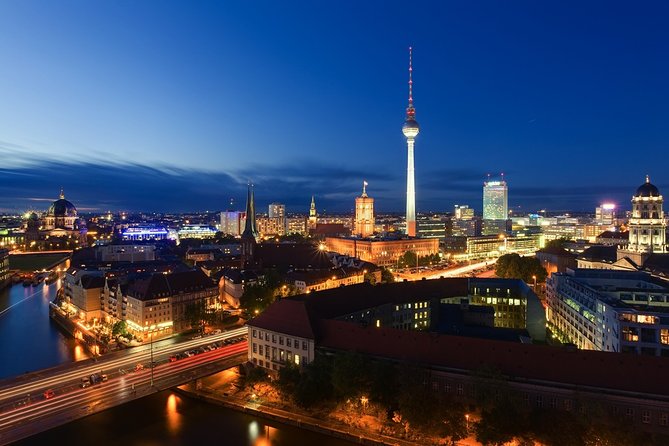
The promise here isn’t just convenience; it’s control. You can tailor the itinerary to what you care about, whether that’s reunification-era sites, memorials, classic imperial architecture, or a mix of big landmarks and quieter stops.
A practical way to do this is to think in themes before you go:
- If you’re focused on 20th-century Europe, lean into the Holocaust Memorial, Topography of Terror, and the East/West crossing landmarks.
- If you want “Berlin postcard” landmarks, prioritize Brandenburg Gate, Unter den Linden, Gendarmenmarkt, and Ku-damm end points.
- If you’re bringing teenagers or first-timers, ask for a route that explains the visible change in the city, not just the dates.
Guides like Thomas, Winfried, Sven, Luka, and Wilfred are cited for being enthusiastic and flexible about what to emphasize. In other words, you’re not stuck with one lecture style. You can steer the conversation to your questions—where to walk, what to look for on the facades, and how the city’s layout connects to history.
Reichstag Building: from scars to today’s Parliament
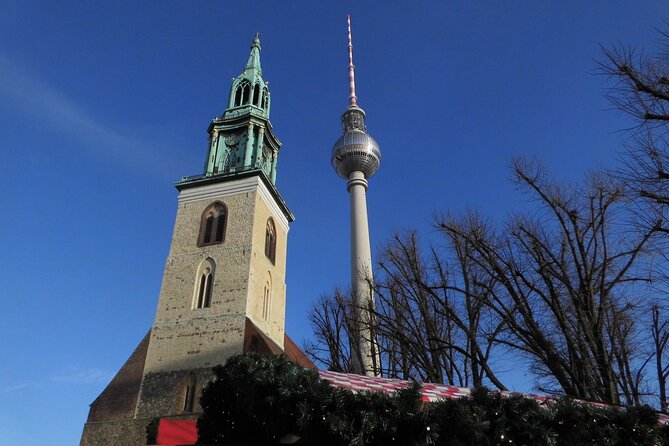
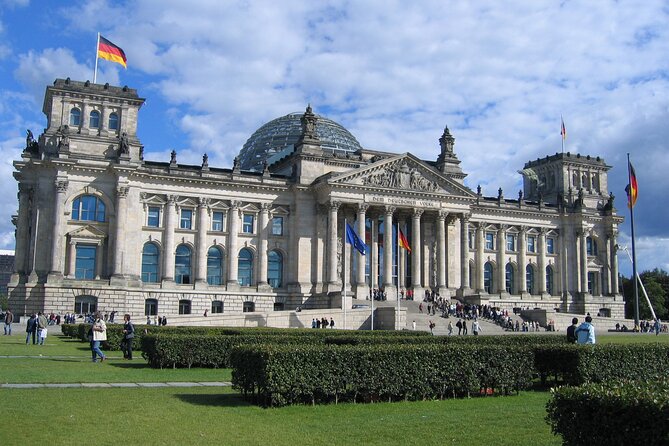
The tour often starts (or loops through) the Reichstag Building, a site loaded with symbolism. It dates to the late 1800s, later suffered a major fire in 1933, and endured the violence of World War II, including bombs and bullet holes. The building was then fully renovated by architect Norman Foster, and it now serves as the seat of Germany’s Parliament.
What’s useful on a guided stop like this is the “see it, then understand it” effect. From the outside, you can spot how the building reads as both monument and working government space. With commentary, it becomes a story about how a nation rebuilds—and how physical damage turns into political meaning.
Admission is listed as free for this stop, and the time window is short. If you want a longer look inside, use this visit for orientation and decide later whether you need a separate time slot.
Brandenburg Gate and the message of famous landmarks
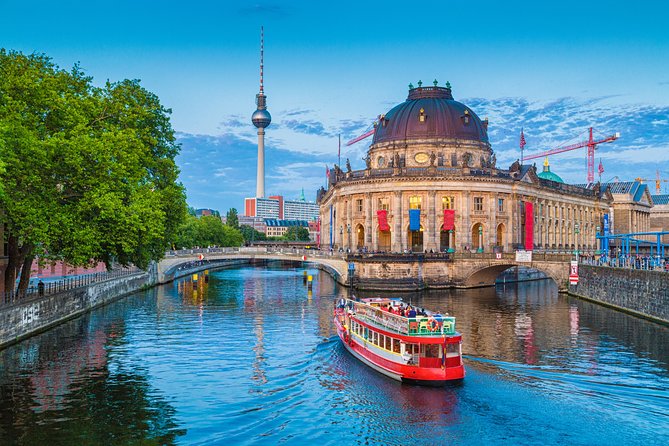
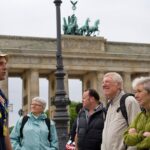
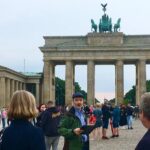
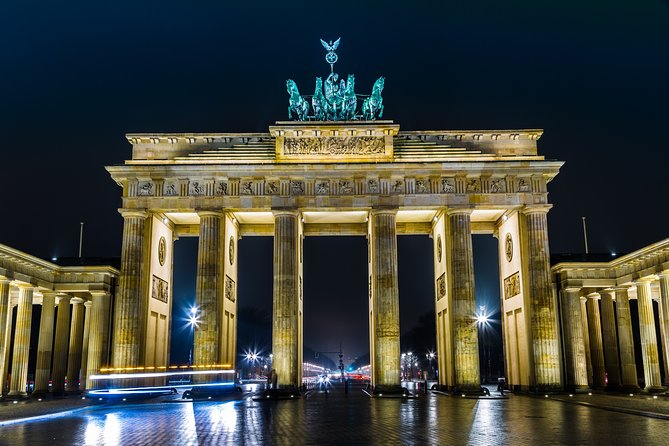
A stop at the Brandenburg Gate is almost mandatory in Berlin. It’s the best-known landmark in Germany, and it’s been visited by figures across wildly different eras. The tour frames it as a place repeatedly treated as significant, not just pretty.
Here’s what to do with the brief stop: look at the space around it. Berlin’s history shows up not only in buildings, but in the way cities reorganize their ceremonial centers. Even if you’ve seen the gate in photos, being there helps you understand scale—why it’s seen as a symbolic center.
Admission is listed as free, and the time is brief. That’s enough for photos, a quick lap, and a baseline understanding of why this spot keeps resurfacing in world headlines.
You can also read our reviews of more tours and experiences in Berlin




Holocaust Memorial: how to handle a place of mourning respectfully
The Memorial to the Murdered Jews of Europe is the kind of stop you don’t want to rush emotionally. It’s a central place of mourning and remembrance for the six million Jews killed during the Holocaust.
On a short car tour, you won’t have time for deep reflection the way a solo visit might. But a guide’s framing helps you slow down in your head even if your schedule doesn’t. You’ll likely get the key context first, then a chance to experience the memorial without distraction.
The stop is listed with free admission, and the time window is around ten minutes. If you’re the type who wants more silence, you can still use that brief time well—walk a few paths slowly and then decide whether to return later on a more open day.
Potsdamer Platz and Topography of Terror: East/West in street form
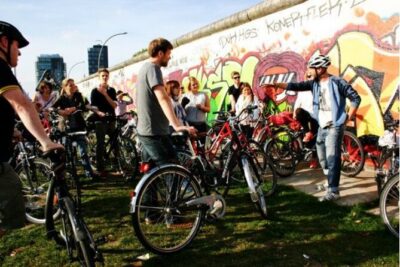
Potsdamer Platz is an interesting contrast. For decades it was “no man’s land,” and it sat right beside the Berlin Wall. After reunification, the area became one of the busiest intersections in the city again.
The tour’s value here is seeing how a once-dividing zone became a connector. You can literally feel the city’s shift from separation to movement—how the streets act today.
Right after that (in many routes), the tour hits Topography of Terror. You’ll see remains of the Berlin Wall and, close behind, a documentation center tied to the sites where Gestapo and SS headquarters used to be. This is one of those places where buildings and remnants do part of the explaining for you.
Both stops are listed with free admission and short time. If you want to read every plaque, you’ll need more time. For most people, though, this is a strong “first contact” that points you to what you might explore later.
Checkpoint Charlie: what a crossing tells you about power
Checkpoint Charlie is the best-known East/West crossing point linked to foreigners and Allied soldiers. The tour notes that Germans were not allowed to use it, which is exactly the kind of detail that makes a place more than a photo backdrop.
With only about five minutes here, treat it like a signpost: get your bearings, understand the restriction, then move on with the larger story in mind. Your guide’s comments are what turn the site into an explanation of control, not just a tourist snapshot.
Admission is listed as free. The bigger value is what you’ll carry forward into the rest of the tour—how Berlin’s geography once served as a political instrument.
Gendarmenmarkt and Unter den Linden: Berlin’s classic face
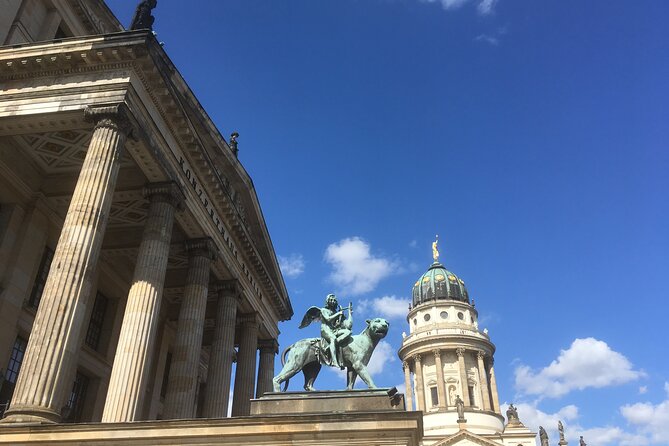
Gendarmenmarkt is often described as Berlin’s most beautiful square, with the German and French domes on either side and Schinkel’s concert hall in the center. Even in a short visit, you can see why this square feels designed rather than accidental. It’s a break from the harder memorial stops, and it gives your brain a chance to rest while still staying in the historical layer.
Then you move along Unter den Linden, the grand boulevard connecting the Brandenburg Gate to the area where the Hohenzollern Palace once stood. The palace was torn down, but it’s been rebuilt as the Humboldt Forum, described here as a striking museum. Along the way, you’ll also pass historic institutions such as the opera house and the former armory, now Germany’s history museum.
This is a great section if you like architecture and city planning. It’s also the part of the tour where you can ask for “what should we focus on” depending on your tastes: imperial era structures, cultural institutions, or modern museum reinterpretations.
Berlin Cathedral and the Victory Column: details you can catch fast
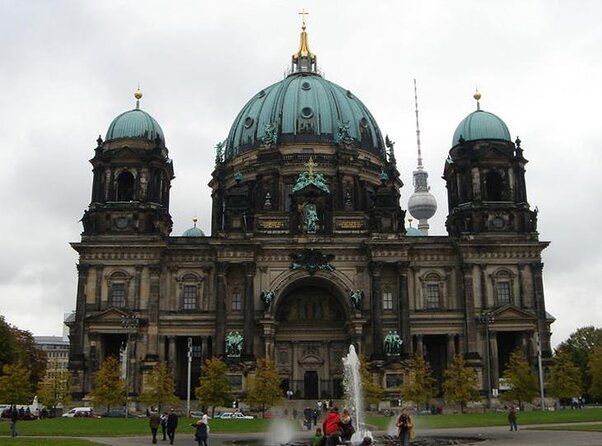
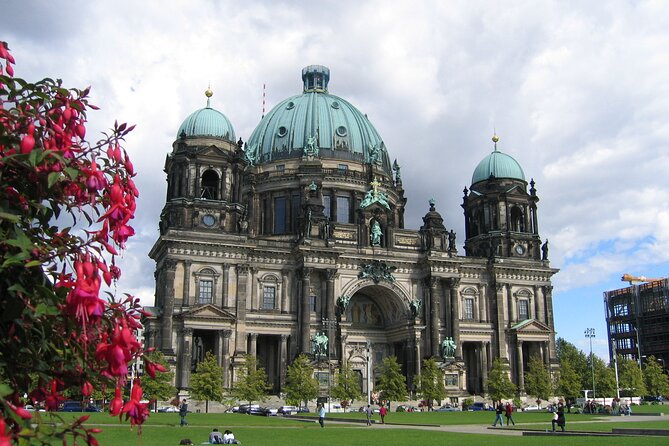
The tour often includes Berliner Dom (Berlin Cathedral), Germany’s largest Protestant church. The route description also notes that the Hohenzollern family are buried there, including King Frederic I and Sophie Charlotte.
A five-minute stop is barely enough for a quick glance, but with guide context you’ll notice what matters: this isn’t just a church, it’s a marker of political dynasties tied to the city’s identity.
Next up is the Victory Column. It commemorates Prussia’s wars, including the last against France in 1871. The column originally stood in front of the Reichstag and was moved to its current Tiergarten location by Albert Speer. That “moved for effect” detail helps explain how planners use monuments to shape perspective.
Both stops are listed as free admission. If you’re trying to decide whether you should come back later, these quick moments are ideal for testing your interest without committing hours.
Ku-damm and Kaiser Wilhelm Memorial Church: west Berlin in one loop
Berlin’s western style shows up when the route reaches Kurfürstendamm (Ku-damm), described as the world’s longest boulevard. You’ll find high-end stores, cafés, restaurants, and theaters, plus the Memorial Church at the end.
You also stop at the Kaiser Wilhelm Memorial Church, an original memorial to Emperor Wilhelm I that was preserved as a war ruin. A modern church sits beside it, built by Egon Eiermann. This pairing—old damaged ruin plus newer design—turns the area into a visible conversation about rebuilding after war.
In a short visit, these stops work best if you treat them like contrast points. After the East/West sites, Ku-damm reads like a different kind of Berlin: consumption, culture, and a westward rhythm.
Kaufhaus des Westens and Museum Island: optional next steps
The tour may include Kaufhaus des Westens, described as continental Europe’s largest department store and also noted for luxury. Even if you don’t plan to shop, it’s worth seeing as part of Berlin’s modern identity and retail culture.
Then comes Museum Island, a UNESCO World Heritage Site. The route highlights the Neues Museum, which has Nefertiti inside, and the Pergamon Museum, which has the Ishtar Gate inside.
This is the part where you’ll want to decide what kind of visitor you are. With a five-minute stop, you won’t get museum time, just a chance to understand the layout and decide whether you should book tickets for a full visit on a different day.
If you’re short on time in Berlin, this tour gives you the names and locations so your later museum planning is easier.
The guide experience: how names like Thomas and Winfried change things
The biggest driver of quality here seems to be the guides. Thomas and Winfried show up repeatedly in strong feedback for mixing detailed storytelling with a friendly tone. Luka, Sven, and Wilfred are also cited for making the stops feel connected rather than random.
Two patterns show up across the guide styles:
1) They explain why a place matters, not just what it is.
2) They adapt the emphasis based on what your group wants to know.
One practical tip: ask a question as soon as you’re in the car, like what you should look for at the next stop. It helps the guide shape commentary around your interests, and it turns the drive into a moving lesson instead of background noise.
Also, if you’re traveling with teens, you’ll probably appreciate the way some guides reportedly kept things interactive, balancing major historical meaning with local street-level clues.
Price and value: is $337.90 per person worth it?
At $337.90 per person for about three hours, this isn’t a budget add-on. It’s a “pay for convenience and guidance” option. Whether it feels worth it comes down to two things.
First, the logistics. Berlin’s spacing between key sites can eat time when you’re navigating on your own. This tour includes hotel or residence pickup and transport in an air-conditioned minivan, which can save both time and stress.
Second, the per-person math depends on how many people are in your group. Since it’s a private tour for your group, the experience tends to feel better when the cost is shared. It can also work well for first-time visitors who want orientation and recommendations for what to prioritize next.
Finally, many stops are listed as free admission, so you’re paying primarily for the guide and car time, not a stack of attraction tickets.
Who should book this private car tour
This tour fits best if you:
- Want a fast orientation for a first Berlin trip
- Prefer to sit back while a guide connects history to street-level reality
- Have limited mobility or bad weather concerns
- Want to customize the day rather than follow a rigid group route
- Are traveling with a mix of adults and teens who still want the story
It might be less ideal if you:
- Want to spend long hours inside major museums
- Prefer a slow, foot-only experience
- Plan to read every sign without help
Should you book this Berlin Private Custom 3-Hour Tour by Car?
If you’re trying to make Berlin make sense quickly, this is a strong starting point. You’ll see key landmarks tied to the city’s hardest chapters and its most elegant streets, and you’ll come away with a clearer idea of what you want to revisit.
I’d book it when you value time and context more than lingering alone. If you like having a plan you can tweak—while someone else handles routing and narration—it’s an efficient way to start your trip.
And if you’re the type who always says we should do a guided tour on day one, this is exactly that habit—done in the most practical way possible, by car.
FAQ
How long is the Berlin private custom tour by car?
It lasts about 3 hours.
Is hotel pickup included?
Yes. Pickup is offered anywhere in Berlin from your hotel or residency.
Can they pick me up from the airport?
Airport pickup is possible, but special conditions apply, so you’ll need to ask.
Is this tour private?
Yes. It’s private, meaning only your group participates.
What language is the tour in?
The tour is offered in English, and it may be operated by a multi-lingual guide.
Do I need to buy tickets for the stops?
Many stops are listed with admission ticket free. Your guide can help you plan around what’s open and how much time you want at each spot.
What if the weather is bad?
It operates in all weather conditions, so dress appropriately.
Is there free cancellation?
Yes. You can cancel for a full refund up to 24 hours before the experience’s start time.