REVIEW · BERLIN
Daily First Rickshaw promotion in Combi Vehicle public Group 90€
Book on Viator →Operated by Berlin-Rickshaw / Berlin-Excursions · Bookable on Viator
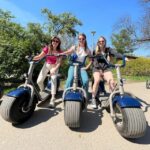
Berlin clicks in when you’re rolling by. This small-group rickshaw tour lets you see major sights with less walking and more control over quick photo stops.
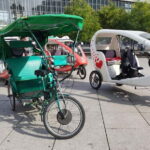
I especially like the comfortable, covered ride—even in bad weather the setup is made to keep you warm and dry. You’ll also get an English-speaking guide who keeps the pace friendly and the route easy to follow.
One thing to think about: the schedule mixes fun photo moments with heavier stops like Nazi-era sites, so if that subject matter feels like a lot, plan your day around a calmer lunch afterward. Also, the big “wow” structure at the start (Berliner Fernsehturm) has an admission fee that isn’t included.
Small-group comfort with room for personal photo stops
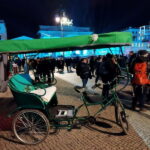
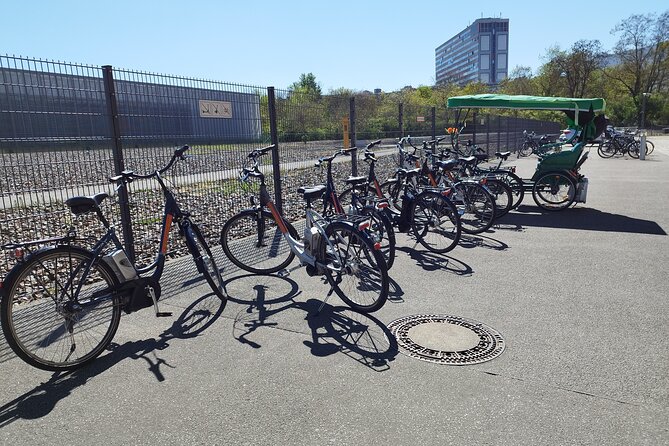
Covered rickshaw ride that’s practical in rain
History-heavy route where you control how long you look
In This Review
- Key things to know before you book
- Berlin from a rickshaw seat: why this format works
- Price and value: what you’re really paying for
- The 4-hour loop: starting point and what the timing feels like
- Stop 1: Berliner Fernsehturm and Alexanderplatz photo power
- Museum Island: UNESCO sights in a focused 15 minutes
- Bebelplatz: from Forum Fridericianum to the Nazi book-burning site
- Gendarmenmarkt: photo-friendly classical Berlin in 10 minutes
- Checkpoint Charlie and the Berlin Wall memory strip
- Topography of Terror: the hard facts, right where you’re standing
- Holocaust Memorial and Brandenburg Gate: memory in scale
- Guide handling, comfort, and photo skill in real life
- Who should pick this tour?
- Should you book a Berlin rickshaw tour like this?
- FAQ
- What is the duration of the tour?
- How much does it cost for the group?
- How big is the group?
- What language is the tour offered in?
- What’s included in the price?
- Are any attraction tickets included?
- Where does the tour start and end?
- What if the weather is bad?
Key things to know before you book
- You’re capped at 2 people for the tour, which makes the ride feel personal instead of rushed.
- Most stops are quick but flexible, and you can often choose where you want to pause for photos.
- WiFi, bottled water, and alcoholic beverages are included, which helps on a long 4-hour loop.
- Top sights come with “photo-close” stops—you don’t always need to step out to see something well.
- Berliner Fernsehturm admission isn’t included, so budget for that if you plan to go up.
Berlin from a rickshaw seat: why this format works
Berlin is big, and your energy is the real currency. What I like about this rickshaw setup is that it turns a “see-everything day” into a manageable loop. You sit while your guide moves you from place to place, and you’re not stuck constantly scanning bus schedules or hunting for parking.
The ride is built around short stops that still feel meaningful. You’ll get the kind of “there it is” moments you want at major landmarks—Alexanderplatz, Museum Island, Gendarmenmarkt, the Cold War checkpoints, the memorials—without turning every sight into a half-day project.
And because the group is limited, it’s easier for your guide to adjust. You can stay on the rickshaw for closeness or hop off briefly if that’s your preference. The tour is also described as a good fit for people with mobility limits, since you enter the rickshaw with only a few steps and you can view monuments without long walks.
You can also read our reviews of more tours and experiences in Berlin.

Price and value: what you’re really paying for
The main rate is $216.74 per group (up to 2) for about 4 hours. That’s not just “a vehicle.” It’s a guided sightseeing loop in a format that saves walking time and adds comfort—plus a few real extras on board.
Included items that matter for value:
- WiFi on board
- Bottled water
- Alcoholic beverages
- A guided rickshaw ride with an experienced, safety-minded operator
There’s also mention of a daily first-rickshaw promotion for a “combi” public group at 90€. If you spot that option and you don’t mind a larger shared group feel, it could be a lower-cost way to try the rickshaw experience.
The only “budget hit” I’d plan for is Berliner Fernsehturm. The tour includes a stop there, but the admission ticket isn’t included for that structure, so if you want to go up, you’ll need to pay separately.
Bottom line: if you want a smooth, guided route with frequent “stop-and-see” moments, this price starts to make sense fast—especially because the tour time is long enough to feel like a real day out, not a quick drive-by.
The 4-hour loop: starting point and what the timing feels like
This tour starts and ends back at Weinbergsweg 6, 10119 Berlin. It’s also described as being near public transportation, which makes it easier to connect from wherever you’re staying.
The duration is about 4 hours. Many people like starting early because the streets are calmer and you can take photos with less crowd friction. One review specifically mentioned an early 9:00 start as a smart choice if you want sights before they get packed.
Expect a rhythm like:
- short rides between landmarks
- quick timed stops for photos and context
- occasional chances to change where you pause, depending on what you want to emphasize
The whole point is to help you get your bearings fast while still covering the big Berlin hits.
Stop 1: Berliner Fernsehturm and Alexanderplatz photo power
Your first major stop is Berliner Fernsehturm at Alexanderplatz. This is Berlin’s tall TV tower, described here as 365 meters. Even if you don’t go inside, it’s one of those skyline markers that instantly makes Berlin feel real.
From there, the route includes passes by:
- Red Town Hall
- Marien Church
- Neptunes Brunn
…before arriving at Museum Island.
How long you’re there: about 5 minutes, and the note is clear—admission ticket not included. That means this stop is mostly for the exterior view and quick photos, unless you decide to add ticketed time yourself.
Why it’s a good opener: Alexanderplatz is a natural starting anchor. It gets you oriented, and it sets the tone for “Berlin past meeting Berlin modern” right away.
Possible drawback: because it’s short, you shouldn’t count on this being enough time for anything beyond photos and a quick look unless you’re adding your own time.
Museum Island: UNESCO sights in a focused 15 minutes
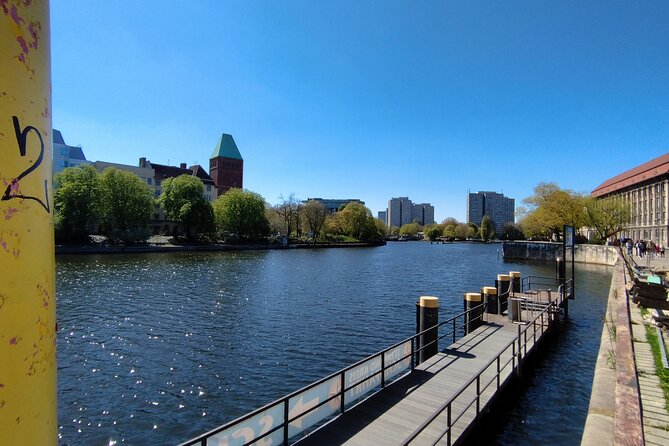
Next is Museum Island, a UNESCO World Heritage site. In just 15 minutes, you’ll get the highlight-cluster feel—enough to understand why this area is famous without turning the day into a museum marathon.
The stops and landmarks mentioned include:
- Berlin Cathedral
- City Palace
- Altes Museum
- Bode Museum
- Neues Museum
This is also one of the more “free-flow” parts of the route: admission is free per the tour notes. That’s helpful because it keeps you from worrying about ticket logistics while you’re in transit.
What makes this stop work on a rickshaw day: your guide can point out key buildings and explain why they matter, and you can linger just long enough to recognize them later. Think of it as a visual primer so the rest of Berlin’s story becomes easier to follow.
Bebelplatz: from Forum Fridericianum to the Nazi book-burning site
At Bebelplatz, the tour frames a sad but important moment in German history. You’ll hear about the Forum Fridericianum, including buildings linked to major institutions such as the State Opera, Humboldt University law faculty, Humboldt University, the state library, and St. Hedwig’s Cathedral.
Then the emotional pivot: Bebelplatz is described as a reminder of the Nazi regime’s oppression. On May 10, 1933, the Nazis carried out a famous book-burning ceremony here—used as a show of power and a way to destroy books judged “un-German.”
Time here is about 10 minutes, and it’s listed as free.
Why you’ll likely feel this stop: it’s quick, but the meaning is heavy. If you’re the type who likes to connect architecture to events, this stop lands well because it gives you a specific date and action, not vague talk.
Consideration: since the tour later covers other WWII and Cold War memory sites too, you may want to mentally pace yourself. A short pause with a photo and a few minutes of listening can be enough.
Gendarmenmarkt: photo-friendly classical Berlin in 10 minutes
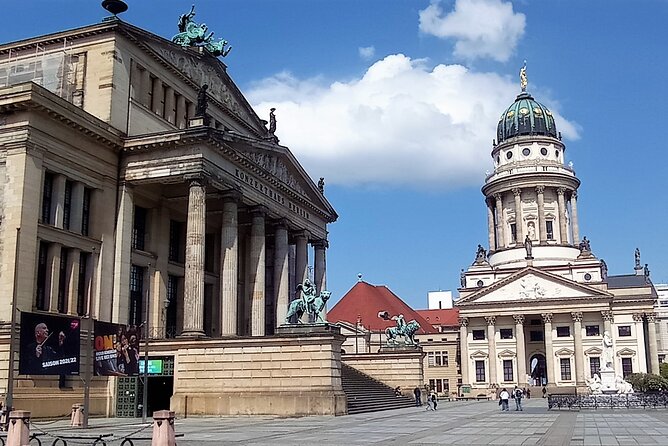
Gendarmenmarkt is one of those places where the buildings make the square feel staged for a postcard. You’ll see the German Cathedral and the French Cathedral facing each other across the square, with a former Royal Concert Hall in the center.
The tour also notes statues and monuments around the area, and it explains why this square is popular: the look is symmetrical, historic, and easy to photograph from multiple angles.
Time here: about 10 minutes, and it’s listed as free.
Why it’s a smart contrast: after the heavy note at Bebelplatz, Gendarmenmarkt gives you a calmer, more scenic break. It also gives you a “reset” photo zone where you can stretch your legs for a minute without committing to a long walk.
Checkpoint Charlie and the Berlin Wall memory strip
Then you move to Checkpoint Charlie, one of the best-known symbols of the Cold War. The tour explains it as a reminder of the 28 years Berlin was divided—families, friends, and even enemies separated—until the Berlin Wall fell in 1989.
Here, the experience is described as passing through the former border strip area—almost like a time capsule—where original pieces are used as monuments to separation.
Time: about 5 minutes, free.
What to expect from a rickshaw stop: your guide can show you key points quickly without crowding you into a long queue. It’s also a good place for a short, clear photo that you’ll remember later because the symbol is so recognizable.
Topography of Terror: the hard facts, right where you’re standing
Next is Topography of Terror, described as an documentation center focused on atrocities committed during the Nazi era. This is the kind of stop where the “location matters”—the tour notes it’s in a pre-war building, which adds weight to the visit.
Time is listed as about 10 minutes, and it’s free in the tour notes.
The tour also connects this area to nearby exhibition spaces, mentioning Martin-Gropius-Bau next door, and listing examples of exhibitions such as:
- Chinese artist Ai Weiwei
- British rock star David Bowie
There’s also mention of the Prussian Landtag, described as a historic building from the late 19th century, tied to political events in Prussian history.
Why this stop matters on a short itinerary: even if you don’t go deep into the museum sections in 10 minutes, your guide can set context so the memorials and history elsewhere on the route make more sense.
Consideration: if you prefer lighter sightseeing, this part of the route may feel emotionally dense. It’s still worthwhile, just plan to stay mentally flexible.
Holocaust Memorial and Brandenburg Gate: memory in scale
After Topography of Terror, the tour heads to The Holocaust Memorial – Memorial to the Murdered Jews of Europe. This memorial opened in 2005 and is described as commemorating the murder of more than six million Jews under National Socialism.
Time is about 10 minutes, free.
Even from the rickshaw, this stop has a strong effect. The scale and design encourage a quiet pause, and the tour framing emphasizes the fragility of freedom—something your guide will likely connect to modern life.
Then come the final landmark moments:
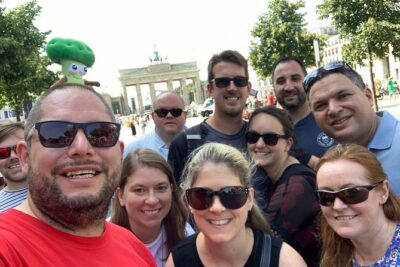
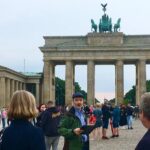
- Brandenburg Gate (about 10 minutes, free)
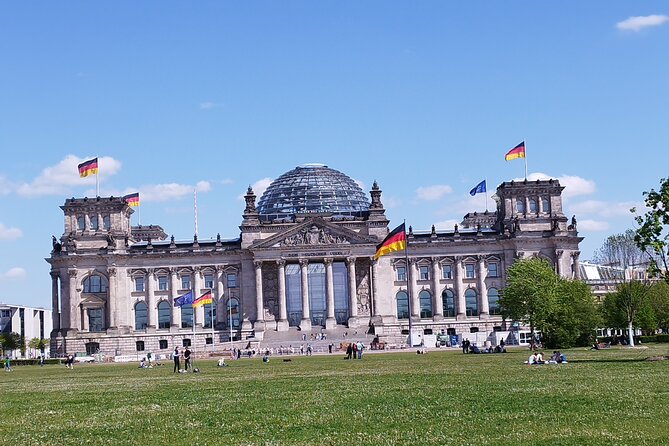
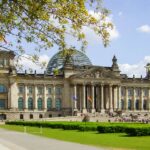
- and along the way, the tour mentions the shift from the former Eastern part of Berlin toward areas connected with the government district, including the Reichstag/Bundestag and Chancellery.
- The tour also mentions the Memorial to the Murdered Sinti and Roma.
Why end here: Brandenburg Gate is widely recognized, and it’s a powerful “Berlin today” bookend after the memorials and WWII-era context earlier in the day. It gives you a place to close the story with a landmark photo.
Guide handling, comfort, and photo skill in real life
A tour like this lives or dies by the guide’s rhythm. The reviews you shared underline a few things I’d treat as part of the promise:
- Guides manage the ride smoothly, including maneuvering for views.
- They handle weather with practical solutions. One review talked about a rain storm where the guide pulled over, taught more about Berlin, and used the rickshaw’s roof/blanket setup so people stayed warm and dry.
- The guide’s photo help can be surprisingly good. One review specifically mentioned the guide being a fantastic photographer, which matters because small timing changes can make a big difference at squares and monuments.
There’s also a review mentioning snacks during the 4-hour tour. That detail isn’t listed in the included items, but since it’s in the shared experience notes, it’s a nice “bonus” to watch for on the day.
And the guide names show up too. One review called out Levi by name, describing how he adjusted the tour to interests beyond a fixed script. That’s the kind of flexibility you should look for with any rickshaw day.
Who should pick this tour?
This is a strong choice if you:
- want to see major Berlin landmarks without doing a marathon of walking
- like history, but also want it guided and structured into a timed route
- care about comfort—WiFi, water, and the covered rickshaw setup make the experience easier on your body
- have mobility concerns and want the “see close up” option without long detours
It’s also a good pick for photo lovers. The route includes multiple classic exterior photo targets, and the tour notes you can stop anywhere for memorable pictures.
Who might hesitate: if you hate heavy WWII/Cold War topics, the itinerary stacks several of them—Bebelplatz, Checkpoint Charlie, Topography of Terror, and the Holocaust Memorial. For some people, that’s exactly what they want. For others, it may feel too intense.
Should you book a Berlin rickshaw tour like this?
I’d book it if you want a comfortable, guided Berlin loop that balances big sights with context, and you like the idea of not walking every step. The small group size, the ability to stop for photos, and the onboard comfort extras make it feel like you’re spending money on time saved and fatigue avoided.
Also, if you’re deciding based on crowds: one review explicitly recommended an early start for less congestion around the highlights. If your schedule allows it, try to match that timing.
If you’re mainly trying to “check off” museums with ticketed interior time, this may be less ideal since the stops are short and only some things are free or not included. But if your goal is a smart, photo-friendly orientation tour with real storytelling, this rickshaw day is a solid choice.
FAQ
What is the duration of the tour?
The tour lasts about 4 hours.
How much does it cost for the group?
The price is $216.74 per group, up to 2 people.
How big is the group?
The maximum group size is 2 travelers.
What language is the tour offered in?
The tour is offered in English.
What’s included in the price?
Included are the rickshaw ride with an experienced tour guide, WiFi on board, bottled water, and alcoholic beverages.
Are any attraction tickets included?
Berliner Fernsehturm admission is not included. Other listed stops (like Museum Island, Bebelplatz, Gendarmenmarkt, Checkpoint Charlie, Topography of Terror, Potsdamer Platz, the Holocaust Memorial, and Brandenburg Gate) are listed as free in the tour notes.
Where does the tour start and end?
It starts at Weinbergsweg 6, 10119 Berlin, Germany and ends back at the meeting point.
What if the weather is bad?
The rickshaw has a covered setup (including a roof and blanket per review details), and the guide can adjust during the tour, including pulling over during rain.