REVIEW · BERLIN
An Introduction to Berlin Walking Tour
Book on Viator →Operated by Insight Cities · Bookable on Viator
Berlin is a living classroom. In this 3-hour walk, you connect Prussian militarism to 20th-century Berlin through landmarks like the Reichstag dome, Brandenburg Gate, the Berlin Wall area, and the Holocaust Memorial.
I like two things most. First, you’re not just looking at buildings—you’re getting a guided explanation of how power, war, and politics shaped the city over 300 years. Second, the group stays small, so you get more attention and better pacing than the big-bus crowd. One consideration: you’ll do a fair amount of walking and you’ll use public transport a few times, so build in time for stairs and transfers.
In This Review
- Key points worth knowing
- The real value: history you can see, not just read
- Price and what you actually get for $156.53
- Small group pacing and the public transit reality
- Transit tip you can use
- Reichstag Building: glass dome, modern democracy, and the symbolism to notice
- Brandenburg Gate: Prussian roots and modern world events
- Museum Island: royal ambition on Spreeinsel
- Potsdamer Platz: how Berlin rebuilt after the fall of the Wall
- Unter den Linden and the Tiergarten reset your eyes
- The Holocaust Memorial: a somber place designed to affect you
- Hackescher Markt: Art Nouveau courtyards and pre-war Berlin texture
- What to expect from your guide (and why it matters)
- Who this tour fits best
- Should you book this Berlin walking tour?
- FAQ
- How long is the Berlin walking tour?
- How many people are in a group?
- What language is the tour offered in?
- Where does the tour start and where does it end?
- Do I need to pay for admission to the sights?
- Is food or drinks included?
- Do I need to use public transportation during the tour?
- What public transport tickets does the tour suggest?
- What’s the cancellation policy?
- Is there a mobile ticket?
Key points worth knowing
- Max 8 people: small group feel and more back-and-forth with your guide
- Historian-led: a historian (plus professor/doctoral-student/journalist backgrounds) keeps the facts grounded
- Big Berlin anchors: Reichstag, Brandenburg Gate, Museum Island, Potsdamer Platz, Unter den Linden, Tiergarten, Holocaust Memorial
- Meaningful route: you’ll connect Prussian militarism to the shocks of the 20th century, not treat history like trivia
- Free-site entries listed: the stops are marked as admission ticket free
- Mobile ticket: easy day-of check-in with minimal fuss
The real value: history you can see, not just read
Berlin has layers. This tour treats them like a story you can walk through. You start in the center of modern German democracy, then move through royal-era architecture, the rebuild-and-reclaim feel of Potsdamer Platz, and into memory and mourning with the Holocaust Memorial.
What makes it work is the through-line. The tour doesn’t treat the city’s past as disconnected chapters. It ties early Prussian militarism to what Berlin became in the 20th century. That helps you look at each site with a better question in your head: How did power get built into everyday life here?
You’ll also get a guide who’s used to teaching and explaining, not just pointing. The group is led by people with academic and media backgrounds—professors, doctoral students, journalists, plus hosts who know how to tell stories clearly. If you like history that has an opinion about cause and effect, this route fits your style.
You can also read our reviews of more walking tours in Berlin



Price and what you actually get for $156.53
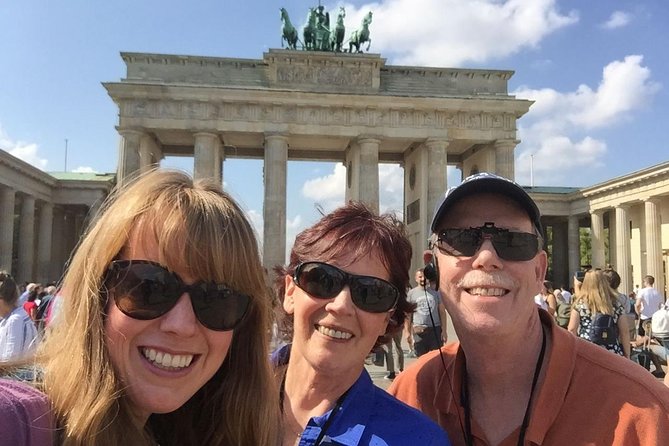
At $156.53 per person for about three hours, you’re paying for three things: (1) a historian guide, (2) a small-group format, and (3) a route packed with major landmarks.
You can do some of these sights on your own. But the value here is in the stitching: how the Reichstag dome’s symbolism fits into the broader idea of democratic government, how Brandenburg Gate relates to Prussian kingship, and why the memorial isn’t just another photo stop.
It also helps that the stops are marked with admission ticket free. That means you’re not layering in a pile of entrance fees while still getting to some of the most important public spaces in Berlin.
Small group pacing and the public transit reality
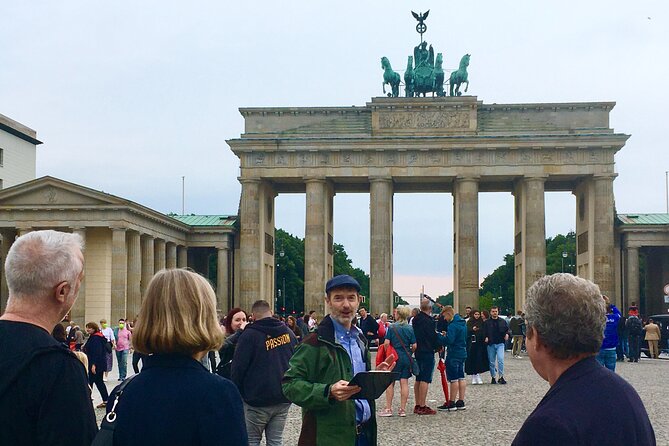
This is listed as a small group tour with a maximum of 8 travelers. That matters more than it sounds. In Berlin, you can waste time when groups stretch out or when people stop to take pictures at the wrong moment. With fewer people, your guide can keep things moving and still answer questions.
One practical note: it’s not a pure walk. You’ll use public transport a few times because some distances are too far to comfortably cover on foot. If you don’t already have a visitor transit pass, the tour suggests getting a day metro pass. If you can’t buy it in advance, the guide can help you purchase it at the first metro station during the tour.
Transit tip you can use
- A one-way ticket in tariff zone AB is listed at 2.8 EUR
- A day ticket for one person is listed at 7 EUR (senior discount 4.70 EUR)
- One-way senior discount is listed at 1.70 EUR
That’s the kind of small detail that saves you from the I-didn’t-buy-the-right-ticket headache.
Reichstag Building: glass dome, modern democracy, and the symbolism to notice
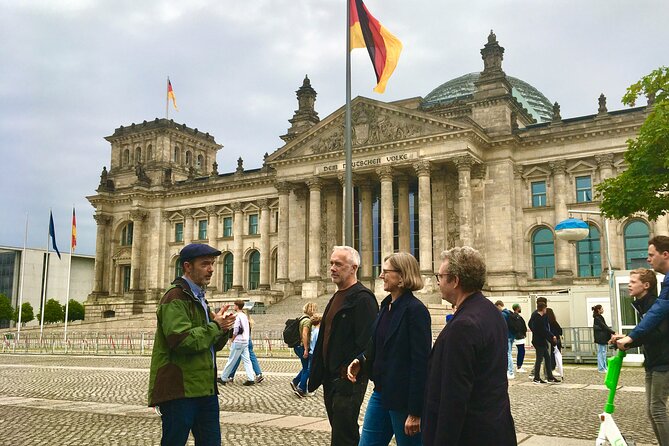
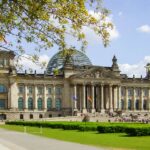
Your first major stop is the Reichstag Building, the meeting place of Germany’s Bundestag (the Federal Assembly). The famous modern add-on is the transparent dome designed by Norman Foster in the 1990s.
Even if you’ve seen pictures of the dome, it hits differently when a guide explains what it’s signaling. The dome is not just a fancy architectural move. It’s a visual argument about democratic government—openness, visibility, and the idea that power isn’t hidden away.
The tour includes time to take it in (about 15 minutes) and notes the admission ticket is free for this stop. So this isn’t a “quick peek and run” situation. You can actually look up and then look around, catching how the building sits in the civic center.



Brandenburg Gate: Prussian roots and modern world events
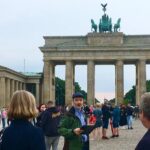
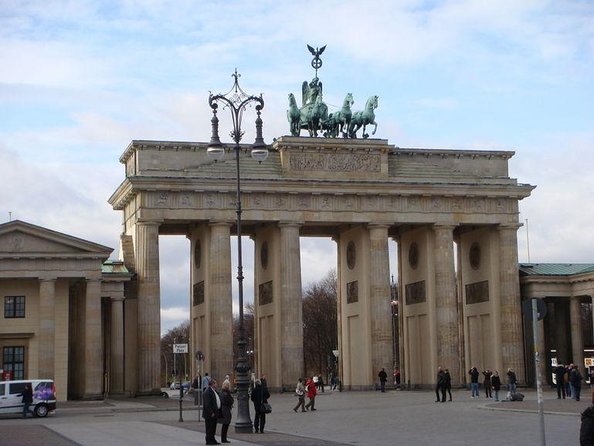
Next you’ll reach Brandenburg Gate, the iconic neoclassical monument built in the 18th century on the orders of Prussian King Frederick William II. This is one of those sites where history keeps restarting itself.
The tour approach helps you see it as more than a pretty landmark. The gate has hosted major moments across centuries, including Napoleon’s triumphal entrance and Ronald Reagan’s Cold War-era speech. When you’re standing there, it’s easier to understand why the gate became a stage for power and persuasion.
You’ll have about 20 minutes here, and it’s listed as admission ticket free. Use that time to walk around the edges. The gate’s position at the top of Berlin’s grand route makes it feel like the city’s spine. If you only photograph it straight on, you miss that feeling.
Museum Island: royal ambition on Spreeinsel
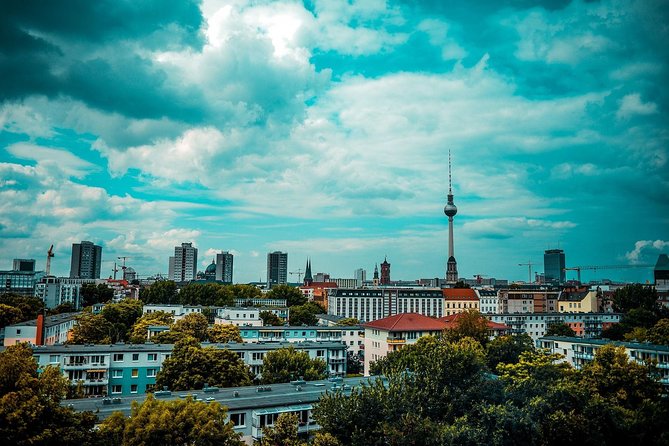
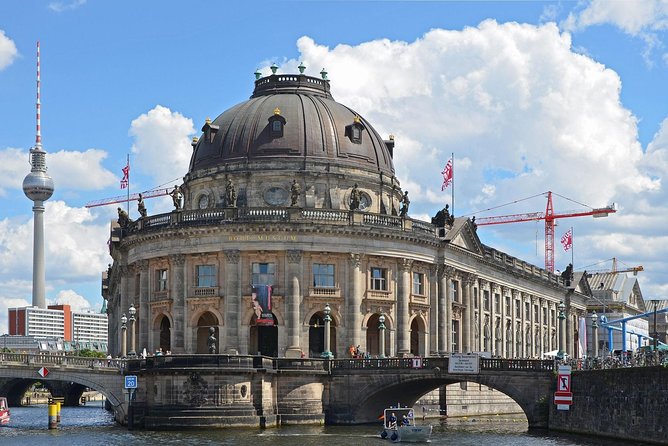
Then comes Museum Island, located on Spreeinsel (Spree Island). This ensemble of buildings sits in the middle of the city and brings together some of Berlin’s major museums under Prussian rulers.
The stops called out include the Pergamon, Neues Museum (New Museum), and Alte Nationalgalerie (Old National Gallery). Even if you don’t go inside museums that day, you’ll still get value from seeing the scale and the symmetry. The architecture and planning explain something important about the era: Prussian power didn’t just build armies. It also built institutions meant to display culture and legitimacy.
You get about 25 minutes here, and the stop is listed as admission ticket free. That means your experience is focused on orientation and context, not a timed ticket scramble. If you’re the type who likes to decide later whether to pay for a museum, this is a smart way to get your bearings first.
Potsdamer Platz: how Berlin rebuilt after the fall of the Wall
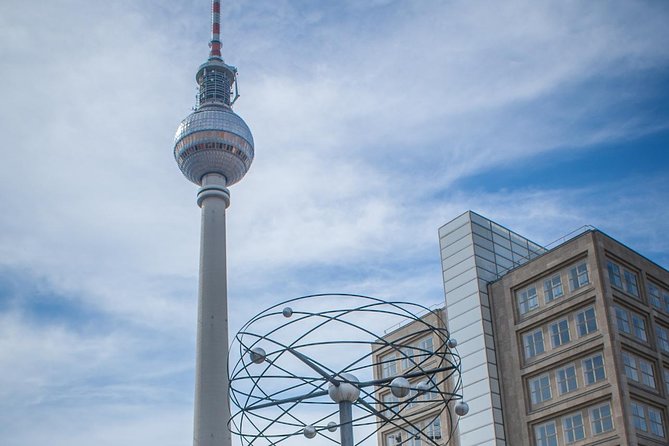
Potsdamer Platz is a key contrast in the tour’s story. Berlin Wall history looms over this area, and after the fall of the Wall the square was reborn into a hub for entertainment, restaurants, and shops.
The tour gives you about 15 minutes. That’s enough time to understand the setting without turning it into a shopping break. What I like about this stop is that it forces you to think about urban change. Berlin didn’t just restore old streets. It reshaped the city’s center into something new, and you can see the modern density here.
Practical tip for your brain: when you look around Potsdamer Platz, try to mentally separate three layers—what used to be there, what changed after the Wall, and what the place is now. Your guide’s historical framing makes that mental switch easier.
Unter den Linden and the Tiergarten reset your eyes
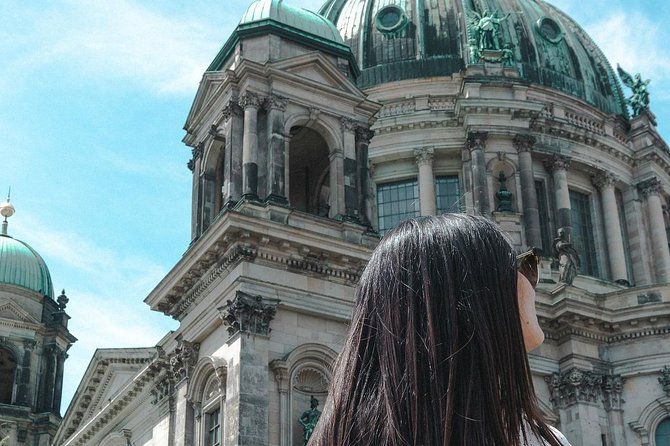
Unter den Linden is Berlin’s grand boulevard, running from the City Palace toward Brandenburg Gate. The name comes from the linden trees lined up along it. In a city full of story, this boulevard gives you a visual rhythm: a straight line of perspective, civic space, and monumental architecture.
You’ll spend about 30 minutes in this section. That extra time pays off because you can do more than snap a photo. You can watch how the street’s scale affects your sense of the city. It’s Berlin’s answer to Paris’s Champs-Élysées, with a different political history under its feet.
Then the tour shifts to Tiergarten, Berlin’s most famous inner-city park. You get about 10 minutes. It’s a short pause, but a useful one. Big history sites can flatten your attention. A walk through green space resets your senses before the heavier memorial stop.
Tiergarten also gives you a chance to move at a slower tempo with the group. It’s not a museum. It’s Berlin’s idea of breathing room in the middle of power and politics.
The Holocaust Memorial: a somber place designed to affect you
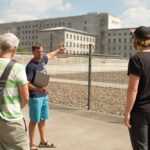
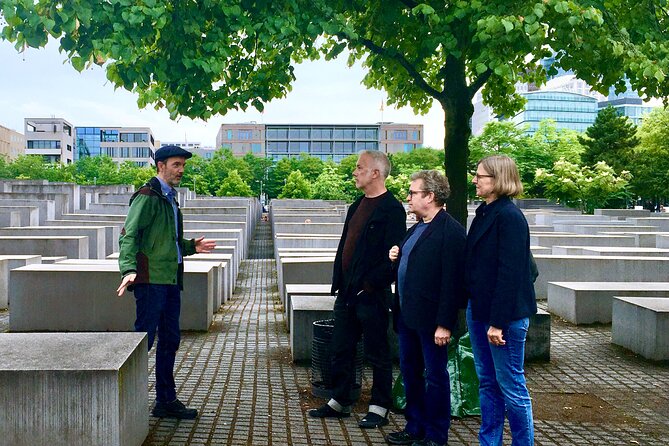
Next is the Memorial to the Murdered Jews of Europe. The design is by architect Peter Eisenman and it opened in 2005. The memorial uses 2,711 concrete slabs of different heights, creating a labyrinth-like space for reflection.
This stop is only about 10 minutes, but don’t treat it like a checkmark. The design is meant to slow you down. The slabs create changing viewpoints and narrow your sense of where you are, which can feel unsettling in a way that’s hard to fake.
What I appreciate here is that the tour places this memorial right after the city’s civic axis. That order matters. You go from architecture that symbolizes governance and public life to a space that forces remembrance and moral weight. It keeps you from turning Berlin’s darkest history into just another photo backdrop.
Use the time for your own stillness. Let the space do its job.
Hackescher Markt: Art Nouveau courtyards and pre-war Berlin texture
Finally, you land at Hackescher Markt Square. This is the kind of place where Berlin’s past isn’t just monumental. It’s lived-in, detailed, and close to the ground.
The tour notes preserved Art Nouveau courtyards from pre-war Berlin. That’s a great contrast after the Holocaust Memorial. Here, the design language feels lighter, even if the city’s story beneath it isn’t light.
You’ll have about 15 minutes. I’d use most of that for looking closely at the courtyards and the way the buildings frame the passageways. It’s not just about seeing a square. It’s about noticing how older Berlin architecture survives inside a modern neighborhood.
What to expect from your guide (and why it matters)
One of the best parts of this tour is the guide mix. You’re not stuck with a scripted narration. The guides come from academic and journalism backgrounds, and they’re described as enthusiastic hosts and storytellers.
If you care about architecture, you’ll likely feel at home here. One review highlighted how an architect-led version of the tour worked especially well for people who enjoy buildings and design. They also mentioned a great pace and that the guide helped them land at a delicious Italian restaurant for lunch. The takeaway is simple: you get real expertise, and you can also get local-day advice for the rest of your afternoon.
Who this tour fits best
This walk is a good match if you want:
- A structured tour that connects big historical forces to specific landmarks
- A small-group format with more conversation time
- A balance of civic architecture, memorials, and the city’s post-Wall reinvention
It may be less ideal if you want a slow, mostly unstructured wander with lots of free time to linger inside museums. This tour is paced to cover a lot of ground thoughtfully, with set time windows for each stop.
Should you book this Berlin walking tour?
Yes, if you want a three-hour tour that gives you context fast and helps you read Berlin like a book. The best value is the combination of major sites with guided explanations—especially the link between Prussian militarism and what Berlin became later. And with a maximum of 8 travelers, the experience stays focused.
I’d skip it only if you already know Berlin history deeply and want a museum day instead. For most first-time visitors—or even curious repeat visitors who want a sharper framework—this tour is a strong use of time.
FAQ
How long is the Berlin walking tour?
It’s about 3 hours.
How many people are in a group?
The tour has a maximum of 8 travelers.
What language is the tour offered in?
It’s offered in English.
Where does the tour start and where does it end?
It starts at Unter den Linden 42, 10117 Berlin, Germany and ends in Berlin (end point shown on the map link provided with the tour).
Do I need to pay for admission to the sights?
The listed stops are marked as admission ticket free.
Is food or drinks included?
No, food and drinks are not included.
Do I need to use public transportation during the tour?
Yes. You’ll use public transport a few times because some distances aren’t walkable.
What public transport tickets does the tour suggest?
If you don’t have a visitor pass, it suggests a day metro pass. If you can’t purchase it in advance, the guide can help you buy it at the first metro station. It also lists one-way and day ticket prices.
What’s the cancellation policy?
Free cancellation is available up to 24 hours in advance for a full refund.
Is there a mobile ticket?
Yes, it includes a mobile ticket.