REVIEW · BERLIN
Half-Day Bike Tour of Berlin’s Lesser Known And Historical Sites
Book on Viator →Operated by Berlin Bike Tour · Bookable on Viator
Berlin has a quieter side when you pedal. This half-day bike tour threads together Cold War apartment life, Stasi history, and calmer waterways in East Berlin—without turning into a museum queue.
Two things I especially like are the small-group format (max 8) and the way the guide keeps the story practical. I’m thinking of how guides like Katrin and Markus can adjust on the fly, so you actually get time to ask questions rather than just follow a pack.
One consideration: some key stops are brief (for example, the Stasi memorial stop is listed at 5 minutes). If you want long, lingering time in one place, you may need to plan extra time after the tour.
In This Review
- Key details that shape the experience
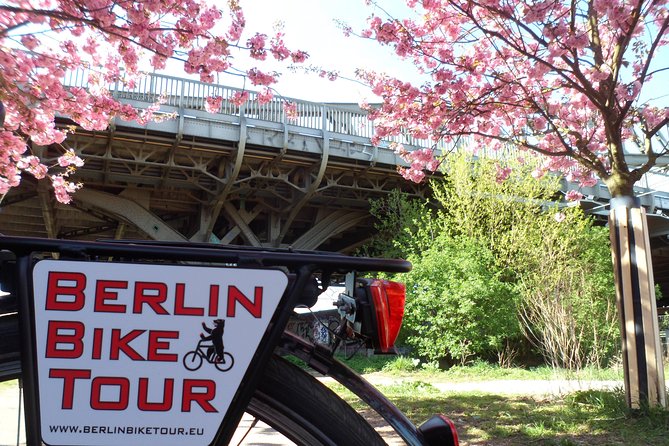
- Riding Berlin’s lesser-known East: Prenzlauer Berg on two wheels
- Stasi Museum memorial: what the East Berlin secret-police system meant
- Ernst-Thälmann-Park and a GDR-era feel in 10 minutes
- Platz des 9. November 1989: border memory without the detour
- Weissensee’s lakes: a calmer ride after heavier stops
- Between famous stories: slaughterhouses, breweries, and Olympic training
- The guide effect: Katrin, Markus, and the small-group advantage
- Timing that works: about 3.5 to 4 hours, with motion built in
- Price and value: what $36.88 buys you in Berlin
- Practical logistics that make the day smoother
- Who should book this Berlin bike tour
- Should you book this half-day lesser-known Berlin bike tour?
- FAQ
- What is the duration of the Half-Day Bike Tour of Berlin’s Lesser Known And Historical Sites?
- How much does the tour cost?
- How many people are on the tour?
- Where is the meeting point, and where does the tour end?
- What time does the tour start?
- What is included in the price?
- Are food and drinks included?
- Is admission included for the stops?
- What is the dress code?
- Can children join the tour?
- Is there a free cancellation option?
Key details that shape the experience
- Max 8 riders, more guide time for questions and pacing that feels human
- Prenzlauer Berg as the core so you learn about everyday life in East Berlin
- Stasi Museum memorial and former prison to understand the system, not just the headlines
- Berlin Wall memory at Platz des 9. November 1989 without tourist crowding
- Weissensee’s lakes and green breaks that make the ride easier to digest
- Bicycle included, with smart-casual dress and no food included
Riding Berlin’s lesser-known East: Prenzlauer Berg on two wheels
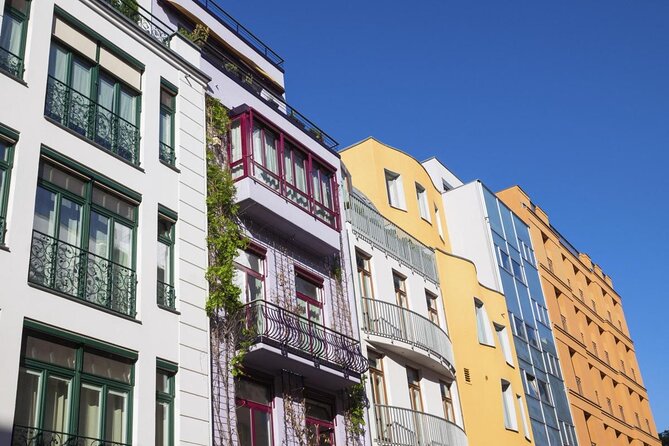
Prenzlauer Berg is where the tour’s tone clicks into place. You spend about an hour there, and the point isn’t just pretty streets—it’s to help you recognize what East Berlin everyday life looked like, right down to the feel of communist-era apartment blocks and the texture of neighborhood living.
Biking matters here. On a bike, you can move between ordinary streets without losing context. You’re not just staring at “historic” plaques; you’re seeing how history sits inside working neighborhoods. That’s a big reason this tour is a win if you’ve already seen the famous monuments or if you simply prefer city texture over postcard views.
You can also read our reviews of more cycling tours in Berlin

Stasi Museum memorial: what the East Berlin secret-police system meant
The tour’s historical weight lands at the Stasimuseum memorial, with a short stop at the former Stasi prison site. Even with the brief time listed (5 minutes), this stop is framed around understanding the network of secret police and informers, not just the building.
Here’s what you should take away: the Stasi wasn’t only about raids and arrests. It also shaped how people behaved day to day—who you trusted, what you said out loud, and how friendships and workplaces could feel tense. A good guide will connect that to the neighborhood you just pedaled through, so the history doesn’t feel like a separate chapter.
If you’re sensitive to heavy topics, it helps that the tour keeps moving. You get the context, then you’re back out on streets and into lighter rhythm—rather than being stuck in one emotionally intense location for long stretches.
Ernst-Thälmann-Park and a GDR-era feel in 10 minutes
Next comes Ernst-Thaelmann-Park, listed at about 10 minutes, with a housing-area backdrop and a planetarium. This is one of those stops that can feel small on the schedule, but it’s useful because it helps you connect the idea of “public space” to a specific era.
Think about it this way: parks and facilities aren’t neutral. In different political systems, public spaces often reflect different priorities—who gets access, what the community is supposed to do there, and how “normal life” gets staged.
Even if the stop is short, you’re getting a snapshot of how East Berlin planned around daily living, not just political drama.
Platz des 9. November 1989: border memory without the detour
Then you reach Platz des 9. November 1989, where the tour points out a former border station related to the Berlin Wall. The listed time here is around 15 minutes, which is enough to get oriented and understand why this date matters.
What I like about this kind of stop is that it tends to show the Wall as something embedded in real urban space. Not a distant monument. Not a stylized backdrop. A structure that cut routes and changed how people moved through their own city.
You’ll also appreciate the pacing: the tour doesn’t treat the Wall as the only story. It places it among neighborhood streets, lakes, and everyday infrastructure, which makes the Cold War feel closer to lived experience.
Weissensee’s lakes: a calmer ride after heavier stops
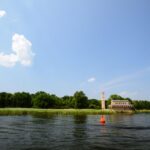
After the wall-related stop, you get small breaks with inner-city lakes: Orankesee and Obersee (each listed around 5 minutes). These quick pauses matter because they reset your body and attention. They also make the route feel like a real bike tour, not just a sequence of history headlines.
You then head to Weissensee district (listed at about 45 minutes), followed by a longer look at Strandbad Weissensee at roughly 10 minutes. This is where the tour earns its “lesser-known” reputation. You get greenery, water, and a residential feel that you may not expect if your Berlin mental map is dominated by central attractions.
This section is also practical. Cycling through flatter, quieter areas can keep the energy steady, especially if you’re not an everyday cyclist. It’s a smart structure: history, memory, then a breath.
You can also read our reviews of more historical tours in Berlin


Between famous stories: slaughterhouses, breweries, and Olympic training
One of the tour’s quieter strengths is that it doesn’t limit itself to the most obvious Cold War symbols. The route includes the sites of erstwhile slaughterhouses and breweries. These aren’t listed with exact stop names in the schedule, but they fit the overall theme: the “system” shows up in industry and everyday production, not only in police buildings.
The same idea applies to the athletic facility on the itinerary, where many famous Olympic athletes have trained. That’s a useful counterweight. East Berlin history isn’t only about surveillance and borders. There was also a state-shaped world of training, ambition, and public facilities.
This mix makes the ride more believable. Berlin’s East wasn’t one mood. It was an entire way of organizing society, including food production, work routines, and sports.
The guide effect: Katrin, Markus, and the small-group advantage
This tour is only scheduled for up to 8 people, which completely changes how the story lands. With a larger group, guides often sprint. With a small group, they can slow down, explain choices, and keep the conversation two-way.
You’ll also notice the guide style matters. The names that come up most are Katrin and Markus, and that points to a broader pattern: strong guides here tend to be fun and accommodating, and they use both history and present-day observations so you can connect the dots.
A practical benefit: when the group is small, the guide can adjust pacing for the riders. That’s valuable in Berlin, where bike lanes and traffic patterns can be uneven from street to street. You’re less likely to feel rushed or separated.
Timing that works: about 3.5 to 4 hours, with motion built in
The tour runs about 4 hours (listed around 3.5 hours). It starts at 10:00 am and ends back at the meeting point on Bornholmer Str. 75A. The “motion first” timing is part of the design: even stops that are short are placed so you don’t lose the thread.
The most important scheduling note is the structure of time at each location. Some stops are quick by design, like the Stasimuseum memorial at 5 minutes and lakes at 5 minutes each. That’s not a flaw if your goal is breadth—getting a clear snapshot of a side of Berlin most visitors skip.
If your goal is deep, slow study at one site, you can treat the tour as the orientation layer. Then you can return to one place on your own with more time.
Price and value: what $36.88 buys you in Berlin
At $36.88 per person, this is priced like a budget-friendly way to see a lot. You’re paying for a local guide, bicycle use, and a ride through neighborhoods that aren’t always convenient by yourself.
The value hinges on two included pieces:
- Use of bicycle
- Driver/guide and local guidance
Admission tickets are listed as free across the stops, so you’re not also paying museum fees. The one clear extra cost category is simple: food and drinks are not included. Bring a plan for water and a snack if you like, especially if you tend to cycle with energy needs.
Practical logistics that make the day smoother
You’ll meet at Bornholmer Str. 75A, 10439 Berlin. The tour ends back at the same meeting point, so you’re not spending extra time figuring out where to go next.
A mobile ticket is provided, and you get confirmation at booking. The dress code is smart casual, which usually means wear something comfortable for cycling rather than stiff or slippery footwear.
Also: children must be accompanied by an adult. And the group size cap stays small (max 8), which helps keep the experience personal.
Who should book this Berlin bike tour
This is a great fit if:
- You want Cold War-era East Berlin context beyond the usual highlights
- You like learning through movement—streets, neighborhoods, and infrastructure
- You prefer small groups and a guide who can answer questions
- You’re okay with short stops in exchange for seeing more territory
It may be less ideal if:
- You want long time inside each memorial space
- You’re uncomfortable cycling for a half-day
- You’re traveling with very limited patience for bike-route pacing
Should you book this half-day lesser-known Berlin bike tour?
Yes, if your goal is to understand East Berlin as a lived place. This tour is built for people who like history that shows up in housing, industry, borders, and public life—not just in famous monuments.
Book it especially if you’ve got limited time in Berlin and still want something more authentic than the standard sightseeing loop. If you’re curious about the Stasi beyond stereotypes, the Stasimuseum memorial stop plus the neighborhood context is the reason to choose this one.
On the other hand, if your top priority is staying a long time in one major site, plan to follow the tour with extra self-guided time where you feel you need it.
FAQ
What is the duration of the Half-Day Bike Tour of Berlin’s Lesser Known And Historical Sites?
It runs about 4 hours (approximately 3.5 hours).
How much does the tour cost?
The price is $36.88 per person.
How many people are on the tour?
There is a maximum of 8 travelers per booking.
Where is the meeting point, and where does the tour end?
The start is Bornholmer Str. 75A, 10439 Berlin, Germany, and the tour ends back at the meeting point.
What time does the tour start?
The start time is 10:00 am.
What is included in the price?
Included are the driver/guide, a local guide, and use of a bicycle.
Are food and drinks included?
No, food and drinks are not included.
Is admission included for the stops?
Admission is listed as free for the stops included on the route.
What is the dress code?
The dress code is smart casual.
Can children join the tour?
Children must be accompanied by an adult.
Is there a free cancellation option?
Yes. You can cancel for a full refund for free up to 24 hours in advance of the experience start time.