REVIEW · BERLIN
East Berlin: City of Shadows Walking Tour
Book on Viator →Operated by Insight Cities · Bookable on Viator
East Berlin still feels like a chapter stuck in place, and this 3-hour City of Shadows walk turns landmarks into stories you can actually picture. I like that you start with major Cold War symbols and end at the places where the system’s pressure broke, so you get real political context fast.
Two things I especially like: the guide’s focus on how everyday life worked under the DDR, and the way you move through several key sites without wasting time. One possible drawback: the stops are brief, so if you want deep museum time (especially at the Stasi museum), you’ll likely need a second visit on your own.
In This Review
- Key things to know before you go
- Why East Berlin Still Feels Like a Chapter Stuck in Place
- Price and Value for a 3-Hour DDR Orientation
- Meeting Point at Unter den Linden 42 and How Pickup Works
- Getting Around: Public Transport Tips and a Simple Transit Plan
- Stop 1: Brandenburg Gate and the Cold War Frame
- Stop 2: Friedrichstrasse Station and the Palace of Tears
- Stop 3: Park am Nordbahnhof and the Ghost Stations
- Stop 4: Karl-Marx-Allee and the Socialist Paradise That Failed
- Stop 5: Memorial of the Berlin Wall and the Death Strip Stories
- Stop 6: Stasimuseum and Eric Mielke’s Spy Network
- Stop 7: Alexanderplatz and the 1989 Turning Point
- What This Tour Does Well (And Where It’s Limited)
- Who Should Book This East Berlin Walking Tour
- Should You Book It?
- FAQ
- FAQ
- How long is the East Berlin City of Shadows walking tour?
- Is the tour offered in English?
- How many people are in the group?
- Does the tour include food or drinks?
- Do I need public transport tickets during the tour?
- Is pickup available from my hotel?
- What kind of stops does the tour include at DDR sites?
Key things to know before you go
- A small group (up to 8) keeps the pace tight and questions possible
- Local historian guidance helps you connect buildings to events, not just dates
- Seven major DDR stops give you a clean East Berlin orientation in one outing
- Public transport is part of the route, so build time for short rides and ticketing
- Most stops are short (10–20 minutes), which is great for orientation but not for long museum immersion
Why East Berlin Still Feels Like a Chapter Stuck in Place
East Berlin is one of Europe’s best places to understand how power shapes space. You see it in grand boulevards meant to project stability, and you also see it in the infrastructure meant to control movement—train stations, guarded gaps, and surveillance headquarters.
This tour is built for that exact mental shift. Instead of treating DDR history as a lecture, you connect it to what you can see: borders, travel chokepoints, and the institutions that watched neighbors.
You’ll walk away with a clearer map of the city’s political logic. That matters, because Berlin is big and easy to misunderstand when you only skim the surface.
You can also read our reviews of more walking tours in Berlin



Price and Value for a 3-Hour DDR Orientation
At $156.53 per person for about 3 hours, this is not a budget walking tour. But for Berlin, you’re paying for more than movement—you’re paying for a local historian to explain why these places look the way they do and what they meant to people living inside the system.
The value also comes from compression. In one outing, you cover multiple districts tied to major DDR themes: Soviet ambition, border control, propaganda housing projects, escape attempts, and state surveillance. That’s useful when you have limited time and want to spend your free time afterward exploring the places that genuinely grab you.
Also, group size is capped at 8. Fewer people makes the explanations feel closer and more personal than big-bus tours.
Meeting Point at Unter den Linden 42 and How Pickup Works
You meet at Unter den Linden 42 (10117). If pickup is offered for your departure, they pick up from any hotel or accommodation in Berlin. That’s a nice advantage when you’re tired, when the weather is questionable, or when you just don’t want to hunt for a meeting spot.
One thing to plan around: the tour still uses public transport a few times. Even with pickup, you should be ready to hop on a tram or train briefly during the route. Bring a mobile-friendly ticket setup and keep your transit app handy if you use one.
Getting Around: Public Transport Tips and a Simple Transit Plan
The route includes distances too far to do comfortably on foot. So you’ll use public transport several times during the tour, and you don’t need to guess what to do—your guide will help you along the way.
If you don’t already have a visitor pass, it’s smart to get a day metro pass in advance if you can. The listed options are:
- One-way ticket AB: 2.8 EUR (senior 1.70 EUR)
- Day ticket for one person: 7 EUR (senior 4.70 EUR)
If you can’t purchase ahead of time, your guide can help you buy at the first metro station on the tour. That’s genuinely helpful because it reduces the chance you show up with the wrong ticket type.
Practical note: bring water. Food and drinks aren’t included, and with multiple short stops plus transit rides, you may want a snack buffer.
Stop 1: Brandenburg Gate and the Cold War Frame
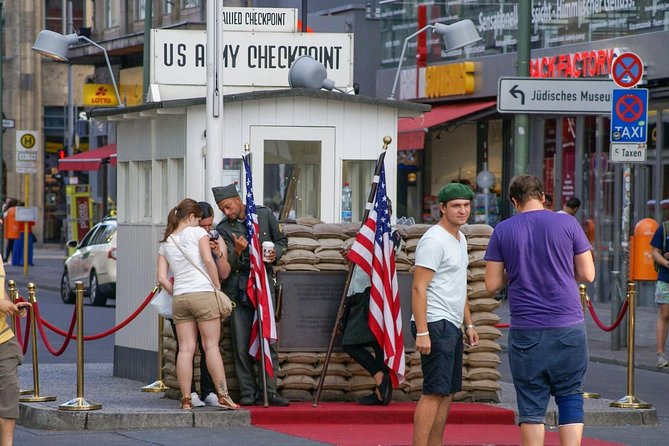
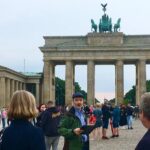
You begin at the Brandenburg Gate, which is a perfect first stop because it forces the story to start with power and symbolism. A historian explains the dialogue between modern Berlin’s built environment and its darker, often hidden history—especially how Communist rule shaped daily life and how East Germans’ discontent was met with brutal suppression.
This stop also anchors you with a key historical moment: in June 1987, President Ronald Reagan publicly urged Soviet Premier Mikhail Gorbachev to tear down the wall. Even if you’ve heard the line before, hearing it right at this landmark helps the meaning click.
Nearby is the former Soviet Embassy, described as a grand monument built in 1945 amid WWII rubble—Stalin’s ambition to control all of Berlin made stone. Then the guide connects it back to the Allies dividing post-war Germany into four parts, which set the Cold War tensions in motion.
How to get the most out of this stop:
- Pay attention to the way the guide links architecture to control.
- Look around and notice what feels ceremonial versus what feels functional.
You can also read our reviews of more city tours in Berlin



Stop 2: Friedrichstrasse Station and the Palace of Tears
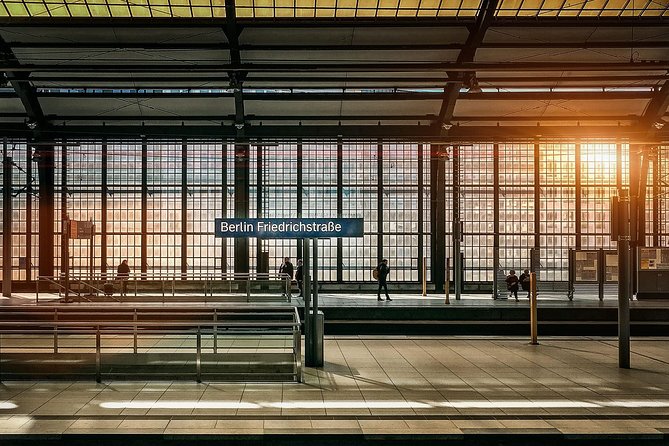
Next is Friedrichstrasse, a train station that acted as a key crossing point between East and West Berlin. In a divided city, stations weren’t just transit—they were separation machines.
Here, you learn about family breakups caused by East Germany’s immigration rules and how departures happened through an office known as the Palace of Tears. The name is hard to forget because the story is about what people endured at the moment they were forced to say goodbye.
This is one of the stops where the “history” part stops being abstract. The guide’s framing makes it clear why people remember specific rooms and hallways: that’s where lives were rerouted.
Drawback to consider: the stop lasts about 15 minutes, so you won’t linger like you might in a full museum. If this theme hits you hard, you can always return independently later for more.
Stop 3: Park am Nordbahnhof and the Ghost Stations
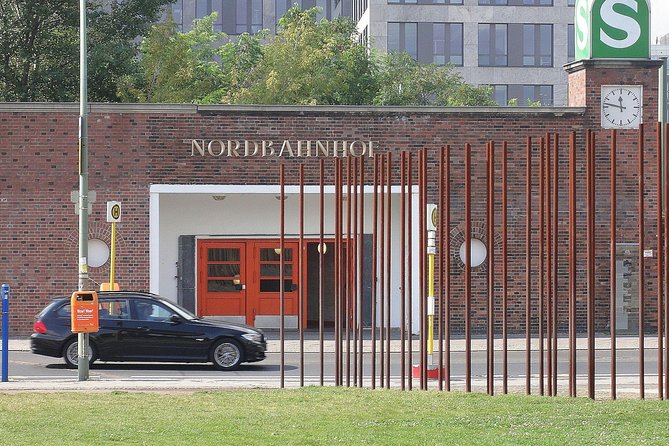
At Park am Nordbahnhof, you’ll hear about “ghost” stations. These were unused but heavily guarded stops on West Berlin subway lines that landed in East German territory.
This idea is chilling because it turns normal city infrastructure into a controlled border zone. A station that looks like it should serve commuters instead becomes proof of how movement itself was restricted.
What I like about this stop is how it changes your eye. You start noticing how the city’s layout reflects political boundaries—even when the borders are gone.
The stop is short (about 10 minutes), but it’s designed to give you the concept quickly: the DDR treated transit lines like something to manage, not something to share.
Stop 4: Karl-Marx-Allee and the Socialist Paradise That Failed
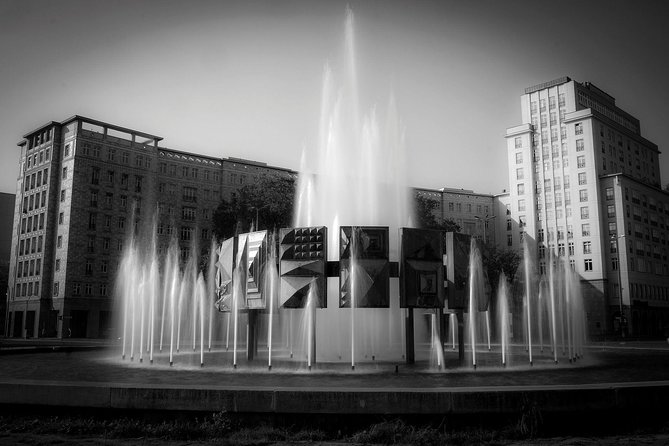
Then you head to Karl-Marx-Allee, a grand mile-long housing complex. The guide walks you through East Germans’ dreams for a Socialist paradise and how those dreams turned into something darker: deprivation, suppression, and paranoia.
This stop is important because it balances the story. You don’t only focus on violence at borders or escape attempts. You also see how systems shape housing, daily stability, and public life—then fail to deliver what people were promised.
If you enjoy urban planning and how ideology gets written into buildings, you’ll get a lot here. The “why this looks so monumental” question basically answers itself once the guide explains the intent and outcome.
The time here is around 10 minutes, so you’ll get the core story and move on. If you want to read more detail from signage or do independent photo time, plan a separate pass later.
Stop 5: Memorial of the Berlin Wall and the Death Strip Stories
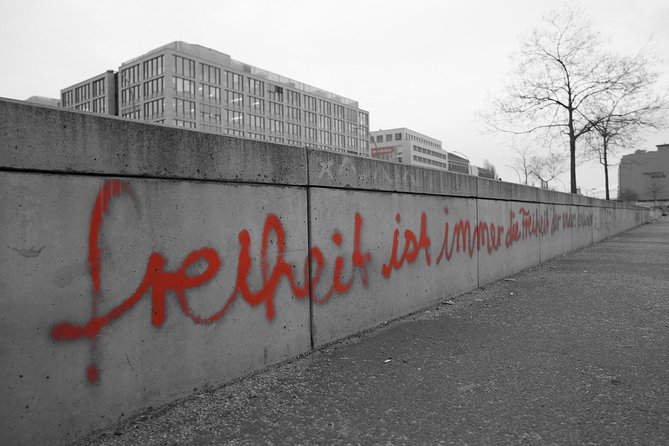
The tour reaches the Memorial of the Berlin Wall, where you’re guided through what’s known as the Death Strip and told stories about people whose escape attempts ended tragically.
This stop is handled with care. The point isn’t spectacle—it’s understanding what the wall system was designed to do: discourage, punish, and make escape feel impossible.
At about 15 minutes, the guide gives you key context without turning the site into a long memorial visit. That makes the tour efficient, but you should still take your time mentally. Even a short stop can land hard when it’s framed correctly.
If you’re the type who likes to sit with a place, consider arriving earlier or staying later after the tour to absorb more quietly on your own.
Stop 6: Stasimuseum and Eric Mielke’s Spy Network
Next comes the former Stasi headquarters, the place connected to East Germany’s secret police. Here, the guide explains how the Stasi coerced neighbors and family members to spy on each other.
One name that matters in this story is Eric Mielke, described as the feared leader who recruited a massive network of spies and developed innovative surveillance techniques. The effect wasn’t only state control from above—it was social control from within, turning trust into a liability.
This is another stop where I think the short time makes sense. You get the core mechanism: surveillance that spread through ordinary relationships. But you won’t get endless detail in one walking segment.
That’s also why you should plan for independent follow-up if you want the deep museum experience. The stop is about 10 minutes, and that’s great for orientation, not for long-form reading and exhibition time.
Stop 7: Alexanderplatz and the 1989 Turning Point
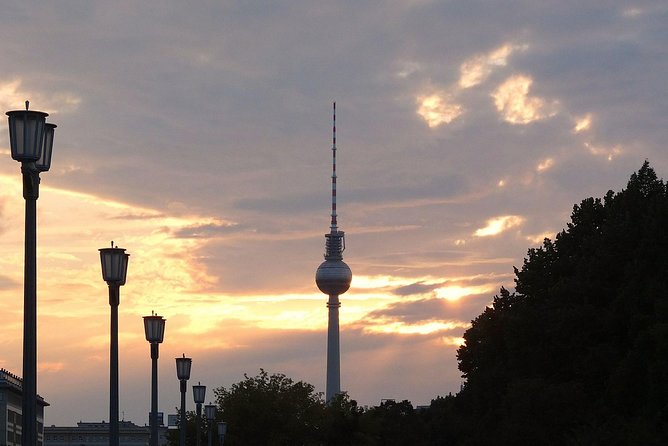
You finish at Alexanderplatz, the center of public life in East Berlin. The guide explains how the area was rebuilt in the 1960s, with monuments like the futuristic parliament building and the iconic TV Tower.
Then you get the turning point: in 1989, Alexanderplatz became the stage for massive demonstrations that helped bring down the regime and ended 40 years of Communist rule.
I like how the tour ends here because it gives the story a direction. Earlier stops are heavy and restrictive—control, fear, separation. Ending in a place built for public life adds contrast and makes the fall feel like something people actively helped bring about, not just something that happened from one command.
The visit is about 10 minutes, which means you leave with a strong sense of where to go next if you want more photos, more coffee, and more independent exploring.
What This Tour Does Well (And Where It’s Limited)
This experience does a lot right for what it is: a focused city orientation that connects DDR-era political history to specific spots on the map.
You get:
- A clear story arc from Soviet influence to border control to surveillance to the public demonstrations that helped end the system.
- A guide who frames the city so it makes sense in layers, not as random monuments.
- A route that balances big symbols with “systems you lived with” like stations and guarded infrastructure.
The limitation is simple: time at each stop is short. It’s fantastic if you want the overview. It’s less ideal if you want to linger for hours at exhibitions and read every caption.
If you’re the type who loves museums, you’ll probably treat this as the pre-game. Then you’ll choose one or two places (often the Stasi-related sites) to revisit on your own for full museum time.
Who Should Book This East Berlin Walking Tour
This is a strong fit if:
- You want an efficient overview of East Berlin’s DDR-era themes.
- You like history tied to walking routes and architecture.
- You’re short on time but still want context before you wander independently.
It may be less ideal if:
- You expect a long, sit-down museum visit at each stop.
- You want lots of free time to explore without a set pace.
Because the group is small and the structure is tight, the tone is likely to feel focused rather than leisurely.
Should You Book It?
If you’re doing Berlin on a tight schedule, I think this is worth it. The price is not low, but the value comes from compressing key East Berlin sites into a coherent story with expert narration. You’ll leave with enough context to make your future independent exploring smarter.
I’d book it if your goal is orientation and understanding. I wouldn’t book it as your only Stasi-related stop if you know you want deep museum reading and long exhibition time—this tour is built for an overview, not a full museum day.
FAQ
FAQ
How long is the East Berlin City of Shadows walking tour?
It lasts about 3 hours.
Is the tour offered in English?
Yes, it is offered in English.
How many people are in the group?
The tour has a maximum of 8 travelers.
Does the tour include food or drinks?
No, food and drinks are not included.
Do I need public transport tickets during the tour?
Yes. You’ll use public transport a few times because some distances are too far to walk. A day metro pass is suggested, and your guide can help you purchase at the first metro station if needed.
Is pickup available from my hotel?
Pickup is offered, and they pick up from any hotel or accommodation in Berlin.
What kind of stops does the tour include at DDR sites?
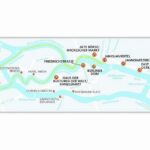
You’ll visit major sites tied to the Communist-era story, including Brandenburg Gate, Friedrichstrasse (Palace of Tears), Park am Nordbahnhof (ghost stations), Karl-Marx-Allee, the Berlin Wall memorial, the Stasi headquarters area, and Alexanderplatz.