REVIEW · BERLIN
Private Walking Tour: Behind the Iron Curtain and Berlin Wall
Book on Viator →Operated by Original Berlin Walks · Bookable on Viator
Berlin’s wall stories walk beside you. This private walking tour turns Cold War headlines into real street corners as you trace the death strip and Berlin Wall sites all the way to Alexanderplatz. It’s interesting because you’re not just seeing photos—you’re walking the same ground where political life, escape attempts, and protests played out.
I like the fact that you get an expert historian guiding the story hour by hour, with a route that sticks to the places that mattered. I also like the stop choices, including the Berlin Wall Memorial on Bernauer Strasse, Gethsemane Church, Bornholmer Strasse, and even the East Side Gallery area. One thing to consider: it’s a moderate walking experience for about four hours, and food/drinks aren’t included, so plan on grabbing a snack before or after.
If you want Berlin in context—WWII aftermath through the Cold War and Germany’s division—this tour gives you a clean spine for the days you spend sightseeing on your own.
In This Review
- Key things to know before you go
- Cold War Berlin on foot: why this tour feels different
- Bernauer Strasse and the Berlin Wall Memorial: where the story gets real
- Gethsemane Church in Prenzlauer Berg: protests you can stand beside
- Bornholmer Strasse: the border crossing you should picture
- East Side Gallery area and wall remnants: when history turns into a streetscape
- The ending at Alexanderplatz: practical and satisfying
- Price and value: is $166.52 per person worth it?
- Guides matter: what the best reviews highlight
- What to do before and after the tour
- Who should book this private Cold War walking tour
- Should you book this Private Walking Tour of the Iron Curtain and Berlin Wall?
- FAQ
- How long is the tour?
- Is this a private tour or a group tour?
- What sites will we visit during the tour?
- Where does the tour end?
- Is hotel pickup included?
- Do I need public transport during the tour?
- Is a mobile ticket used?
- When will I get confirmation after booking?
- What’s the cancellation policy?
Key things to know before you go
- Private group, real back-and-forth: only your group joins, so you can ask questions as you walk
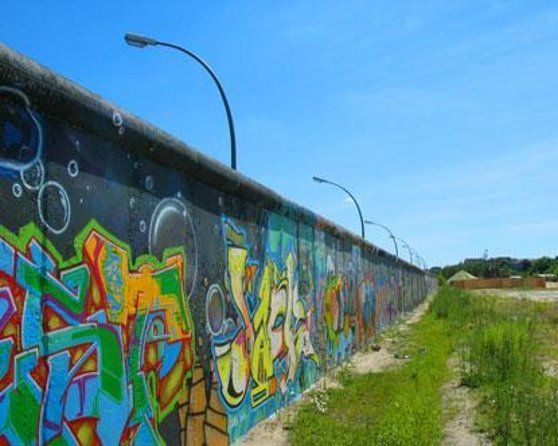
- Bernauer Strasse is the anchor: escape attempts, the Berlin Wall Memorial, and the “death strip” story line
- Protest history at Gethsemane Church: civil rights activists gathered there in the late 1980s
- Bornholmer Strasse focuses on crossings: one of the border crossings between East and West Berlin
- Easy landing at Alexanderplatz: the tour ends at a big central transport hub
Cold War Berlin on foot: why this tour feels different
Berlin can feel like a museum sometimes. This tour avoids that. You’re moving through the city as it is now, but the guide keeps pulling your attention back to what it was like when the Cold War was running the show.
The core idea is simple: after WWII, Berlin went from Nazi Germany’s capital to the place where the superpowers collided. You spend your time on the Berlin Wall and the surrounding border geography, so the story stays grounded in locations—not vague time periods. And because it’s private, you’re not stuck watching a crowd shuffle to the next stop.
You can also read our reviews of more walking tours in Berlin


Bernauer Strasse and the Berlin Wall Memorial: where the story gets real
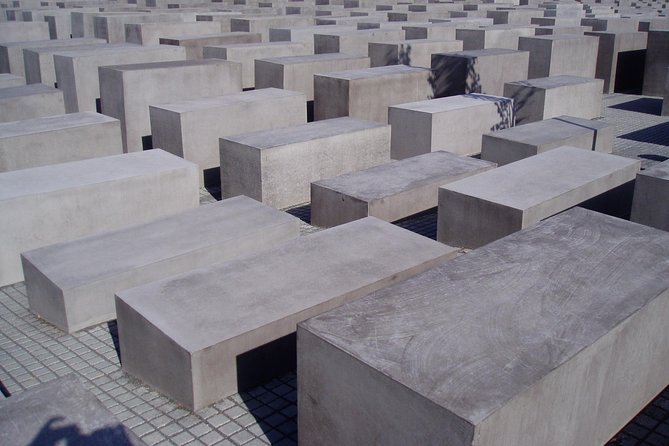
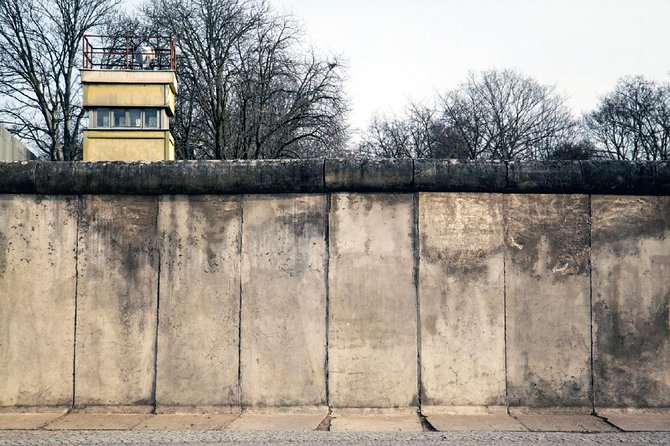
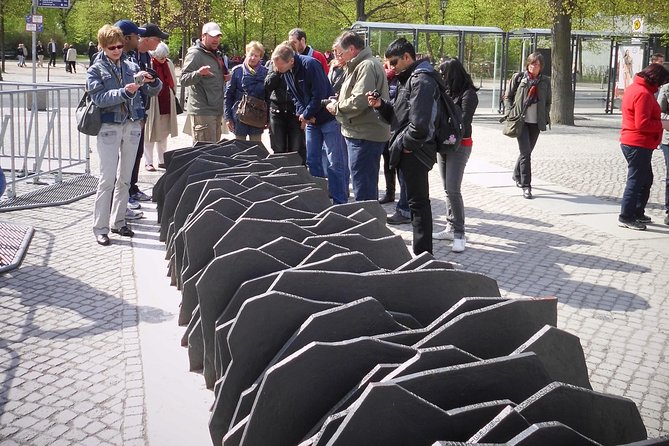
Bernauer Strasse is one of the most powerful places to understand the wall. Here, the tour zeroes in on the edge where so many escape attempts happened, and that makes the history feel direct. The wall is no longer “mystical.” It’s walls, streets, and vantage points you can stand in front of.
You also visit the Berlin Wall Memorial on Bernauer Strasse. That matters because it gives you a structured way to interpret what you’re seeing. Instead of collecting facts, you learn how the border worked in daily life—why people tried to get out, and why the whole area carried such intense pressure.
The practical win: you’ll leave this stop with a much clearer mental map. Later, when you hear about other wall locations, they’ll connect instead of feeling random.
Gethsemane Church in Prenzlauer Berg: protests you can stand beside
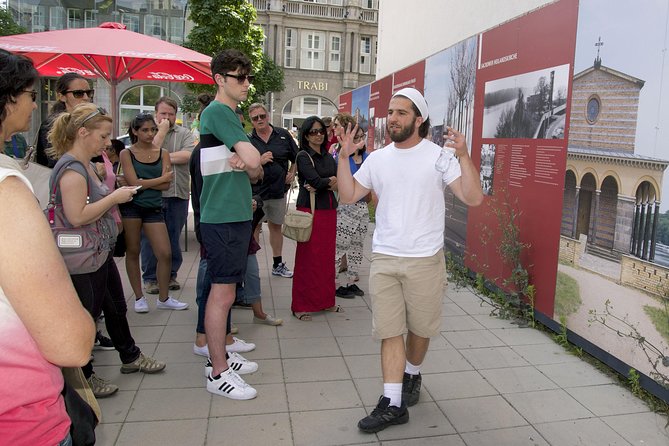
Next comes Gethsemane Church, described as the best-known church in Prenzlauer Berg. For me, what makes this stop worth your time is the link to late-1980s civil rights organizing. The tour doesn’t treat the Cold War only as tanks and treaties. It shows how people used public gathering and moral pressure to push for change.
The late 1980s are a turning point across the whole story. When you stand at the place where civil rights activists gathered, it’s easier to understand how the wall wasn’t just a physical barrier—it was a political system that faced sustained opposition.
Possible drawback to plan for: churches and memorial sites can mean quieter pacing and more standing. Wear shoes you can walk in for the full half-day, not just for photos.
Bornholmer Strasse: the border crossing you should picture
Bornholmer Strasse is one of the border crossings between East and West Berlin, and that focus is smart. Crossing points are where theory meets reality. You can see why border life felt so controlled, and why even small moments could become huge.
This stop also helps you understand the GDR experience the tour highlights: a heavily policed state, with daily life shaped by the fact that leaving wasn’t simply a commute or a train ride. The guide’s job is to help you connect the dots between the Cold War story you hear in broad terms and what it meant on the ground for ordinary people.
If you like history that has “cause and effect,” this is where it clicks: borders don’t only divide maps. They divide options.
East Side Gallery area and wall remnants: when history turns into a streetscape
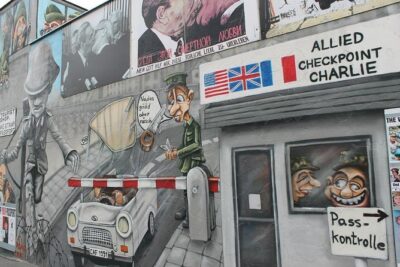
The tour also includes the wall remnants at the Berlin Wall Memorial area and the East Side Gallery. This part matters because it shows how the wall’s story did not end when it stopped functioning.
Even if you’ve seen images online, the experience changes when you’re there in person and the guide frames what you’re looking at. You stop thinking of the wall as a single moment in time, and you start seeing it as something that Berlin had to process—politically, emotionally, and physically.
Why I think you’ll enjoy it: it adds contrast. You go from the seriousness of escape attempts and protests to a Berlin street scene where the wall’s legacy is visible in a new form.
You can also read our reviews of more private tours in Berlin


The ending at Alexanderplatz: practical and satisfying
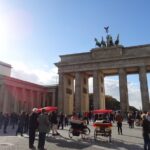
Alexanderplatz is a natural finish for a wall-focused walk. It’s a large public square and a transport hub in Berlin-Mitte, so you’re not left stranded after four hours. By the time you reach the end point, you’ve built a storyline that helps you navigate the city’s other Cold War-related sights with less guesswork.
It’s also a good mental reset. You go from border corridors and remembrance spaces back to everyday Berlin life. That shift helps the whole day feel balanced instead of heavy from start to finish.
Price and value: is $166.52 per person worth it?
At $166.52 per person, this isn’t a budget add-on. But it also isn’t “pay for a bus ride.” You’re paying for a private walking format with a professional historian guide and a route designed around Cold War locations, not generic sightseeing.
Here’s why the value can make sense:
- Private = more interaction. You can ask how something worked, not just accept a lecture.
- The route is the product. Stops like Bernauer Strasse, Gethsemane Church, Bornholmer Strasse, and the Berlin Wall Memorial aren’t interchangeable; they’re part of a connected narrative.
- You avoid time-wasting planning. With a tour like this, the city’s big landmarks are easier to place once you’ve heard the right context.
If your idea of value is big-ticket attractions and long lists of museums, you might feel the cost more. If your idea of value is a clear, story-driven path through Berlin’s most meaningful Cold War sites, this price often lands in the right zone.
Guides matter: what the best reviews highlight
The guides seem to drive the success of this tour. I’m using the examples of real names you’ll run into with this provider: Rachel Wells, Alex, and Philippa.
- Rachel Wells is praised for delivering historical facts and visiting actual historical sites.
- Alex stands out for a deep understanding of the DDR era and reunification, plus an informative route through wall areas.
- Philippa is noted for being flexible with private-tour needs and making the four hours feel enjoyable while still teaching a lot.
If you get a guide with that mix—site focus plus explanation—you’ll get more than a checklist. You’ll walk away with a stronger sense of how the Cold War shaped Berlin.
What to do before and after the tour
This is a focused half-day, so you’ll benefit from doing two simple things.
Before: pick comfortable shoes and plan your timing around food. Food and drinks aren’t included, and the tour runs about four hours. If you go hungry, your mind will wander.
After: use what you learned to connect Berlin streets you see later. You’ll likely find it easier to interpret other Cold War-related sights because you’ll already understand how the border story fits together.
Who should book this private Cold War walking tour
I’d point you to this tour if you:
- want a private guide instead of a group shuffle
- care about Berlin Wall and Cold War context, not just photos
- like history that connects big events to real places—escape attempts, protests, and border crossings
You might want a different option if:
- you dislike walking for about four hours
- you’re not interested in political history and prefer purely scenic sightseeing
- you don’t want to handle the required public transport day pass for the day of the tour
Should you book this Private Walking Tour of the Iron Curtain and Berlin Wall?
Yes, if you want Berlin’s Cold War story told through the places where it actually happened. This tour earns its reputation because it focuses on the right sites—Bernauer Strasse and the Berlin Wall Memorial, Gethsemane Church, Bornholmer Strasse, and the East Side Gallery area—while keeping the narrative tied to how Berlin lived under pressure and how people pushed for change.
If you’re the type who likes a clear storyline and a thoughtful route, this is a strong fit. If you’re mainly shopping for iconic landmarks without the political context, you might find it heavy. But for most history-minded travelers, it’s a very practical way to get real understanding without wasting time guessing your way around Berlin.
FAQ
How long is the tour?
It’s about 4 hours.
Is this a private tour or a group tour?
It’s a private tour/activity, meaning only your group will participate.
What sites will we visit during the tour?
You’ll see Cold War locations including the Berlin Wall Memorial on Bernauer Strasse, Gethsemane Church, Bornholmer Strasse, and the tour also references the East Side Gallery area. The tour also includes time around the trail of the “death strip” and Berlin Wall.
Where does the tour end?
The tour ends at Alexanderplatz in the Mitte district of Berlin.
Is hotel pickup included?
Pickup is offered if your hotel is centrally located.
Do I need public transport during the tour?
Yes. A public transport day pass covering zones AB is required during the tour.
Is a mobile ticket used?
Yes, a mobile ticket is included.
When will I get confirmation after booking?
You’ll receive confirmation at the time of booking, unless you book within 7 days of travel. In that case, confirmation is received within 48 hours, subject to availability.
What’s the cancellation policy?
You can cancel for free up to 24 hours in advance of the experience start time for a full refund. If you cancel less than 24 hours before the start time, the amount paid won’t be refunded.