REVIEW · BERLIN
Never Again Sachsenhausen Concentration Camp
Book on Viator →Operated by Rude Bastards Tour Berlin · Bookable on Viator
Sachsenhausen hits hard, but this tour helps. What makes this experience especially useful is how it explains how control was built at the camp, then ties that history to the present—without turning the whole thing into a scripted lecture.
I really like the tone. With guide Siobhán, the focus stays respectful and human, including a feminist lens that connects Nazi-era racism and cruelty to today’s far-right threats. The one thing to consider is that the political framing is part of the point, so if you want a strictly neutral, apolitical approach, this may feel like it has a clear stance.
In This Review
- Key things I’d pencil into your plans
- Why Sachsenhausen still matters in Berlin
- Potsdamer Platz meeting and the 4-hour rhythm
- Entering the Memorial: Visitors’ center models you’ll actually remember
- Autonomous time in barracks and the camp kitchen
- The infirmary: racism, eugenics, and cruelty as career advancement
- The guide matters: Siobhán’s sensitive, feminist framing
- Price and what $31.29 really buys you
- Who should book this tour (and who might think twice)
- Should you book Never Again Sachsenhausen?
- FAQ
- FAQ
- Where does the tour start?
- How long is the experience?
- Is the tour available in English, and do I get a mobile ticket?
- What’s included in the price, and what isn’t?
- How big is the group?
- Is there any mobility or fitness requirement?
- Can I cancel for free?
Key things I’d pencil into your plans
- Small group size (max 15) helps the guide keep a careful, respectful pace
- Visitors’ center models make the camp’s layout and purpose easier to understand
- Autonomous time gives you space to look closely at barracks and the camp kitchen
- Present-day connections come up through current far-right realities like the AfD
- Infirmary themes cover racism, eugenics, and abuse of women’s bodies head-on
- English with a mobile ticket keeps logistics simple once you arrive in Berlin
Why Sachsenhausen still matters in Berlin
Sachsenhausen is one of those places that doesn’t just sit in the past. Even if you know the general outline of Nazi camps, the experience here nudges you toward something more practical: understanding how systems of domination were designed, maintained, and later repurposed.
The tour frames Sachsenhausen as a space that changed hands and meaning over time. It started as a Nazi “model” concentration camp, then became a Soviet “special” camp, and later shifted again into a pro-communist propaganda tool. That step-by-step transformation matters because it shows you how ideology can re-skin the same physical machinery of control.
And the connection to today is not vague. You’ll hear about ongoing extremist behavior and how Holocaust denial and far-right politics keep trying to reshape public memory. The goal isn’t to scare you. It’s to help you see patterns—and recognize why rejecting these ideas matters beyond one event in history.
You can also read our reviews of more tours and experiences in Berlin.


Potsdamer Platz meeting and the 4-hour rhythm
You’ll meet at Potsdamer Platz 10, 10785 Berlin. The activity runs for about 4 hours, and you end back at the meeting point. For most people, that timing is the sweet spot: long enough to understand the site, but not so long that the experience turns into exhaustion.
This is also a tour where getting your bearings counts. You’ll walk from the nearby train area toward the visitors’ center, then move through the memorial’s spaces in an order that makes the history feel logical rather than random. Since the tour asks for moderate physical fitness, wear shoes you’re comfortable walking in. There’s time outdoors and you’ll be on your feet through multiple areas of the grounds.
The group size stays small (up to 15). That’s a big deal at a site like this. A large crowd makes respectful silence harder. Here, the smaller format helps keep the mood steady and lets you hear the guide’s comments clearly in English.
Entering the Memorial: Visitors’ center models you’ll actually remember
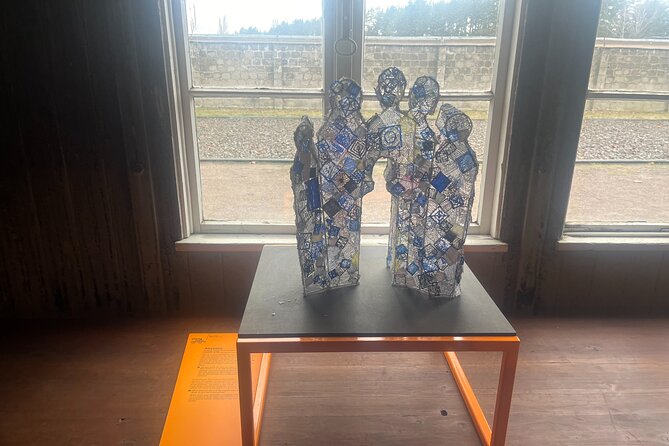
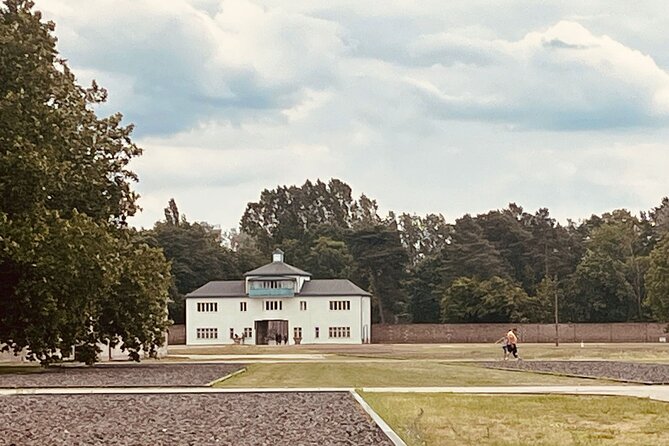
The first major moment is the Memorial and Museum Sachsenhausen visitor area. Before you wander among the ruins and remnants, you get something that makes everything else easier: detailed models showing the camp’s physical structures.
What I like about this approach is that it answers a question you might not even know you have yet. When you look at what’s left behind, you’ll naturally wonder what each part was supposed to do. The models give you that missing translation—how barriers, buildings, and sightlines supported control, intimidation, and the goal of enforcing superiority over prisoners.
Then you’ll also learn about the site’s later reuse. Sachsenhausen didn’t stay frozen in time. The tour points out the unsettling transformation of the former SS training camp into today’s Brandenburg police academy. That detail can feel jarring, and that’s the point. It forces you to confront how institutions can inherit spaces tied to atrocity—and how public memory can get overwritten if you don’t keep looking.
Autonomous time in barracks and the camp kitchen
After the visitor area, you’ll get autonomous exploration time. This is one of the tour’s most effective design choices: you’re not just marched from point to point. You get space to slow down, look at what’s in front of you, and connect it to what you just learned.
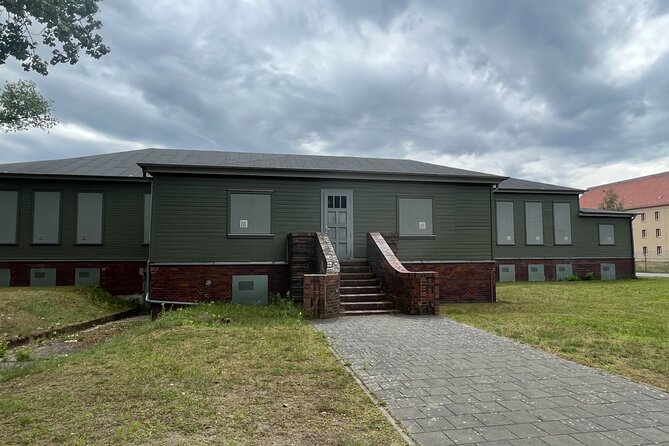
The focus is on the prisoners’ barracks and the camp kitchen. Seeing the everyday infrastructure of a camp can hit differently than just reading about the ideology. You start noticing how the camp’s organization shaped life—how people were processed, managed, and reduced to functions.
During this part, the tour also brings up something uncomfortable: attacks linked to neo-Nazi Holocaust denial have targeted the site. It’s a reminder that memorial spaces aren’t neutral objects sitting safely behind history glass. They can be actively contested.
And from there, you’ll hear about connections to the present, including the rise of the AfD, a German far-right group. That matters because it shifts the visit from memory to responsibility. Instead of treating the past as a locked drawer, the tour asks you to notice how denial and extremist politics work in real time.
The infirmary: racism, eugenics, and cruelty as career advancement
The tour’s final big thematic anchor is the infirmary. This section is heavy. It covers how racist ideology seeped into medical thinking, including control over women’s bodies and the logic of eugenics.
You’ll also learn about an especially chilling dynamic: prisoners treated as lab rats, tied to Nazi doctors’ career advancement. The way this is presented isn’t meant to be sensational. It’s meant to show you the mechanism—how ideology got converted into practice, and how professional ambition could be used to justify suffering at scale.
If you’re the kind of visitor who needs time to process, plan to slow down here. Even with a guide, this isn’t the sort of content you skim. It helps to think of the infirmary as the tour’s emotional thesis. Earlier segments explain structures of control. This one explains how control became biological and bodily—how cruelty turned into policy dressed as science.
The overall takeaway is the tour’s main purpose: confront the past, understand the present connections, and push toward a future that rejects these atrocities. You’ll leave with more than facts. You’ll leave with a clearer sense of how violent systems reproduce themselves.



The guide matters: Siobhán’s sensitive, feminist framing
This experience feels different largely because of the guidance style. Guide Siobhán is described as attentive, and the approach balances honesty with care.
The tone is respectful. The tour handles the brutality and the scale of suffering with deference to what visitors are feeling. That’s important. A site like Sachsenhausen is already emotionally loaded, and you don’t need a guide to add noise.
At the same time, the guide doesn’t try to keep everything uniformly grim. There can be a touch of levity in moments where the group needs to breathe. That doesn’t make the content lighter—it helps you stay present enough to actually absorb it. For many people, leaving feeling educated rather than broken is the whole point.
There’s also an explicit feminist lens. The connection to racism and control over women’s bodies isn’t treated as an add-on. It’s part of the framing, connecting the ideology behind Nazi atrocities to broader patterns of inequality and modern far-right rhetoric.
One practical note: if you prefer a strictly neutral, academic-only approach, this feminist/political framing may not match what you’re expecting. But if you want your tour to help you read the present through the lens of history, you’ll likely appreciate it.
Price and what $31.29 really buys you
At $31.29 per person for about 4 hours, the value here is solid—especially because key costs are covered. The experience includes an admission ticket, plus a donation for the memorial. For a major memorial in Berlin, that combination can add up quickly if you’re paying everything separately.
What’s not included is also worth knowing up front. You’ll want to budget for:
- snacks
- bottled water
- a public transport ticket (ABC zone)
Even if you don’t usually pack snacks, I’d still bring something small. Not because the tour is an all-day marathon, but because the content can slow your pace. When you’re absorbing difficult history, hunger becomes distracting fast.
One more value factor: you’re not paying for a huge crowd experience. Max 15 means more personal space and a higher chance you’ll hear the guide. For me, that small-group structure is part of what makes the price feel fair.
Who should book this tour (and who might think twice)
I think this is a strong choice if you:
- want guided context beyond what you get from signage alone
- like a clear, interpretive framework that links past and present
- are comfortable with difficult topics like racism, eugenics, and abuse connected to medical crimes
- appreciate a guide who keeps a respectful tone while still engaging the group
You might think twice if:
- you strongly prefer tours that avoid any political framing
- you expect a dense, academic, fully lecture-style route
- you get overwhelmed by emotionally heavy content and need a lighter format
The tour also does have autonomous segments, so if you need constant guidance every minute, consider whether your preferred style is more structured.
Should you book Never Again Sachsenhausen?
Yes, I’d book it if you’re going to Sachsenhausen anyway and you want a visit that helps you make sense of the site’s design and its later repurposing. The combination of models, small-group English guidance, and the way the tour connects extremist ideology past and present makes the time feel purposeful rather than just observational.
To make the most of it, come with comfortable walking shoes and a bit of patience for big emotions. Bring water and a snack since those aren’t included. And mentally set yourself up for the infirmary section—it’s the hardest material, and it’s also the clearest explanation of how ideology became harm.
FAQ
FAQ
Where does the tour start?
The tour starts at Potsdamer Platz 10, 10785 Berlin, Germany and ends back at the same meeting point.
How long is the experience?
Plan for about 4 hours.
Is the tour available in English, and do I get a mobile ticket?
Yes. It is offered in English, and it uses a mobile ticket.
What’s included in the price, and what isn’t?
Included: the memorial donation and admission to the memorial. Not included: snacks, bottled water, and a public transport ticket (ABC zone).
How big is the group?
The tour has a maximum of 15 travelers.
Is there any mobility or fitness requirement?
You should have a moderate physical fitness level.
Can I cancel for free?
Yes. You can cancel up to 24 hours in advance for a full refund.
If you want, tell me your travel dates and whether you prefer more guided narration or more quiet time. I can help you plan how to fit Sachsenhausen into the rest of your Berlin day.