REVIEW · BERLIN
Hitler’s Berlin – the rise and fall (Small Group)
Book on Viator →Operated by On the Front Tours · Bookable on Viator
Berlin has a long shadow.
This small-group walk strings together the places where Nazi ideology took hold and where its victims are remembered. I like that it stays focused on cause-and-effect, not just dates, and that you get a guided thread through major sites in just 2 hours 30 minutes.
I also really love the tone: you’re guided toward reflection and Q&A at the hardest stops, especially around the Holocaust memorial. And the format is practical for real sightseeing—mobile ticket, free entries at each stop, and walking between sites without long detours.
One thing to consider: it’s a heavy topic with a lot of information packed in, and you should be ready to listen carefully while walking on mixed pavement.
In This Review
- Key things you’ll notice on this Hitler’s Berlin tour
- Starting at Brandenburg Gate: getting your Berlin bearings fast
- Why the small-group format (max 15) changes the experience
- Stop 1: Memorial to the Sinti and Roma Victims of National Socialism
- Stop 2: Reichstag building and the mechanics of Nazi power
- Stop 3: Soviet Memorial Tiergarten and the memory of Berlin’s destruction
- Stop 4: The Holocaust Memorial for the Murdered Jews of Europe
- Stop 5: Monument to Homosexuals Persecuted Under the National Socialist Regime
- Stop 6: Führerbunker and Hitler’s final days
- Stop 7: Johann Georg Elser Memorial and resistance that wasn’t famous
- Stop 8: Berlin Aviation Ministry building and Göring’s era
- Stop 9: Topography of Terror—Gestapo headquarters and your reset break
- Then & Now photos and historic maps: how the tour stays clear
- The guide’s role: sensitivity, structure, and real questions
- Pacing and physical reality: shoes, weather, and listening time
- Price and value: $54.44 for a focused, high-impact route
- Should you book Hitler’s Berlin – the rise and fall (Small Group)?
- FAQ
- How long is the Hitler’s Berlin walking tour?
- Where does the tour start and end?
- Is this a small-group experience?
- What language is the tour offered in, and do I get a ticket on my phone?
- Do I need to pay separate admission fees for the stops?
- Is food included?
- What should I wear or expect for weather?
- Can I cancel and get a full refund?
Key things you’ll notice on this Hitler’s Berlin tour
- Small group cap of 15 keeps it interactive, not lecture-only
- Free admission at every stop means you spend less time on entry lines and more time learning
- Then & Now photos and historic maps help you read today’s Berlin through the past
- Stops include Sinti and Roma victims, the Holocaust Memorial, and Topography of Terror
- You end at Topography of Terror, a natural transition point for your next Berlin plan
Starting at Brandenburg Gate: getting your Berlin bearings fast
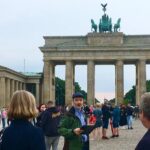
The tour begins at Brandenburg Gate, right by Pariser Platz. That matters because you start in a place many people already associate with modern Berlin, then you immediately shift into the period when power, propaganda, and violence took over politics.
From there, the walking route is designed to feel tight and coherent. You’re not bouncing across the whole city; you’re moving through a cluster where the story makes sense. Even if you think you know Berlin well, you’ll likely discover how different layers of the same area connect.
You can also read our reviews of more tours and experiences in Berlin.


Why the small-group format (max 15) changes the experience
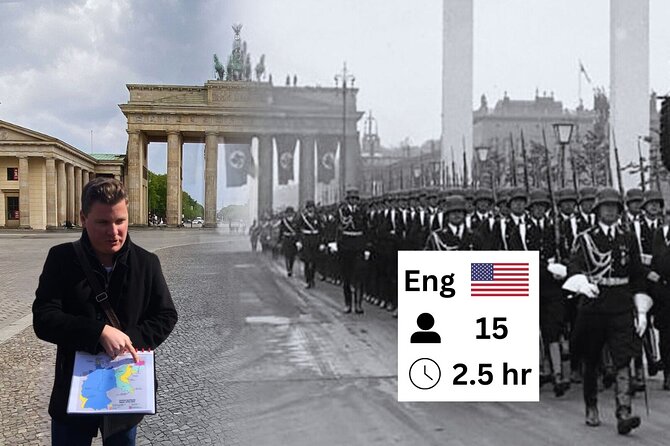
With a maximum of 15 people, you’re more likely to actually talk with your guide instead of listening from far away. This matters on a topic like this, where you’ll probably have questions about what you’re seeing and how the events connect.
The tour also builds in time for reflection and discussion, not just headsets and forward motion. It’s the kind of pacing that works well when the group is respectful and curious, and when the guide can tailor answers without rushing you.
Stop 1: Memorial to the Sinti and Roma Victims of National Socialism
Your first major stop centers on the Roma and Sinti victims of the Third Reich. The point here isn’t only remembrance—it’s understanding how Nazi social philosophies became the machinery that later supported mass persecution and the Holocaust.
You’ll spend about 10 minutes here, and the memorial admission is free. This is a strong opening because it sets a wider frame than you might expect if you only picture one victim group in one familiar storyline. It also primes you for the rest of the tour’s theme: ideology turning into policy turning into violence.
Stop 2: Reichstag building and the mechanics of Nazi power
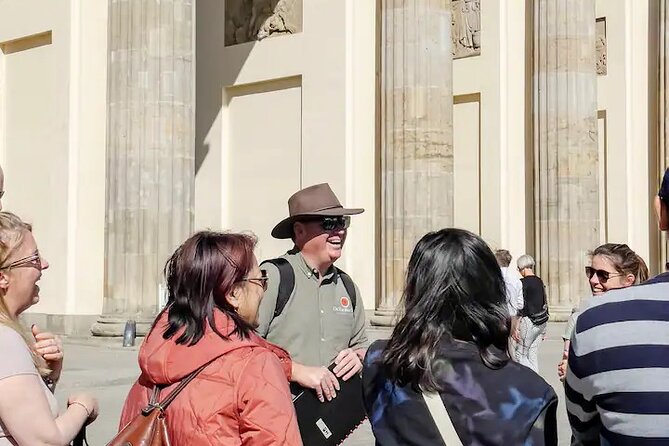
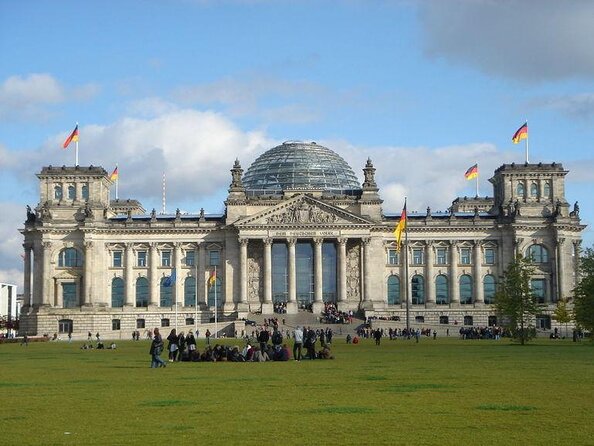
Next is the Reichstag Building, the German Parliament building. Your guide explains how the Nazi Party were elected to power and how Hitler became Führer of Germany.
This stop is only about 15 minutes, but it’s a useful counterweight to the myths that sometimes float around history. The focus is on how power gets built through political steps, not just through battlefield outcomes. It’s one of the ways the tour stays grounded in how a regime actually takes control.
Since the stop is free to enter, you can spend that time listening instead of dealing with ticket hassle.
Stop 3: Soviet Memorial Tiergarten and the memory of Berlin’s destruction
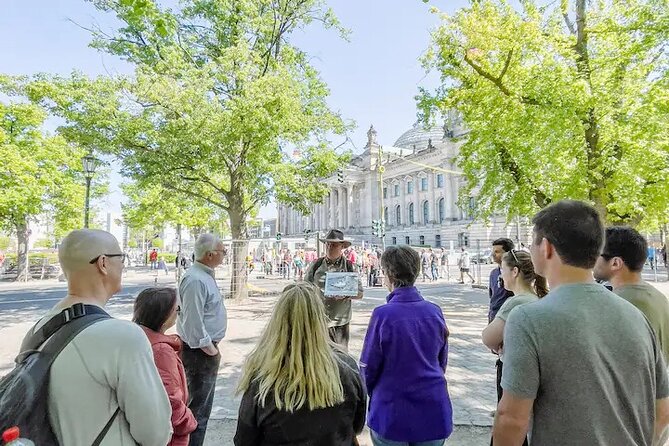
The tour then moves to the Soviet Memorial Tiergarten. Here, the Battle of Berlin is framed as one of WWII’s bloodiest operations, and you’ll talk about the brutal fighting and post-war remembrance.
Expect roughly 15 minutes. This stop works because it adds another perspective to the story. Even if you came for the Nazi chapter, Berlin’s WWII ending still shapes how the city remembers everything that came before.
If you’re the type who likes to understand how different sides remember the same events, this is a valuable checkpoint.



Stop 4: The Holocaust Memorial for the Murdered Jews of Europe
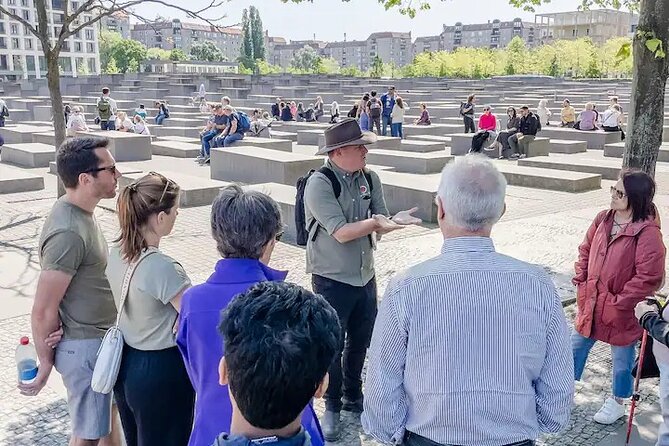
After that, you reach the Memorial to the Murdered Jews of Europe. The tour gives you the chance to experience the memorial directly and talk about its meaning, with space for Q&A.
You’ll spend about 15 minutes here, and the emotional weight is real. What I appreciate about the way this stop is handled is that it doesn’t try to force quick conclusions. Instead, your guide helps you read what the memorial is doing through reflection and discussion.
The memorial is presented as the largest ethnic group targeted by the Nazis. The emphasis isn’t only on tragedy—it’s on clarity about who was targeted and what Nazi ideology required.
Stop 5: Monument to Homosexuals Persecuted Under the National Socialist Regime
This is a shorter stop, around 5 minutes, but it adds an essential piece. You visit the Monument to Homosexuals persecuted under the National Socialist regime, and the tour uses it to broaden your view beyond the most commonly repeated narratives.
A quick stop doesn’t mean a small impact here. In fact, that contrast—short time, big importance—can help the message land. It also helps you see how Nazi persecution extended across different targeted groups.
Stop 6: Führerbunker and Hitler’s final days
Then you get to the Führerbunker, the site connected with where Hitler spent his final days of WWII. Expect about 15 minutes.
This stop can feel surreal because it’s not just about someone’s biography—it’s about the end-state of a regime that had already caused enormous suffering. Your guide’s job here is to keep the focus on what the bunker symbolizes within the broader rise-and-fall story, rather than turning it into a dark curiosity stop.
If you’re hoping for a purely outdoor-photo tour, this is where you’ll need to slow down and listen.
Stop 7: Johann Georg Elser Memorial and resistance that wasn’t famous
At the Johann Georg Elser Memorial, you hear the story of Elser and his role in trying to oppose the Nazi regime by attempting to assassinate Adolf Hitler.
You’ll spend about 15 minutes. What makes this stop especially useful is that it introduces the idea of resistance that runs parallel to the better-known headlines. It’s a reminder that opposition existed even in extreme conditions, and it gives the tour a more human, action-oriented note after the darkest scenes.
Stop 8: Berlin Aviation Ministry building and Göring’s era
Next is the Aviation Ministry of Berlin, constructed in 1936 as the largest office building in Europe at the time. The tour explains that it housed the German Ministry of Aviation, led by Hermann Göring.
This stop is only about 5 minutes, but it helps connect ideology to institutions—how government systems got built, staffed, and scaled. Instead of treating the era like a set of abstract events, you’re shown the administrative footprint behind the power.
Even in a short time, it’s a useful “how did this run?” moment.
Stop 9: Topography of Terror—Gestapo headquarters and your reset break
Finally, the tour reaches Topography of Terror (ending at Niederkirchnerstraße 8). This is where you visit the location where the Gestapo headquarters once stood.
You get about 20 minutes, and the tour includes time for a break. Your guide helps you with the practical side too: there’s a chance to get tea or coffee and use the restrooms.
This ending works well because the story is already at its most intense, and then you’re given a breather before you continue with your Berlin plans. Your guide also points you to the best connection options for wherever you’re going next.
Then & Now photos and historic maps: how the tour stays clear
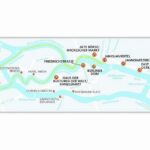
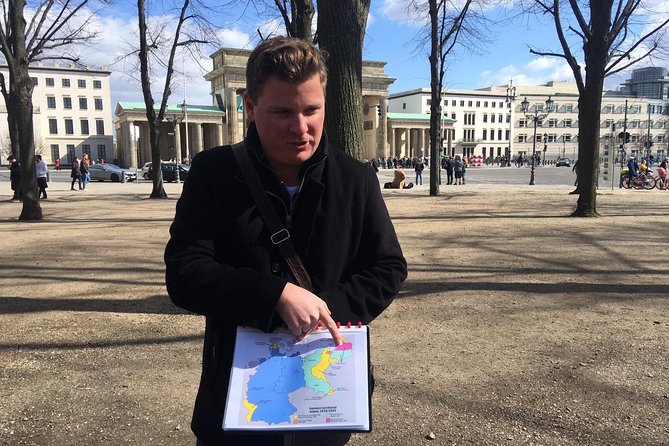
One of the included perks is the use of Then & Now photographs and historic maps. This is more than a nice add-on. In Berlin, modern streets can make the past hard to picture, especially when the buildings or street patterns have changed.
These visuals help you connect what you’re seeing today with what happened there during the Nazi era. It’s a way to keep the tour readable even when the topic is emotionally and intellectually heavy.
The guide’s role: sensitivity, structure, and real questions
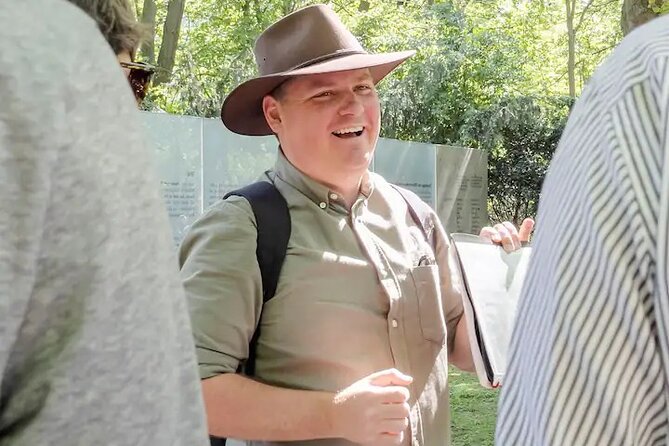
The tour explicitly uses an expert local guide with an academic background in WWII history, and the experience is shaped by how the guide handles nuance and emotion. The best guides keep the timeline clear and give you space to ask what you actually want clarified.
From the guide names that have led this walk—Scott, Johan, Jochen, Roshana, and Matt—you can also see a mix of speaking styles, but the through-line is that the topic demands respect and careful pacing. In my view, the guide matters most at the Holocaust and remembrance stops, where good structure helps you stay present instead of lost.
If you’re the type who likes to ask why something happened, or what a memorial is trying to communicate, this tour’s built-in Q&A time is a real benefit.
Pacing and physical reality: shoes, weather, and listening time
The tour runs about 2 hours 30 minutes and asks for moderate physical fitness. That’s mostly about the walking. It’s also not a sit-and-watch tour; it’s a stop-and-stand-and-walk rhythm.
Dress for the weather. The tour operates in all weather, so bring a warm layer if Berlin is cold, and comfortable shoes if the ground is slick. One practical tip: you’ll want to keep your phone battery charged for photos, because you may find yourself wanting extra context while you’re still at the sites.
Also note that each stop is short and information-heavy. The guide may cover a lot quickly, so if you’re easily distracted, do yourself a favor and plan to pay attention from the start.
Price and value: $54.44 for a focused, high-impact route
At $54.44 per person for about 2.5 hours, this tour sits in the mid-range for Berlin walking tours, but the value comes from what you get packed in:
- Small group (up to 15) for interaction and questions
- An expert guide with WWII academic background
- Free admission at each listed stop
- Guided time for reflection and discussion, not just sightseeing
- Practical included materials like Then & Now photos
If you’re trying to understand Hitler’s Berlin without spending extra time on ticketing or hopping on multiple tours, this format is efficient. You’re paying for interpretation and handling of a complicated, sensitive subject in a tight route.
Should you book Hitler’s Berlin – the rise and fall (Small Group)?
Yes, if you want a guided walk that treats history seriously and connects the rise and fall of the Nazi regime to the memorial landscape of Berlin. I’d especially recommend it if you:
- like a structured timeline in a compact area
- want help reading the meaning of major memorials through a guide-led discussion
- plan to stay for more Berlin history afterward, since ending at Topography of Terror is a solid pivot point
If you’re looking for a lighter, casual history walk, or you get overwhelmed by heavy topics and constant listening, you might want to choose a different style of tour with less emphasis on remembrance and politics.
FAQ
How long is the Hitler’s Berlin walking tour?
It lasts about 2 hours 30 minutes.
Where does the tour start and end?
It starts at Brandenburg Gate (Pariser Platz, 10117 Berlin) and ends at Topography of Terror (Niederkirchnerstraße 8, 10963 Berlin).
Is this a small-group experience?
Yes. It’s limited to a maximum of 15 travelers.
What language is the tour offered in, and do I get a ticket on my phone?
It’s offered in English, and you’ll receive a mobile ticket.
Do I need to pay separate admission fees for the stops?
No. The listed stops have free admission (as indicated for each site).
Is food included?
No. Food and drinks are not included. The tour includes a break where you can get tea or coffee at the end area.
What should I wear or expect for weather?
The tour operates in all weather conditions, so dress appropriately for the forecast. It also notes it requires good weather, and if canceled due to poor weather you’ll be offered a different date or a full refund.
Can I cancel and get a full refund?
Yes. There is free cancellation. You can cancel up to 24 hours in advance for a full refund.