REVIEW · BERLIN
Kreuzberg: Culinary Food Tour
Book on GetYourGuide →Operated by Adventure World Tours · Bookable on GetYourGuide
That’s one way to taste history fast. In Kreuzberg, you get five food stops plus a guided walk that explains why this neighborhood looks and eats the way it does today. Meeting at Kotti, you’ll move through streets, courtyards, and well-known corners like SO36, while your guide ties snacks to stories about work, protest, and everyday life.
I especially love the pairing of food variety with place details. You’re not stuck with one big meal; you try multiple bites across international and local styles, including classics like döner/dürüm and currywurst, plus desserts and vegetarian options. Also, guides named Niclas and Nike come up in recent experiences for being well prepared and strong at connecting neighborhood history to what you’re eating.
One drawback to plan for: in rare cases, some tastings may be served outside and you’ll eat standing up. If you prefer a sit-down meal the whole time, this tour may feel a little more “on-the-go” than you expect.
In This Review
- Key things you’ll notice on this Kreuzberg tour
- Why Kreuzberg makes sense for a food tour
- The 3-hour flow: how the walk and tastings fit together
- Stop-by-stop: what each moment is for
- 1) Meeting near Kotti: the orientation you actually need
- 2) The Neues Kreuzberger Zentrum area: photo stop plus working-class context (about 40 minutes)
- 3) Oranienstraße: the main storyline street (about 1 hour)
- 4) Rio-Reiser-Platz: short stop, story-first (about 15 minutes)
- 5) Mariannenstraße 4: small street energy (about 20 minutes)
- 6) Oranienplatz: quick pause to reset your bearings (about 5 minutes)
- 7) Dresdener Straße: short walk + guided sighting (about 10 minutes)
- 8) Admiralstraße: a longer wrap-up with another photo stop (about 40 minutes)
- Final: Grimmstraße 23
- The food: what you can expect beyond the headline dishes
- The stories: where this tour earns its ticket price
- Who should book this Kreuzberg food tour?
- Quick practical tips so you enjoy it more
- Should you book?
- FAQ
- How long is the Kreuzberg Culinary Food Tour?
- Where do I meet for the tour?
- How many food tastings are included?
- Are vegetarian options available?
- Is there a vegan option?
- Are drinks included in the price?
- What languages is the tour guide available in?
- What happens if the food can’t be served inside?
- How much does it cost?
Key things you’ll notice on this Kreuzberg tour

- Kotti start, neighborhood context included: you’ll get a real sense of Kreuzberg before the food starts landing.
- Five tastings, not one meal: small portions mean you can compare styles and still walk.
- Oranienstraße and SO36 on the route: these places help explain modern Kreuzberg’s left-wing and immigrant mix.
- GDR-era details in the story: you’ll hear about traffic-light men and escape attempts, not just sightseeing.
- Vegetarian is built in: you can request a vegetarian option, while vegan isn’t available.
- A guide-led pace: it can be info-heavy, which is great for history lovers and less ideal if you only want food.
Why Kreuzberg makes sense for a food tour
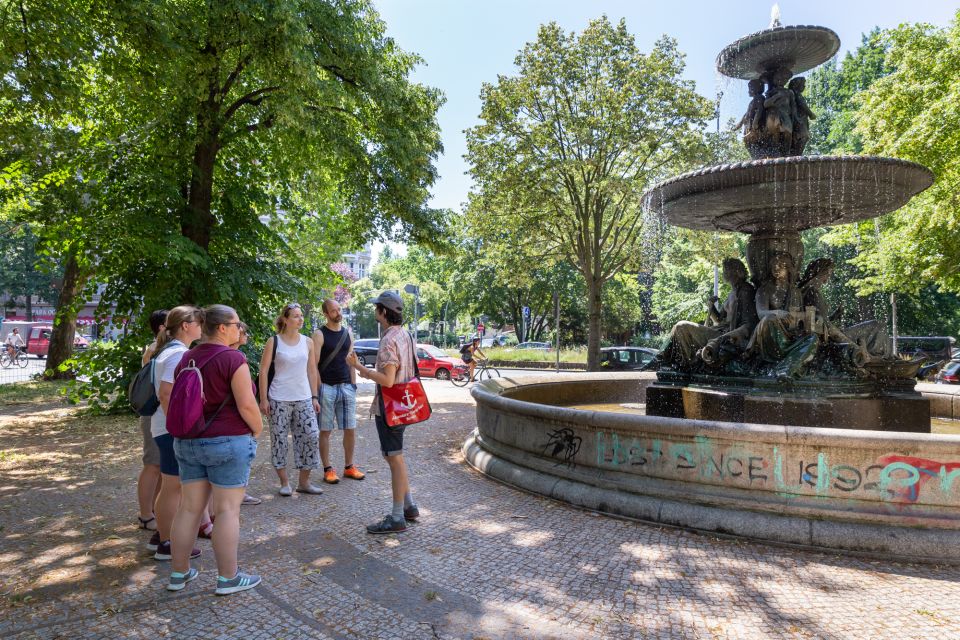
Kreuzberg isn’t just a “cool district” label—it’s a layering of communities, politics, and changing identities. A walking tour works here because the neighborhood reads in small parts: a street name, a square, a courtyard, a building corner, then the next food stop.
This tour does something smart. It doesn’t treat food as a detour from the real point. Instead, the guide uses each tasting to talk about migration, working-class life, and the kind of Kreuzberg culture that grew out of both struggle and reinvention. That’s why it feels more like a guided neighborhood read than a list of restaurants.
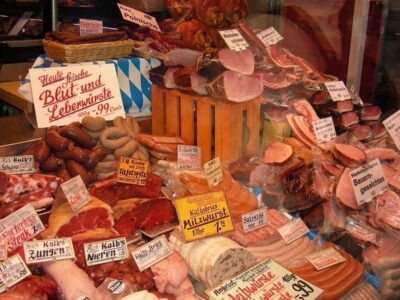
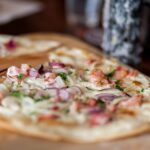
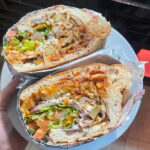
And you get the classic Kreuzberg mix: Turkish and German staples side by side with other international flavors. One recent experience highlights the range—döner/dürüm, currywurst, flammkuchen, baklava, vegetarian sushi, and even sweet-to-savory roasted nuts—so you can expect that this isn’t just “snacks that taste similar.”
You can also read our reviews of more food & drink experiences in Berlin


The 3-hour flow: how the walk and tastings fit together
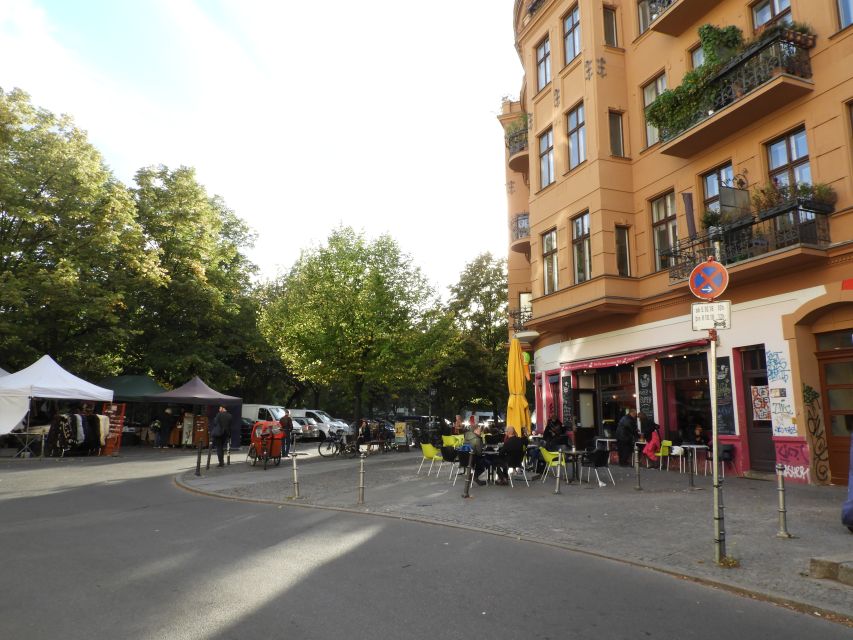
You’re in motion the entire time. The tour is scheduled for 3 hours, with stops that include photo moments, short guided segments, and about five food tastings across different locations. You’ll finish at Grimmstraße 23, which is useful if you want to keep exploring afterward without feeling rushed to the next subway change.
Two practical notes matter for enjoying it:
- You’ll be eating multiple small tastings, so you should arrive with an appetite but not expect a full sit-down dinner.
- If the weather forces it, one food stop might be eaten standing up. That’s manageable, just don’t plan around it feeling like a restaurant meal.
The route moves through key Kreuzberg streets and squares, so you’re not trapped in one long corridor. You’ll bounce between history points and eating points, which keeps the time from dragging.
Stop-by-stop: what each moment is for

Below is the kind of experience you’ll get at each part of the route—what you’ll see, what the guide will likely explain, and how the food moment connects.
1) Meeting near Kotti: the orientation you actually need
The tour meets around Kotti (Kottbusser Tor). Depending on what option you book, the meeting point can vary—one option lists FightClub Casino, and another points to the area around Neues Kreuzberger Zentrum KG Kottbusser Tor.
This first stretch is short but important: you get a broad overview of Kreuzberg’s origin as a working-class neighborhood in the middle of the 19th century. For me, this sets the right frame. Without it, Kreuzberg can look like a mix of everything—creative, political, immigrant, artsy—without the “why.” With it, you start to notice patterns.
2) The Neues Kreuzberger Zentrum area: photo stop plus working-class context (about 40 minutes)
You’ll start with a photo stop and guided sightseeing, then a food tasting as you move forward. This is where you’ll hear how housing and daily life worked in earlier times—specifically the idea that many people didn’t rent an entire flat or a whole room, and that living meant an 8-hours-stay on a mattress.
That detail matters because it explains why the neighborhood still carries a practical, community-forward energy. When you later try street-style foods, you can understand them as part of a culture built on everyday access and speed—not just “food trend.”
You can also read our reviews of more tours and experiences in Berlin



3) Oranienstraße: the main storyline street (about 1 hour)
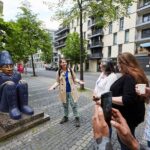
Oranienstraße is the big one on this route. You’ll walk, stop for photos, and get a guided explanation while the tasting happens along the way. This street is tied to the neighborhood’s working-class and left-wing heritage, including demonstrations and how that political identity shaped what people built here.
If you like learning in layers, this is your favorite stretch. You’ll be asked to imagine the past from street-level: where people lived, how daily life felt, and what changed over time. It’s also the segment that helps you connect to the modern “melting pot” concept—people of different backgrounds, opinions, lifestyles, sexualities, and incomes sharing the same space.
4) Rio-Reiser-Platz: short stop, story-first (about 15 minutes)
At Rio-Reiser-Platz, you’re mostly in sightseeing mode with a photo stop and a guided walk. The value here is momentum. You get a quick narrative beat—enough to keep the history chain going—without slowing the whole tour down.
Then a food tasting ties it back to the present: you’re not just looking at places; you’re learning how Kreuzberg’s identity shows up in what people eat and how they gather.
5) Mariannenstraße 4: small street energy (about 20 minutes)
This is another photo stop plus guided walking. You’ll keep crossing between the neighborhood’s older political roots and today’s everyday feel. The tour’s tone here tends to get more specific: the guide points to details that you might not notice on your own, like why certain corners became meeting points for community life.
Expect this stop to reinforce how Kreuzberg runs on neighborhood networks—then the tasting becomes proof, not just theory.
6) Oranienplatz: quick pause to reset your bearings (about 5 minutes)
Oranienplatz is brief—think of it as a reset. You’ll see it as part of the walk design: a small pause that keeps your eyes fresh and your feet ready for the next stretch.
Even when the time is short, the guide’s storytelling helps you keep track of the “then and now” theme.
7) Dresdener Straße: short walk + guided sighting (about 10 minutes)
Dresdener Straße is another tight segment. You’re not here for a long lesson, but for a piece of the bigger puzzle: Kreuzberg’s identity isn’t one landmark; it’s a sequence of streets and the attitudes they represent.
8) Admiralstraße: a longer wrap-up with another photo stop (about 40 minutes)
This is one of the heavier timed blocks, with a photo stop and guided sightseeing, plus a longer walk. It’s also where you’ll likely hear more of the GDR-era threads—like the former GDR traffic-light men—along with stories about attempts to escape the GDR.
That’s a strong match for Kreuzberg’s current reputation. You’ll leave understanding that the neighborhood’s openness wasn’t invented from scratch. It was shaped by border politics, repression, migration, and the kind of activism that pushed against the limits of the past.
Final: Grimmstraße 23
You’ll finish at Grimmstraße 23 (10967 Berlin). From a practical perspective, this matters because you end inside Kreuzberg rather than at some far-off transit spot. It makes it easier to keep exploring food, coffee, or nightlife plans without losing time to a long ride immediately after the tour ends.
The food: what you can expect beyond the headline dishes
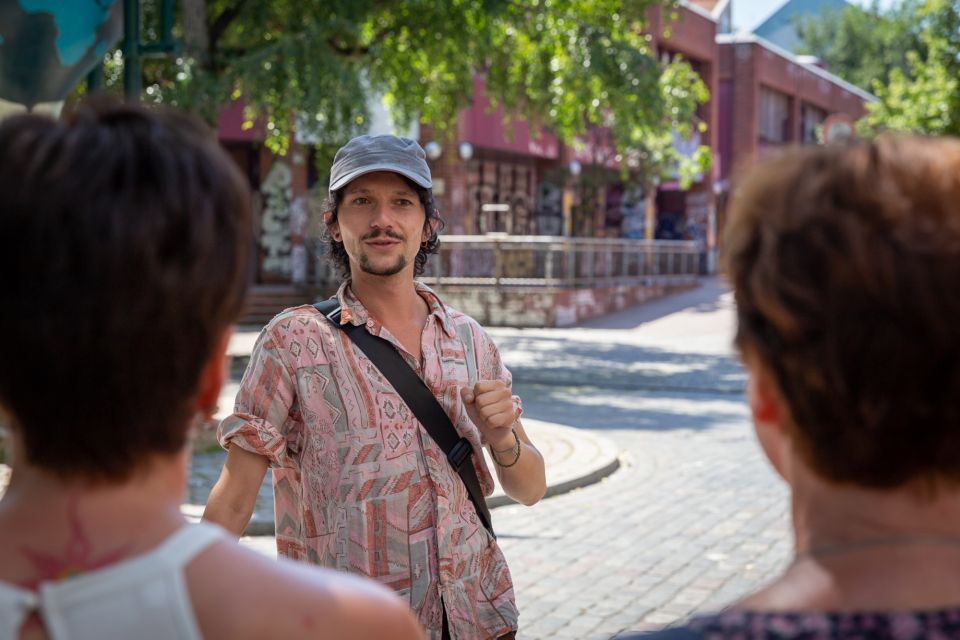
The headline is simple: you’ll get five different food tastings in distinct restaurants, with a vegetarian option available. What makes this tour feel worth it is the variety across styles and cultures.
Based on the range described in recent experiences, here’s the kind of menu mix you should expect:
- Döner or dürüm (a Kreuzberg staple)
- Currywurst
- Flammkuchen
- Baklava
- Vegetarian sushi
- Roasted nuts in sweet and savory forms
That spread does more than taste good. It helps you understand how Kreuzberg eats: practical street food plus dessert and snack culture, with vegetarian choices that aren’t treated like an afterthought.
Two clear limitations to plan around:
- Drinks aren’t included.
- Vegan is not available.
So if you’re vegan, you’ll want to eat beforehand or budget for a separate meal after the tour. For vegetarian eaters, the tour is designed to work better.
One more practical consideration: sometimes food may be served outside in exceptional cases. If you want to sit with your food, you might not get that for every tasting—bring the right expectation and it will feel easier.
The stories: where this tour earns its ticket price
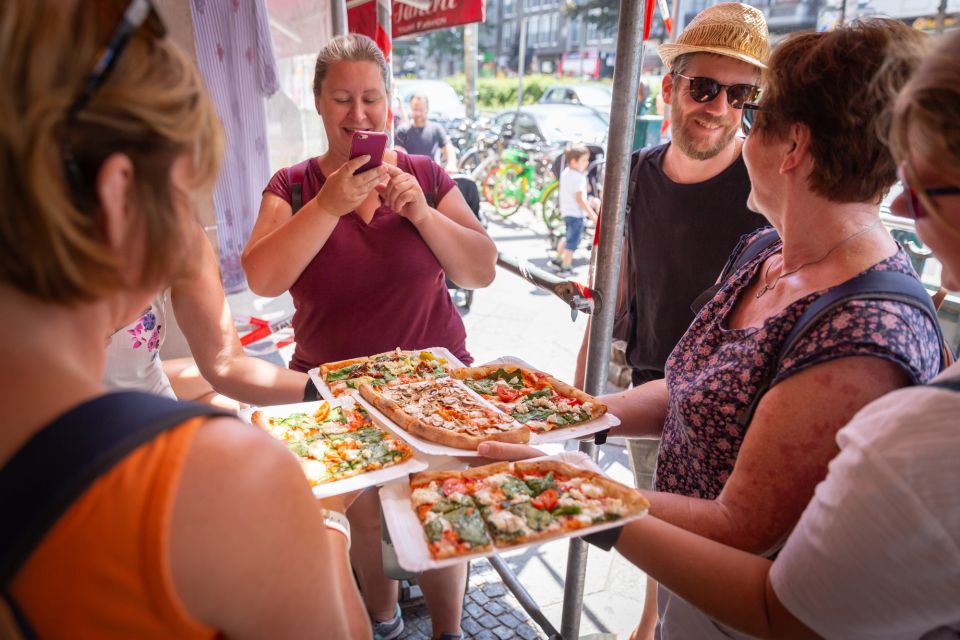
Price in Berlin can swing wildly, but this tour’s cost—$589 per group up to 10—gets easier to justify if you think in “value per person in a group.” For example:
- If you fill a group of 10, that’s about $59 per person.
- If you’re only 4 people, it’s closer to $147 per person.
So it’s a great deal when you travel with friends or family and split the group cost. It’s less of a bargain if you’re traveling alone and end up paying a higher per-person share in a smaller group.
What you’re buying for the money is not just taste. You’re buying a qualified guide and a structured walk that connects food to:
- Kreuzberg’s working-class roots (mid-19th century)
- Oranienstraße’s lived political heritage
- SO36’s role in May Day march demonstrations
- GDR-era stories, including the former traffic-light men and escape attempts
- A note about Martin Luther King’s visit in 1964
- And even local legend-style storytelling about Berlin’s Jack the Ripper
That mix is what turns “a food tour” into a conversation with the city.
One small caution: the tour is story-forward. If you prefer your history neat and linear, you might occasionally feel the narrative is more “human and dramatic” than perfectly tied together. That doesn’t ruin it, but it shapes the experience.
Who should book this Kreuzberg food tour?
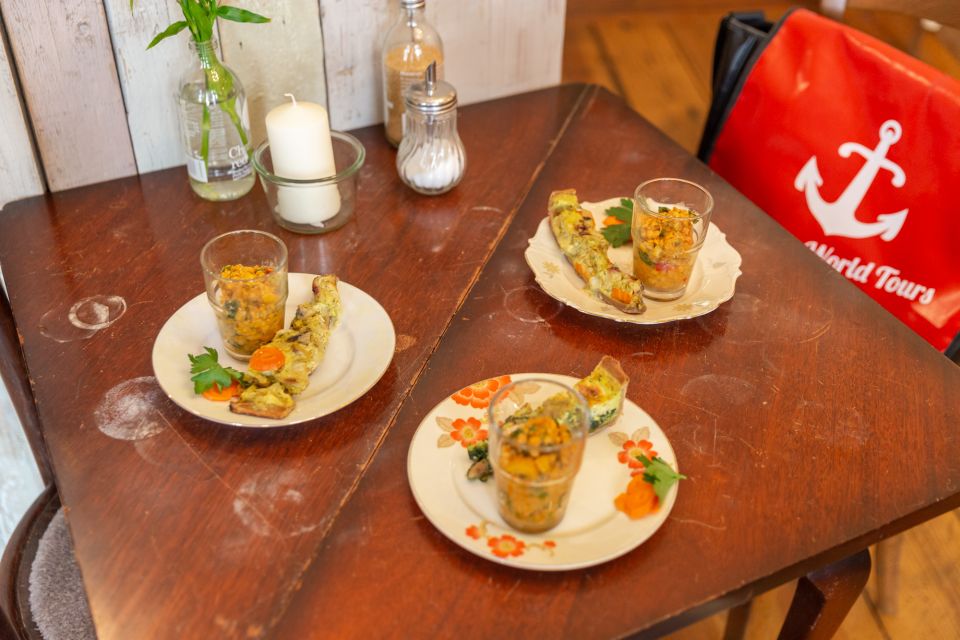
This tour fits best if you:
- Want food and context, not just a restaurant hop
- Like walking and learning how neighborhoods formed
- Travel with a small group that can use the group price
- Eat vegetarian (since vegetarian is available)
It’s not the best match if you:
- Need vegan-friendly tastings (not available)
- Want drinks included (they aren’t)
- Hate standing while eating in rare weather-driven scenarios
- Only want food and would rather skip heavy history
Quick practical tips so you enjoy it more
- Wear shoes you trust. You’re walking with multiple stops over about three hours.
- Eat a light breakfast or lunch if you don’t want to feel stuffed by the end. The plan is multiple small bites.
- If you’re vegetarian, remind yourself that you’re still sampling five tastings, not a single “vegetarian meal.” That variety is the point.
- If you’re vegan, plan to handle food separately and treat the tour as inspiration and history.
Should you book?
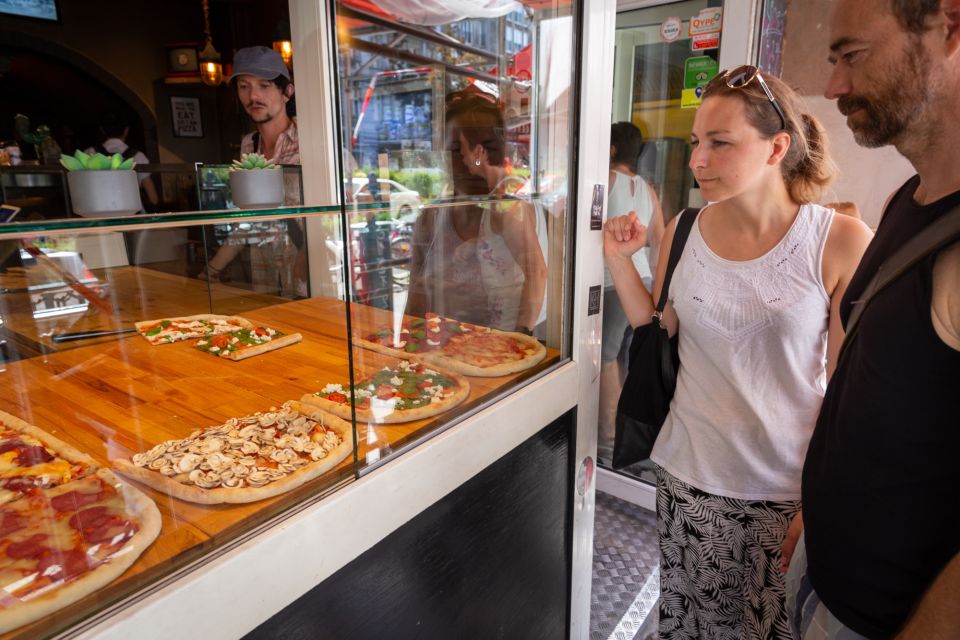
I’d book this Kreuzberg culinary walk if you want a guided neighborhood story with real food variety. The best part isn’t one standout bite—it’s the way each tasting comes after a place-based explanation, so you start connecting Kreuzberg’s politics and community energy to what you’re eating.
If you can travel with others and fill more of the up-to-10 group, the price gets easier to swallow. If you’re vegan or you expect a sit-down meal with included drinks, you’ll likely feel disappointed. But for most people who like food tours that teach something, this one hits a sweet spot: five tasty stops plus a walk that makes Kreuzberg feel understandable, not just famous.
FAQ
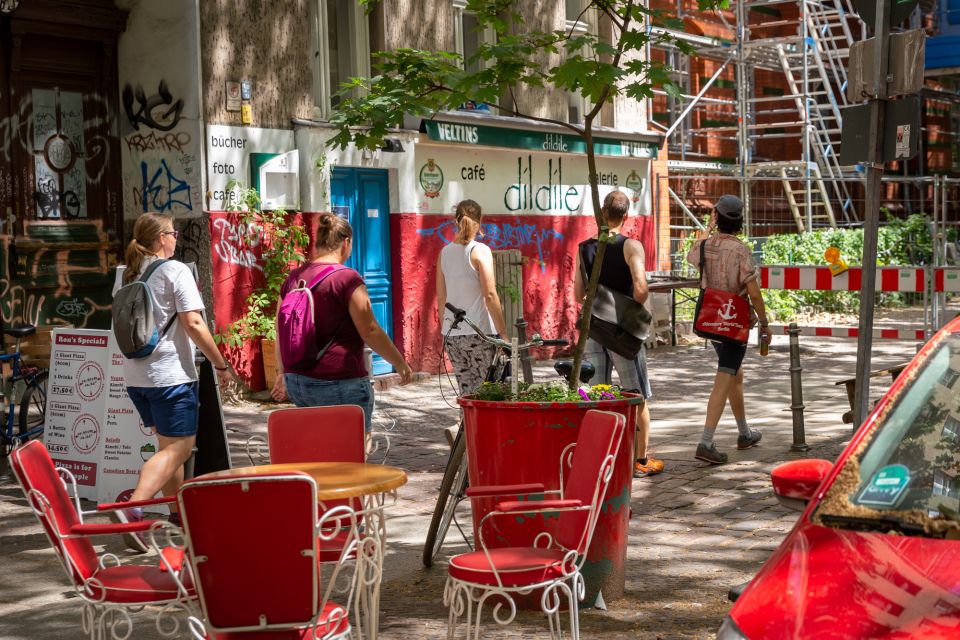
How long is the Kreuzberg Culinary Food Tour?
It lasts 3 hours.
Where do I meet for the tour?
The meeting point may vary depending on the option booked. One listed option is FightClub Casino, and another option is near Kottbusser Tor.
How many food tastings are included?
You’ll have 5 different food tastings at 5 distinct stops/restaurants.
Are vegetarian options available?
Yes, a vegetarian option is available.
Is there a vegan option?
A vegan option is not available.
Are drinks included in the price?
No, drinks are not included.
What languages is the tour guide available in?
The tour guide is available in English and German.
What happens if the food can’t be served inside?
In exceptional cases, food may be served outside and you may need to eat standing up.
How much does it cost?
It is $589 per group (up to 10 people).