REVIEW · BERLIN
East Berlin Food & History Tour with Eating Europe
Book on Viator →Operated by Eating Europe Food Tours Berlin · Bookable on Viator
Forget museums; eat your way through East Berlin. This East Berlin Food & History Tour with Eating Europe ties street food to the people who made it, from Turkish and Middle-Eastern immigrants to end-of-East-Berlin life. I love that tastings are included (so you’re not nickel-and-dimed mid-walk) and that craft beer is built into the stops, not an afterthought. One thing to consider: it’s a steady walking tour, so if you want slow museum-style pacing, you’ll feel the pace.
The small-group format (maximum 12 people) keeps the whole thing relaxed and chatty, and it moves through food anchors you’d miss on your own. You’ll get an English-speaking guide and enough context to understand why dishes like currywurst weren’t just invented in a vacuum.
Go hungry, and plan your expectations: the menu is a selection and can vary by day or season, and strong food allergies may not be a good fit. The payoff is a very Berlin experience—street corners, wall art, and real flavors—rolled into one afternoon.
In This Review
- Key things that make this tour work
- Why East Berlin’s street food tells the real story
- The meal plan: what’s included (and what it usually feels like)
- Don’t show up hungry in theory—show up hungry in practice
- Stop-by-stop: the walk from Späti beer to currywurst greatness
- Stop 1: Boxi Spatshop and German beer origins
- Stop 2: Haroun for döner and the immigrant story
- Stop 3: NYOM for neon-lit Vietnamese TyTy Tacos
- Stop 4: RAW-Gelände, a past made of rail yards and factories
- Stop 5: Warschauer Straße currywurst and how it got invented
- Stop 6: Schnitzel burger and Berliner Pilsner—end-of-East-Berlin context
- East Side Gallery and Wall-side walking: why it belongs on a food tour
- Syrian mezze and the integration angle that makes the food feel personal
- RAW-Gelände and the alternative scene stops: what you’re really seeing
- Craft beer included: great perk, but pace it
- Dietary needs and allergy reality: plan smart
- Price and value: is $107.68 fair for this much food?
- Who should book this East Berlin food and history tour
- Your best approach on the day
- Should you book it?
- FAQ
- How long is the East Berlin Food & History Tour?
- How much does the tour cost?
- What’s included in the price?
- Do I need to pay extra for tastings?
- Can the tour accommodate dietary requirements?
- Is the tour safe for severe food allergies?
- What age policy is there for children?
- Where do I meet the guide, and where does the tour end?
- How big is the group?
Key things that make this tour work

- Tastings and craft beer are included, so your budget stays predictable
- Food connects to migration and East Berlin history, not just what tastes good
- Small group size means more time for questions at each stop
- A smart mix of classics and ethnic street food, from currywurst to döner to Vietnamese tacos
- You get both street-level culture and iconic Wall-era art, including the East Side Gallery
- Dietary needs can be accommodated when possible, with clear limits for severe allergies
Why East Berlin’s street food tells the real story

East Berlin has a way of showing up in food. Not in a vague, postcard kind of way, but in the practical sense: who lived here, what businesses served the neighborhood, and how new arrivals changed what became normal. That’s why this tour feels more like a food walk with a timeline attached than a list of restaurants.
I also like the tour’s basic logic: you start with German beer culture, then you work through Turkish and Middle-Eastern street food history, then you land on Vietnamese and Syrian flavors. By the time you reach the Wall-side art, you can actually connect the dots between politics, community, and what ends up on a plate.
And yes, the beer helps. It’s not mandatory-you-drink-everything energy, but it makes the whole route feel social and grounded in how locals snack and linger.
You can also read our reviews of more food & drink experiences in Berlin


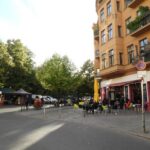
The meal plan: what’s included (and what it usually feels like)
This isn’t one sit-down dinner. It’s multiple stops with tasting portions spread across roughly 3 hours 30 minutes. The exact items can change depending on day or season, but the structure is consistent: a series of food introductions, plus craft beer during the journey, and food stops that focus on street-level Berlin.
What you can expect, based on the planned stops:
- German beer tastings at a small liquor store (Späti-style)
- A döner/shawarma stop tied to Turkish and Middle-Eastern immigrant history
- Vietnamese street food, including TyTy Tacos
- A stop for currywurst, described as the best and most famous in Berlin
- A final savory stop built around schnitzel burger plus Berliner Pilsner
- A Syrian Levante mezze taste at a supper club-style restaurant
There are also stops where you’re not paying anything for the experience element itself, like RAW-Gelände and the East Side Gallery. That’s nice because it keeps the focus on eating and walking, not on ticket pricing.
Don’t show up hungry in theory—show up hungry in practice
Several parts of the route are designed to keep you eating steadily. If you start with a full stomach, you’ll still enjoy it, but you’ll miss some of the point of tasting lots of different flavor styles in one afternoon.
Stop-by-stop: the walk from Späti beer to currywurst greatness

Here’s how the tour typically reads as a storyline, and what each location adds to your understanding of East Berlin.
Stop 1: Boxi Spatshop and German beer origins
You begin at a small liquor store on Boxhagener Straße, the kind of place that feels like it has always been there. You’ll try a popular German beer and get the origin story behind it. The point isn’t beer trivia for fun—it sets the tone for how Berliners use everyday shops and habits as part of their culture.
If you’re the type who thinks history is boring, this is where you get proof that small places carry big meaning.
You can also read our reviews of more tours and experiences in Berlin

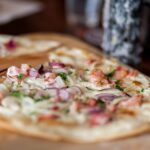

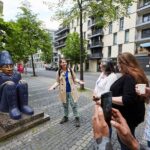
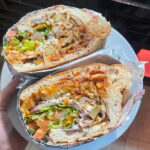

Stop 2: Haroun for döner and the immigrant story
Next comes Haroun, a Shawarma Döner eatery. This stop is where the tour does its strongest job of connecting food to migration: street food in Berlin isn’t just about taste, it’s about who arrived, who adapted, and how neighborhoods accepted new flavors.
The tasting here is included, and you’ll leave knowing that döner-style food in Berlin has a history you can actually explain—not just memorize.
Stop 3: NYOM for neon-lit Vietnamese TyTy Tacos
At NYOM, you’ll try TyTy Tacos, an example of how Vietnamese food in Berlin has its own street-food identity. The neon-lit setting is part of the charm, but the real value is the way the tour frames this as cultural integration rather than a novelty.
This is also a good stop to slow down and pay attention to the flavor balance—because later you’ll compare it to currywurst and mezze and feel the contrasts instantly.
Stop 4: RAW-Gelände, a past made of rail yards and factories
Then you step into RAW-Gelände, which has worn multiple identities over time: an imperial rail repair yard, a Soviet factory, and later a Deutsche Bahn warehouse. Today it’s art spaces, indie record companies, clubs, beer gardens, a bouldering hall, and the largest indoor skate park in Berlin.
You’re not there to tour a single museum hall. You’re there to see how spaces change roles in East Berlin—and how that same “reinvention habit” shows up in food too.
Stop 5: Warschauer Straße currywurst and how it got invented
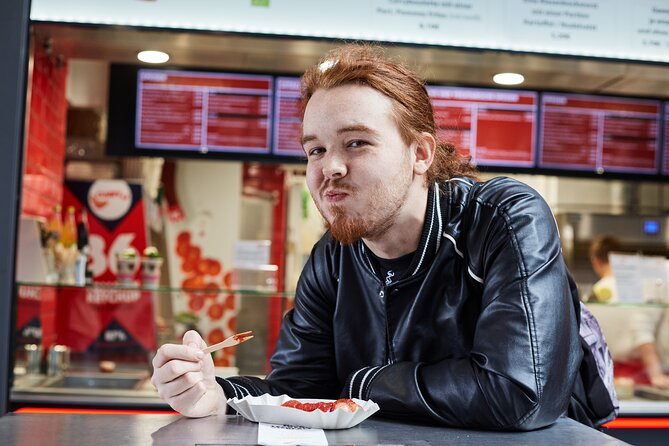
At Warschauer Straße, you’ll try Berlin currywurst described as the best and most famous. The tour also explains how the iconic dish was created, which matters because currywurst can otherwise feel like a random German fast-food item.
This stop helps you understand why currywurst is such a Berlin marker. It’s quick, affordable, and wrapped into a local origin story you can repeat later.
Stop 6: Schnitzel burger and Berliner Pilsner—end-of-East-Berlin context
The tour finishes with schnitzel burger plus Berliner Pilsner at a compact schnitzel burger restaurant/club near the end of the route. This is also where the guide ties the food storyline back into what life was like towards the end in East Berlin, including events leading to the fall of the Berlin Wall.
If you want the day to feel like more than eating, this is the emotional anchor.
East Side Gallery and Wall-side walking: why it belongs on a food tour
After the food-heavy portion, you hit the East Side Gallery. This open-air art gallery is built around the longest surviving stretch of the Berlin Wall, running just over 1.3 miles end to end. The murals have been in place for over twenty years, so you’re not seeing a quick display—you’re seeing an evolving memorial landscape.
On a normal sightseeing day, people treat the Wall like a must-see object. On this tour, it comes at the right time, after you’ve already learned how communities shaped daily life and daily plates.
Even if you’re not into street art, the scale and the stories give you a feeling for what East Berlin was like—and why people can still write their identities on public walls.
Syrian mezze and the integration angle that makes the food feel personal

A huge part of the tour’s value is that it’s not framed as one cuisine vs. another. It’s framed as how different communities moved into East Berlin and how the city absorbed, mixed, and normalized those flavors.
At Aleppo Supper Club, you’ll try a traditional mezze dish from Syrian and Levante cuisine. Mezze is perfect for a walking tour because it tends to be shareable, varied, and flavor-forward—so you get range in one stop without needing a full course meal.
This stop balances out the other parts of the day:
- German beer culture up top
- Turkish/Middle-Eastern street food next
- Vietnamese tacos mid-route
- Currywurst as a Berlin classic
- Mezze as a Levant presence in East Berlin food culture
When the pieces line up like that, the city stops being a list of neighborhoods and becomes a living food system.
RAW-Gelände and the alternative scene stops: what you’re really seeing
RAW-Gelände is more than a photo stop. The tour uses its layered history—rail yard, Soviet factory, then a warehouse—to underline a big East Berlin theme: spaces get reassigned, and people keep reinventing how they use what’s around them.
That matters for you because it explains why the food scene works the same way. New communities don’t just add restaurants. They add jobs, habits, and social gathering places.
If timing works, you may also catch side sights that make the day feel playful, like the small-distraction moments people mention on this route. Just keep your expectations flexible and let the guide work with what the neighborhood is doing that day.
Craft beer included: great perk, but pace it
Craft beer is included, and that’s a real part of the tour’s value. Not because beer is a gimmick, but because it matches the street-food pace: snack, taste, talk, repeat.
Berliner Pilsner shows up at the end stop, and earlier you’ll also enjoy a popular German beer during the first tasting. Still, this is an afternoon walk, not a pub crawl.
Practical tip: sip if you want to keep moving comfortably. The tour is designed for walking between stops, and you’ll enjoy the history more if you’re not fighting the pace.
Dietary needs and allergy reality: plan smart

If you’re vegetarian or gluten-free, you’ll want to let the company know at booking. The tour says they’ll do their best to accommodate dietary requirements like vegetarians and gluten-free guests, and you can also email ahead.
For severe or life-threatening food allergies, this experience isn’t suitable, and the company can’t take responsibility for allergies or intolerances. That’s not them being difficult—it’s them being realistic about group food sampling.
If you’re in the middle (a mild intolerance, or a “no pork” preference), email the team clearly before you go, and I’d still consider bringing an extra snack you trust, just in case.
Price and value: is $107.68 fair for this much food?
At $107.68 per person for about 3.5 hours, you’re paying for something that’s hard to replicate on your own: structured tastings across several neighborhoods, plus a guide who explains how the dishes connect to East Berlin life.
The money feels more reasonable because tastings are included and you’re not constantly paying for single items at each stop. Beer is also part of the included experience, which can raise the total value of a food tour quickly if it’s not included elsewhere.
You also get free admission elements at certain stops, which helps keep the day predictable. And because the group is capped at 12, it’s not a chaotic “herd and hope” tour.
If you like history that actually shows up in daily life, this price makes sense. If you only want one big meal and hate walking, you may feel like you’re paying for motion more than food.
Who should book this East Berlin food and history tour
This tour is a strong match if you:
- Want food plus context instead of pure sightseeing
- Like trying street food types you might not order on your own
- Prefer small groups and plenty of time for questions
- Enjoy the idea of East Berlin as a story of communities, not just buildings
It might not be the best fit if you:
- Need long sit-down breaks between meals
- Have a severe allergy risk (the tour has clear safety limits)
- Want a purely traditional German food-only day (this tour spreads across several cuisines)
Your best approach on the day
A few simple things will make the afternoon smoother:
- Wear comfortable shoes; it’s a walking route across East Berlin
- Come ready to eat steadily throughout the tour
- If you have dietary needs, tell the team ahead of time so they can plan tastings that work
- If you drink beer, pace yourself so you can enjoy the last stretch and the Wall art walk
Also, bring a curious mindset. The guide’s job here isn’t just naming dishes—it’s tying each stop back to the way East Berlin communities formed and re-formed.
Should you book it?
I think you should book this tour if your goal is the East Berlin version of eating like a local, with history that explains why the food looks the way it does today. The included tastings and craft beer make the value feel solid, and the small group size keeps it friendly enough that you’ll actually ask questions.
If your ideal Berlin day is quiet and slow, or if you only want German classics, you might find the variety a little too mixed. But for most people who want a memorable East Berlin afternoon that goes beyond the usual checklist, this is a very strong choice.
FAQ
How long is the East Berlin Food & History Tour?
It runs for about 3 hours 30 minutes.
How much does the tour cost?
The price is $107.68 per person.
What’s included in the price?
You get a local English-speaking guide, included tastings at the food stops, and craft beer included during the experience. You also get Food & the City insider tips.
Do I need to pay extra for tastings?
No. Tastings are included. The selection of foods can vary by day or season, but you’re not expected to pay separately for the tastings listed for the tour.
Can the tour accommodate dietary requirements?
Yes, the company says it will do its best to accommodate dietary needs such as vegetarians and gluten-free guests. Add your needs at booking or email them.
Is the tour safe for severe food allergies?
The tour isn’t suitable for guests with severe or life-threatening food allergies to ingredients found on the tour, and the company can’t take responsibility for allergies or intolerances.
What age policy is there for children?
Children under 4 can join for free, but food isn’t included. For ages 4 and up, paid tickets are available with food included.
Where do I meet the guide, and where does the tour end?
The tour starts at Haroun, Neue Bahnhofstraße 28, 10245 Berlin, Germany, and ends at Mühlenstraße 78, 10243 Berlin, Germany.
How big is the group?
The tour has a maximum of 12 travelers, and it requires a minimum of 2 guests to run.