REVIEW · BERLIN
Spy Mission in Berlin: Self-Guided Espionage Puzzle Quest
Book on Viator →Bookable on Viator
Berlin becomes a spy puzzle quest. This self-guided mission turns Moabit and Mitte into an interactive story you play on your phone, with clear directions between real landmarks. I like the way it blends a light “escape game” feel with outdoor wandering, and the value at about $9.31 per person for a full chunk of city time.
Two big wins for me: you get guided pacing through places you might skip, and the plot threads together what you’re seeing—especially around the Moabit prison site, the kind of place that deserves more attention than a quick photo. The route also strings together parks, museums, bridge views, and Berlin Wall memorial areas so your walk feels like a narrative, not just a checklist.
One possible drawback: the experience is screen-forward, and there’s no option for listening instead of reading. It can also be a mixed fit for kids; one family found their 12-year-old didn’t quite latch onto the story, so think about how your group handles phone reading and plot twists.
In This Review
- Key things to know before you play
- How the Spy Mission game works on your phone
- Moabit Historical Prison Park: your mission launch point
- Hamburger Bahnhof to Sand Pitcher Bridge: the route starts moving
- Ministry for Economy & Technology, Invalidenpark, and Natural History Museum
- Lauchhammer Water Pumps and the reminder stops: where the story turns serious
- The Berlin Wall Memorial stretch: from Mural to Chapel to Border House
- Timing, pacing, and why breaks matter to your day
- Price and value: what $9.31 per person buys you
- Group setup, phone sharing, and support when things go sideways
- Who should book this Berlin spy puzzle quest
- Should you book the Spy Mission in Berlin?
- FAQ
- FAQ
- Where does the Spy Mission start and end?
- How long does it take to complete?
- Do I need to buy tickets for attractions along the way?
- Do I need a tour guide?
- What if a clue or location is blocked or closed?
- Is it good for kids?
- Can I cancel for free?
Key things to know before you play

- Phone-led clues, then exact directions: You solve challenges and your screen tells you where to go next.
- A Moabit-to-Wall walk across the city: It strings together Moabit and Mitte stops, then finishes on Bernauer Straße.
- Real sites, casual entry: Attraction entry tickets aren’t needed to complete the quest.
- Support is part of the design: If a clue is blocked by work or a location is closed, help is available 24/7.
- A 2.6-hour pace is common: Many players finish around 2 hours 40 minutes to about 3 hours 10 minutes, but breaks add time.
- Some downtime is built in: You can pause at each stop and continue when you’re ready.
How the Spy Mission game works on your phone
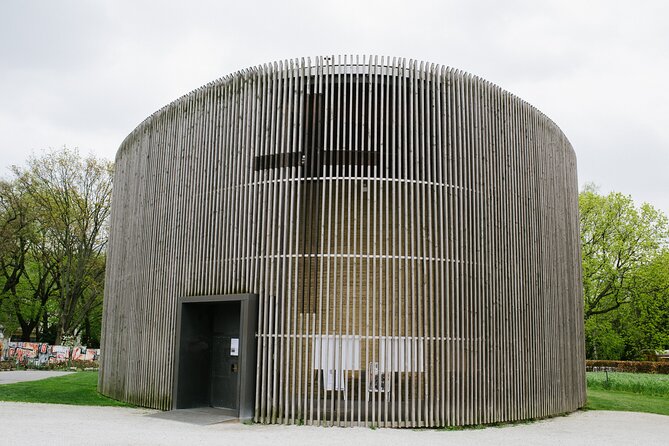
This isn’t a guided walking tour with someone talking at you. Instead, you’re the spy. After you book, you get an email with instructions to download and play the game on your phone (the experience runs through the Questo app). You’ll start with a first clue at the launch point, solve a challenge, then receive directions to the next stop.
What makes it feel fun rather than fiddly is the structure. Each location is both a setting and a puzzle board. You’re not just trying to read a sign; you’re looking for what the story needs. As you answer, the narrative keeps moving, and the phone handles navigation so you’re not constantly checking maps.
One practical detail that matters: the game is designed so each participant ideally has their own ticket for an optimal experience. You can share a phone among people, but if your group splits up (or one person is slower on puzzles), having one device per player keeps things smoother.
You can also read our reviews of more guided tours in Berlin



Moabit Historical Prison Park: your mission launch point
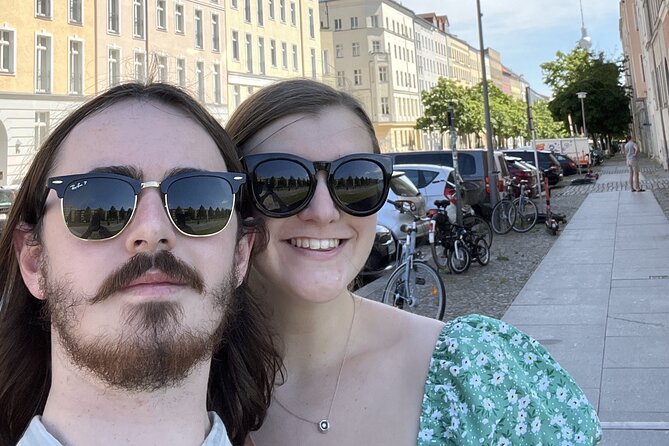
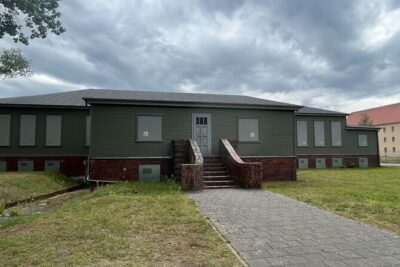
You begin at Geschichtspark Ehemaliges Zellengefängnis Moabit, at Lehrter Str. 5B (near public transportation). This is a fitting opener because it sets the tone: you’re not starting at a postcard spot—you’re starting at a place tied to Berlin’s darker past.
In the game, you get the first clue here. It’s a “start button” moment: you’ll solve something small, then the story pivots to the next step and gives you directions. Even if you’re not a prison-history person, this is the kind of site where slowing down for 10 minutes can change how you see everything else on the route.
Why this stop is especially valuable in a self-guided format: you can control your own pace. If you want to read, take time, and stare at what feels important, you can. If you’re more into movement and momentum, you can play through faster and save deeper reading for afterward.
Hamburger Bahnhof to Sand Pitcher Bridge: the route starts moving

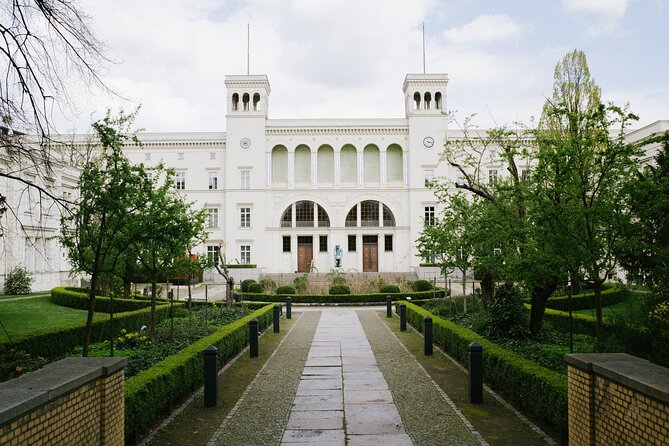
After Moabit, the mission continues to Hamburger Bahnhof for another clue. From here, the game keeps you outdoors and in motion, but in a way that still feels purposeful. You’re not trudging from one random viewpoint to another; the phone tells you what you need to do at each stop, and then you get walked into the next setting.
Next up is Sand Pitcher Bridge. This is a nice contrast because bridges naturally break the tension of lots of indoor-looking sites. You get a moment to look around, get your bearings, and—crucially—reset your attention before the next round of puzzles.
The vibe of these middle stops is what makes the whole quest work. They create rhythm: clue, short wandering, directions, clue again. If you’ve ever done a “normal” walking tour and wished it had more hands-on engagement, this section is where that benefit shows.
Ministry for Economy & Technology, Invalidenpark, and Natural History Museum
As the game pushes into Mitte, it doesn’t only chase famous museums or big monuments. You’ll also hit Invalidenpark and the Natural History Museum of Berlin, plus Ministry for Economy & Technology.
Here’s what I’d watch for if you like structure: these locations can feel different in “how you relate to them.” Parks give you open space to think and look for small visual details. Government-building areas often feel more about architecture and street context. Museum zones can feel like “this is the brainy pause,” even if you don’t need any tickets to complete the quest.
The benefit of mixing these types of places is that the puzzles can keep your eyes active. You’re less likely to get that tour-weariness where everything blends together. Even if you don’t walk into any museum, you still experience Berlin as a city of institutions, not only a city of landmarks.
Lauchhammer Water Pumps and the reminder stops: where the story turns serious
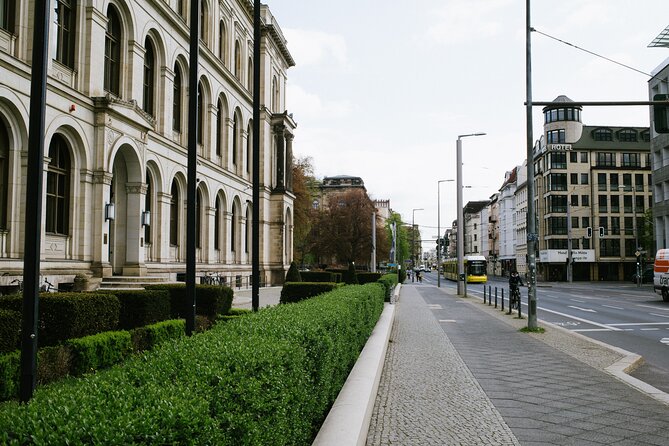
The mission includes Lauchhammer Water Pumps, then moves toward remembrance areas like Victim Wall of Remembrance.
This is where the game’s tone becomes more weighty. When a quest threads you toward memorial spaces, it’s usually better to slow down rather than sprint. In a self-guided format, you have the freedom to do that. Take the pause. Read what you can. Let the puzzle be a prompt, not a distraction.
One of the most practical things about this part of the route: you’re outdoors for most of it, but it’s also the kind of walking where you’ll naturally need small mental breaks. If you’re traveling with someone who rushes, gently coach them to take a few minutes here—otherwise the story moments might feel flat.
You can also read our reviews of more tours and experiences in Berlin






The Berlin Wall Memorial stretch: from Mural to Chapel to Border House
The back half of the mission is anchored in the Berlin Wall area, with multiple steps tied to remembrance and context.
You’ll visit or pass through key stops including:
- Mural – Berlin Wall Memorial
- Chapel of Reconciliation
- Border House Bernauer Straße
- View of Alexanderplatz TV Tower
- and then your final finish at Berlin War Memorial on Bernauer Straße (the end point area is listed around the memorial sites there)
That set of locations is smart for a phone puzzle quest because the “distance problem” gets solved. Wall memorial areas are spread out, but the story gives them continuity. The directions on your phone help you link each scene to the next, so you can focus on meaning and layout instead of only route-finding.
This is also the segment where I’d expect the most value if you like authentic, in-place learning. The quest isn’t only about the Wall as an image; it nudges you to connect different angles, memorial features, and sightlines (including that Alexanderplatz TV Tower view step).
Timing, pacing, and why breaks matter to your day
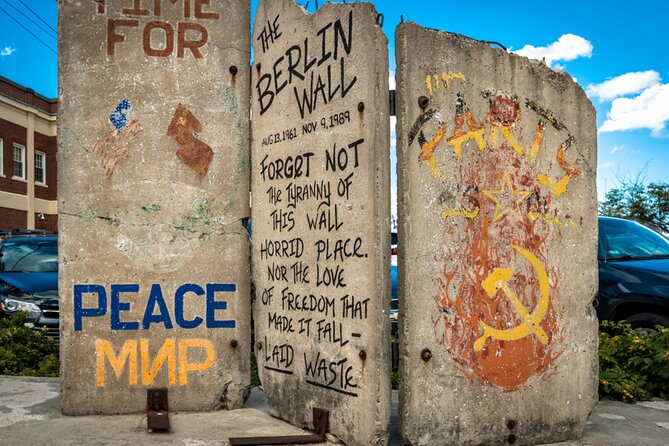
The game runs about 2 hours 40 minutes to 3 hours 10 minutes for most players. In real life, that’s a flexible window. If you stop for lunch or take extra time at a single clue location, it can stretch into a bigger chunk of your day.
A good way to plan: think of this as your “morning-to-early-afternoon brain” activity (or your late-afternoon walk) rather than something to cram between trains. The quest is self-guided, and you’re meant to pause and solve properly.
Also, expect the flow to alternate between walking and screen time. One downside that came up clearly: there’s no option for listening instead of reading, so you’ll be looking at your phone a lot. If you hate being on your screen during travel, this isn’t your match. If you’re okay with reading prompts while you walk, it’s a smooth experience.
Price and value: what $9.31 per person buys you
At about $9.31 per person, this sits in the “seriously affordable” category for an experience that takes you across multiple districts and ties in a story format. The money isn’t going to a live guide talking the whole time. It’s going to the app experience: the writing, the clue design, and the phone-led navigation.
That value makes sense for Berlin, because you’re already paying to get there and you’ll likely end up walking anyway. Here, your walking gets structure. You’re also not paying entry fees to finish. The basics are designed so you don’t need attraction tickets to complete the quest.
The best value angle for me: you control how much you slow down. If you want the basics and then move on, fine. If you want to linger at memorial moments or museum exteriors, you can do that without feeling like you’re “wasting” a guide’s time.
Group setup, phone sharing, and support when things go sideways
This is listed as a private activity for your group, so you’re not stuck with strangers pacing differently than you. Still, the biggest group challenge tends to be one phone, multiple brains. If you can, each person getting a ticket helps each player interact fully with the puzzles and directions.
A very reassuring part: 24/7 customer support. When a clue is blocked by construction work, or when a location is temporarily closed, help is available fast. That kind of safety net matters more than you think with clue-based games, because it’s rarely the puzzle itself that kills momentum—it’s the real-world stuff like barriers.
If you hit something closed or hard to access, don’t just guess your way through. Use the support channel so you keep your place in the story.
Who should book this Berlin spy puzzle quest
This works best if you like:
- self-guided city exploring with structure
- outdoor puzzle moments and light detective work
- Berlin history that’s connected to place, not just dates
- a walking route that spans multiple neighborhoods
It may be less satisfying if:
- your group hates reading on the phone while walking
- you’re bringing younger kids who need more traditional storytelling
- you prefer a live guide to answer questions in real time
If you’re traveling with teenagers who are okay with phone-based challenges, this is a strong “activity that doesn’t feel like a chore.” For younger kids, I’d treat it as a maybe, and focus on whether they’ll enjoy solving rather than only being told.
Should you book the Spy Mission in Berlin?
Yes, if you want an affordable way to turn Berlin into a guided-feeling walk without paying for a full guided tour. The format is especially good in a city like Berlin, where the best learning often happens when you slow down at the right places—Moabit’s prison-history start and the Wall memorial finish make that easy.
Think twice before booking only if your group is phone-fatigued or needs a more classic, conversation-based tour style. Otherwise, this is a smart value play: about three hours of purposeful wandering, with directions in your pocket and a story that keeps your attention on what you’re actually passing.
FAQ
FAQ
Where does the Spy Mission start and end?
The quest starts at Geschichtspark Ehemaliges Zellengefängnis Moabit, Lehrter Str. 5B, 10557 Berlin. It finishes on Bernauer Straße in the Berlin Wall Memorial area, with the story ending at Berlin War Memorial.
How long does it take to complete?
It typically takes about 2 hours 40 minutes to 3 hours 10 minutes, though you can pause as long as you want at each stop.
Do I need to buy tickets for attractions along the way?
No. Entry tickets to attractions are not needed to complete the tour.
Do I need a tour guide?
No. This is a self-guided phone game. You’ll play through the Questo app and follow directions on your phone.
What if a clue or location is blocked or closed?
You have 24/7 customer support. If something prevents you from continuing, you can reach out for help.
Is it good for kids?
It’s listed as free for KIDS, and most travelers can participate. Still, one family found their 12-year-old didn’t fully connect with the story, so it may work best for kids who enjoy puzzles and phone-based tasks.
Can I cancel for free?
Yes. You can cancel for a full refund if you cancel up to 24 hours in advance. If you cancel less than 24 hours before the start time, the amount paid won’t be refunded.