REVIEW · BERLIN
Berlin Battlefield Tour – Operation Berlin 1945
Book on GetYourGuide →Operated by On the Front Tours · Bookable on GetYourGuide
Berlin’s final WWII days are walked at street level.
This tour traces Operation Berlin 1945, ending the war in Europe, with a focused route around the Reichstag assault and surrounding bridges and squares. It runs about 150 minutes, so you get a meaningful story without it turning into an all-day slog.
I especially liked two things: the way guide Jochen brings the battle to life with strong, practical context, and the Then & Now photos and maps that help you read today’s streets like they’re still battlefield terrain. You’re not just memorizing dates; you’re connecting decisions to real locations.
One thing to consider is logistics around meeting and sighting your guide. One past participant had trouble finding the guide when the umbrella marker was wrong, so I’d take this seriously: arrive early and look for the guide holding the blue umbrella outside the meeting point.
In This Review
- Key Things I’d Prioritize About This Tour
- Why the Battle of Berlin Still Feels Personal on This Walk
- Meeting at MEININGER Berlin Hauptbahnhof Without Losing Time
- Stop 1: The Viewpoint Setup That Helps You Read the Terrain
- Moltkebrücke: A Strategically Vital Bridge in Real Street Context
- Platz der Republik and the Assault Orientation Around Königplatz
- Reichstag: Where the Objective, the Odds, and the Cost Collide
- Weidendammer Brücke: The Finish Where the Stories Turn to Desperation and Breakout
- The Tour’s Most Memorable Themes: MG42, Soviet Flag Raising, and Commander Choices
- Then & Now Photos and Maps: What Makes This More Than a Lecture
- Price and Value: Is $57 Worth It?
- Who This Tour Fits Best (and Who Might Want Something Else)
- Before You Go: Practical Tips That Make a Difference
- Should You Book Berlin Battlefield Tour – Operation Berlin 1945?
- FAQ
- How long is the Berlin Battlefield Tour – Operation Berlin 1945?
- Where does the tour meet?
- What language is the tour offered in?
- Will the tour run in bad weather?
- What’s included in the tour?
- Is the tour wheelchair accessible?
- How much does the tour cost?
Key Things I’d Prioritize About This Tour
- A small-group WWII route focused on the Reichstag and the last days of the city’s fighting
- Then & Now photographs and maps that make the 1945 layout easier to understand
- Bridge-to-Reichstag street strategy, from Moltkebrücke to Weidendammer Brücke
- Command decisions explained, not just battle descriptions
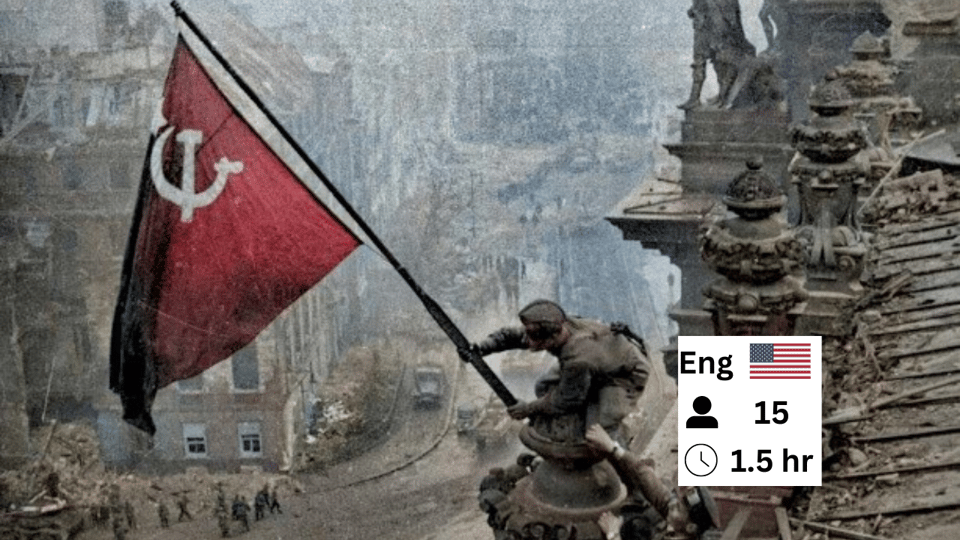
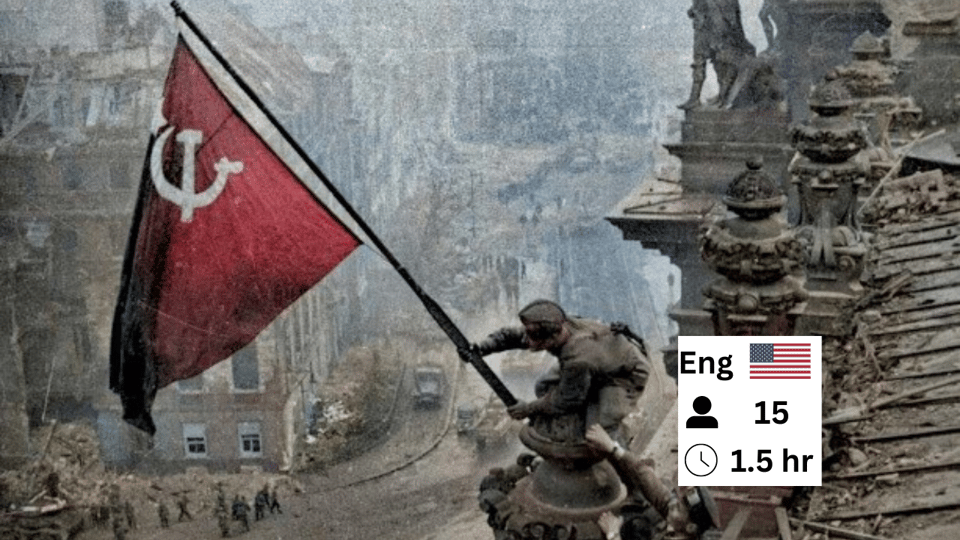
- A specific focus on the Soviet flag-raising story, including the debate around what’s repeated
- A finishing point at Weidendammer Bridge, where the narrative lands on desperation and breakout attempts
Why the Battle of Berlin Still Feels Personal on This Walk
The Battle of Berlin isn’t a distant “European war chapter” for most people. It’s the last, loud, and messy endgame—where commanders had almost no room for mistakes and soldiers had very few options. This is a street-level tour, so you don’t get to hide behind a museum label.
What makes this experience work is the focus on one stretch of the story: the confrontations around the Reichstag and how the assault unfolded from nearby key areas. You’ll also get an emphasis on the human side—desperation, hope, and carnage—so it doesn’t stay clinical.
You also leave with a clearer sense of strategy. You hear how Soviet and German commanders made decisions, and how those decisions played out in the layout of Berlin. Even if you know some WWII basics, this kind of location-based framing can change what you think you understand.
You can also read our reviews of more tours and experiences in Berlin.


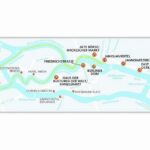
Meeting at MEININGER Berlin Hauptbahnhof Without Losing Time
The tour starts in front of MEININGER Hotel Berlin Hauptbahnhof (Ella-Trebe-Straße 9), on the south side of Berlin Central Station. You’ll want to arrive 10 minutes early and look for the guide standing outside holding a blue umbrella.
This matters because the tour is short—about 150 minutes—and it doesn’t waste time. If you’re late, you can end up sprinting to catch up while the group is already getting oriented.
Also plan for weather. The tour runs rain or shine, and you’ll have umbrellas available if it’s wet. Bring your own umbrella or raincoat anyway, and come in wearing comfortable shoes, since this is a walking tour built around multiple stops.
Stop 1: The Viewpoint Setup That Helps You Read the Terrain
After meeting, you’ll go to a viewpoint for about 20 minutes of guided orientation. This is where the guide usually does the heavy lifting: setting up the “why this location, why this direction” part of the story.
This pre-game matters. The Battle of Berlin is intense and fast-moving, and without a quick framework you can feel like you’re hearing a list of places rather than a single connected battle. The viewpoint phase helps you get bearings fast—so later, when you reach Moltkebrücke and the Reichstag area, the narrative has a spine.
If you like asking questions, this is a good moment to do it. You’re fresh, you’re not yet tired from walking, and your guide can explain the plan for what you’re about to see.
Moltkebrücke: A Strategically Vital Bridge in Real Street Context
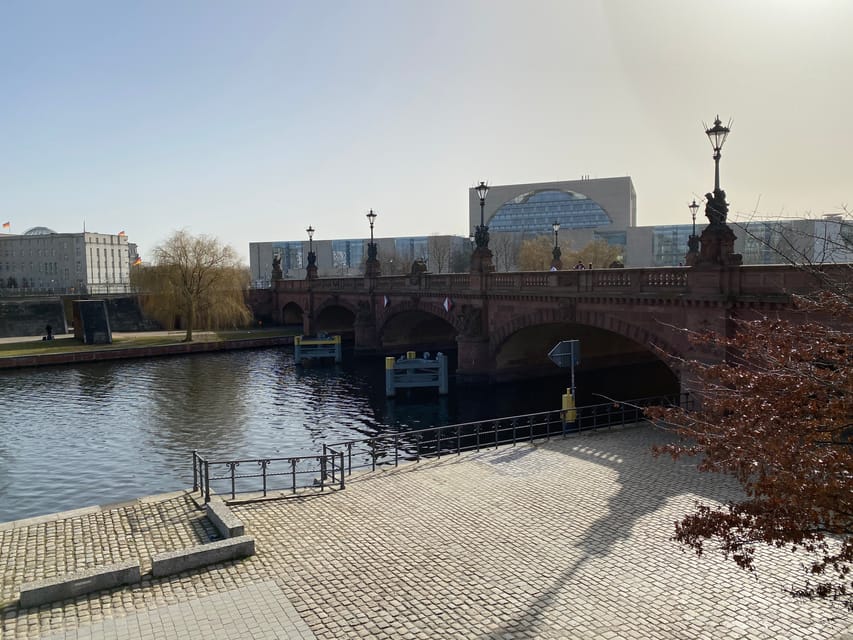
Next up is Moltkebrücke, with about 20 minutes of guided sightseeing and passing-by sections. Bridges show up in war stories for a reason: they control movement, timing, and vulnerability. On this route, the bridge isn’t just a landmark—it’s part of how the assault could push forward or stall.
Standing near the bridge during the discussion helps you understand what makes it strategically vital in the battle narrative. You start seeing how small changes—routes, crossings, chokepoints—can create big outcomes over days of fighting.
A helpful part of the tour here is the use of Then & Now materials and maps. Even if you’ve seen old Berlin photos before, comparing them to what you can actually see makes the story feel grounded. You stop thinking of the bridge as “somewhere back then” and start placing it in the logic of the 1945 fighting.
Potential drawback at this stop: like many bridge areas, you may be exposed to wind or weather. If it’s rainy or chilly, keep an umbrella handy and keep moving. The tour keeps momentum, so don’t plan to linger on your own unless the guide pauses.
Platz der Republik and the Assault Orientation Around Königplatz
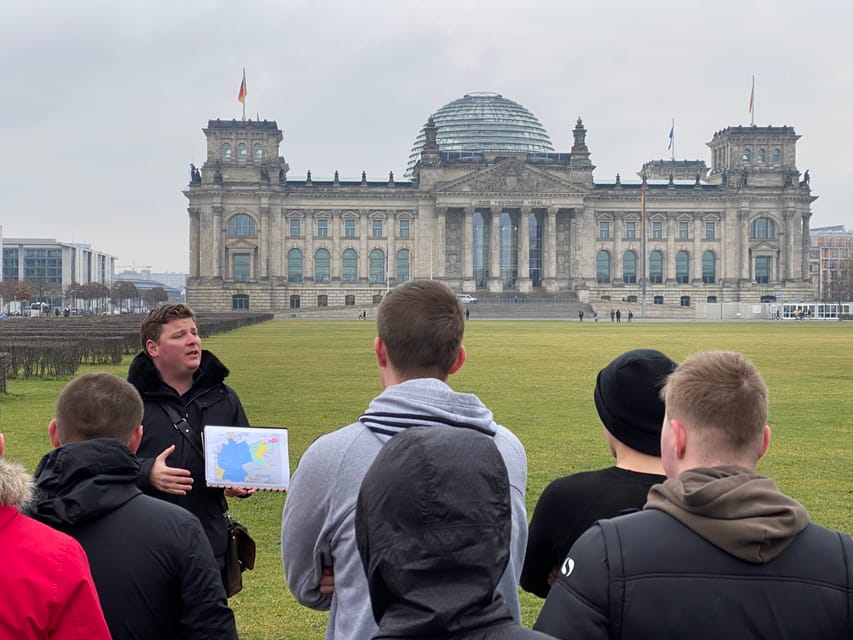
The tour then heads to Platz der Republik (about 20 minutes). This stop is about perspective—giving you a sense of where assault pressure came from and how the fighting tied into the larger push toward the Reichstag objective.
You’ll also hear the tour’s attention to the Königplatz assault area as part of the story. The key value here is the way the guide connects the local geography to the battle’s tempo: where movement could happen, where it likely couldn’t, and how attackers and defenders were forced into difficult choices.
This is one of the places where the tour’s method really helps you as a visitor. You’re not just shown “the important place.” You’re taught to interpret why it mattered.
If you’re the type who likes military detail, you’ll probably appreciate how the guide brings in strategy alongside story. The tour keeps returning to what Soviet and German commanders were trying to accomplish, and how the battle plan collided with reality on the ground.



Reichstag: Where the Objective, the Odds, and the Cost Collide
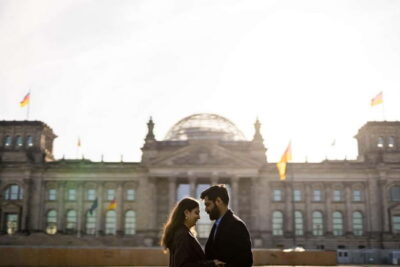
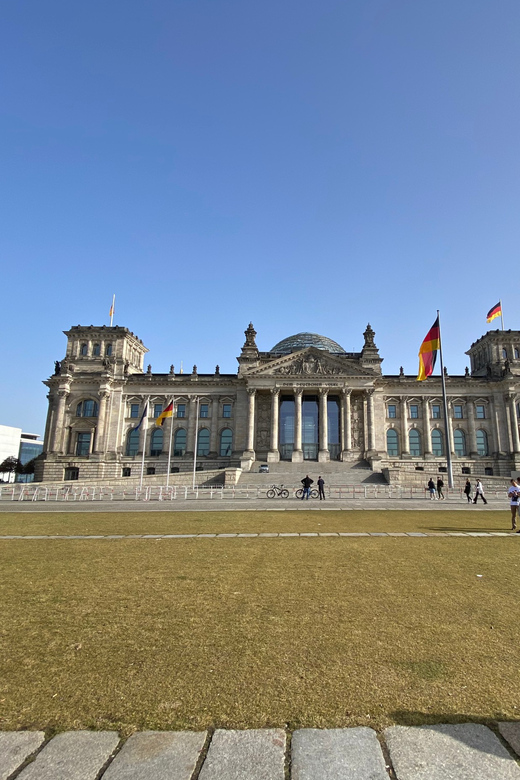
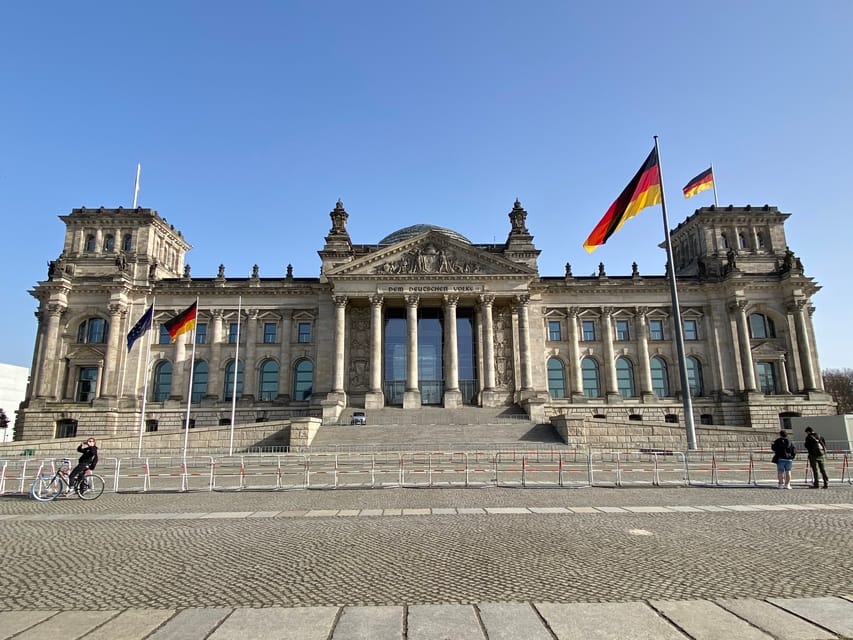
The biggest stop is the Reichstag area, about 30 minutes. This is the primary objective of the war for the Soviets in the way the tour frames it, and you’ll hear the story unfold around what that meant for both sides.
This is also where the tour’s tone shifts from “where things happened” to “why this mattered.” You’ll hear about the intense moments leading up to the assault, and the desperation, hope, and carnage that ran through those final stretches.
What I liked here is that the guide doesn’t treat it like a generic victory site. Instead, you get a sense of competing priorities—attackers trying to force an outcome, defenders trying to hold what they could while resources and options shrank.
There’s also a practical learning angle. The guide uses this stop to explain decisions by Soviet and German commanders. That’s important because the Battle of Berlin can be hard to understand if you only focus on individual bravery. You see bravery, yes, but you also see how plans and constraints shaped what soldiers could realistically do.
One note: the Reichstag area can feel like a lot at once—emotion, strategy, and geography all at the same time. If you tend to get overwhelmed in crowds, take a quick breath when the guide pauses and focus on the map/photos portion first. That keeps the story from becoming noise.
Weidendammer Brücke: The Finish Where the Stories Turn to Desperation and Breakout
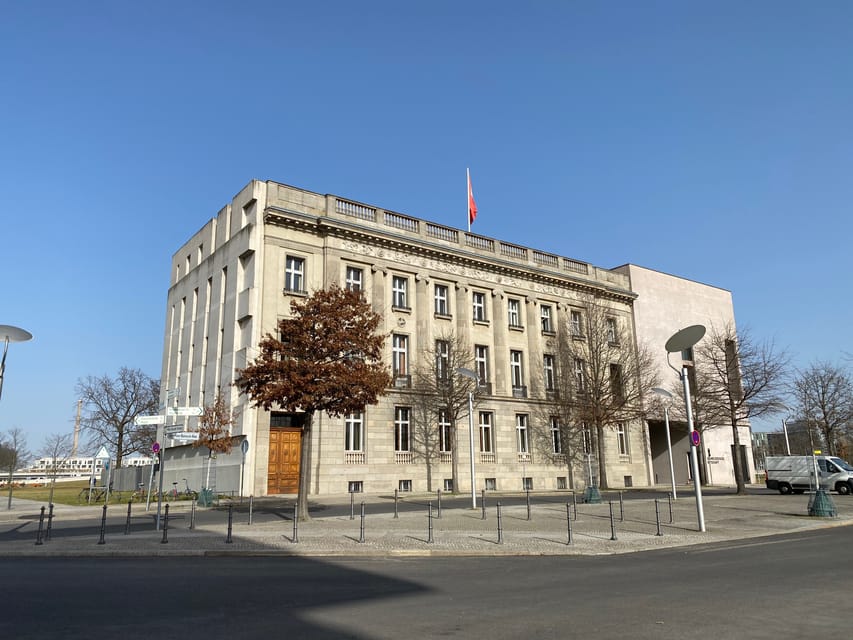
Finally, you reach Weidendammer Brücke for about 20 minutes, and the tour finishes there. This stop is built around the tales of desperation, hope, and carnage—and it lands the narrative on the German Break-Out part of the story.
Bridges again. That repeated emphasis isn’t random. In the last days of fighting, movement corridors can decide who gets trapped, who can retreat, and who can try to escape. Hearing the breakout story while you’re in a real crossing area helps you understand the stakes beyond the words.
The ending matters because it gives you closure to the route. After walking the bridge-to-assault-to-objective sequence, you’re not left with scattered impressions. The guide brings it together and points you to how the final moments played out around the Reichstag area and beyond.
If you want a photo, plan it at the guide’s pace, not after. The tour ends at the bridge, and you’ll likely have limited time to linger while others wrap up. On a busy day, get what you want quickly and then step back for your own viewing.
The Tour’s Most Memorable Themes: MG42, Soviet Flag Raising, and Commander Choices
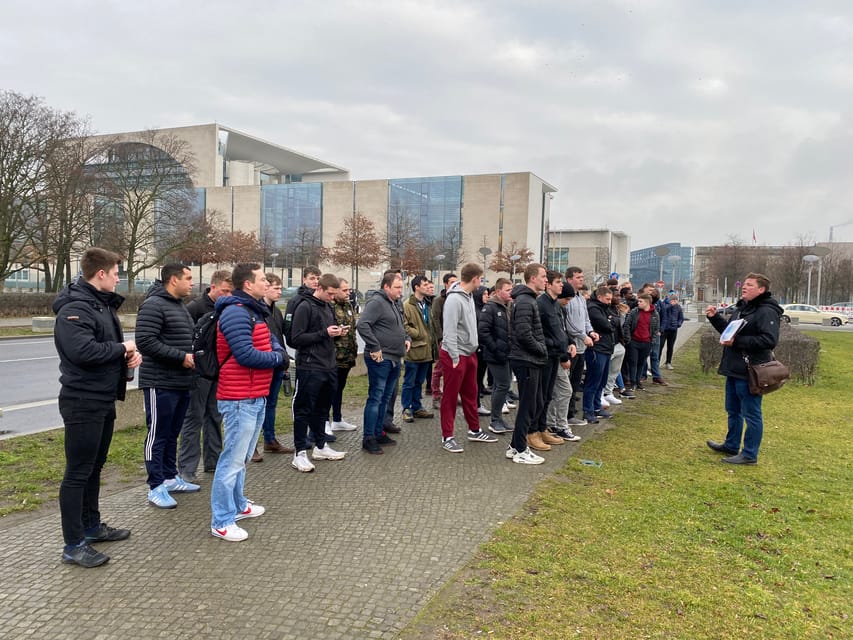
A big part of the experience is how the guide uses vivid battle details to help you grasp what fighting sounded like and how it felt. You’ll hear descriptions involving the MG42, plus the hiss and snap associated with artillery. Even if it’s not literal reenactment, the guide’s storytelling is designed to make the environment understandable.
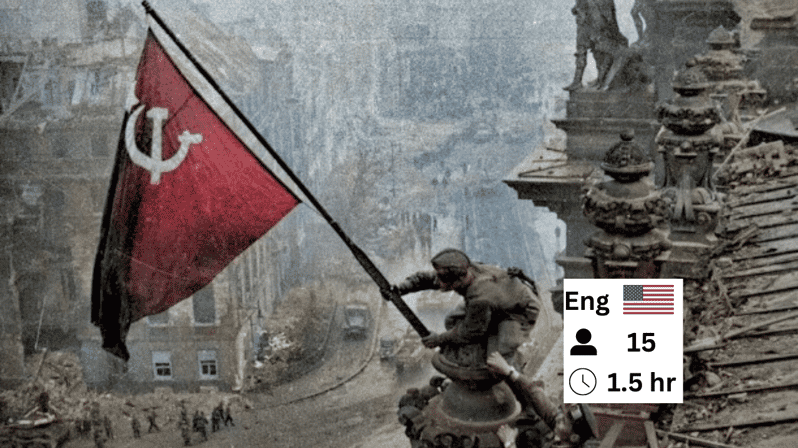
The tour also highlights the story behind the Soviet flag raising—framed as the truth people often don’t get straight. I’d treat that as a prompt to think critically rather than a single final answer. What you should take away is that this moment has competing versions, and the guide is pushing you to question the simplest telling.
Finally, the tour repeatedly returns to strategy and decisions. You learn about choices made by Soviet and German commanders, and you connect those choices to what you’re seeing around you. That’s the real payoff for many people: you stop treating WWII as a sequence of events and start seeing it as a sequence of decisions under pressure.
And don’t skip the human side. The tour’s attention to heroism, bravery, and desperation keeps the story from becoming a chess match. It also helps you understand why soldiers on both sides could be brave and still be trapped in a collapsing situation.
Then & Now Photos and Maps: What Makes This More Than a Lecture
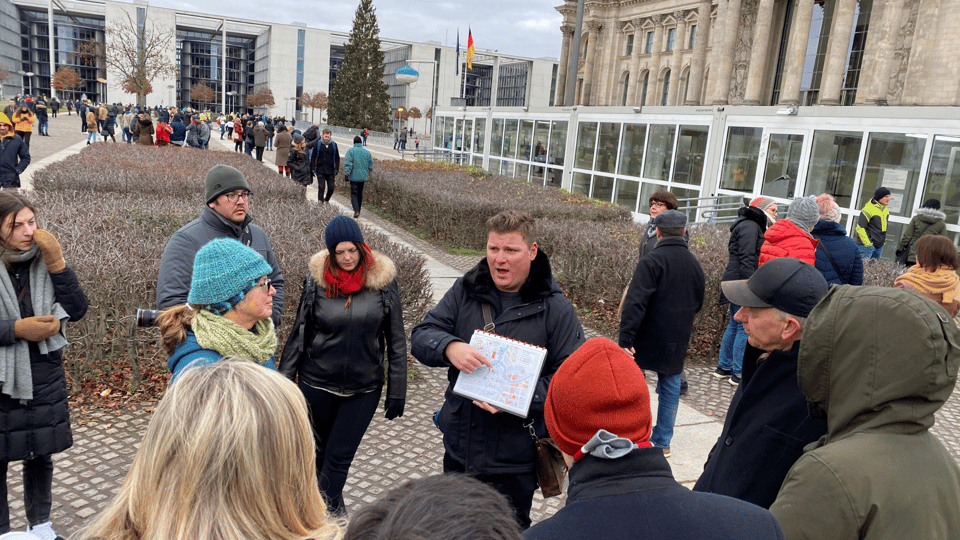
Berlin is full of WWII sites. Lots of tours will point and talk. What makes this one more satisfying is that you get Then & Now photographs and maps to work with during the route.
Here’s why that matters: Berlin has changed. Street layouts, building footprints, and even sightlines aren’t the same as 1945. Without visual comparisons, a guide can only describe what you can’t fully see.
With the maps and photos, you can “place” the battle in the present city. It’s not about getting every detail perfect. It’s about building mental structure so the story stays coherent after the tour ends.
This also helps if you’re the type who likes to wander independently afterward. With the battle geometry in your head, you’ll understand what you’re passing even when the guide isn’t there to narrate.
Price and Value: Is $57 Worth It?
At $57 per person for a roughly 150-minute small-group tour, the value depends on what you want from Berlin.
If you enjoy WWII topics and you like guided interpretation tied to specific locations, this price can make sense. You’re getting an expert guide, a focused route around major sites, and visuals via Then & Now photos and maps. The tour also targets the “how did it happen” story around the Reichstag assault, not a broad tour of Berlin WWII locations.
If you’re more of a casual sightseeing person, you may feel it’s on the expensive side compared with other Berlin tours. And that’s a fair concern. A tour needs to match your curiosity level, or the cost starts to feel like it’s buying structure you don’t fully use.
My advice: if you want a guided explanation of one of WWII’s last-city battles, with street-level storytelling, this is a solid use of time. If you mainly want photos and general context, you might prefer something cheaper and more flexible.
Who This Tour Fits Best (and Who Might Want Something Else)
This tour fits best if you:
- Want a WWII specialist focus rather than a general Berlin history route
- Like battles explained through strategy plus human stories
- Enjoy short, intense walks where the guide keeps a tight narrative arc
- Appreciate visual supports like maps and Then & Now photos
You might consider a different option if you:
- Don’t enjoy walking tours or you expect mostly indoor, slow-paced sightseeing
- Prefer broad, unscripted history browsing over a guided battle narrative
- Want a battle story without the commander-level strategy discussion
The good news: the tour is built around a clear endpoint at Weidendammer Brücke, so it doesn’t drift. It has direction.
Before You Go: Practical Tips That Make a Difference
Bring comfortable shoes. The tour is compact in time, so blisters feel like they happen fast. Pack water and snacks since you’re on your feet and the tour length is enough to build hunger.
For weather, assume you’ll be outside a lot. Even though umbrellas are available, having your own umbrella or rain gear keeps you comfortable and not scrambling for cover.
If you want to get the most out of it, do one small prep step: skim a few lines about the Battle of Berlin before you go. You don’t need a textbook. Just know that the Soviets pushed toward the Reichstag as a key objective and that the final days involved desperate fighting. Then the guide’s story clicks faster.
Also, listen for how the guide links each place to decisions made by commanders. That’s the thread that makes the route feel like one connected story rather than disconnected stops.
Should You Book Berlin Battlefield Tour – Operation Berlin 1945?
I think this tour is a strong choice if you want WWII history tied tightly to Berlin’s real geography. The combination of a focused route, a guide who can explain strategy in plain language, and Then & Now photos and maps makes it easier to understand than many generic city walks.
It’s also a good value for the time you’re spending—about 150 minutes—as long as you’re genuinely interested in the Reichstag assault and the surrounding bridge areas. The main “watch-out” is basic logistics: arrive early at MEININGER Hotel Berlin Hauptbahnhof and look for the guide holding the blue umbrella.
If you’re on the fence because of the price, treat it as a question: do you want a guided, location-based battle story, or do you want cheaper, looser sightseeing? If the former, book it. If the latter, you can likely find a less costly option.
FAQ
How long is the Berlin Battlefield Tour – Operation Berlin 1945?
The tour lasts 150 minutes.
Where does the tour meet?
It meets in front of MEININGER Hotel Berlin Hauptbahnhof, Ella-Trebe-Straße 9, 10557 Berlin, on the south side of Berlin Central Station. The guide stands outside holding a blue umbrella.
What language is the tour offered in?
The live tour guide speaks English.
Will the tour run in bad weather?
Yes. The tour takes place rain or shine.
What’s included in the tour?
You get an expert tour guide, an exclusive small group tour, and Then & Now photographs and maps. Umbrellas are also provided throughout the year in case of rain.
Is the tour wheelchair accessible?
Yes, it is wheelchair accessible.
How much does the tour cost?
The price is listed as $57 per person.