REVIEW · BERLIN
Berlin’s Best: 2 Hour Walking Tour Third Reich and the Cold War
Book on Viator →Operated by Insider Tour Berlin · Bookable on Viator
Berlin history hits different when you walk it. This two-hour route strings together major Third Reich and Cold War landmarks, with a guide calling out what matters and why it still shapes Berlin today. You move by foot between symbolic places like the Brandenburg Gate and the infamous Checkpoint Charlie, hitting spots where buses can’t really stop long.
What I like most is the way the tour turns famous locations into something you can actually picture. I also like the guide style: several guides on this tour—people like Glen, Ben, Mikhail, and Maggie—are praised for handling questions, keeping the pace friendly, and adding context with historic photos at certain stops.
One thing to consider: this route covers brutally dark material. You’ll stand where the Holocaust was commemorated, where Hitler’s command center was, and where Nazi terror institutions were headquartered—so plan for a serious emotional tone and take your time if you need it.
In This Review
- Key Highlights You’ll Feel on This Route
- Entering the Story at Brandenburg Gate
- Why this stop is worth your time
- A small practical note
- The Reichstag Building: Parliament, Fire, and the Next 100 Years
- What to watch for as you listen
- Tiergarten’s Soviet Memorial: When the Battlefield Comes Home
- The emotional angle
- The drawback
- The Victory Column and Speer’s Germania Dream
- Why this matters for modern Berlin
- Holocaust Memorial Walk and the View Above Hitler’s Bunker
- How the guide approach helps
- My take on pacing
- Goering’s Aviation Ministry and Topography of Terror
- Why this stop is a turning point
- Wall Life at Niederkirchnerstraße, Then Checkpoint Charlie
- Why the ending works
- Price and Value: Is $24.07 a Smart Move?
- Getting the Timing Right: Pink Umbrella Meet Point
- Who This Tour Fits Best (and Who Might Not Love It)
- Should You Book This Berlin Third Reich and Cold War Walking Tour?
- FAQ
- How long is the walking tour?
- How much does the tour cost?
- Where does the tour start and end?
- What language is the tour offered in?
- Do I need to buy tickets for the stops?
- How many people are in the group?
- Are there any requirements for meeting the group?
- Is free cancellation available?
Key Highlights You’ll Feel on This Route
- Brandenburg Gate to Checkpoint Charlie in two hours: a smart “from symbolism to street-level reality” path.
- Free-to-enter stops listed throughout: you’re not paying your way into the story.
- Small groups (max 30): easier questions and more human pacing.
- Guides who answer anything: multiple guides are singled out for Q&A and clear explanations.
- Historical images on the walk: at least some guides use old photos to anchor what you’re seeing.
- A heavy, respectful sequence: Nazi rise, wartime aftermath, Wall-era escape attempts, and reunification.
Entering the Story at Brandenburg Gate
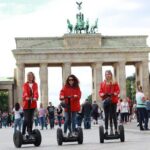
You start at Pariser Platz, right by the Brandenburg Gate. This is the kind of site everyone recognizes—because it’s plastered on postcards and politics speeches alike. But on this walk, it’s more than a photo stop. The guide frames it as a symbol of reunified Germany, not just a monument that looks grand from a distance.
What makes this opening work for you is the setup. In a short span, you go from a national icon to the machinery of dictatorship and then to the Cold War’s physical divide. That first explanation helps the rest of Berlin click into place.
You can also read our reviews of more walking tours in Berlin



Why this stop is worth your time
- The Gate gives you a shared reference point.
- The guide’s context keeps the walk from feeling like a random list of landmarks.
A small practical note
This is one of the busiest parts of central Berlin. You’ll want to arrive on time because you meet the group there and start with orientation.
The Reichstag Building: Parliament, Fire, and the Next 100 Years
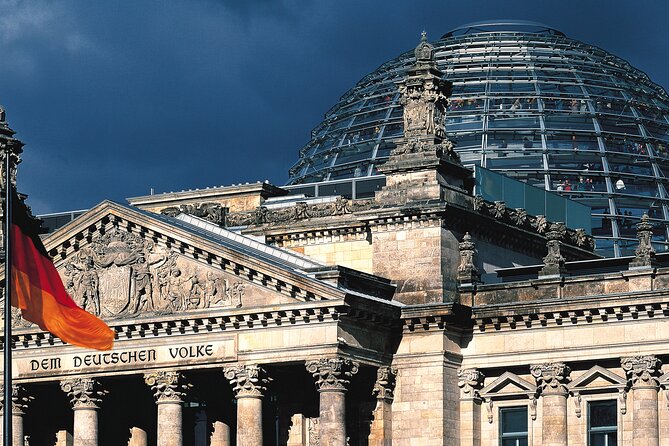
Next up is the Reichstag Building, Germany’s parliament house, and one of the most loaded structures in the city. You’ll hear how the building captures Berlin’s arc over the last century—especially through the lens of the Reichstag fire in 1933 and how Hitler used the Reichstag during his dictatorship.
This is the stop where the tour helps you think in cause-and-effect. Many buildings in Berlin are just buildings until someone gives you the backstory. Here, the backstory is the point: you’re looking at a democratic symbol that was twisted into authoritarian power.
What to watch for as you listen
Even if you’re only seeing portions from the outside, you’ll get better at reading the building. The guide ties it to what Berlin became afterward. That connection is what makes the next few stops land.
You can also read our reviews of more tours and experiences in Berlin


Tiergarten’s Soviet Memorial: When the Battlefield Comes Home
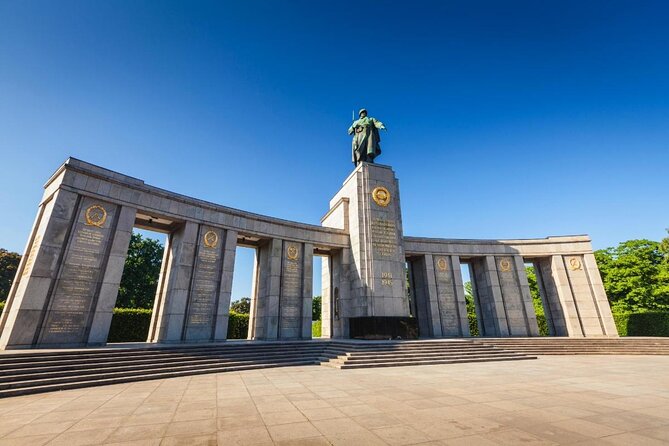
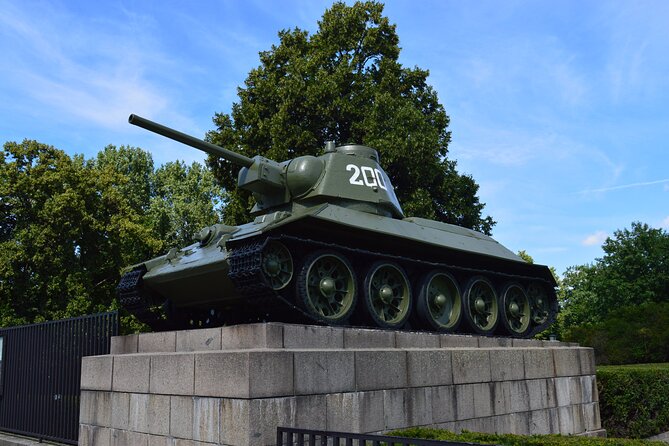
From national government sites, the walk shifts sharply to the Soviet Memorial in the Tiergarten. You’ll see WW2-era military artifacts, including a Soviet T34/76 tank and field artillery.
This section hits with a different kind of clarity. Instead of propaganda slogans on stones, you’re looking at hardware. It’s the war’s leftovers, displayed so you can stand near them and understand the scale of what was fought here.
The emotional angle
This isn’t a victory-lap moment. The guide’s commentary is aimed at showing how Berlin was shaped by what happened, not just who won.
The drawback
If you’re hoping for light sightseeing between big topics, this is where the tone gets heavier again. Plan your mental bandwidth accordingly.
The Victory Column and Speer’s Germania Dream
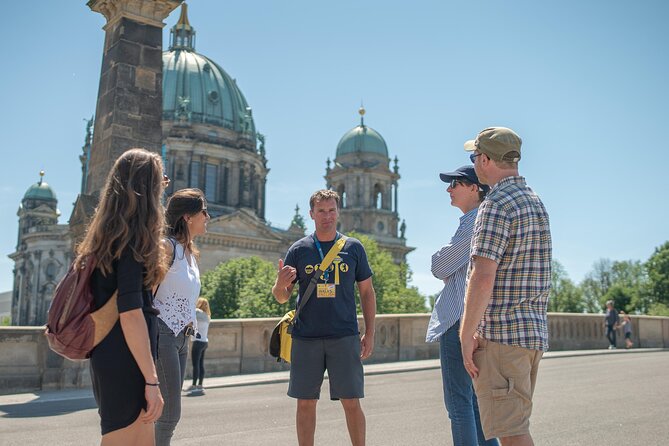
Another stop on the route brings you to the Victory Column. You’ll learn why Albert Speer moved it from its original location to the new site. You’ll also hear about Speer’s grand planning for the Nazi-era future—his plan for a new capital called Germania, which was tied to the Nazis’ dream of winning the war.
This stop can be surprisingly fascinating because it’s about design, power, and obsession. The Nazis didn’t just want to rule people. They wanted to rewrite the city itself into a permanent message.
Why this matters for modern Berlin
Berlin today is full of layers. This stop gives you one of the most aggressive examples of how a regime uses architecture and planning to control perception. Once you know that, you’ll start noticing other “planned futures” around the city.
Holocaust Memorial Walk and the View Above Hitler’s Bunker
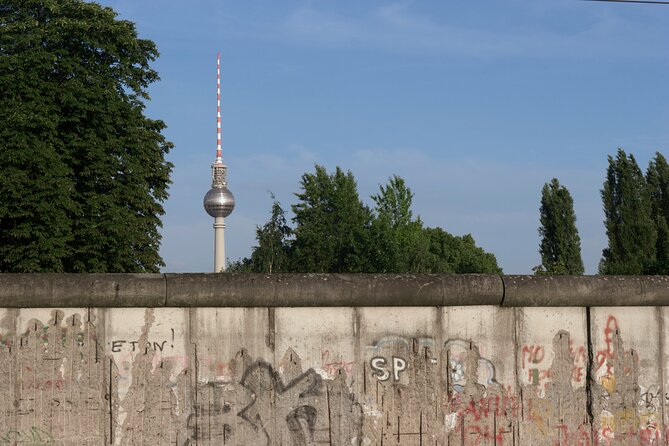
Next comes the Holocaust Memorial (Memorial to the Murdered Jews of Europe). You’ll walk through the memorial designed to make you feel the weight of loss and absence. It’s immense in a quiet, unsettling way—less about explanations and more about standing inside remembrance.
Then you’ll move to the Fuhrerbunker area. You’ll stand above the location where Hitler’s bunker was and hear about the last days of WW2, including Hitler’s suicide on April 30, 1945, and how Germans confront this past today.
How the guide approach helps
Several guides called out in feedback—people like James and Joachim—are praised for balancing seriousness with just enough human steadiness that you don’t feel rushed or handled like a lecture audience. That matters here. These topics aren’t trivia, and a good guide keeps the tone respectful.
My take on pacing
This portion can feel like the emotional peak of the whole walk. If you’re the type who needs a moment to process, you’ll probably find the natural breaks between stops helpful.
Goering’s Aviation Ministry and Topography of Terror
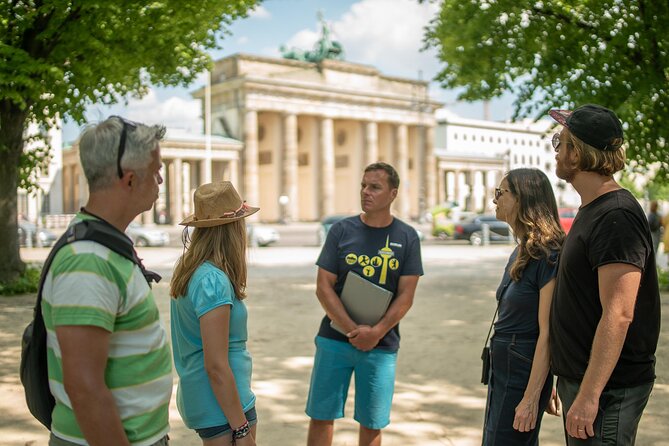
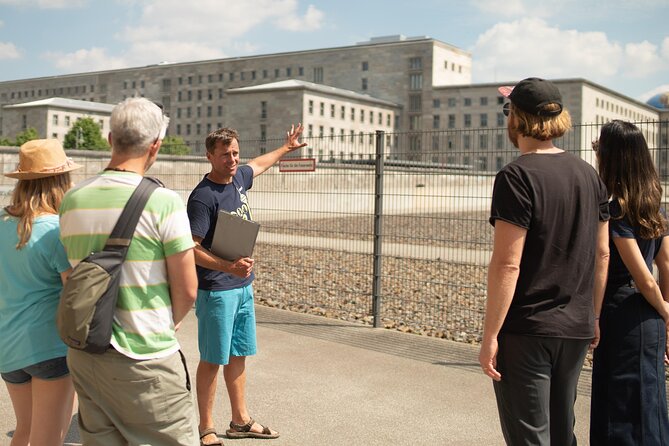
The walk continues with the Aviation Ministry of Berlin, tied to the long shadow of Hermann Goering. You’ll also hear how this location was tied to the early post-war period, including when East Germany (the GDR) was proclaimed in 1949.
Then comes Topography of Terror. This is one of the most important stops on the route because it marks where Nazi institutions like the SS, Gestapo, and SD had headquarters. Today, the site houses the Topography of Terror exhibition, which teaches the crimes these organizations carried out during WW2.
Why this stop is a turning point
Earlier stops focused on symbols and battles. Here you get the administrative side of terror—how systems were run. That makes the city feel less abstract. You’re not only seeing where events happened; you’re seeing what those events were made of.
Wall Life at Niederkirchnerstraße, Then Checkpoint Charlie
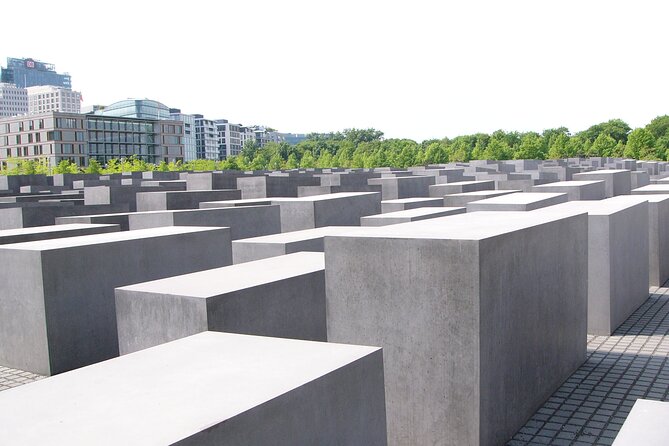
You finish with the Berlin Wall story in two steps: first at Niederkirchnerstraße, then at Checkpoint Charlie.
At Niederkirchnerstraße, you’ll see a big remaining piece of the wall and hear accounts of escapes—plus what happened to people who tried and didn’t make it. The guide also covers life on both sides of the Wall: East Berlin vs West Berlin. This part turns a monument into lived experience.
Then you end at Checkpoint Charlie, the famous checkpoint through the Wall. You’ll hear about the Soviet vs USA tank standoff on this street in 1961, and then the night the Wall came down—November 9, 1989. The tour closes by connecting reunification to what has followed in the decades since.
Why the ending works
Checkpoint Charlie is the most famous name, but the tour makes it meaningful by giving you the context first. By the time you arrive, you’re not just looking at a tourist landmark. You’re seeing why it mattered, and what changed after.
Price and Value: Is $24.07 a Smart Move?
At $24.07 per person for about two hours, this is good value if you want a guided framework. You’re paying for three things that add up fast on your first Berlin trip:
- someone to connect the sites into one timeline
- context that you won’t guess from plaques
- help answering questions so you don’t leave with half-understood impressions
Also, the stops on this walk are marked as free to enter, which keeps the total cost from creeping upward. That’s a big deal for a short tour: you get a lot of landmarks without turning your schedule into a ticket hunt.
One more value clue: this type of walk tends to get booked ahead. The average booking window here is about 16 days in advance, so if you’re traveling during busy seasons, don’t wait until the last minute.
Getting the Timing Right: Pink Umbrella Meet Point
You meet at Brandenburg Gate (Pariser Platz side) at the Tourist Information office, and you’re asked to arrive 15 minutes early. Look for the guide with the pink umbrella. It’s simple, but it matters because Berlin sidewalks are crowded and the group needs to start on time.
The tour ends at Checkpoint Charlie (Friedrichstraße 43–45, 10117 Berlin). Since it finishes in a central area, it’s an easy anchor point for your next activity—meal, museum, or just wandering.
And yes, the tour is offered in English only. If you want German-language commentary or a self-guided deep dive, this probably isn’t your format.
Who This Tour Fits Best (and Who Might Not Love It)
This walk is best for you if:
- you’re seeing Berlin for the first time and want a clear timeline from the Third Reich to the Cold War
- you like getting the story behind major sites like Brandenburg Gate, the Reichstag, and Checkpoint Charlie
- you want a guide who can handle questions without rushing you along
It’s also family-friendly in structure, based on what people describe—one family report mentioned an 11-year-old and a 16-year-old feeling comfortable asking questions. That said, the content is heavy. If you’re traveling with kids, you’ll want to prep them for serious topics.
Who might want to skip it?
If you only want light, casual sightseeing or you’re looking for a purely outdoor photo tour with minimal emotional weight, this route will feel too intense.
Should You Book This Berlin Third Reich and Cold War Walking Tour?
If you want a fast, focused way to understand why Berlin looks the way it does—past and present—this tour is a strong pick. You get the major landmarks tied together into one coherent story, and you’ll likely appreciate how guides on this tour handle tough material with sensitivity and humor kept in check.
Book it if you like walking tours that do more than point. You’re not just collecting stamps. You’re learning how power, war, and ideology carved this city into layers you can still read today.
FAQ
How long is the walking tour?
It runs for about 2 hours.
How much does the tour cost?
The price is listed as $24.07 per person.
Where does the tour start and end?
It starts at Brandenburg Gate, Pariser Platz (Tourist Information office side) and ends at Checkpoint Charlie on Friedrichstraße 43–45.
What language is the tour offered in?
The tour is offered in English only.
Do I need to buy tickets for the stops?
All listed stops are marked as Admission Ticket Free.
How many people are in the group?
The tour has a maximum of 30 travelers.
Are there any requirements for meeting the group?
You should meet 15 minutes before the tour starts in front of the Tourist Information office at the Brandenburg Gate (Pariser Platz side) and look for the guide with the pink umbrella.
Is free cancellation available?
Yes. Free cancellation is allowed up to 24 hours in advance for a full refund. If you cancel within 24 hours, the amount you paid is not refunded.