REVIEW · BERLIN
Clash of Titans: Battle for Seelow Heights WW2 tour
Book on Viator →Operated by On the Front Tours · Bookable on Viator
WW2 history gets real fast at Seelow Heights. You’ll ride out from Berlin, get a museum intro, then step onto the same ground where the Eastern Front fight turned toward Berlin. I like the small group size (max 7), which means your guide can keep the story clear and answer questions without rushing you. One catch: parts of the day go off the main paths, so plan on sturdy boots.
I also love the way the tour connects what you see in the museum to what’s still visible outdoors. The big example is the 3D bunker model introduced at Gedenkstaette Seelower Hoehen, which you later spot again in the field—along with Marshal Zhukov’s command bunker and observation points.
In This Review
- Key takeaways
- Starting at Alexanderplatz: the smooth, practical Berlin pickup
- Gedenkstaette Seelower Hoehen museum: where the battle clicks
- Reitwein and the Seelow Heights approach: Am Reitweiner Sporn in context
- Zhukov’s command bunker and the trench remnants you can still see
- Dolgelin’s defenses and the “shooting gallery” problem
- Lietzen: German field cemetery plus a Knights Templar surprise
- Jahnsfelde’s field hospital site and the artillery last stand
- Price and value: what $167.74 buys you in a real day tour
- Who this tour is best for (and who should rethink it)
- What to pack and how to handle the day’s walking
- Should you book Clash of Titans: Battle for Seelow Heights?
- FAQ
- How long is the Clash of Titans: Battle for Seelow Heights tour?
- Where does the tour start in Berlin?
- How many people are in the group?
- What’s included in the price?
- Is lunch included?
- What language is the tour in?
- What happens if the weather is bad?
Key takeaways
- Small-group pacing (up to 7 travelers) keeps the battlefield story focused and personal.
- Museum + field match-up: a 3D Soviet bunker model links directly to trench remains you can walk through.
- Reitwein forest sites include Marshal Zhukov’s command bunker and observation point.
- German defense “shooting gallery” moments help you understand why this crossing was so deadly.
- Jahnsfelde’s field hospital and artillery last stand bring the cost of the fighting into sharp focus.
Starting at Alexanderplatz: the smooth, practical Berlin pickup
Your day begins at Alexanderplatz (Dircksenstraße 2) with a 9:15 am start. You’re not just hopping into a car and hoping for the best. This is set up as a real day of touring, built around a 2-way transfer in an air-conditioned vehicle, so you can spend your energy on history instead of navigation.
A couple of small comforts matter more than you’d think. You get Wi-Fi on the ride and a small bottle of water, and the group moves as one unit between scattered sites. The tour ends back in Berlin, with your guide dropping you at your hotel or a central point of your choice.
You can also read our reviews of more tours and experiences in Berlin.


Gedenkstaette Seelower Hoehen museum: where the battle clicks
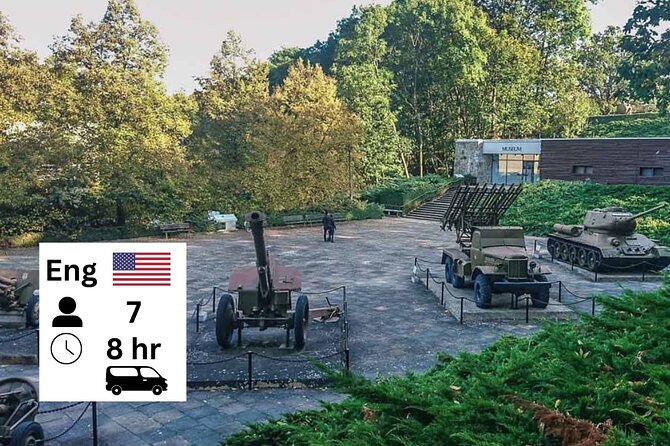
Stop one is Gedenkstaette Seelower Hoehen, a memorial site with exhibits centered on the Berlin–Seelow offensive operation. Expect a guided introduction that sets the stage before you move into the field. If you’ve ever felt WWII battlefield tours can be a blur of names and dates, this start helps you get the map in your head first.
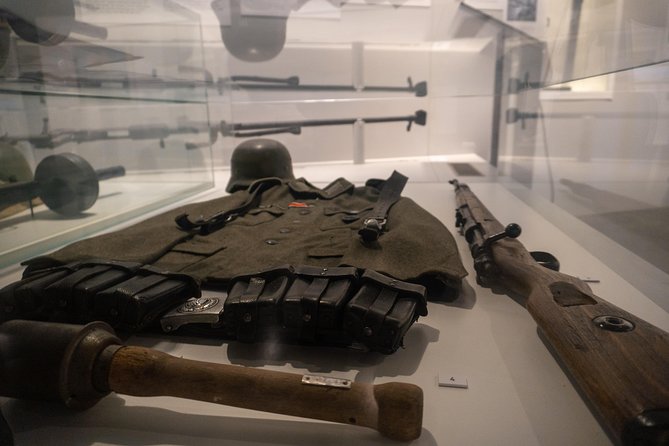
A highlight here is the museum’s 3D model of the Soviet 1st Belorussian Front bunker and trench network. The guide uses it to explain how the attack was coordinated—then you’ll later be in the area where those defenses and positions are reflected in surviving remnants. After the intro, you get time to explore at your own pace.
What to watch for: look closely at how the trenches and command positions connect. You don’t need to be a military-history expert to understand the layout—the guide frames it so the ground makes sense when you step onto it later.
Reitwein and the Seelow Heights approach: Am Reitweiner Sporn in context
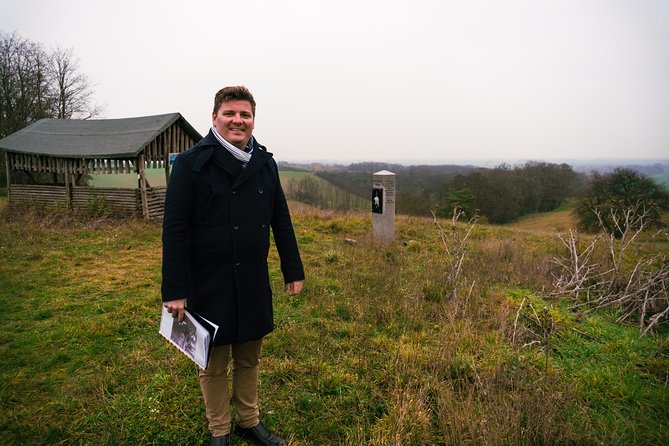
After the museum, the tour goes to Am Reitweiner Sporn in the nearby area around the town of Reitwein. This is a “small town, huge turning point” kind of stop. Reitwein functioned as a starting point for the 1st Belorussian Front assault on Seelow, with the wider push onward toward Berlin.
You’ll hear scale and logistics numbers that are hard to absorb unless you’re hearing them while the ground surrounds you. The Soviet forces assembled here included 768,000 infantry (including 78,556 soldiers of the Polish 1st Army), 3,059 tanks, 16,934 artillery and mortars, and 3,279 combat aircraft. Even if those figures don’t sound real on paper, they start to feel real when you’ve just learned what a trench network and command line are meant to do.
This stop is short, around 20 minutes, and it’s designed to bridge the museum story to what you’ll walk through next.
Zhukov’s command bunker and the trench remnants you can still see
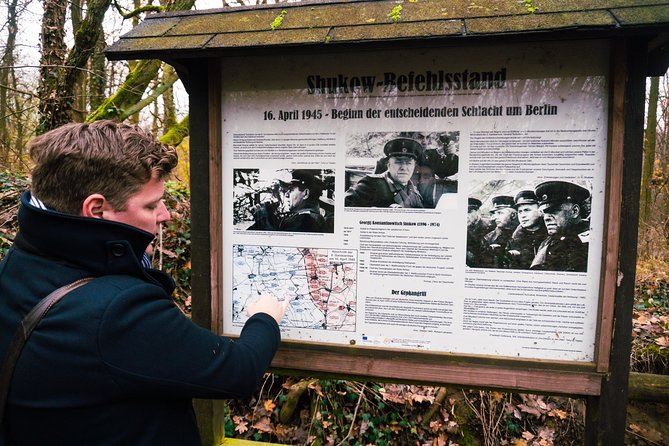
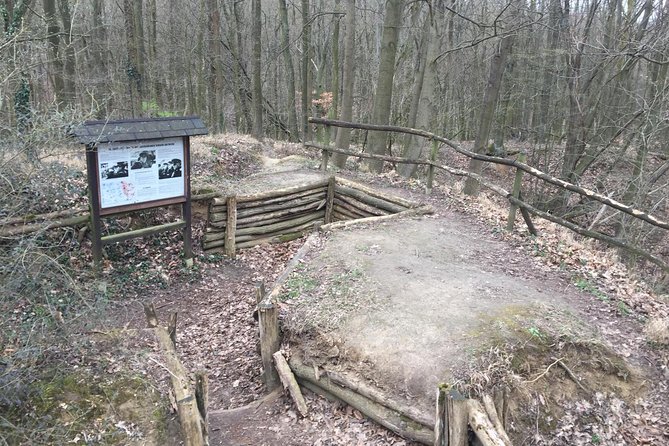
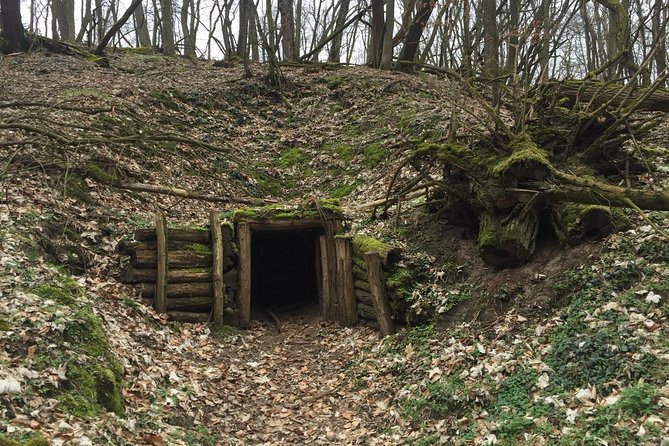
From Reitwein, you head on a short walk through the forest to the bunker and trench network systems. This part is why many people book this tour in the first place: you’re not only hearing about positions—you’re seeing the physical leftovers of them.
Among the sites you’ll visit are Marshal Zhukov’s command bunker and an observation point where he commanded the battle. The value here isn’t just the name. It’s perspective. Command posts tend to be described as abstract in books; here, you can stand in the space that shaped decisions during a brutal, fast-moving fight.
Expect about 30 minutes for this segment, and plan your footwear accordingly. Paths and ground can be uneven, and you’ll want traction for any short stretches off the main route.
Dolgelin’s defenses and the “shooting gallery” problem
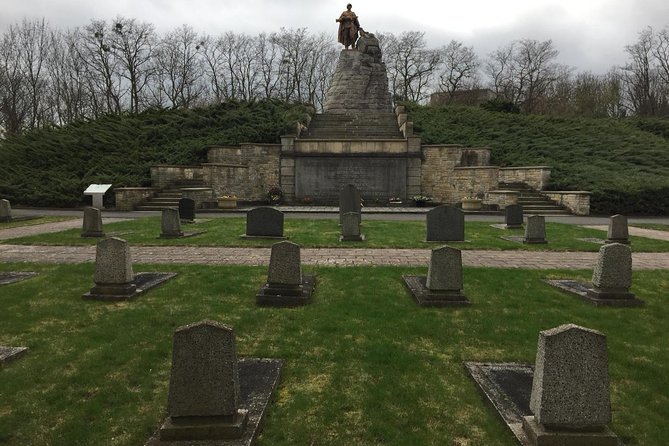
Next, the tour heads to Dolgelin Railway station area, after passing by Kita Dolgelin(er) Zwerge. This is where the day turns from command-and-attack into defense-and-devastation.
At this stage you’ll learn about Colonel Scheunemann, commander of the 303rd Infantry Division, and how he set up his defense positions for the heights. The tour focuses on the German defensive layout and why crossing the approach was so punishing for the Soviet and Polish troops.
A key phrase you’ll hear here is the aptly described shooting gallery—a crossing area where attackers faced intense fire and heavy losses. The reason this stop matters is simple: it helps you understand that battles are won and lost not just by numbers, but by how terrain funnels movement.
You’ll spend around 20 minutes here, and it’s worth using that time to connect what you saw earlier (trench systems and command points) to how defenders expected the attack to come.



Lietzen: German field cemetery plus a Knights Templar surprise
The tour then begins its return route toward Berlin, and stops in Lietzen at Komturei Lietzen. This stop is a blend: battlefield memory on one side, everyday historical depth on the other.
First comes a brief stop at a German field cemetery. What stands out here is that the site has been significantly extended, with newly found remains constantly added to wartime graves. It’s a reminder that history isn’t frozen in time; excavations and identifications can still change what’s documented.
Then there’s a different kind of historical note: Lietzen is also home to what’s said to be Germany’s oldest barn and a manor house built by the Knights Templar dating back to 1252. That contrast can feel surprising on a WWII tour, but it’s useful. It places the battlefield inside a much older layer of place and continuity.
Expect about 30 minutes total for this stop.
Jahnsfelde’s field hospital site and the artillery last stand
The final field stop is Schlosskirche Jahnsfelde, in the town of Jahnsfelde. This is the most emotionally heavy segment of the day. The site includes a sports field that marks where a German field hospital was attacked by Soviet aircraft, specifically targeting areas with red cross markings.
From there, the guide connects the location to a last stand: the 3rd Battalion of the Artillery Regiment 18. You’ll hear how the battalion set up defensive positions during a withdrawal when they were caught by advancing Soviet armor, destroying an estimated 100 tanks—at a very high cost. The figures given are stark: 8 officers killed, 163 killed total, and over two-thirds of the battalion wounded, with all guns lost.
This stop is only around 20 minutes, but it often lands in your body more than in your notes. The point isn’t morbid detail for its own sake. It’s clarity about what the word battle really means here: close-range decisions, impossible odds, and consequences that weren’t theoretical.
Price and value: what $167.74 buys you in a real day tour
At $167.74 per person for about 7 hours, you’re paying for more than a ride to rural sites. You’re buying a guided storyline tied to specific places, plus museum entrance, air-conditioned transportation, and small basics like Wi-Fi and water.
Lunch is the one item you should budget separately—it’s not included. That said, the structure of the day still works well. You’ll be in a position to stop in towns as the route allows, and you can choose something that fits your taste rather than being locked into a set menu.
The value question usually comes down to one thing: will the guide make the ground understandable? With this tour, the format is designed to do exactly that: museum first, trenches second, defense positions third, then memory sites. The small group size (max 7) also reduces the classic problem of large tours where you only hear half the story.
Who this tour is best for (and who should rethink it)
This is a great fit for you if you want WWII battlefield context with enough structure to keep it from becoming random stops. You don’t need to be a hardcore military-history fan. The day is built so you can follow the stages of the fight through the locations themselves.
It’s also a good choice if you like hands-on history—standing at command points, walking through trench remains, and using the terrain to understand why the battle unfolded the way it did. If you’re the type who enjoys maps, timelines, and location-specific explanations, you’ll likely enjoy the pacing.
Rethink it if you expect a relaxed “sit and look” sightseeing trip. This isn’t that. You’ll do short walks and spend time outdoors in the open areas of the battlefield.
What to pack and how to handle the day’s walking
Pack for uneven ground. Even though the stops are timed, you’ll walk through forest paths and trench remnants where the footing isn’t guaranteed to be smooth. Sturdy footwear is the practical advice that matters most.
Bring a plan for meals. Lunch isn’t included, so either budget money for it or plan to grab something simple nearby. Also consider how you’ll pace yourself: the tour’s length can feel long in the middle of the day, even though the route is tightly planned.
Finally, remember the tour requires good weather. If it’s canceled due to poor conditions, you’ll be offered a different date or a full refund.
Should you book Clash of Titans: Battle for Seelow Heights?
Book this if you want a Berlin-area WWII tour with real specificity: Seelow Heights, trench remnants, and command points tied to a guided story. The biggest reason to choose it over a generic “Eastern Front overview” is the way the day is constructed—museum model first, then the field stops that give those explanations a physical backbone.
Skip it if your priority is a quick photo loop with minimal walking and minimal depth. This tour asks you to stand, look, and think for a while.
If you’re serious about understanding how the Eastern Front push worked at ground level, this one is an excellent use of a half-day in Berlin’s wider WWII story.
FAQ
How long is the Clash of Titans: Battle for Seelow Heights tour?
It runs about 7 hours.
Where does the tour start in Berlin?
The meeting point is Alexanderplatz at Dircksenstraße 2, 10179 Berlin. The start time is 9:15 am.
How many people are in the group?
The tour has a maximum of 7 travelers.
What’s included in the price?
Included are an air-conditioned vehicle, museum entrance (for the museum stop), Wi-Fi, and a small bottle of water.
Is lunch included?
No. Lunch is not included, so you’ll want to plan on buying it during the day.
What language is the tour in?
The tour is offered in English.
What happens if the weather is bad?
The tour requires good weather. If it’s canceled due to poor weather, you’ll be offered a different date or a full refund.