REVIEW · BERLIN
Cold War, Berlin Wall, Spies and the East Side Gallery
Book on Viator →Operated by Insider Tour Berlin · Bookable on Viator
Spy stories meet Berlin Wall history.
This 3-hour, English-speaking tour takes you along the physical edges of Cold War Berlin, but it also explains what that boundary meant day to day. I like that you get expert local guiding through the CIA/KGB/Stasi world of surveillance, and I love the mix of emotions and facts at places like the Palace of Tears and the East Side Gallery. One thing to consider: it’s a lot of outdoors walking plus some transit, so cold weather, sound levels, and pace matter—arrive on time and stand where you can hear clearly.
The route is built around major real-world anchors: Friedrichstrasse and the former border-crossing machinery, the “death strip” logic, and the Berlin Wall remains near memorial sites. You’ll also see how East Berlin’s public spaces—like Alexanderplatz and Karl-Marx-Allee—looked in an era of control and propaganda, not just as pretty buildings.
You’ll finish right by the East Side Gallery, which turns old concrete into public art. If you want a short, high-impact intro to how Berlin became the pressure-cooker of the Cold War, this is a strong match.
In This Review
- Key highlights worth your attention
- Cold War Berlin in 3 hours: what you’ll actually get
- Friedrichstrasse and the ghost train: starting inside the division
- Admiralspalast and SED origins: when politics became control
- Palace of Tears (Tränenpalast): the emotional center of separation
- Bernauer Straße, the Death Strip, and Wall remnants: seeing the system work
- Brandenburg Gate: division’s symbol now flipped
- Alexanderplatz: communist power meets daily life under surveillance
- Karl-Marx-Allee: ideology in stone (and what it hid)
- East Side Gallery: turning the Wall into public art
- CIA, KGB, and Stasi: how surveillance shaped everyday Berlin
- Price and logistics: is this a good deal?
- Who should book this Cold War Berlin tour?
- Should you book it or not?
- FAQ
- How long is the Cold War Berlin Wall and spies tour?
- What language is the tour offered in?
- Where do I start and where does it end?
- Do I need a transport ticket?
- Is admission included for all stops?
- Is the tour only for certain ages or groups?
Key highlights worth your attention
- Friedrichstrasse start plus a ghost-train segment that once helped connect East and West Berlin
- Palace of Tears (Tränenpalast), now a museum about the emotional cost of separation
- Death Strip context as you retrace escape attempts and wall remnants near memorial areas
- Spy-systems talk: CIA, KGB, and Stasi techniques explained in plain terms
- East Berlin power centers like Alexanderplatz and Karl-Marx-Allee, framed by daily life under surveillance
- East Side Gallery as the long remaining stretch of the Berlin Wall turned into a freedom mural wall
Cold War Berlin in 3 hours: what you’ll actually get
This tour is short on purpose. In three hours, you won’t “cover everything about Berlin.” Instead, you’ll get a guided through-line: how World War II left Berlin split, how the Wall system worked (including the brutal logic of the death strip), and how surveillance shaped ordinary life inside the German Democratic Republic.
The value for you is clarity. A guide walks you from place to place and helps you connect the dots: the border crossings that families faced, the public squares where ideology was performed, and the wall stretches that now teach what happened when control met desperation.
You can also read our reviews of more museum experiences in Berlin

Friedrichstrasse and the ghost train: starting inside the division
You begin at the Friedrichstrasse train area, one of Berlin’s best starting points for Cold War context. It’s not just a transit hub—it’s where the city’s split became practical. The guide meets you there and sets the stage, then you move on to a “ghost train” segment: an underground route that once connected East and West Berlin during the Cold War.
Why that matters: it gives you a physical sense of how separation could still exist alongside systems and infrastructure built to function in parallel. You’re not only looking at monuments; you’re stepping into the machinery of division.
Practical note: this start includes a brief meet-and-greet and an organized tempo right away. If you’re arriving from far across the city, give yourself extra buffer so you’re not rushing the group.
Admiralspalast and SED origins: when politics became control
After the Friedrichstrasse area, the tour stops at Admiralspalast Berlin, noted for the founding of the East German Political Party (SED) in 1946. This is a quick stop, but it’s an important one because it frames a key idea of the Cold War in Berlin: the East German state wasn’t just defended with walls; it was also built with party power.
What you should look for here is the shift from “post-war chaos” to organized rule. Even when the street scenes seem ordinary, the political foundations you’re learning about explain why daily life could feel tightly managed.
Palace of Tears (Tränenpalast): the emotional center of separation
This is the stop where Berlin’s Cold War turns personal. The Palace of Tears—Tränenpalast—was a former border crossing at Friedrichstrasse. The name isn’t poetic for show. Families and loved ones faced tearful goodbyes when separation forced itself into routine movement.
Today, the building houses a museum, and the tour uses it as a reflective anchor: escape attempts, the emotional and physical toll of separation, and what reunification meant after years of being divided.
For you, this is the best “tone-setter” on the itinerary. The rest of the tour adds political and spy-system detail, but Palace of Tears gives you the human baseline. If you like history that includes real feelings—fear, hope, grief—this stop is the one you’ll remember on your way home.
Bernauer Straße, the Death Strip, and Wall remnants: seeing the system work
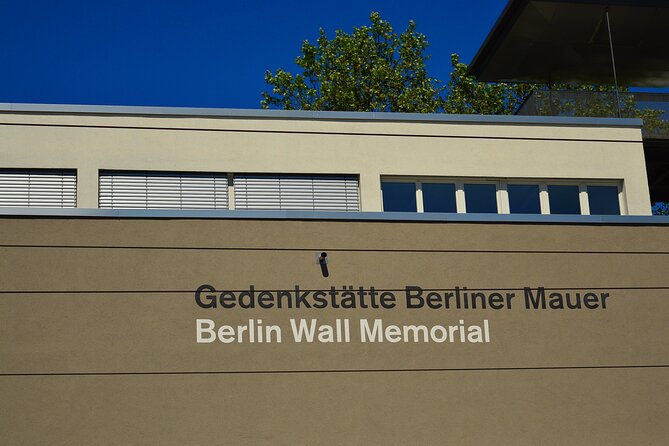
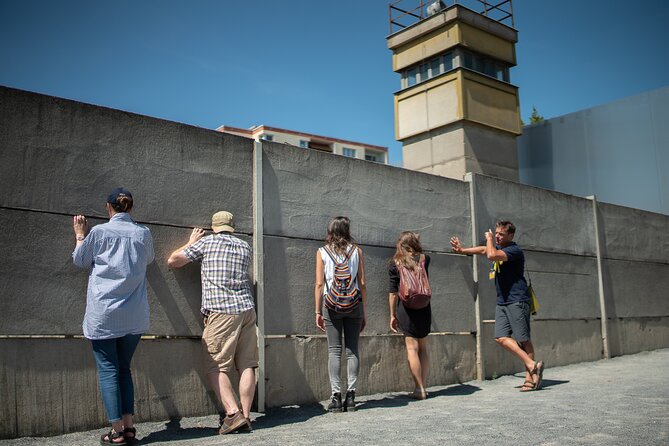
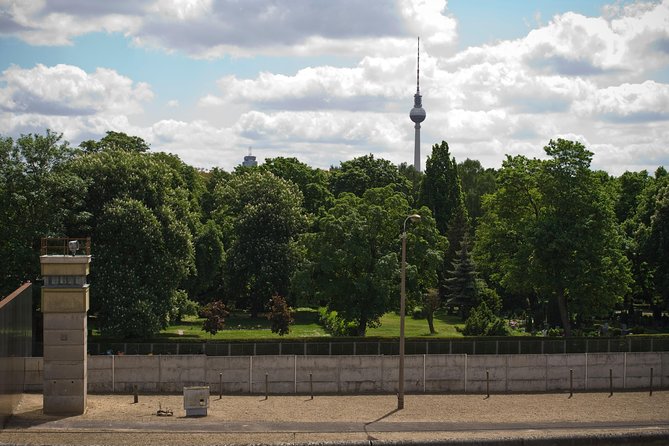
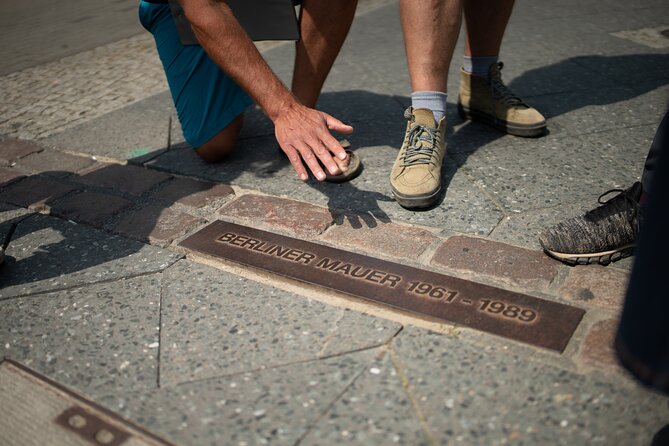
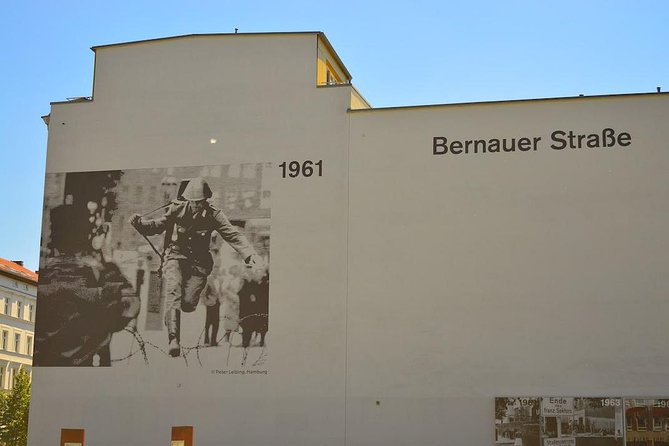
Between major stops, you retrace the trail connected to the Wall and the “death strip.” You’ll also walk along Bernauer Strasse, a site linked with many notable escape attempts, and you’ll see remains of the wall at memorial areas.
Here’s what I think you’ll find most useful: you’ll learn the logic behind the layout, not just the fact that it existed. The death strip wasn’t a vague scary idea. It was a designed buffer zone meant to prevent escape and control movement. When you stand near wall remnants, the explanation becomes more believable because the spaces start to match what you’re hearing.
This is also where the tour’s seriousness matters. Don’t speed through. Pause when your guide invites you to look at how the area is set up. That small habit turns a “photo stop” into real understanding.




Brandenburg Gate: division’s symbol now flipped
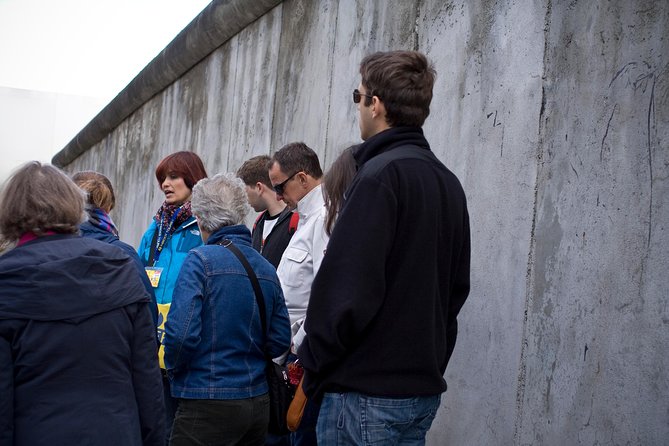
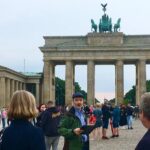
The tour includes time under the Brandenburg Gate, one of Berlin’s best-known monuments. During the Cold War era, it stood as a visible symbol of division between Berlin and Germany. Today, it’s recognized more as a national symbol of peace and unity.
What makes this stop valuable on a Cold War tour is the time-travel effect. You get to see how the same landmark can shift meaning based on politics and freedom, not because the stone changed.
If you’re short on time in Berlin, this kind of framing helps you avoid the common trap: seeing the Gate as only a postcard. The guide pushes you to see it as a record of shifting power.
Alexanderplatz: communist power meets daily life under surveillance
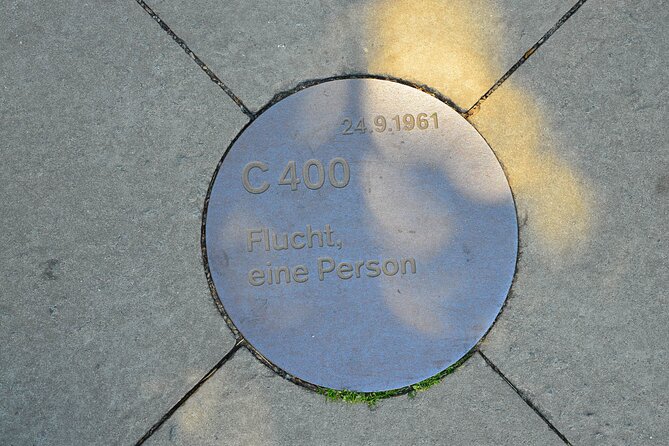
Alexanderplatz is described as the beating heart of East Berlin. In this tour, you don’t just walk past big-square architecture. You’re told it was a stage for communist power and mass rallies, and also a place where daily life unfolded.
This matters because the Cold War wasn’t only about spies and borders. It was about how people moved through public space. In Alexanderplatz, you get the sense of how propaganda and reality could share the same sidewalks.
What to do: look up at the scale and symbolism, but also keep your attention on the human scale your guide adds. The best moments here are when surveillance and control are connected back to normal routines.
Karl-Marx-Allee: ideology in stone (and what it hid)
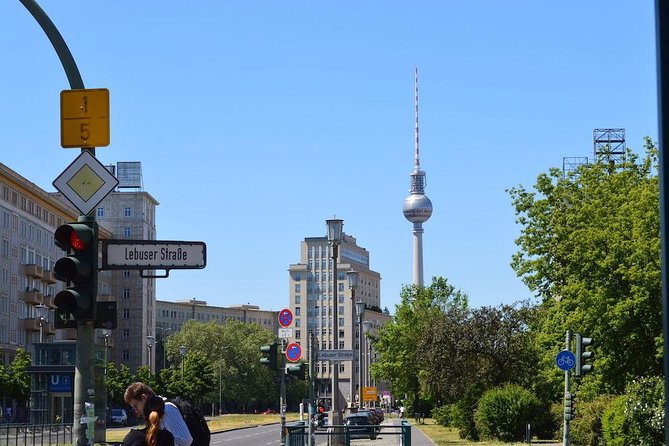
Next comes Karl-Marx-Allee, East Germany’s showcase boulevard—grand Stalinist architecture meant to impress the world. Your guide frames it as power and ideology designed to project confidence, while the everyday lived experience behind the Iron Curtain could be far less stable.
The takeaway for you: architecture can be political messaging. Karl-Marx-Allee isn’t only about design. It’s a loud statement about who wanted to be seen as strong.
If you’re the kind of traveler who likes “reading” cities, this stop gives you tools. You’ll start noticing how public spaces in authoritarian systems communicate power.
East Side Gallery: turning the Wall into public art
You finish at the East Side Gallery at Mühlenstraße. It’s the longest permanent graffiti wall in the world and also the largest remaining section of the Berlin Wall—now transformed into murals that speak about freedom and resistance.
On this tour, the East Side Gallery isn’t treated like a fun wall to check off. Your guide’s focus keeps it tied to the original purpose of the Wall: a deadly border that once restricted life. Then the same concrete becomes a canvas for hope after the Cold War.
This is a satisfying ending because it turns your earlier learning into visible contrast. You’ll leave with a mental “before and after” story.
CIA, KGB, and Stasi: how surveillance shaped everyday Berlin
A big part of this experience is the spy-systems conversation—CIA, KGB, and Stasi surveillance techniques—explained so you can connect them to real places and real behaviors. The guide also highlights how the Stasi operated within the Eastern Bloc’s heavily policed environment.
What I like about this approach for you: it keeps surveillance from becoming a generic spy-movie word. You’ll understand it as a system that could influence daily choices—what you said, who you trusted, how safe you felt.
If you’re curious about the Stasi in particular, you’ll also see references to former DDR secret police sites as part of the wall-and-memorial story. You’ll get enough context here to know why the topic deserves more time if it grabs you.
Price and logistics: is this a good deal?
The tour price is $18.04 per person, with local guide service included, in English, and delivered with a mobile ticket. The duration is about 3 hours, and the group size is capped at 22, which usually keeps you from feeling lost in a crowd.
The main extra cost you should budget is transit: a Berlin Transport daypass for AB Zone is required, and it’s listed at €10.00 per person. That’s not a small add-on, but it’s also normal for Berlin sightseeing because stops are spread across key Cold War nodes.
So is it value? For many people, yes—because you’re paying mainly for expert guidance and a structured route through places that are otherwise hard to connect into one story. If you were to do this on your own, you’d likely spend more time stitching together explanations, and you might miss the meaning behind the spaces.
If you care about convenience, note that the tour ends in a transportation-friendly area near the East Side Gallery. That helps you roll into your next stop without a scramble.
Who should book this Cold War Berlin tour?
Book it if you want:
- a fast, guided path through Berlin Wall, death-strip logic, and border-crossing emotions
- spy-era context with CIA/KGB/Stasi surveillance explained in human terms
- a walk that mixes iconic landmarks with less-celebrity Cold War spaces like Alexanderplatz and Karl-Marx-Allee
- a tour that can work well for families too, since the material is explained clearly and the story arc is easy to follow
Consider a different style if:
- you hate cold weather and long outdoor stretches (bring warm layers)
- you need absolute quiet to hear details, because this is a walking-and-transit format and sound levels can vary
Should you book it or not?
I’d book it if you’re on a first Berlin trip and you want one guided experience that ties Cold War themes together: the Wall system, the emotional border reality of the Palace of Tears, the surveillance atmosphere of East Berlin, and the hopeful contrast of the East Side Gallery.
If you already plan to spend lots of time in museums and want very slow, deep research, you might pair this with extra independent time after—use the tour as your map and your context, not your final destination.
If you want one ticket that turns Berlin’s Cold War into a coherent story, this does that job well.
FAQ
How long is the Cold War Berlin Wall and spies tour?
It runs about 3 hours.
What language is the tour offered in?
The tour is offered in English.
Where do I start and where does it end?
You start at Reichstagufer 17, 10117 Berlin, Germany, and the tour ends at East Side Gallery, Mühlenstraße, 10243 Berlin, Germany.
Do I need a transport ticket?
Yes. You need a Berlin Transport daypass AB Zone, which is not included and can be purchased from the meeting point area for €10.00 per person.
Is admission included for all stops?
The guide is included. Some stop-specific admissions are listed as free, while others are not included. The tour itself includes the guided experience.
Is the tour only for certain ages or groups?
Most travelers can participate, and service animals are allowed. The group size is capped at a maximum of 22 travelers.
If you tell me your travel month (and whether you hate cold walking), I can suggest how to time the rest of your day around this tour.