REVIEW · BERLIN
Berlin: “Pergamonmuseum. The Panorama” Exhibition Tickets
Book on GetYourGuide →Operated by Distributor: GetYourGuide Tours & Tickets GmbH · Bookable on GetYourGuide
360 degrees beats any photo in Berlin. This temporary exhibition at Pergamonmuseum. Das Panorama turns the city of Pergamon into a wraparound scene from AD 129, and I really liked the soundtrack and the dramatic light effects that make the statues feel active. I also enjoyed seeing real Pergamon highlights up close, including major altar sculpture. One heads-up: the on-site security can feel a bit intense, with staff closely watching as you move through.
At a fixed 15-minute window from first activation, it’s a good way to experience Museum Island in a shorter hit, especially if you want something more modern than glass cases. It’s also family-friendly in concept, mixing archaeology with contemporary visual storytelling—just keep in mind there’s a “no backpacks” rule.
In This Review
- Key highlights worth planning around
- Finding Pergamonmuseum. Das Panorama (and not wandering the museum wrong-way)
- Price and timing: is $16 for 15 minutes good value?
- AD 129 in a 360° wraparound: what the panorama experience actually does
- The artifacts moment: up close with Antikensammlung treasures from Pergamon
- The Pergamon Altar in its original context (rare chance, short window)
- Music, light, and the showmanship that makes it click
- Logistics you’ll feel right away: backpacks, security, and the entry vibe
- Wheelchair notes: accessible on paper, tricky in practice
- Who should book this (and who might feel it’s too short)
- When to go: closure dates can change your plans
- Should you book Pergamonmuseum. The Panorama?
- FAQ
- How long is the Pergamonmuseum. The Panorama ticket valid?
- Where do I go to enter Pergamonmuseum. Das Panorama?
- What is included with the ticket?
- What is not included in this ticket price?
- What time period does the 360° panorama depict?
- Who created the panorama?
- Is the exhibition wheelchair accessible?
- Are backpacks allowed inside?
- Is it refundable if plans change?
- Are there any dates when the panorama is closed?
Key highlights worth planning around
- AD 129 + Hadrian’s era: a High Roman Empire time slice under Emperor Hadrian (AD 117–138)
- 40 new scenes inside the 360° panorama by architect Yadegar Asisi
- Up to 80 Pergamon works from the Antikensammlung, including a major Telephos frieze piece
- Pergamon Altar in original architectural context for a limited time on the Acropolis
- Music and changing light that guides your attention around the panorama
- Tip: ask guides in the room for small extra details you may otherwise miss
Finding Pergamonmuseum. Das Panorama (and not wandering the museum wrong-way)
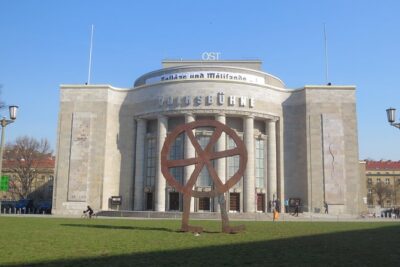
The meeting point is Pergamonmuseum. Das Panorama, Am Kupfergraben 2, 10117 Berlin. This matters because signage around Pergamon can point you toward the main Pergamon Museum on Museum Island, and that’s not where your timed entry gets started.
When you’re there, just ask staff to point you to Das Panorama. It’s a fast fix, and it saves you from the classic Berlin “I swear I’m here” moment while you’re circling the same block.
Also note the timing setup: your ticket is valid for 15 minutes from the first activation. So I’d rather you locate the entrance first, then activate and go in with a calm pace.
You can also read our reviews of more tours and experiences in Berlin



Price and timing: is $16 for 15 minutes good value?
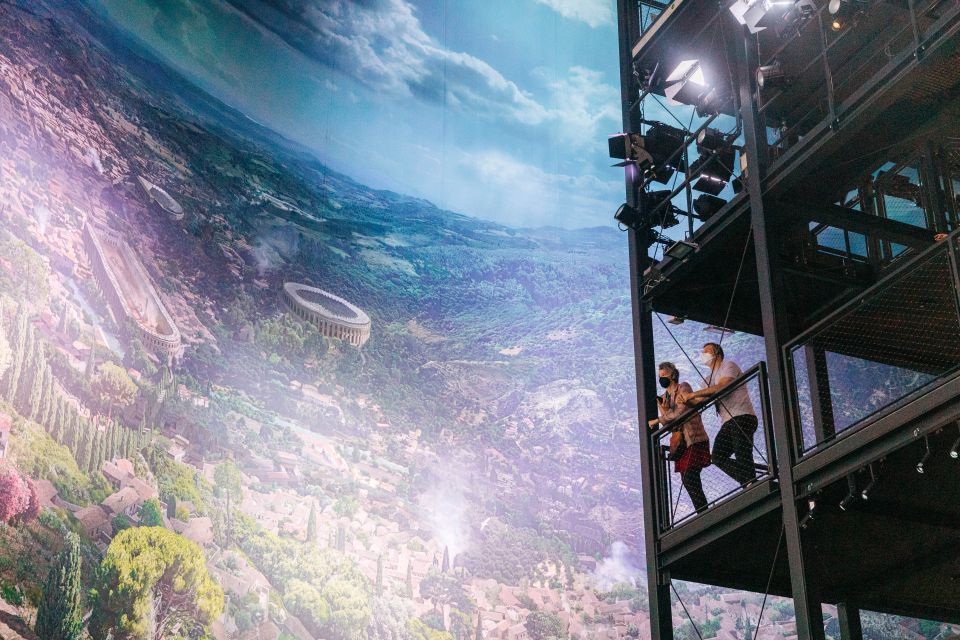
At $16 per person for an experience that’s built around a timed 15-minute window, this isn’t the kind of ticket where you “slow museum” your way through. You’re buying a focused hit: a 360° city reconstruction plus a curated look at key Pergamon objects.
Here’s why I still think it’s solid value. You’re not only seeing a screen or a virtual view—you get access to the exhibition itself, plus close access to major Antikensammlung works connected to Pergamon. The experience also leans on showmanship (music, lighting, and staged viewing areas), which is exactly the sort of thing you pay for when you want more than plaques and glass.
If you’re the type who likes long museum marathons, you may feel the time cap. If you’re the type who wants one standout “wow” moment without spending half your day walking galleries, this fits.
AD 129 in a 360° wraparound: what the panorama experience actually does
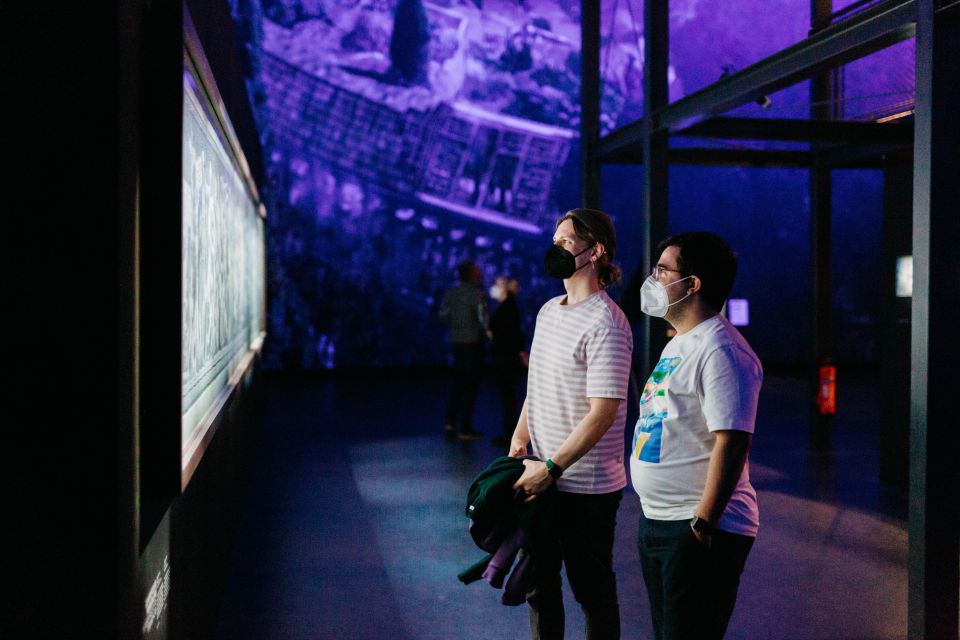
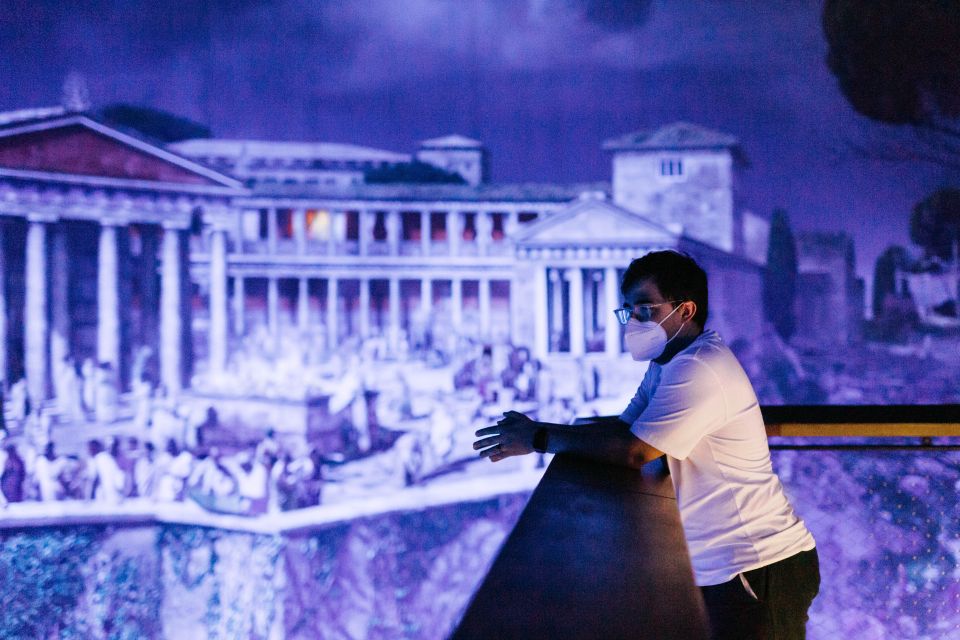
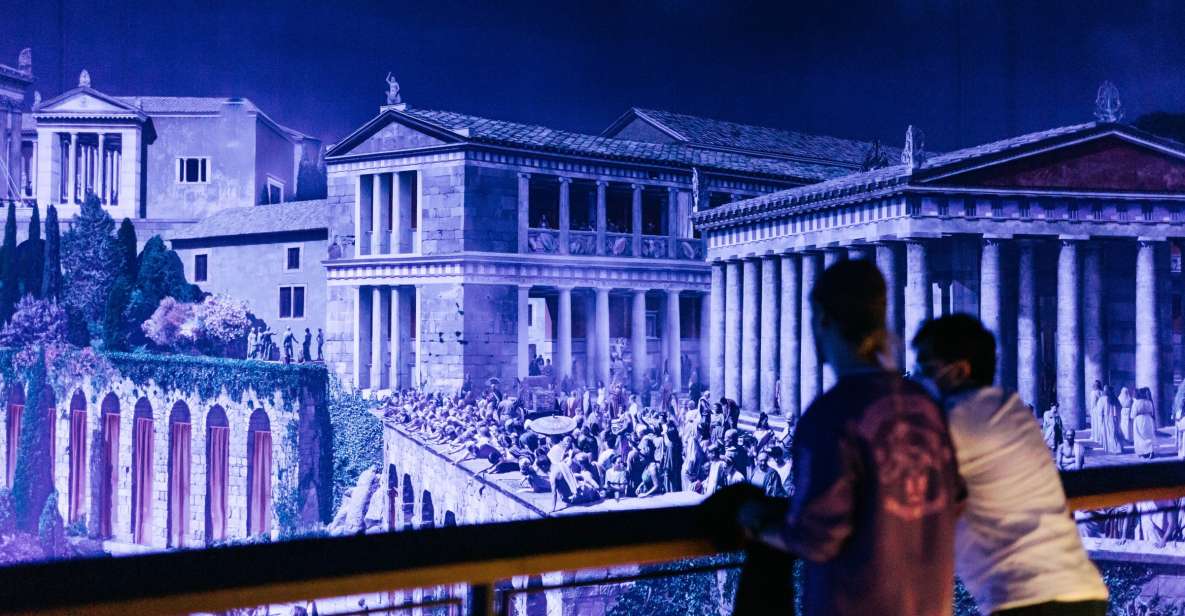
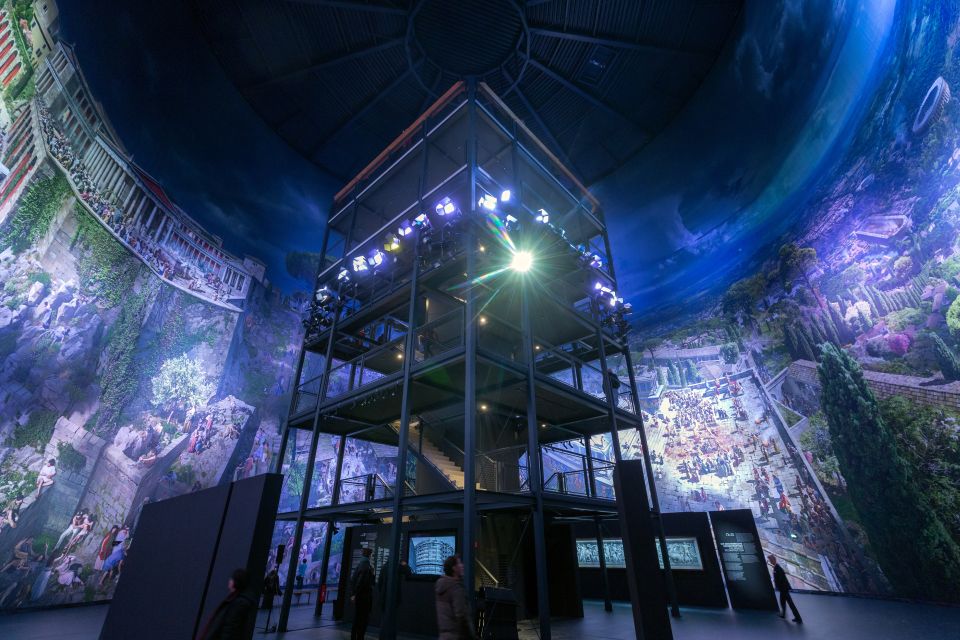
This exhibition takes you to AD 129, when Pergamon was thriving under the High Roman Empire. The big draw is the 360° reconstruction of the ancient city on the west coast of Asia Minor—rebuilt from what historians and archaeologists know, then reworked into a modern visual format.
The panorama is created by Yadegar Asisi, and the show includes 40 new scenes woven into the picture. That matters for your expectations: it’s not just one still “city view” around you. The staging is meant to help you read the city as something lived-in, not a static postcard.
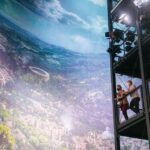
How it feels in practice: you stand inside a full surround view, and the show uses music and light effects to point your attention. A big part of the enjoyment is letting the sound and lighting guide where you look next, even if you’re standing still.
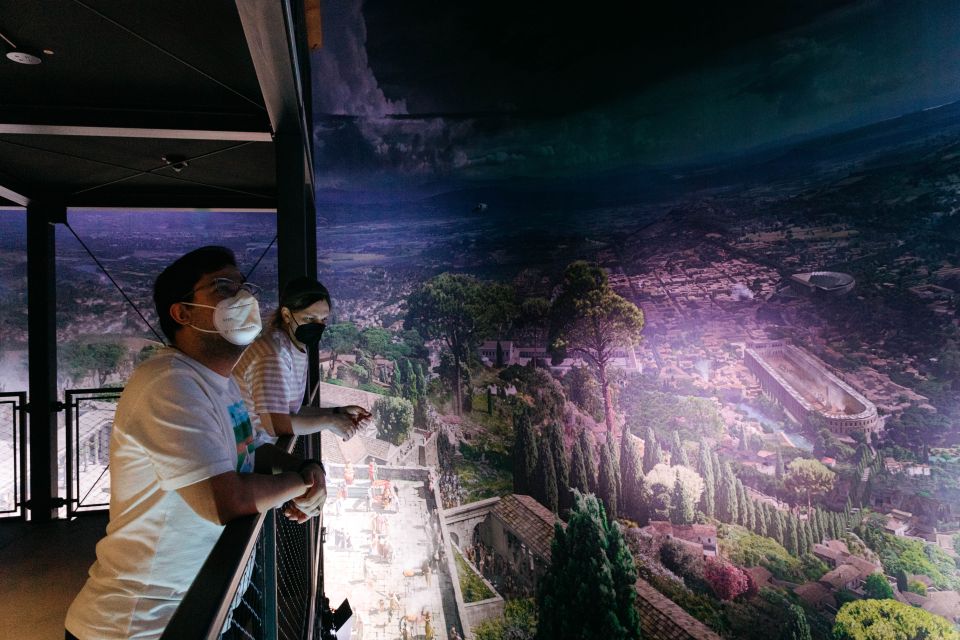
You also have a viewing angle from above (some parts of the experience are designed for a higher vantage), and it can help you get your bearings quickly. One visitor advice that I like: don’t rush the start—give yourself a moment before you make up your mind about where to look first.
The artifacts moment: up close with Antikensammlung treasures from Pergamon
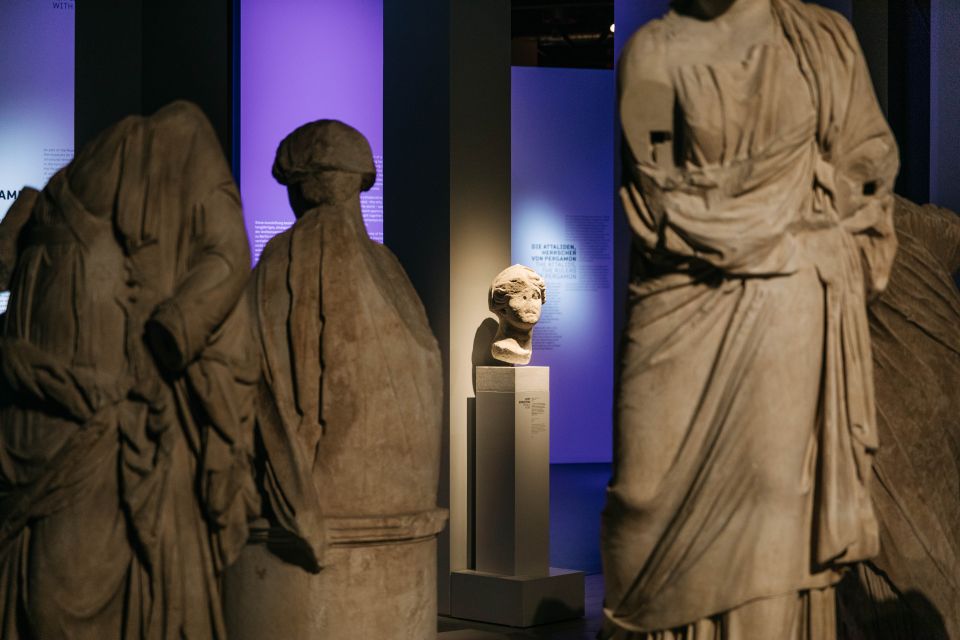
The panorama is only half the story. The other half is physical objects: you can get up close to around 80 of the Antikensammlung’s most important works from Pergamon.
The standouts include the largest piece of the Telephos frieze from the Pergamon Altar. That’s a big deal because the frieze is one of the visual cores of the altar complex, and seeing a major section connected to it helps you connect “the city” to “the art.”
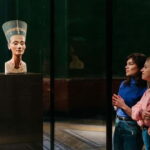
You’ll also encounter notable sculpture highlights mentioned for this exhibition, including the Beautiful Head, the giant head of Herakles, portrait sculptures, the Archaistic Dancer from the palace, the Prometheus group, and Athena with a cross-strapped shield.
The practical value here: even if you’re not an expert, you’re getting a guided sense of what makes Pergamon “Pergamon”—powerful myth imagery, portrait presence, and the dramatic language of sculpture built for public display.
The Pergamon Altar in its original context (rare chance, short window)
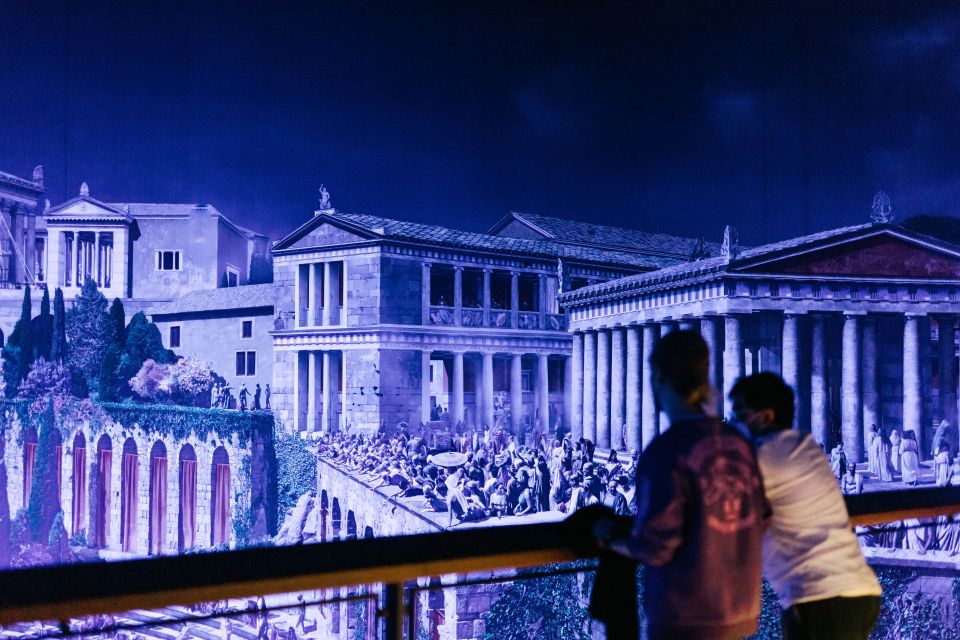
One of the most exciting parts is that, for a set time only, you can experience the Pergamon Altar in its original architectural context, placed on the Acropolis.
In plain terms: this isn’t only about the panorama; it’s also about how the pieces relate to the space they were meant to sit in. When an altar-like structure is shown in the way its builders intended, your brain fills in scale faster. Faces and figures stop feeling like “museum objects” and start feeling like parts of a designed world.
If the altar moment is what you care about most, plan to watch it without multi-tasking. This is one of those experiences where staring closely and letting the staging work on you beats trying to speed-run it.
You can also read our reviews of more museum experiences in Berlin




Music, light, and the showmanship that makes it click
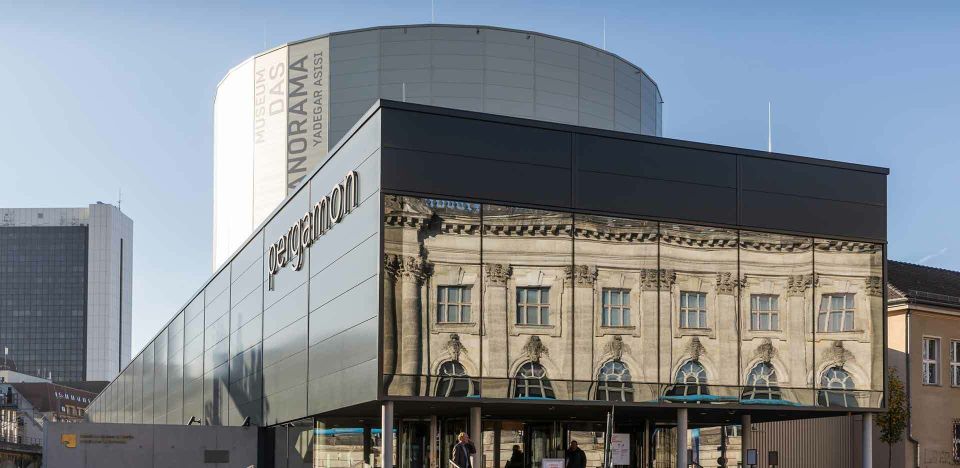
A pattern shows up in the best reactions: the music and lighting aren’t “extra.” They’re part of how you’re meant to understand the space.
I’d describe it like this: the panorama gives you the city, but the audio and light effects tell you how to read that city. Some scenes shift in mood (including a night-to-day change), which helps you understand the reconstruction as something that evolves through time, not just a single snapshot.
One more practical tip: if you want to get the most out of the auditorium-style moments, plan to spend enough time there. A smart approach is to wait until you’re seated/positioned before you start checking your phone or you’ll miss the cueing.
And if you want the small surprises, ask a guide standing in the room. There are small hidden details people enjoy once they know what to look for.
Logistics you’ll feel right away: backpacks, security, and the entry vibe
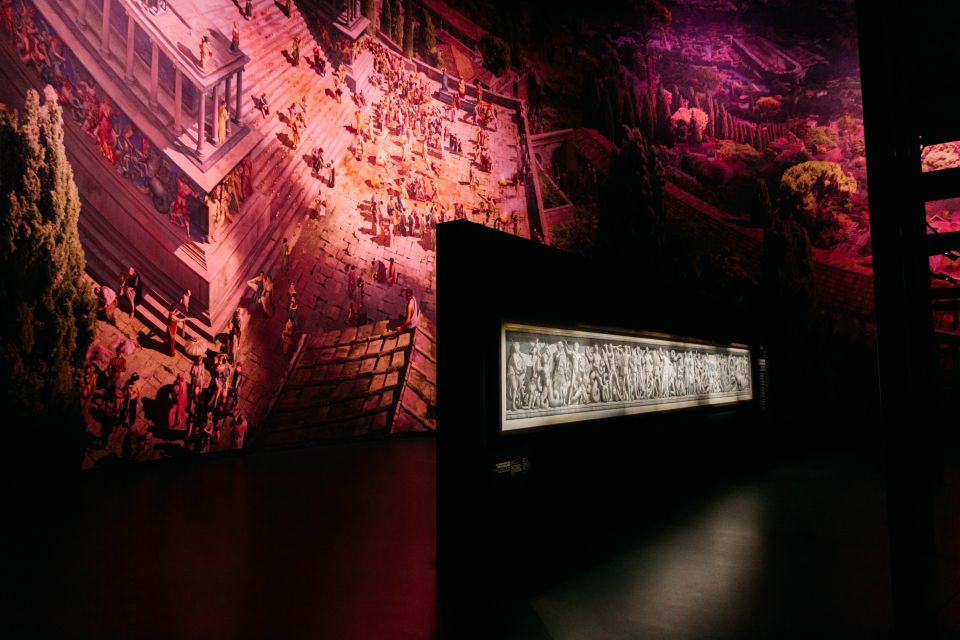
A few rules shape your comfort level.
Backpacks aren’t allowed. So if you’re planning a Berlin day that includes lots of walking, swap to a small day bag or something you can carry easily.
Security can feel oppressive and close-up. That’s not unusual for major museum zones, but it can be distracting if you’re used to slow, private-looking time in galleries. The best fix is simple: keep your pace steady, follow staff instructions quickly, and don’t treat it like you’re wandering untended.
If you’re sensitive to being watched, this is your “consideration” category. It may not ruin the experience, but it can affect how relaxed you feel while you take it in.
Wheelchair notes: accessible on paper, tricky in practice
The activity is listed as wheelchair accessible, but the museum is only partially accessible for wheelchairs, and it’s also flagged as not suitable for wheelchair users. The difference here is important for your planning.
So here’s the honest takeaway: if you use a wheelchair, expect friction. There are steps involved in parts of the experience, and one of the “how to enjoy it” tips involves scaling steps carefully. That’s a hint that the physical route may not be comfortable or easy.
If accessibility matters most to you, I’d treat this as a “check first” situation. Use the official contact or on-site staff to confirm the route you’ll take from entry to the panorama viewing points.
Who should book this (and who might feel it’s too short)
This is a great match if:
- You love ancient art but also like modern presentation methods
- You want one standout Berlin museum moment without a half-day commitment
- You’re traveling with family and want an experience that pairs archaeology with modern visuals
- You enjoy audio support, since an audio guide is available and people often find it worthwhile for understanding what they’re seeing
This may feel less ideal if:
- You need lots of uninterrupted time to read labels and linger in detail
- You’re coming specifically for the full Pergamon Museum collection (your ticket is for the panorama exhibition only)
- You’re expecting a quiet, low-control museum stroll (security is close and the show format keeps you moving)
One person even felt the 360 view was cool but the overall experience didn’t meet expectations. That’s a good reminder: this is show-led and time-capped. If you treat it like a short program, it tends to land better.
When to go: closure dates can change your plans
There’s a key closure window: the Panorama will be closed from September 1 to October 13 due to renovations. If you’re planning around fall travel, verify dates before you build the rest of your Museum Island day.
Should you book Pergamonmuseum. The Panorama?
Book it if you want a fast, high-impact way to understand Pergamon—city scale in 360°, plus major objects up close. The best value comes from matching your expectations: it’s a timed experience built around music, light, and staged viewing, not a slow gallery wander.
Skip it or postpone if you’re tightly focused on only the Pergamon Museum itself, need a fully wheelchair-friendly route, or you know you’ll dislike close security presence. Also, if you’re visiting during the Sep 1–Oct 13 renovation closure, you’ll save yourself a wasted trip by rescheduling.
If you’re on the fence, treat this like your “one must-see modern format” ticket on Museum Island day. It gives you a sense of Pergamon as a lived city, not only as artifacts behind glass.
FAQ
How long is the Pergamonmuseum. The Panorama ticket valid?
Your ticket is valid for 15 minutes starting from the first activation.
Where do I go to enter Pergamonmuseum. Das Panorama?
The meeting point is Pergamonmuseum. Das Panorama, Am Kupfergraben 2, 10117 Berlin, Germany.
What is included with the ticket?
The ticket includes entry to the exhibition Pergamonmuseum. The Panorama.
What is not included in this ticket price?
This ticket does not include entry to the Pergamonmuseum or entry to other museums on Museum Island.
What time period does the 360° panorama depict?
The exhibition shows Pergamon in AD 129, during the High Roman Empire under Emperor Hadrian (AD 117–138).
Who created the panorama?
The panorama is by Iranian architect Yadegar Asisi and includes 40 new scenes.
Is the exhibition wheelchair accessible?
The activity is listed as wheelchair accessible, but the museum is only partially accessible for wheelchairs, and it is also noted as not suitable for wheelchair users.
Are backpacks allowed inside?
No. Backpacks are not allowed.
Is it refundable if plans change?
No. The activity is non-refundable.
Are there any dates when the panorama is closed?
Yes. It will be closed from September 1 to October 13 due to renovations.