REVIEW · BERLIN
East Berlin Food & History Tour with Eating Europe
Book on GetYourGuide →Operated by Eating Europe Food Tours · Bookable on GetYourGuide
East Berlin tastes like history. I love the currywurst at the station and the Syrian supper-club flavors, because they turn immigration and everyday life into something you can actually taste. You’ll walk through the area’s big political shifts while a guide ties each bite to what was happening outside the door.
One thing to plan for: it’s a 3-hour walking pace. Wear flat shoes, and note this tour isn’t suitable for wheelchair users or people with mobility impairments. If you have severe food allergies, this is also not a safe fit based on the stated allergy limitations.
In This Review
- Key highlights you’ll feel on this tour
- East Berlin, explained through food (and why that works)
- Meeting point at Berlin’s hub: find the platform bakery
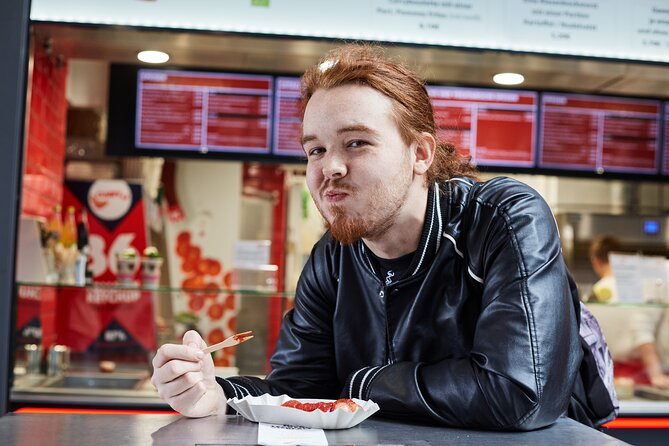
- Stop 1: Currywurst at the station, the Berlin classic way to begin
- Metabal: smoked aubergine dip that tells you how Middle Eastern flavor travels
- The Syrian family supper club: craft beer, stories, and real community food
- TyTy Tacos: Vietnamese fusion that makes sense once you see Berlin’s mixing culture
- Döner and the Turkish-German comfort zone
- Sweet Turkish finish: the last bite that makes it feel complete
- The walking history thread: wall art, key sites, and club zones
- Guides matter: the tour’s best feedback is about storytelling
- Price and value: what $104 covers in real terms
- Dietary needs and allergies: where you’ll want to plan carefully
- Who should book this East Berlin tour (and who might not)
- Should you book?
- FAQ
- How long is the East Berlin Food & History Tour?
- Where do I meet the guide?
- What food is included?
- Are drinks included?
- Can the tour accommodate dietary needs?
- Is the tour suitable for wheelchair users or mobility impairments?
- What is the cancellation policy?
- Can I pay later?
Key highlights you’ll feel on this tour

- Currywurst at a train-station setting: Berlin classic energy, served where locals naturally pass through.
- Syrian family supper club meal: Syrian flavors, craft beer, and real stories in a family-style setup.
- 80 years of Berlin told on the street: wall art, key sites, and club zones are used as historical markers you can see.
- Vietnamese TyTy Tacos: a bold fusion idea that makes sense once you understand how Berlin mixes cultures.
- Turkish döner plus a sweet finish: the tour leans into Turkish-German comfort food, ending with something sugary.
East Berlin, explained through food (and why that works)

If Berlin feels like a city of layers, East Berlin is the cleanest example. This part of town went from hard-line communist planning to one of Europe’s most international melting pots. The clever thing about this tour is that it doesn’t treat history like a museum label. It uses food stops as a way to make sense of how communities formed, survived, and shaped the neighborhood’s everyday rhythm.
For you, that means the walking pieces matter. You aren’t just going from restaurant to restaurant. You’re also getting the street-level context: what the wall did to daily life, what changed after, and how new arrivals brought flavors that quickly became normal parts of Berlin eating.
You’ll also get insider tips as part of the package. That’s useful here, because East Berlin is big and sometimes confusing on a first visit. A good guide can help you connect what you see—especially wall art and club-zone references—to what it used to mean.
You can also read our reviews of more food & drink experiences in Berlin


Meeting point at Berlin’s hub: find the platform bakery

This starts at a train station meeting point, which I like for two reasons: you can arrive with no stress, and you’re already in the middle of Berlin life. You meet in the main hall, walking toward McDonald’s, then head to track 8. Take the escalator down and meet in front of the bakery on the platform, where your guide will be waiting with the purple Eating Europe bag.
Practical tip: build in a little buffer for station navigation. Hauptbahnhof (Berlin’s main station) is busy, and finding the exact spot is easier when you’re not rushing. Flat shoes help more here than you might expect, because you’ll be walking on station floors and then continuing through neighborhoods.
Stop 1: Currywurst at the station, the Berlin classic way to begin

It wouldn’t be Berlin without currywurst, and this tour opens in a way that makes the classic feel grounded instead of touristy. The idea is simple: start with a dish that’s basically Berlin shorthand, then use it as a jumping-off point to explain how the city’s food culture formed.
What makes this first stop smart is the setting. When you eat currywurst near where people commute and connect, you understand something important about Berlin eating: it’s part of daily movement, not a special occasion. You’ll get that before the tour even turns fully to international foods.
Also, currywurst gives you an easy baseline flavor. Later, when you taste Middle Eastern, Vietnamese, and Turkish influences, it’s easier to notice what changes and what stays.
Potential consideration: if you dislike pork or don’t eat meat, you’ll need to confirm what can be swapped. The tour notes they do their best to accommodate vegetarian and gluten-free needs, but it also says offerings can vary by day and season.
Metabal: smoked aubergine dip that tells you how Middle Eastern flavor travels
Next up is metabal, described as a dip with smoked aubergine, tahini, and garlic. This is the kind of dish that matters on a food-history tour because it’s both comforting and specific. It’s not just a random appetizer. It represents a wider Middle Eastern food language—smoky depth, creamy tahini, and garlic-forward bite.
Why I like including something like metabal here: it prepares your palate for the later supper-club stop. You’ll recognize the flavor thinking—smoke, herbs, sauces—so the Syrian meal feels like a continuation rather than a curveball.
If you’re sensitive to certain ingredients, pay attention. The tour explicitly states it isn’t suitable for severe or life-threatening food allergies and that they can’t take responsibility for allergies or intolerances. If your needs are complex, contact them in advance and get a clear yes before booking.
The Syrian family supper club: craft beer, stories, and real community food

One of the most praised parts of this experience is the Syrian family supper club. You’ll enjoy Syrian flavors in a family-style setting, plus craft beer and stories. This is where the tour stops feeling like a checklist and starts feeling like a social history.
The tour’s strongest promise here is the connection between food and people. The supper club setup is a direct way to experience how immigrant communities create gathering places. And because you’re also getting stories, you learn what’s behind the meal: why these foods show up where they do, how families keep traditions, and how the wider neighborhood begins to adopt them.
This also explains why so many people rate the guides highly. In past experiences tied to this tour, guides like Clara and Anastasia were praised for linking history with the food places you visit, including the personal histories behind those shops. That’s not a small detail. It’s the difference between eating and understanding.
Drawback to keep in mind: craft beer is included as an option, but it isn’t stated that it’s alcohol-free. If you want to avoid beer, you may still have water included. The tour does include water, so you’re not stuck.
You can also read our reviews of more tours and experiences in Berlin



TyTy Tacos: Vietnamese fusion that makes sense once you see Berlin’s mixing culture

Then comes Vietnamese TyTy Tacos, highlighted as a bold fusion of Vietnamese and local flavors. Fusion foods can sound like marketing until you understand the environment they’re responding to. Berlin is a city where ingredients, cooking styles, and customer needs keep mixing. A taco format is familiar and portable, while the Vietnamese flavors bring a different seasoning logic.
On this stop, the “what” is easy to taste. The “why” lands harder: the tour uses this meal to show how East Berlin became a meeting zone for different culinary traditions.
I also like that this isn’t just another plate of something heavy. Tacos tend to be quick and flexible, which helps keep the pacing comfortable over the full walk. You’re not constantly stuck with one intense meal after another.
Food note: tastings are described as a selection of foods they often feature, and both offerings and tour stops can vary by day or season. So you should be excited for the themes (Syrian, Vietnamese, Turkish-German), but don’t treat the menu like a locked schedule.
Döner and the Turkish-German comfort zone

After tasting multiple international influences, the tour brings you to the iconic Turkish-German döner. Döner is one of those foods that can feel obvious in Berlin once you’ve seen enough shops, but it’s still worth learning how it became part of the mainstream. On this tour, it’s framed as a key part of Berlin’s everyday post-communities story.
In practice, döner also works well for a walking tour because it’s filling and shareable. You’ll get a döner kebab or shawarma wrap included, which is convenient if you want something straightforward that still feels distinctly Berlin-international.
This is also a good point to ask your guide a question, even if you didn’t plan to. When someone explains how a dish became normal here, you usually get a better feel for the neighborhood than you would from reading signage later.
Sweet Turkish finish: the last bite that makes it feel complete

To close, the tour includes a sweet Turkish treat. Finishing with dessert is more than a nice touch. It signals that the tour isn’t only about savory history; it’s about how daily culture works. Sweet foods often travel with families and rituals, and that’s part of the story of how immigrant food traditions settle into local routines.
Also, dessert helps you remember the contrast between neighborhoods. After wall-side history and club-zone references, a sweet ending keeps the whole experience from feeling too stern.
The walking history thread: wall art, key sites, and club zones

This tour promises “about 80 years of Berlin history” using key sites, wall art, and club zones. That’s a smart way to teach history in a city where the past is visible in fragments. You don’t need to sit for hours. You can stand where things changed and see the modern echoes of older politics.
What you’ll likely notice as you go:
- how public art works like an archive,
- how nightlife areas connect to identity and social life,
- how the city’s shifts shaped daily choices, including food.
And because the tour pairs this with multiple cuisines, it avoids a common trap: history as dates and speeches. You get history as street-level change, with tastes as your memory anchor.
Guides matter: the tour’s best feedback is about storytelling
The strongest review themes are about the guides. Names that show up in highly rated experiences include Clara and Anastasia, with praise for detailed local knowledge and for making the history connect directly to the places you eat. Another guide name that appears (sometimes spelled in a way that suggests the same person) is Carla, also praised for walking you through both history and food.
Here’s the practical takeaway for you: if you care about context, this tour is set up to deliver it through the guide. You’re not left with a generic audio trail.
Price and value: what $104 covers in real terms
At $104 per person for 3 hours, this price looks fair once you see what’s included. You’re getting:
- multiple food tastings (döner/shawarma wrap, metabal, Vietnamese tacos, currywurst, mixed caramelised nuts, plus dessert),
- drinks (Club Mate, local craft beer, and water),
- a local English-speaking guide,
- and food-and-city insider tips.
That mix matters because it reduces decision fatigue. You won’t be trying to figure out what to eat at each stop while also interpreting history. You show up, follow the guide, eat what’s planned, and use the guide’s explanations as your shortcut.
You also avoid the hidden cost of drinks and multiple separate meals. Even if you’d happily pay for one big meal in Berlin, the tour builds a full arc of tasting and context within one ticket.
Dietary needs and allergies: where you’ll want to plan carefully
The tour says they can accommodate dietary requirements if you email or add a note at booking, including vegetarian and gluten-free guests. That’s good news if you’re flexible with substitutions.
But there’s an important warning: this experience isn’t suitable for people with severe or life-threatening food allergies, and the company can’t take responsibility for allergies or intolerances. If your needs fall into that category, you should skip this tour or contact the provider for a written plan before booking.
Also, because offerings and tour stops can vary by day or season, don’t assume every tasting will always match a specific ingredient list. The themes are stable; the exact foods can shift.
Who should book this East Berlin tour (and who might not)
This is a great fit if:
- you’re in Berlin for a short time and want history plus food in the same walk,
- you like international cuisine and want the story behind why it’s here,
- you want a guide to help you read the neighborhood quickly, including wall art and nightlife references.
You may want to reconsider if:
- you have mobility limitations or use a wheelchair (the tour isn’t suitable),
- you need an allergy-safe route for severe reactions,
- you hate walking or aren’t comfortable with flat-shoe requirements.
One more practical note: the tour requires a minimum of 2 guests. If that threshold isn’t met, they contact you to help reschedule or reimburse.
Should you book?
I’d book this tour if you want East Berlin explained through what people actually eat. The best parts aren’t just the foods like currywurst, metabal, TyTy tacos, and döner. It’s how the guide connects those tastes to wall-side history and to the communities that turned the area into something you can feel on the street.
If you’re the kind of traveler who likes both a good meal and a story, this is one of the most practical ways to spend a half day in Berlin. Just plan for the walking, wear flat shoes, and be honest with your dietary needs from the start. With that done, you’ll leave with a much clearer map of East Berlin in your head and a few favorite flavors you’ll look for again.
FAQ
How long is the East Berlin Food & History Tour?
It lasts 3 hours.
Where do I meet the guide?
Go into the main hall and walk toward the McDonald’s, then go to track 8. Take the escalator down and meet in front of the bakery on the platform. Your guide will be waiting and wearing an Eating Europe purple bag.
What food is included?
Included tastings are döner kebab or a shawarma wrap, metabal (smoked aubergine with tahini and garlic), Vietnamese chicken tacos, currywurst, mixed caramelised nuts, plus a Turkish sweet at the end.
Are drinks included?
Yes. You’ll get Club Mate (sparkling tea), local craft beer, and water.
Can the tour accommodate dietary needs?
The tour says they’ll do their best to accommodate vegetarian, gluten-free, and other dietary needs if you email or add a note at booking. Severe or life-threatening food allergies are not suitable, and the provider cannot take responsibility for allergies or intolerances.
Is the tour suitable for wheelchair users or mobility impairments?
No. It isn’t suitable for people with mobility impairments or wheelchair users.
What is the cancellation policy?
You can cancel up to 24 hours in advance for a full refund.
Can I pay later?
Yes. The tour offers reserve now & pay later, so you can book your spot and pay nothing today.