REVIEW · BERLIN
Berlin: East Side Gallery and Cold War Segway Tour
Book on GetYourGuide →Operated by Firewheels Tour GmbH · Bookable on GetYourGuide
A Segway turns the Berlin Wall into street theater. I like how the East Side Gallery is the real centerpiece, with its painted wall stretching along the Spree and coming with clear context. I also love getting live historical commentary while we roll past places like Alexanderplatz and Hackescher Markt, so the story isn’t just museum talk.
One heads-up: the route flow and how much history you get can vary by guide, and a few bookings reported uneven information at stops.
In This Review
- Key highlights worth knowing
- Berlin’s East Side Gallery on a Segway: why this format works
- Getting ready: what the 150-minute ride feels like
- Alexanderplatz and Hackescher Markt: the “then and now” contrast
- Nikolaiviertel and the Spree route: where you start to feel the Wall’s gravity
- The East Side Gallery itself: 1.3 km of wall art with political teeth
- Cold War context you can follow without a textbook
- Segway safety and comfort: the small details that matter
- Price and value: what $100 buys you
- Who should book this Segway and East Side Gallery tour
- Should you book it? My straightforward call
- FAQ
- How long is the East Side Gallery and Cold War Segway tour?
- What does the tour include?
- Where do we meet the guide?
- Is the tour offered in English?
- Who is the tour not suitable for?
- What should I wear or bring?
Key highlights worth knowing
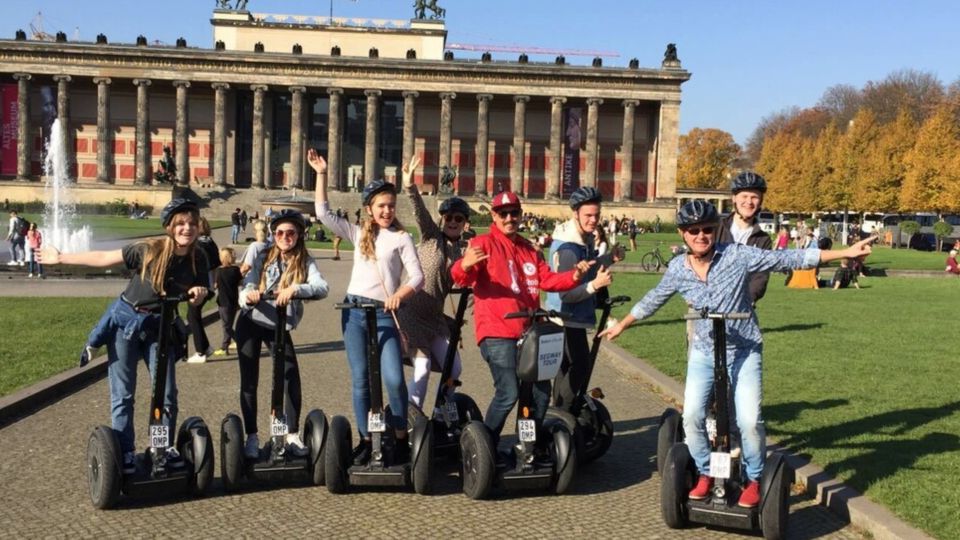
- East Side Gallery, the longest open-air stretch: A 1.3 km remnant along the Spree River, now treated like an outdoor gallery.
- Cold War storytelling on wheels: You don’t just see the wall—you connect it to the political upheaval of 1989–1990.
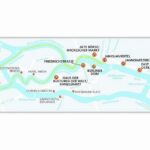
- Central Berlin route with real stops: You’ll pass through areas like Alexanderplatz, Hackescher Markt, and Nikolaiviertel.
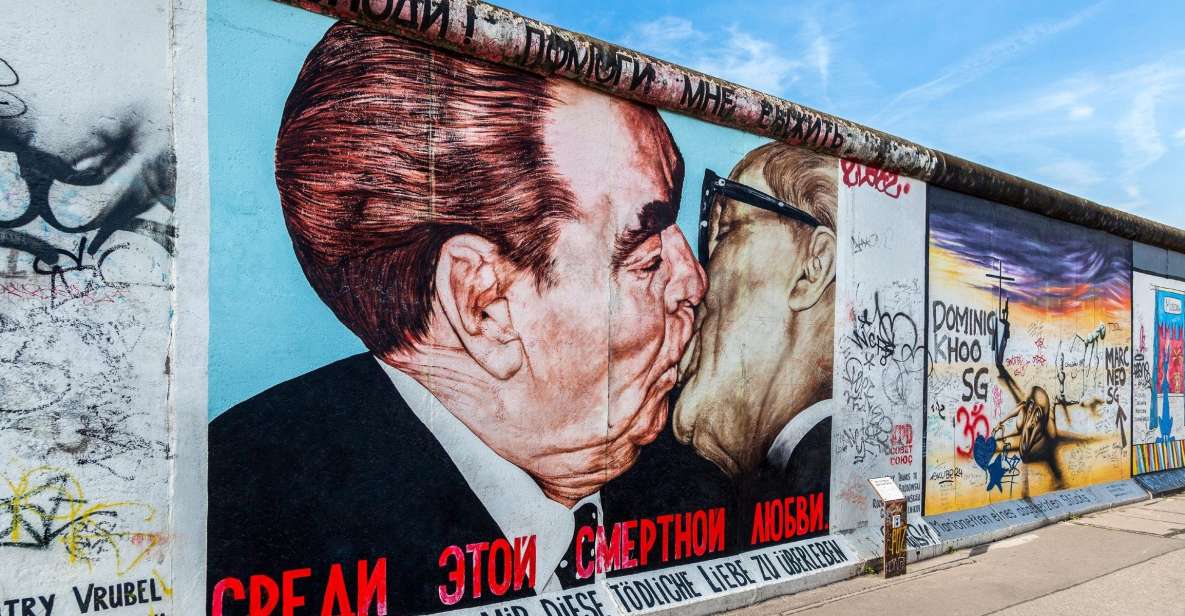
- Wall art with big-name meaning: Famous pieces include Dmitri Vrubel’s Fraternal Kiss and Birgit Kinders’ Trabant breaking through the wall.
- Practical ride comforts included: Helmet and a raincoat are provided, which is a nice bit of “Berlin weather insurance.”
Berlin’s East Side Gallery on a Segway: why this format works
Berlin is a city where history sits in the middle of everyday life. This tour takes that idea and makes it physical. One minute you’re gliding through central streets, and the next you’re beside a wall section that used to split families, cities, and futures.
The best part is that the East Side Gallery isn’t presented as random street art. It’s treated like a political snapshot. When you learn that this 1.3 km stretch was decorated after the Wall came down—by more than 100 artists from over 20 countries—you start seeing each painting as a response to the chaos of 1989 and 1990, not just a pretty mural.
The Segway adds a lot here. Walking that area on your own can be time-consuming, and you can miss the connective tissue between neighborhoods. A guided ride helps you get your bearings fast and understand why these spots matter.
You can also read our reviews of more museum experiences in Berlin


Getting ready: what the 150-minute ride feels like

You’ll meet your guide at the activity provider’s office in central Berlin and then set out on the Segway with a helmet provided. The tour runs 150 minutes, which is long enough to see multiple central areas but not so long that you feel wrecked afterward.
Your comfort matters. Bring comfortable shoes and dress for the weather. Berlin can switch moods quickly, and you’ll also have a raincoat available if conditions turn damp. That’s practical for two reasons: you stay focused on the story instead of fidgeting with clothes, and your ride stays safer because you’re less likely to rush on slippery surfaces.
One thing to keep in mind: this is a ride format. If you don’t like balancing or you’re unsure about handling a two-wheeled device, you may spend mental energy on the Segway instead of on the Cold War context. The ride can be fun, but it’s still the vehicle for your history lesson.
Alexanderplatz and Hackescher Markt: the “then and now” contrast
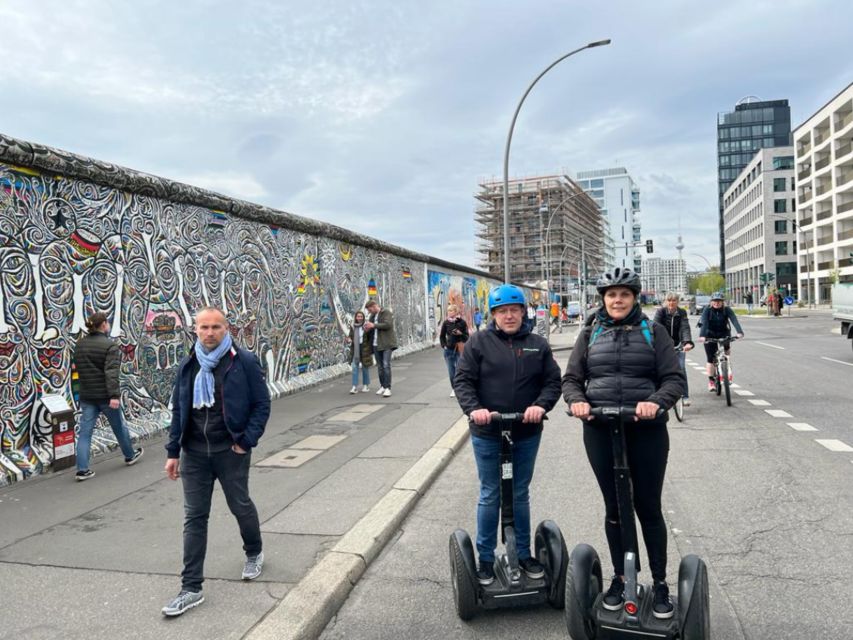
A lot of Berlin history is easier to grasp when you can compare what’s there now with what used to exist. That’s where places like Alexanderplatz come in. It’s a major hub, and rolling through it gives you a sense of scale—how modern Berlin keeps moving while its past stays visible.
Hackescher Markt is similar in spirit. You’re not just passing through a named street—you’re moving through an area that feels like a living part of the city rather than a themed set. The guide’s job here is to tie the big political story to street-level experience: where you are geographically, what the area’s role would have been in a divided city, and why the East Side Gallery’s location along the Spree isn’t an accident.
If your guide is strong, this segment pays off. People have praised guides for steering away from only the “usual tourist paths” and pointing out details that make you look twice. If the guide’s pacing is off, you might get lots of movement without much explanation at each stop, which is why the quality of narration matters so much on this kind of tour.
Nikolaiviertel and the Spree route: where you start to feel the Wall’s gravity
As you head toward the East Side Gallery, the mood of the ride changes. Nikolaiviertel helps with that. It’s closer to the older core of the city, and the surroundings tend to feel more historic in character than the largest traffic corridors. That shift matters because the Wall isn’t just a concept—it’s a physical barrier, and approaching the area by Segway makes the transition smoother than if you’re just hopping off a bus at the last second.
Then comes the Spree River corridor. The East Side Gallery runs along the banks of the Spree, which gives it a “viewing angle” you don’t get at an indoor museum. You’re not only looking at paintings on concrete; you’re also noticing how the river and the surrounding city layout relate to the wall’s former purpose. That location makes the Wall feel like part of Berlin’s daily geography.
Bring your camera here. The art is a main attraction, but the best photos tend to include more than just a single painting. Try to capture the stretch-length effect and the river-side context so you remember the scale: 1.3 km is long enough that the Wall becomes a walkway of stories.
The East Side Gallery itself: 1.3 km of wall art with political teeth
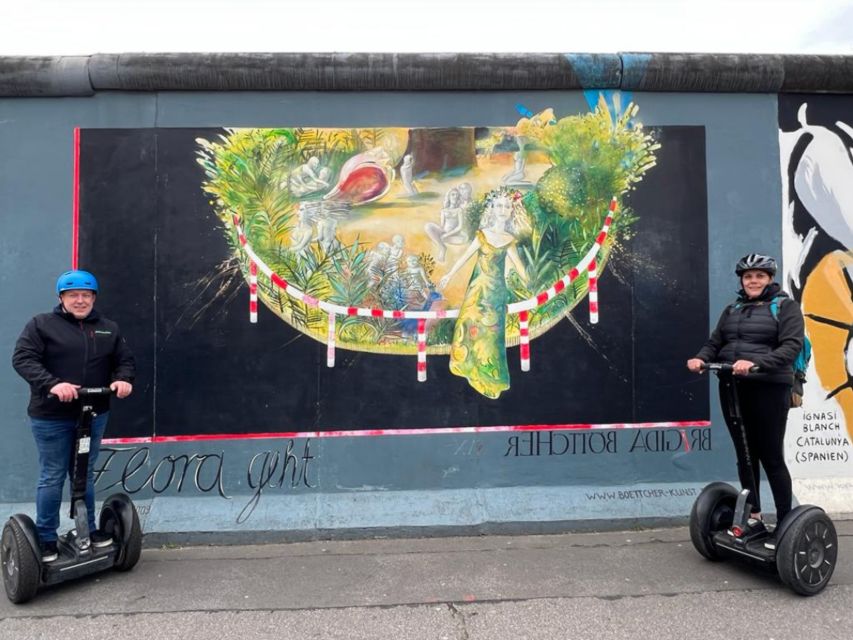
The East Side Gallery is now the longest open-air gallery in the world, and the scale is the first “wow” moment. But it’s also where the tour earns its name. This is a former stretch of the Berlin Wall that still stands, covered in works that responded to the political upheaval happening at the time.
The guide’s commentary is what turns the paintings from decoration into evidence. In 1990, artists from across the world decorated the Wall, with many works addressing what was shifting between 1989 and 1990. That time period is key. The end of the Wall wasn’t a calm event—it was a scramble, a negotiation, a new reality forming in real time. The artwork reflects that tension.
Here are two works that are often highlighted because they’re instantly recognizable once you see them:
- Dmitri Vrubel’s Fraternal Kiss: You’ll likely hear it framed as a symbol of unity and change right at the moment the world was recalibrating.
- Birgit Kinders’ Trabant breaking through the wall: This one turns the idea of escape and disruption into an image you can’t forget.
You’ll get time to marvel at the paintings, but don’t treat it like a quick photo stop. The value of going with a guide is understanding why specific choices were made—what message the artist was signaling, and how the image fits the broader Cold War narrative.
Also, keep an eye on how the Wall section is presented. Because it’s open-air, you experience it differently than a protected monument. Light, angles, and weather all change how the art looks. That’s not a downside—it’s a reminder that history sits outside, exposed, and still part of the street.





Cold War context you can follow without a textbook
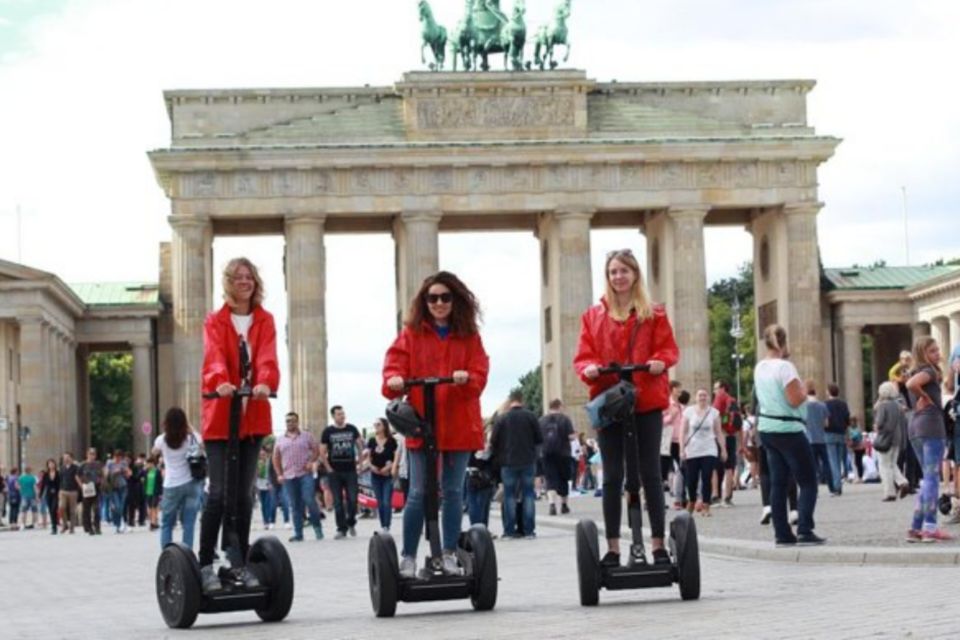
Berlin has a lot of Cold War material, and it’s easy to drown in names and dates. The structure of this tour helps you avoid that trap. You’re moving through a route the guide uses to build a timeline, then landing on the East Side Gallery to tie it all together in one place.
The goal is simple: connect the Wall’s purpose to what it meant for daily life, then connect the artists and their work to the moment the Wall fell. People have praised guides for giving helpful explanations, including guides named Fais and Morgan, who were described as excellent and effective at communicating the story.
But balance matters. Some experiences have also flagged issues like weak language skills or a guide who didn’t seem fully prepared for what was booked. If you’re counting on a very detailed historical lecture, I’d consider how you learn best. The Segway tour format gives you movement and big-picture clarity, but it may not replace a more focused history tour where the guide spends more time on fewer stops.
If the narration is strong, you’ll walk away with more than photos. You’ll understand why the artwork on concrete became a public argument—why the Wall became a message board after it stopped functioning as a barrier.
Segway safety and comfort: the small details that matter
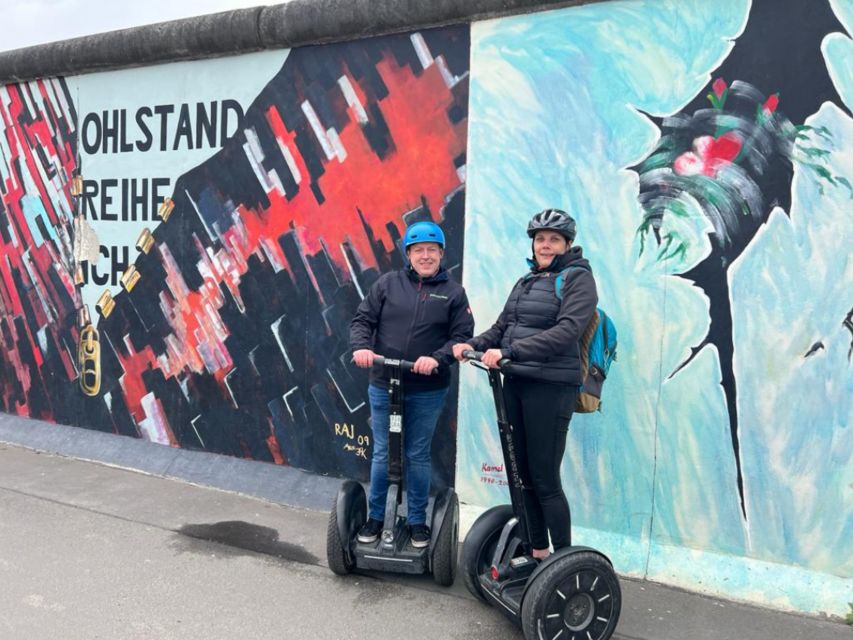
Even if you’re an experienced rider, a group tour changes the rhythm. You’ll want to pay attention to the guide’s instructions before you start moving quickly through intersections and tighter streets.
This is also why the tour has clear physical limits. It isn’t listed as suitable for children under 14, pregnant women, people over 264 lbs (120 kg), or people under 88 lbs (40 kg). If you’re near those boundaries, don’t assume you can “make it work.” This kind of ride depends on safe weight and stable control.
On your end, the basics are:
- Wear comfortable shoes you can walk in without slipping.
- Dress for the weather; if it rains, use the provided raincoat.
- If you feel uncomfortable or unsure, say something early. Don’t wait until you’re already riding at speed.
A couple reports also mentioned situations where guides didn’t keep everyone properly together at busy street points. That’s a reminder to stay attentive to the guide’s pace and to check that everyone behind you is still in line.
Price and value: what $100 buys you
At about $100 per person for 150 minutes, this isn’t a budget add-on. The question is whether you’re paying for the Segway experience or the history.
You’re paying for both, plus the logistics that come with them:
- A local guide with commentary
- Use of a Segway
- Helmet included
- Raincoat included
- Time spent visiting the East Side Gallery and additional central areas like Alexanderplatz, Hackescher Markt, and Nikolaiviertel
Here’s my practical take: this tour is best value when you want to see multiple connected parts of central Berlin in one go and you don’t want to manage navigation yourself. If your plan is already packed with walking tours and museums, you may find the Segway time less compelling. If you’d rather cover ground efficiently and still get a guided story at the Wall’s best-known surviving stretch, this price starts to look reasonable.
The one value risk is inconsistency in delivery. Since history is the point, you’ll want the guide to be prepared and communicative. Some experiences describe great delivery; others describe guides who were less fluent or less informative. So if you care most about deep historical detail, you should weigh that trade-off.
Who should book this Segway and East Side Gallery tour
I’d point you here if you want:
- A guided route through central Berlin tied directly to the Cold War
- A hands-on way to experience the East Side Gallery beyond a quick walk-by
- A mix of movement and explanation that fits a 150-minute window
I’d think twice if:
- You primarily want a museum-style lecture with lots of stop-and-go detail
- You’re sensitive to changes in route or pacing
- You can’t meet the ride limits (age, pregnancy, weight range)
It also suits language flexibility. The tour runs with live guidance in English and German, which is helpful if you’re visiting Berlin as part of a mixed-language group.
Finally, if you’re bringing a camera, this is the right time. You’ll have multiple segments where photos make sense, but the East Side Gallery is where your best shots will come from.
Should you book it? My straightforward call
If your ideal Berlin day includes seeing the East Side Gallery with context and you like the idea of covering central neighborhoods on a Segway, I think this tour is a strong choice. It’s not just about the art; it’s about the story behind why the art exists where it does, right along the Spree.
However, book with the right expectations. This is a ride-and-commentary experience, not a slow, deep seminar. If you’re okay with a guided overview and you’re excited to connect Wall paintings like Fraternal Kiss and Trabant breaking through the wall to the end-of-the-Wall moment, you’ll likely enjoy it.
If you’d like, tell me what time of year you’re going and whether you’re comfortable riding a Segway. I can suggest how to slot this into a Berlin itinerary around other Cold War sights.
FAQ
How long is the East Side Gallery and Cold War Segway tour?
The tour lasts 150 minutes.
What does the tour include?
It includes a tour of the East Side Gallery, a local tour guide, Segway use, a helmet, and a raincoat if needed.
Where do we meet the guide?
You meet your guide at the activity provider’s office.
Is the tour offered in English?
Yes. The live guide language options listed are English and German.
Who is the tour not suitable for?
It’s not suitable for children under 14, pregnant women, people over 264 lbs (120 kg), or people under 88 lbs (40 kg).
What should I wear or bring?
Wear comfortable shoes and bring weather-appropriate clothing. A camera is also a good idea for the East Side Gallery paintings.