REVIEW · BERLIN
Berlin Wall History Small Group Cycling Tour
Book on GetYourGuide →Operated by BBT-Sightseeing & More · Bookable on GetYourGuide
Berlin’s Wall story rolls past you on two wheels. This 4-hour small-group ride follows the Mauerweg along real former border ground and stops at places where the Cold War still feels close.
I especially love the way the tour turns big history into walk-up-to-the-wall moments, like the Square of the 9th November 1989 area and the former border-control at Bornholmer Straße. I also like the emotional punch of the sites at Bernauer Straße and Chausseestraße, including the ghost-station and border-crossing experience.
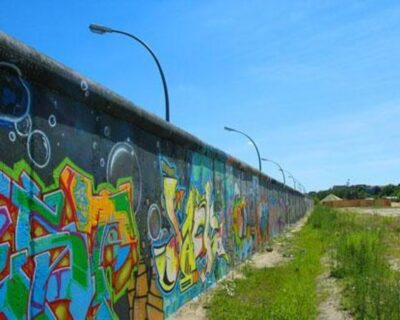
One caution: don’t expect a continuous ribbon of wall. Today, only fragments remain, so you’re really biking through traces, memorials, and stories—if you want mostly untouched wall sections, this may feel more interpretive than visual.
In This Review
- Key highlights worth your attention
- A 4-hour Wall-tracing ride that feels tight and personal
- Bornholmer Straße: where the story turns on 9 November 1989
- Mauerpark and the “traces” approach that makes sense
- Bernauer Straße memorials: the Wall as a wound in the city
- Chausseestraße: ghost-station atmosphere and border-crossing reality
- Invaliden Graveyard and Invalidenstraße: a darker pause
- Government Bank, the Parliament of Trees, and Berlin’s pivot to symbols
- From Brandenburg Gate to Checkpoint Charlie and Tränenpalast
- Price check: what $36 buys you in real value
- Guides set the tone: relaxed but serious
- What to bring (so your ride stays comfortable)
- Who this Berlin Wall cycling tour suits best
- Should you book this Berlin Wall cycling tour?
- FAQ
- How long is the Berlin Wall history cycling tour?
- What’s the group size for this tour?
- Where do I meet the guide?
- What should I bring with me?
- Is food included?
- Do I need to worry about rain?
- What’s included in the ticket price?
- Is the tour conducted in English?
Key highlights worth your attention
- Bornholmer Straße crossing point: start where people first got through on 9 November 1989
- Mauerpark and the Death Strip area: see how the zone was shaped to control movement
- Bernauer Straße memorials and the ghost-station: clear, factual storytelling with eerie atmosphere
- Invaliden Graveyard and Invalidenstraße crossing: a quieter stop that lands hard
- Government Bank to the Parliament of Trees: Berlin’s shift from division to symbolism
- Brandenburg Gate to Checkpoint Charlie and Tränenpalast: Cold War to present-day landmarks in one ride
A 4-hour Wall-tracing ride that feels tight and personal
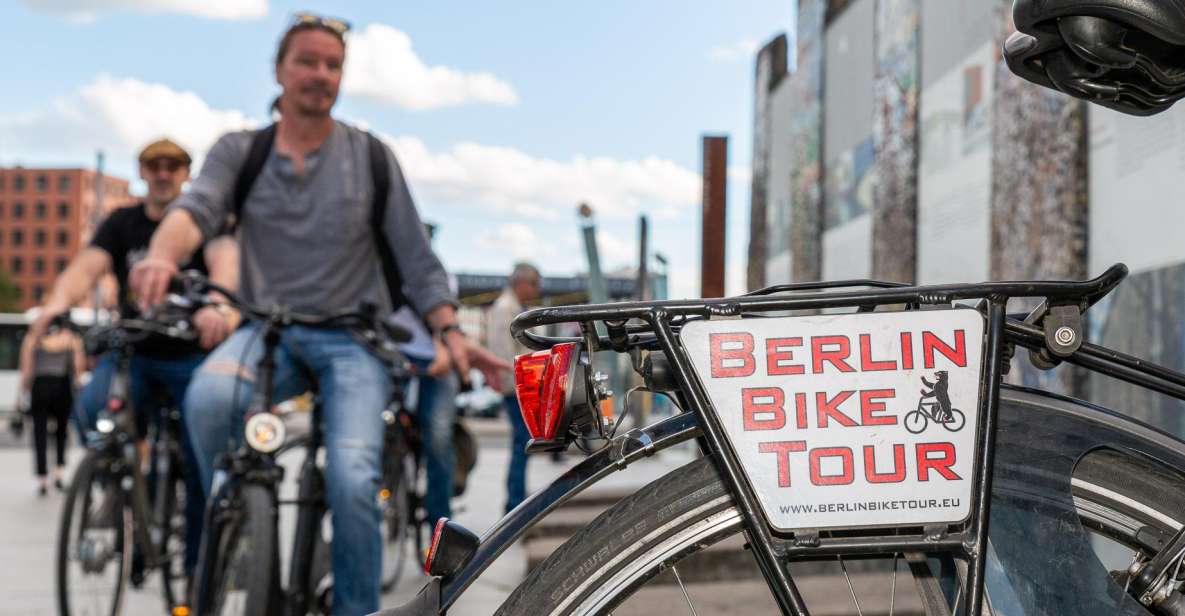
This is the kind of tour that works because it’s sized right. You’re in a small group—3 to 8 people—so your guide can slow down when questions pop up, and you don’t spend half the time coasting past stops without context.
The route is built around the Mauerweg, the long Berlin Wall route. Even though the physical wall is mostly gone, the geography still tells the story. You’ll glide through areas that were meant to separate East and West, then ride toward the iconic West-facing sights that became global symbols once the Wall fell.
At just 4 hours, it’s also a good “day-of” activity: long enough to feel like you learned something real, but not so long that you lose your evening to bike fatigue. You’ll need to dress for all weather—rain ponchos are provided if needed.
Meeting is simple: you meet your guide at 75 Bornholmer Straße, Berlin 10439, and the tour ends right back there. From public transport, it’s very doable on foot: about 1 minute from tram-stop Björnsonstraße, 2 minutes from S-Bahn Bornholmer Straße, and around 10 minutes from Schönhauser Allee.
You can also read our reviews of more cycling tours in Berlin

Bornholmer Straße: where the story turns on 9 November 1989
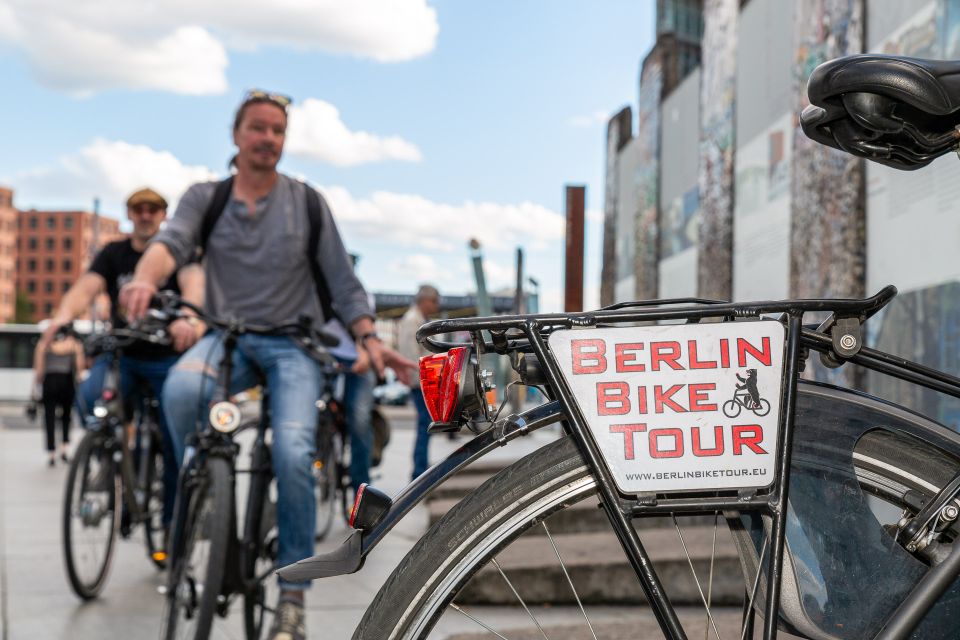
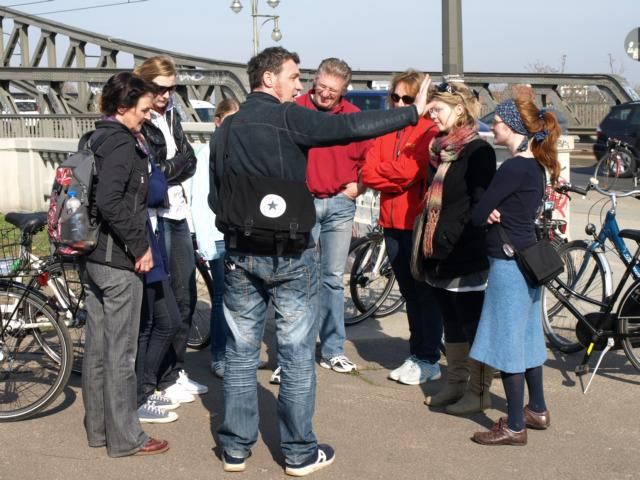
You begin at Bornholmer Straße, right in the area connected to the events of 9 November 1989—the night when the first East German citizens crossed the border. This matters because you’re not starting with abstract Cold War talk. You’re starting in the place where real decisions changed real lives.
You’ll also see a few details that make Bornholmer Straße feel specific rather than generic: cherry trees planted along the street area and the original watchtower and the death-strip concept. The death strip wasn’t just a fence line—it was an engineered stretch meant to deny escape and control visibility. Even when you can’t see a perfect wall segment, the tour helps you understand what the space was designed to do.
One practical tip: if you like taking photos, this is where it pays to slow your brain down. The story here is fast-moving in time, but the physical cues are spread out. Let your guide connect those cues; your camera will thank you later.
Mauerpark and the “traces” approach that makes sense
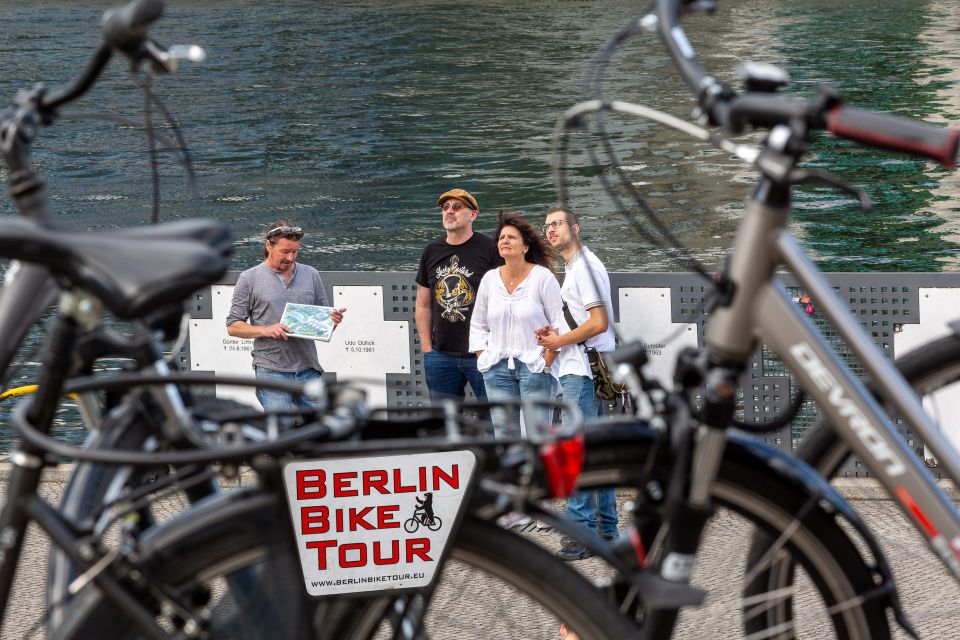
A lot of Wall tours struggle with a basic problem: the Wall isn’t fully there anymore. This one leans into that reality. When you cycle through the Mauerpark area after crossing near Bornholmer Straße, you’re moving through the land where the dividing logic used to be.
Here’s what I like about the approach: the tour doesn’t pretend you’re seeing the Wall exactly as it looked in 1989. Instead, you’re learning how to read the city. Small visual hints—ground markings, memorial shapes, and placement of former border-control elements—add up to a clearer picture.
You’ll also notice playful details on the ground (pictures of rabbits) used as part of the visual guide along parts of the route. It sounds odd until you see why it works: Berlin is layered. You can acknowledge something tragic and still recognize how a modern city survives and repurposes space.
If you’re the kind of person who enjoys “spotting” history clues as you move, this stop will click.
Bernauer Straße memorials: the Wall as a wound in the city
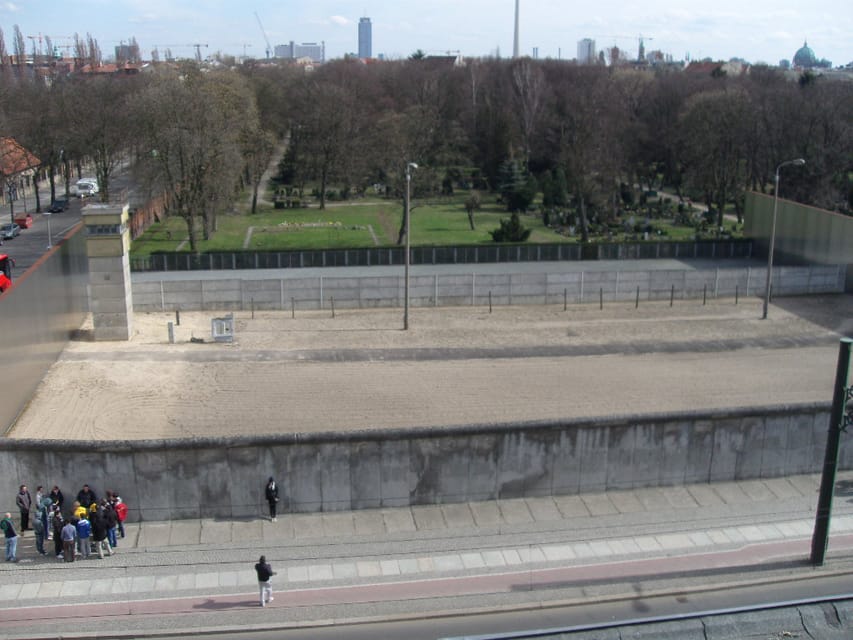
Bernauer Straße is one of the most powerful areas for Wall memory, and this tour brings you there with a focused plan. The highlight here is the Wall Memorials at Bernauer Straße.
Even if the wall itself is no longer a full sightline, memorials like these do something useful: they keep the timeline and human impact from getting vague. This is where you start to understand the Cold War as lived experience—families separated, choices made under pressure, and the constant risk built into the border system.
If you like your history balanced—fact-based but not cold—this section tends to hit that sweet spot. Your guide gives context, and the setting helps you feel why the details matter.
Chausseestraße: ghost-station atmosphere and border-crossing reality
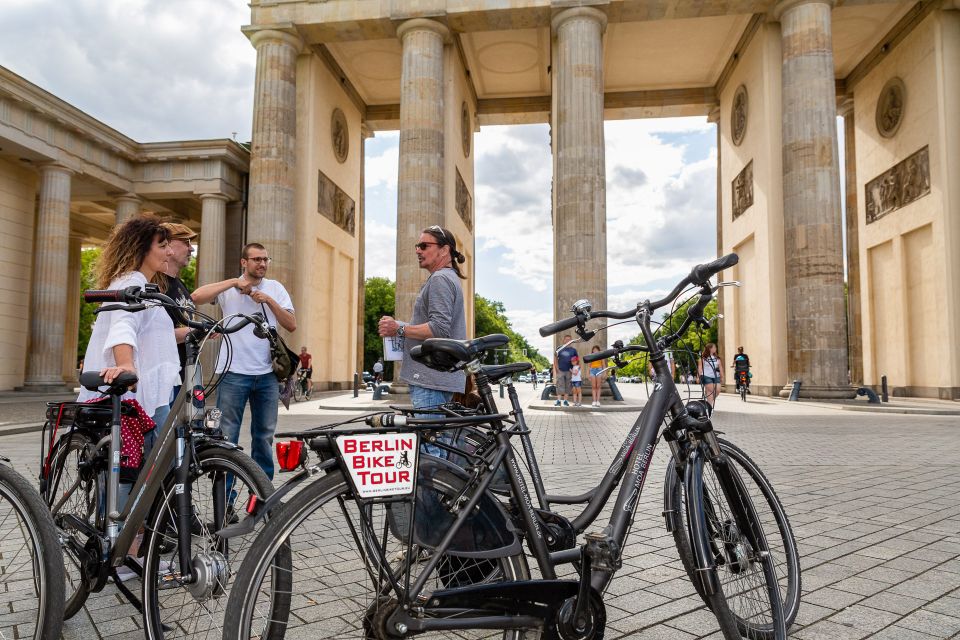
One of the best stops on the route is Chausseestraße, where you visit the ghost-station and the border-crossing area. This is a place that can feel oddly quiet compared with the surrounding city noise, which makes the background story land harder.
The word ghost-station isn’t just marketing. It signals that something is missing—service, movement, normal life—because the border system controlled what could happen. You’ll hear the tragic and fateful stories your guide focuses on here, and the tour’s pacing helps you take them in instead of skimming past.
If you’re traveling with someone who thinks history tours are boring, this is the moment where you can convince them. The setting does part of the work for you.
You can also read our reviews of more historical tours in Berlin


Invaliden Graveyard and Invalidenstraße: a darker pause
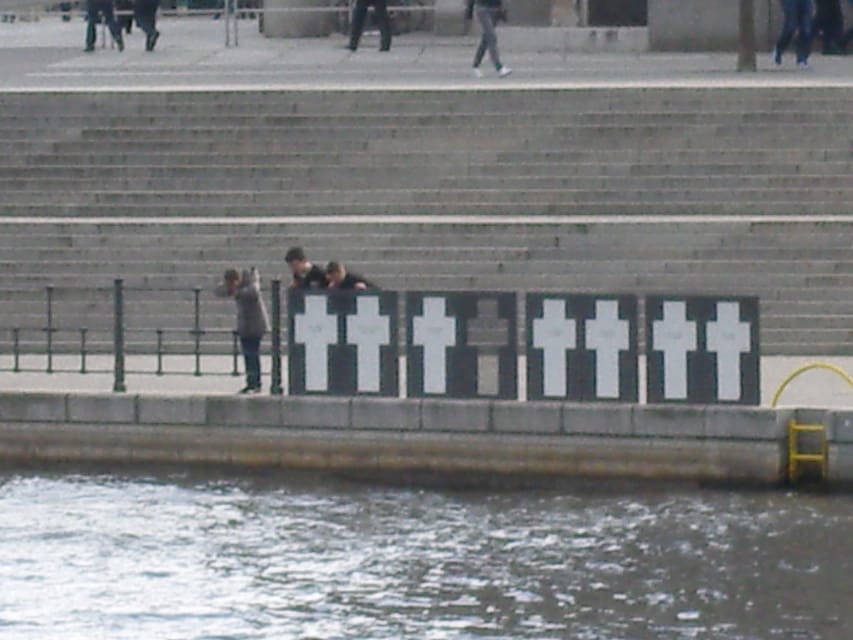
After the more central landmarks, the tour takes you to the Invaliden Graveyard and the former border-crossing at Invalidenstraße. This is a quieter kind of stop—less about grand architecture, more about memory and consequences.
What I like about it is that it interrupts the “wow, big sights” rhythm. You don’t just bounce between iconic backdrops. You get a moment where the story slows down, and you’re reminded that the border wasn’t a game for people making plans in calm offices. It was lethal and personal.
This stop may be brief compared to the emotional weight of it. Still, it’s the kind of place where your brain naturally shifts gears. Bring your best listening voice.
Government Bank, the Parliament of Trees, and Berlin’s pivot to symbols
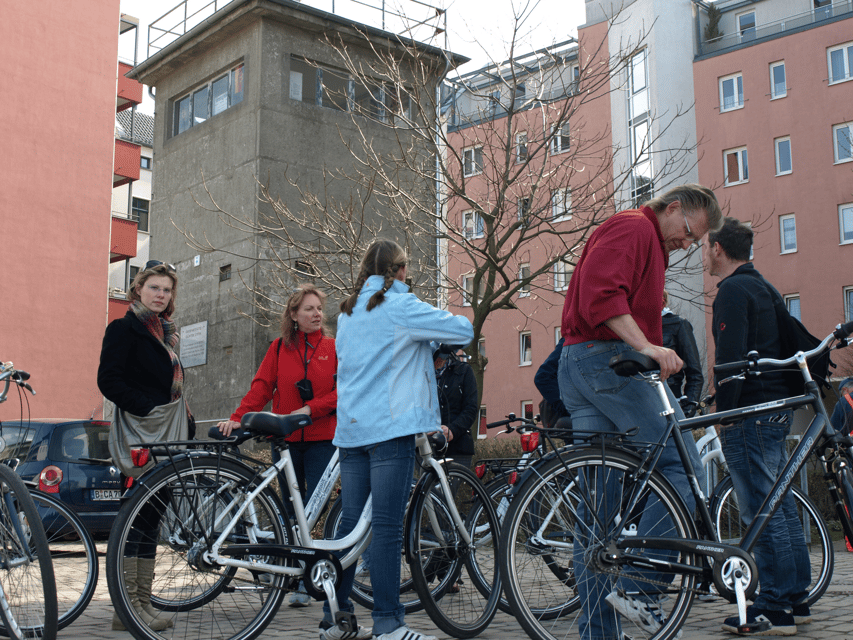
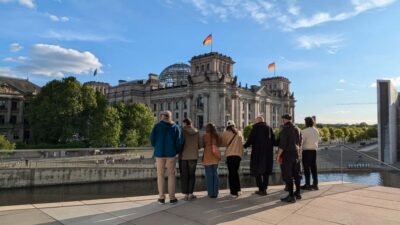
Then the ride moves into an area that shows Berlin after reunification: you’ll travel along the Government Bank toward the Parliament of Trees.
This part of the tour matters because it shows how cities rewrite meaning. Where there used to be control and exclusion, you now see symbolic spaces—design meant to represent civic life rather than border enforcement. It’s not a replacement for the hard border history, but it helps you understand the full arc.
And since you’re on a bike, the transition feels natural. You’re not jumping from one century to another with no in-between. The city itself does the linking.
From Brandenburg Gate to Checkpoint Charlie and Tränenpalast
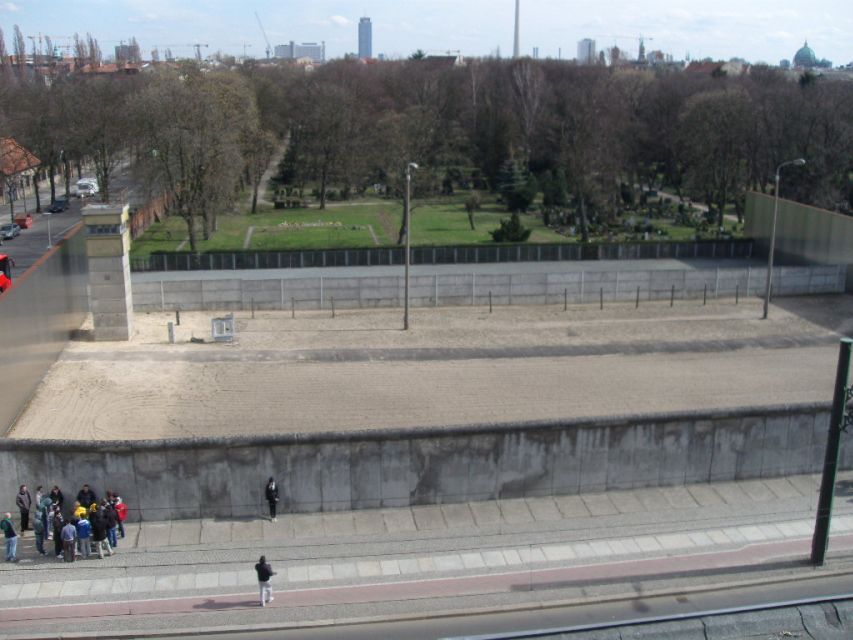
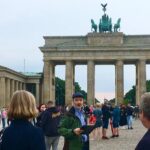
Now you turn toward the heavyweight postcards: Brandenburg Gate, Potsdamer Platz, and Checkpoint Charlie on the way through the Friedrichstraße area.
What makes this stretch work on the tour is timing and context. If you visit these landmarks on your own, it’s easy to treat them as famous set pieces. On this ride, your guide ties them back to the border story—how the Cold War shaped movement, how checkpoints became symbols, and how those symbols evolved into tourist icons once the Wall was gone.
You’ll also stop at the Tränenpalast—the Palace of Tears—on Friedrichstraße. Even if you’ve seen photos, it’s the kind of name that sticks because it points to what people went through: departures and reunions that carried pressure and pain.
Along Friedrichstraße you’ll get a very practical Berlin sightseeing “bonus” as you roll through the area: you ride past Friedrichstadt Palace, Museum Island, the New Synagogue, and the Old Berlin Post Office. You’re not stopped at each one for a museum visit, but you’re getting the visual sweep. For a 4-hour tour, that’s efficient.
And yes, Checkpoint Charlie is touristy. But with the right context, it doesn’t feel hollow—it feels like a place where history condensed into a single location.
Price check: what $36 buys you in real value
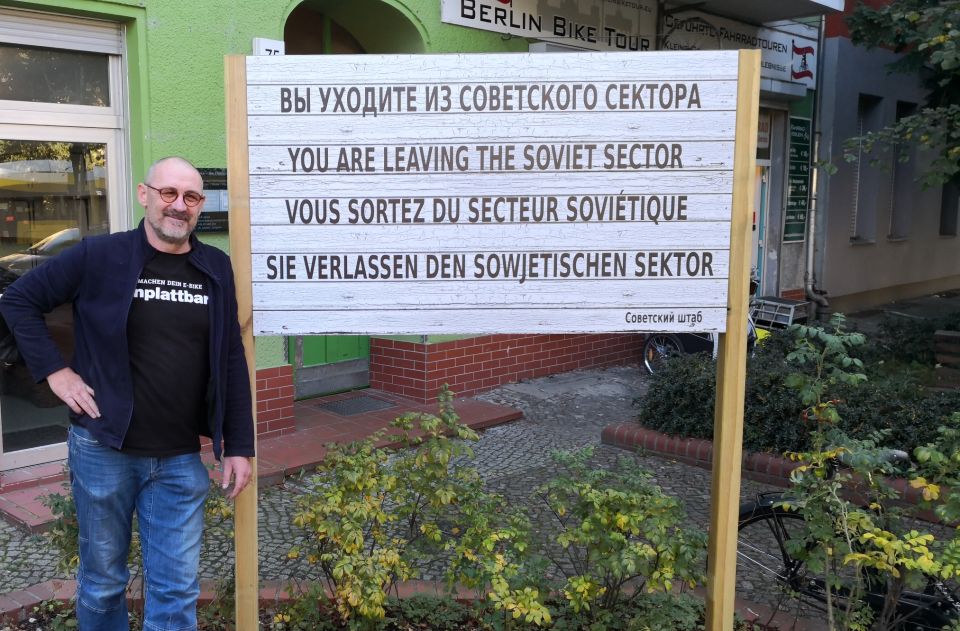
At $36 per person for a 4-hour small-group bike tour, this is strong value—mainly because the tour isn’t just “cycling around.” You’re paying for:
- a guided route that connects scattered former border points into a single narrative
- access to specific memorial and border-related stops (like Bernauer Straße and Chausseestraße)
- the bike itself, plus fees and a city guide included in the price
Your biggest personal cost is time and energy, not money. Also, food isn’t included, so plan a snack or meal before or after. In exchange, you’re getting a high-density history hit without committing to a full museum day.
Guides set the tone: relaxed but serious
The best thing about this tour’s reviews is the way they describe the guiding style: informative and relaxed. Guides like Marcus and Kathrin come up in comments for being professional, careful with pacing, and sharing personal insights that make the route feel less like a lecture.
In real terms, that means you can expect explanations that actually help you picture the old border system—not just a list of dates. You’ll learn stories, but you’ll also learn why the places are placed where they are.
And because the group is small, your questions have room to breathe.
What to bring (so your ride stays comfortable)
This tour is very doable, but you’ll enjoy it more if you come prepared.
Bring:
- Passport or ID card
- Sunglasses
- Sun hat
- Camera
On rain days, you’ll get a rain poncho, so you don’t need to panic-buy gear last minute. Still, wear layers you can ride in and shoes that handle wet pavement.
One more rule: no luggage or large bags. So travel light and keep your hands free for photos and balance.
Who this Berlin Wall cycling tour suits best
This is a great fit if you want:
- Wall history with motion, not just standing in one place
- a small-group format that stays human-sized
- an “in-between” pace: enough structure for the story, enough freedom to enjoy the city
It’s also a good choice if you’re short on time in Berlin. In four hours you’ll cover a lot of the key emotional geography—from Bornholmer Straße to the Friedrichstraße landmarks—without draining your whole day.
If you only want long stops inside museums, you might prefer a different style of tour. This one keeps you moving and uses stops and guided explanations to do the heavy lifting.
Should you book this Berlin Wall cycling tour?
Yes—if you want a practical, guided way to understand how Berlin’s border system worked and where it still shows up. The route does a smart job of connecting famous names like Brandenburg Gate and Checkpoint Charlie to less-famous but meaningful stops like Chausseestraße and the Invaliden Graveyard.
Book it when you value story + geography together. Bring your camera, expect traces more than continuous wall, and let the guide connect the dots between places. If you do that, you’ll leave with a much clearer sense of how Berlin changed—and what the city remembers even when the wall is mostly gone.
FAQ
How long is the Berlin Wall history cycling tour?
It lasts 4 hours.
What’s the group size for this tour?
It’s a small group with a minimum of 3 participants and a maximum of 8 participants.
Where do I meet the guide?
Meet at 75 Bornholmer Straße, Berlin 10439. The tour also ends back at the meeting point.
What should I bring with me?
Bring your passport or ID card, sunglasses, a sun hat, and a camera.
Is food included?
No. Food and drink are not included.
Do I need to worry about rain?
Yes, it happens. The tour takes place in all weather, and you’ll be given a rain poncho if necessary.
What’s included in the ticket price?
You get a bicycle, fees, a city guide (live), and a rain poncho if necessary.
Is the tour conducted in English?
The live tour guide language listed is German.