REVIEW · BERLIN
Rickshaw Sightseeing City Tours Berlin – Rikscha Tours
Book on Viator →Operated by Rikscha & Bier Bike & Party Beer Bike - Leo Rickshaw Tours · Bookable on Viator
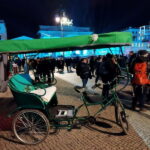
A rickshaw view beats the usual Berlin blur. This tour is a fast, close-up way to see the city’s big sights while staying warm and connected with onboard Wi‑Fi and a warm blanket. One thing to plan for: there have been enough reported no-show/communication problems that I strongly suggest you confirm the day before.
I like that the ride is built for real sightseeing, not just sitting and waving at monuments. You get a private group (up to 2 people) with pickup within a 2 km radius of Brandenburg Gate, plus a guide who can tailor what you focus on.
A possible catch: some major stops involve buildings/museums where tickets are not included, so you may want to treat this as a highlights ride rather than a full inside-the-museum day.
In This Review
- Key things to know before you book
- Why a rickshaw tour works so well in Berlin
- On-board comfort: Wi‑Fi, blanket, music, and photo help
- Starting at Brandenburger Tor: pickup and the 2 km rule
- From Brandenburg Gate to the Reichstag dome area: the royal-to-parliament story
- German Chancellery and Tiergarten memorials: power meets remembrance
- Potsdamer Platz and Topography of Terror: modern life and Nazi-crime context
- Wall-era Berlin: memorials, Checkpoint Charlie, and the line between worlds
- Gendarmenmarkt and the classicist trio: Deutscher Dom, Konzerthaus, and perfect square geometry
- Bebelplatz book-burning memorial: where the Nazi past becomes personal
- Museum Island and the old-center circuit: cathedrals, synagogues, and a palace-shaped past
- Finishing with East Side Gallery: the Wall as street art
- Price and value: what $105.72 gets you for up to 2
- Who should book this rickshaw tour (and who should skip it)
- Should you book this Berlin rickshaw tour?
- FAQ
- How many people are in a group?
- Is pickup included?
- What’s included in the price?
- Is Wi‑Fi available during the tour?
- Are admission tickets included for major stops?
- How long is the tour?
Key things to know before you book

- Close-up landmark views that feel different from a bus window
- Onboard Wi‑Fi + warm blanket for comfort, especially in chilly months
- Music on request and a photographer service to help you capture the trip
- A tightly packed route through both East- and West-era Berlin landmarks
- Some admission tickets are not included, so expect mostly exterior time at many stops
- Private group of up to 2 means the pacing can fit your energy
Why a rickshaw tour works so well in Berlin
Berlin is huge, and the famous stuff is spread in a way that punishes slow travel. A rickshaw tour solves that. You trade long walks and crowded bus lines for short bursts of movement, then you stop when it matters. The result is an easy way to get your bearings fast and still feel like you’re sightseeing, not just commuting.
This one is also set up for comfort. You don’t just get a ride; you get onboard Wi‑Fi, a warm blanket for cooler evenings, and music on request. That matters in Berlin, where weather can change your day instantly.
You’ll also have a closer perspective than you’d get on a bus. On a bus, you’re usually far from details. On a rickshaw, you can see textures, angles, and the small “why did they build it like that” details that make Berlin architecture more than postcard backdrops.
The tour runs about 1 to 4 hours (time depends on how you’re doing and what you want emphasized), so it works for first-timers and people with limited time.
You can also read our reviews of more city tours in Berlin

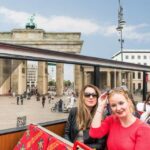
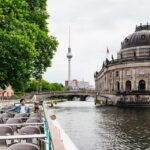
On-board comfort: Wi‑Fi, blanket, music, and photo help

The included warm blanket is more than a nice add-on. It changes the whole vibe if you’re riding late afternoon into evening. Instead of cutting your sightseeing short, you can stay out and enjoy the light and mood around the monuments.
The included Wi‑Fi on board is practical for two reasons. First, you can quickly look up context while you’re moving. Second, you can post photos without spending the evening searching for a connection.
If you want your memories captured, the tour includes a photographer. From the way the tour is described and the way guides operate, this is designed to help you get shots without breaking the flow of sightseeing. You’re not stuck saying, okay, pause for everyone to take their own pictures.
And yes, there’s music on request. It can be a small thing, but it makes a rickshaw feel less like a rigid tour and more like a personalized ride.
Starting at Brandenburger Tor: pickup and the 2 km rule

The meeting point is at Brandenburger Tor (Brandenburg Gate), 10117 Berlin. The tour also offers pickup, but with a specific boundary: pickup includes a 2 km radius from Brandenburg Gate. If you’re more than 2 km away, there’s a €10 per km charge.
What this means for you: if you’re staying fairly central, you’ll likely get pickup without drama. If your hotel is farther out, you’ll need to factor that extra cost—or plan to meet right at Brandenburg Gate.
Also, the tour is private for your group. That’s important for how the rickshaw experience works. Narrow streets and quick turns are easier when the guide is managing one group instead of corralling a big crowd.
The ride is in English, and service animals are allowed. If you need to coordinate around a specific mobility or comfort concern, it’s worth discussing that upfront so your guide can plan the smoothest route.
From Brandenburg Gate to the Reichstag dome area: the royal-to-parliament story

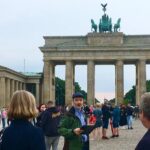
The tour’s first major stop is Brandenburg Gate, one of Germany’s best-known classicist monuments. You’ll learn how it was built from 1788 to 1791 and how its design echoes the propylaea concept from the Athens Acropolis. That’s the kind of detail that makes the Gate feel less like a landmark and more like a statement.
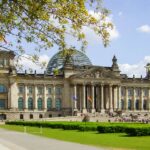
Next comes Reichstag/Bundestag. This stop is where you start connecting architecture to conflict and change. You’ll hear about key historical moments tied to the Reichstag building, including the balcony speech on November 9, 1918, the Reichstag fire on February 27, 1933, and how the dome and plenary hall were affected during WWII-era events. There’s also the symbolism of the Soviet flag raised on April 30, 1945.
Practical note: the stop time is short, and admission ticket is not included. Plan to take in the exterior context and the overall setting, not to treat it as a full museum visit. If you want to go inside, you’ll likely need to plan that separately.
Why it’s a smart rickshaw stop: this area is close enough to landmarks that you can understand the “Berlin layers” quickly. You’re seeing the shift from monarchy symbolism to parliamentary drama in a single ride segment.
German Chancellery and Tiergarten memorials: power meets remembrance

From there, you pass the German Chancellery, built around a central administration structure that’s described as rising about 36 meters with a transparency-focused design. The building’s design language—glass surfaces, concrete pillars, and large glazed atriums—makes it feel lighter than you’d expect for a huge government facility. That contrast is part of Berlin’s story: modern governance trying to look open.
Then you move into the Tiergarten area for the Soviet War Memorial. This stop is especially moving because it’s specific and physical: two T-34 tanks flank the square, and a bronze statue shows a Red Army soldier carrying a rifle. Behind the figures you’ll see names on memorial plaques, and in the rear there are graves of around 2,500 soldiers.
This is one of those moments where you’ll probably want a few minutes of quiet. The description also notes that the memorial includes free admission, but on a rickshaw route you mainly get the sense of place and the chance to get close enough for photographs and clear viewing lines.
In short: you’re not just sightseeing buildings. You’re tracking the way Berlin remembers the people who shaped its darkest chapters.

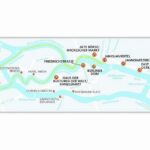
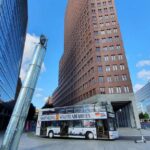
Potsdamer Platz and Topography of Terror: modern life and Nazi-crime context

Potsdamer Platz is the quick pivot point into contemporary Berlin. It was planned as a district by architects, and the result is a mix of cafes, cinemas, shops, and high-rise surroundings that locals and visitors use like a living center of the city. This stop is short, but it’s useful because it breaks the heaviness that comes with the WWII-era sites.
Then you head toward Topography of Terror, a site known since 1987 as the central planning and control location for major Nazi crimes. You’ll hear how key SS and police institutions were located there between 1933 and 1945.
This is one of the stops where a rickshaw tour shines. You can move fast between contexts, so you’re not stuck spending half a day commuting between sites. But you still get enough time to understand what you’re looking at.
Topography of Terror has free admission for the site view. In a typical “highlights ride” format, you’ll likely skim the area rather than do a full deep read. If this subject is a priority for you, you can treat the tour as the opening chapter, then come back later for longer time.
Wall-era Berlin: memorials, Checkpoint Charlie, and the line between worlds

The route includes a Memorial of the Berlin Wall and then Checkpoint Charlie. Even with short stop times, these are emotionally loaded places, and being there in person hits harder than reading about them.
For the Wall memorial stop, admission isn’t included, but the goal is clear: you’re seeing the physical reminder of the division and how it shaped movement across the city.
Checkpoint Charlie is described as the most famous border crossing of Berlin’s three American-controlled checkpoints. You’ll also hear how transition rules applied, including that the crossing was used by foreigners, FRG representatives, and GDR officials. It’s a practical way to understand why this spot became internationally recognized.
If you’re doing Berlin in limited time, this is the section where you’ll understand Berlin’s geography and political history at the same time. The route also notes Friedrichstraße as a north-south axis, with a well-known shopping mile developed between Checkpoint Charlie and Friedrichstraße station after the Wall fell.
Practical drawback to keep in mind: many of these sites are exterior viewing areas with quick stop windows. If you want long indoor time (archives, exhibits, guided narrative depth), you’ll need additional time outside the rickshaw.
Gendarmenmarkt and the classicist trio: Deutscher Dom, Konzerthaus, and perfect square geometry

After the Wall-era sites, the tour steers into some of Berlin’s prettiest architectural rhythm. Gendarmenmarkt is an 17th-century-created square built around plans by Johann Arnold Nering. You’ll learn about French Huguenot settlement in the area and the square’s name changes over time—up through the final name in 1799 tied to the guard and stables of a regiment.
This area is also a shortcut to understanding Berlin’s European “city-square” identity. It’s not just memorials and monuments. It’s also about planned public space, culture, and the social life of the city.
Then you pass the Deutscher Dom area, associated with an exhibition about ways, wrong trails, and detours showing development in liberal parliamentary democracy. Admission isn’t included, so again: this is mostly about exterior context and orientation.
Next is the Konzerthaus am Gendarmenmarkt, described as a classicist architecture masterpiece tied to Karl Friedrich Schinkel. You’ll also hear how the site evolved from a comedy house into the Royal National Theater, highlighting how German cultural institutions grew in importance.
Why this part matters: after heavy WWII context, these stops help you breathe. You get beauty and civic life back into your mental map.
Bebelplatz book-burning memorial: where the Nazi past becomes personal
Bebelplatz is a different kind of stop: it’s a memorial tied to a single brutal act. You’ll learn that on May 10, 1933, the Nazis burned more than 20,000 books there. The narrative includes the idea of selected books being labeled non-German spirit and names of authors whose work was targeted.
That list matters because it turns the event from a general tragedy into a direct human one. You’re not just learning that books were destroyed. You’re seeing that it reached writers with real voices and influence.
This stop has free admission, and the tour time is short. Still, it’s one of the best “one-minute stops” in Berlin for feeling the stakes of censorship and public intimidation.
If you’re the kind of person who likes to understand Berlin’s moral lessons as much as its buildings, don’t rush this segment.
Museum Island and the old-center circuit: cathedrals, synagogues, and a palace-shaped past
The tour brings you into the Museum Island area, which is described as one of Europe’s outstanding museum complexes and a UNESCO World Heritage Site. The stop time is short, but the value is that you get the overall sweep: this is a core historic and cultural pocket that anchors central Berlin.
You’ll also pass the Berlin Cathedral, where the tour description treats it as a must for church lovers. Again, admission isn’t included, so treat it as a viewing-and-context stop unless you plan to add separate time.
Then you’ll see the Lustgarten, once part of the Berlin City Palace. The point here is to connect what used to be imperial power to what stands as public space now. The tour framing helps you see how Berlin’s center kept changing ownership of the same geography.
The route also notes the New Synagogue on Oranienburger Straße, described as once the largest and most important synagogue in Germany. Passing it is a useful reminder that Berlin’s history isn’t only wars and governments. It includes communities and faith life, including what was lost and what survived.
Next comes Nikolaiviertel, Berlin’s oldest residential area, with old-town flair and historic houses plus nearby churches and cafés. This stop is where you can get a more human scale of Berlin: not just grand monuments, but streets and everyday atmosphere.
And you’ll pass Alexanderplatz, described as one of Berlin’s liveliest places through different eras. If you want a snapshot of Berlin today, this is that.
Finishing with East Side Gallery: the Wall as street art
The tour ends in the direction of the East Side Gallery, described as a remnant of the Berlin Wall and credited as the longest open-air gallery in the world. Even when stop time is brief, this is a great final emotional note because it reframes the Wall from only division into expression and memory.
Why this ending works: you start with classic monuments and government architecture, pass through WWII and division, then finish with a Wall piece you can look at like public art. It’s history with a different face.
If you’re planning the rest of your day after the rickshaw, this is a good area to build on—because it’s a place you can walk around afterward, linger, and keep seeing the wall story in detail.
Price and value: what $105.72 gets you for up to 2
This tour is priced at $105.72 per group (up to 2). That pricing matters because rickshaws can be pricier per person, especially in a city as popular as Berlin. Here, the value comes from bundling several things into one package:
- Short transport between many top sights, so you save time
- Comfort add-ons like the warm blanket and onboard Wi‑Fi
- A guide who provides the narration and handles the ride logistics
- A photographer included, plus music on request
If you’re traveling as two people, the per-person math is usually much easier to stomach than solo rates on private experiences. If you’re traveling alone, you might compare it against other private options to see if the extra cost buys you enough time savings.
One more value angle: some admission is not included, so the tour is best as a highlights and orientation experience. You’re paying for movement, context, and close viewing, not for entry tickets to every major building.
Who should book this rickshaw tour (and who should skip it)
This is a great fit if you want:
- A short time in Berlin and a strong hit-list of sites
- Close-up viewing rather than a bus window experience
- Comfort for evening riding: warm blanket + Wi‑Fi
- A private, flexible feel with a group size up to 2
You might want to skip or add a second plan if:
- You want long museum stays or lots of interior ticket time
- You’re hoping for a fully worry-free arrival every time (more on that below)
Should you book this Berlin rickshaw tour?
I’d book this if your goal is to understand Berlin quickly and enjoy it comfortably—especially if you’re doing Berlin for the first time or you only have a few hours.
But I’d also be smart about risk management. Because the rating includes multiple no-show incidents in the provided data, I strongly recommend you:
- Confirm your start time the day before
- Have a clear plan to reach the meeting point on time
- Keep a backup sightseeing option in the same area, so your day doesn’t fall apart if communication gets messy
If you do that, the upside is real: you get close-up city history, a comfortable ride, and a route that threads together monarchy-era Berlin, WWII memory sites, the divided city, and public art.
FAQ
How many people are in a group?
This is a private tour/activity. Your group will be up to 2 people.
Is pickup included?
Pickup is offered within a 2 km radius from Brandenburgertor/Brandenburger Tor. Beyond 2 km, there’s a charge of €10 per km.
What’s included in the price?
Included items are a warm blanket, music on request, a photographer, and Wi‑Fi on board.
Is Wi‑Fi available during the tour?
Yes. Wi‑Fi is provided onboard.
Are admission tickets included for major stops?
Admission ticket details vary by stop. For example, Reichstag/Bundestag and some others note admission tickets not included, while places like Soviet War Memorial Tiergarten and Potsdamer Platz list admission free.
How long is the tour?
The duration is approximately 1 to 4 hours, depending on how the tour is run and your pacing.