REVIEW · BERLIN
The porcupine anniversary program: I still have a Tesla in Berlin
Book on GetYourGuide →Operated by Kabarett Theater: Die Stachelschweine · Bookable on GetYourGuide
Berlin can be funny and angry in the same breath. This 2-hour cabaret at Die Stachelschweine turns the stage into a sharp look at Germany’s future in 2028. Expect fast jokes, music, and social criticism wrapped in a very Berlin-style calm.
What I like most is the close, no-distance feel you get in a small theater setting. You’re watching uncensored, live political satire play out right in front of you, not through a screen. I also like how the show mixes black humor with music, so the ideas land with a punch, not a lecture.
One potential drawback: the performance is in German, so you’ll want solid understanding to catch the nuance.
In This Review
- Key takeaways
- Why Die Stachelschweine is the kind of venue you plan your night around
- The 2028 plot behind Ich hab’ noch einen Tesla in Berlin
- What the show feels like: fast cabaret, black humor, and music
- The cast and creative team you’ll want to recognize
- Getting there in Berlin: Europacenter basement to theater seats
- Price and value: is 45 USD worth a German-language satire night?
- Who should book, and who should skip it
- Should you book Ich hab’ noch einen Tesla in Berlin?
- FAQ
- How long is the experience?
- Where do I meet for the show?
- What language is the performance?
- Is there wheelchair accessibility?
- How big is the group?
- Can I pick exact seats?
- Do I need to exchange my voucher?
- How much does it cost?
Key takeaways
- Berlin’s first cabaret theater experience at Die Stachelschweine
- Topical political satire live and uncensored, presented in a tight theater space
- A 2028 future scenario built from debt, credit ratings, tech, and policy
- Fast-paced cabaret with lots of music, not just talking heads
- Small group, limited to 6 participants for a more focused audience feel
- You choose a seating category, but not exact seats
Why Die Stachelschweine is the kind of venue you plan your night around
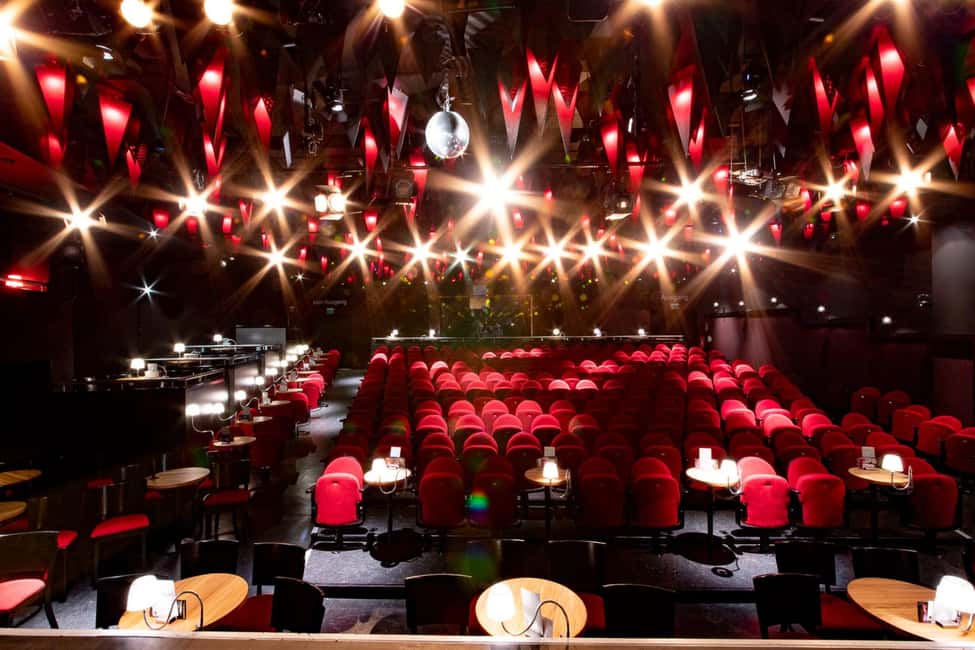
If you’re the type who wants Berlin at full wattage, this is the right stop. Die Stachelschweine is described as Berlin’s first cabaret theater, and that matters. It’s not a big, generic auditorium where everything feels distant. Cabaret works best when the room is intimate and the actors can read the audience in real time, and this setup is built for that.
Also, the show here isn’t cozy. The program leans into direct, topical political criticism. It’s the sort of evening where you laugh and then realize you’re laughing at something painfully current. That combination is why people seek out cabaret in the first place: quick laughs, followed by a second thought.
On top of the venue vibe, the production has a clear creative signature. Written by Frank Lüdecke and Sören Sieg, directed by Frank Lüdecke, with music by Luca Fazioli and arrangements by Martin Rosengarten. That list matters because it signals a team built for this style: satire that’s timed like comedy and shaped like theater.
You can also read our reviews of more tours and experiences in Berlin.



The 2028 plot behind Ich hab’ noch einen Tesla in Berlin
The anniversary program is 75 years of STACHELSCHWEINE, with the theme title Ich hab’ noch einen Tesla in Berlin. The premise is a future Germany in 2028, where the political spotlight gets tighter as pressure rises.
Here’s the backbone of the story you’ll be following during the performance:
- The new Chancellor is Wagenknecht, with Vice-Chancellor Pistorius
- National debt keeps climbing, and the pressure shows up everywhere
- Everyday life turns into absurd pricing and policy math, like a cheese roll costing 14 euros
- Major changes hit industry and tech, including BASF and Bayer emigrating to Asia, and VW and BMW belonging to Tesla
- The country’s credit rating gets downgraded to BB
- Half of the taxes go to interest payments
- Pistorius proposes a single “solution” to finance election promises: retirement from 55, free public transport, and a rent cap at 1989 levels
- The plan includes selling off the capital like it’s silverware, because once the logic starts breaking, things spiral
The fun part is that the show uses exaggeration on purpose. The jokes are built from real political themes—debt burdens, shifting industries, and how policy choices get sold as simple fixes. The satire is sharp, but it’s also structured so you can track the logic even when it turns ridiculous.
What this means for you: you’re not just watching random skits. You’re watching a single scenario evolve into chaos, which is why the humor feels coherent rather than scattered.
What the show feels like: fast cabaret, black humor, and music
This is described as fast-paced cabaret with lots of music. That’s not a small detail. In good political cabaret, tempo is a delivery system. Fast pacing keeps you engaged, while songs and musical moments give the writers space to sharpen a point without stopping the flow.
The program is also billed as combining Berlin serenity with astute social criticism. That sounds like a contradiction until you see how it works on stage: the actors can hit you with dark humor and then reset with calm, controlled delivery. It’s a classic cabaret rhythm—laugh, pause, laugh again, then think.
The show is also presented as political satire close up, uncensored and live. That usually translates to material that doesn’t cushion itself for politeness. If you prefer entertainment that never bothers to question power, you may not love this. If you like your comedy honest and your theater brave, you’ll probably be right in your element.
The cast and creative team you’ll want to recognize
A big part of the charm is the ensemble on stage. The actors listed are:
- Santina Maria Schrader
- Mirja Henking
- Sebastian Stert
When a cabaret production lists specific performers like this, it often means the show is built around their timing and stage presence, not just a theme. Expect different energy levels and performance styles rather than a single voice carrying everything.
Since the program is written by Frank Lüdecke and Sören Sieg, with direction by Lüdecke, you can also expect a consistent comedic through-line. In other words, it’s not just jokes thrown at the wall. The political ideas are likely to move step by step, with the performers guiding you through the scenario like a guided argument that keeps turning into comedy.
The music by Luca Fazioli and arrangements by Martin Rosengarten also tells you something important: the show’s songs are probably not filler. They’re part of how the satire lands.
Getting there in Berlin: Europacenter basement to theater seats
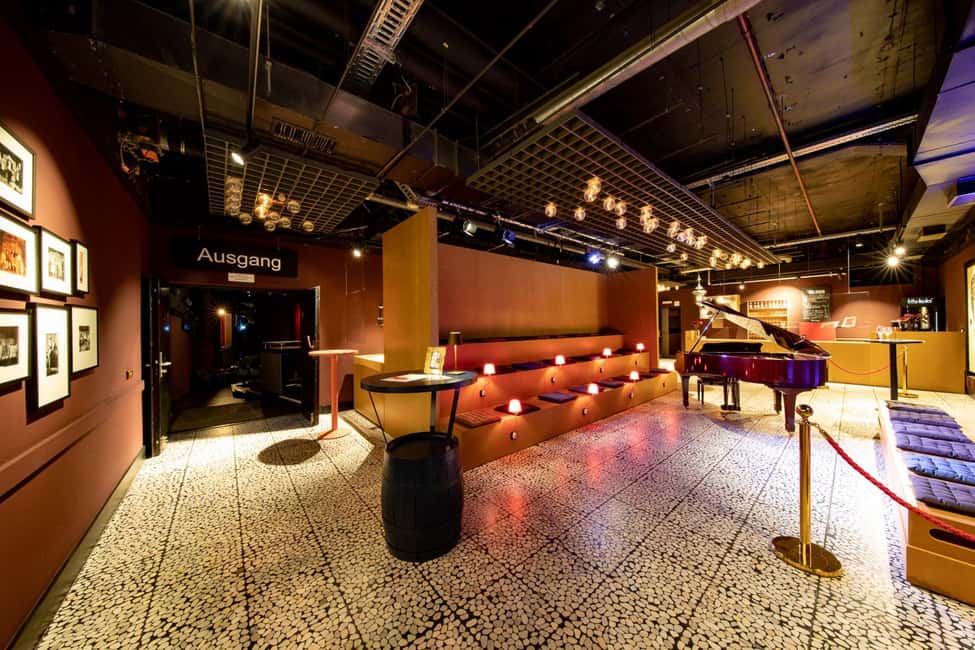
Logistics matter more than people think with cabaret, because you want to settle in and let the room catch you. The meeting point is the entrance to the theater in the basement of the Europacenter. From there, the experience runs for 2 hours and ends back at the meeting point.
A few practical points that affect your evening:
- You’ll be choosing a seating category, but not selecting exact seats.
- Your voucher must be exchanged at the box office before the performance begins.
- The performance is wheelchair accessible.
Also, this is a small-group format with a limit of 6 participants. That’s a good sign if you hate getting lost in a crowd. Smaller groups generally mean a better chance the actors can keep their timing tight, and it can also reduce the sense of being anonymous.
One more thing to plan around: the show is in German, so you’ll want to arrive mentally ready to follow language fast. If you’re relying on a slow translation in your head, you’ll likely miss the punchlines.



Price and value: is 45 USD worth a German-language satire night?
At $45 per person (about €-level pricing depending on exchange rates), you’re paying for a very specific kind of entertainment: live political cabaret in Berlin, in a smaller theater setting, with a professional cast and original creative team.
Here’s the value logic I’d use:
- Two hours is short enough that you won’t feel trapped if the tone isn’t your taste.
- The intimate setting matters. You’re paying to be close to live political satire, not for a big venue seat where the show becomes background noise.
- The uncensored, live aspect is part of the product. That’s what makes it different from sanitized mainstream comedy.
Is it expensive? For a normal theater ticket, maybe. But for cabaret where the writing is topical and the format is built around speed and timing, it’s a reasonable buy—especially if you’re the type who enjoys political humor without a safety net.
Who should book, and who should skip it
This program fits best if you like:
- Live political satire and you enjoy thinking while you laugh
- Fast comedy and songs woven into the story
- Berlin nightlife that feels more adult and sharper than standard sightseeing shows
It’s also a good choice if you want something that isn’t just a passive museum-style experience. This is performance-driven, topical, and language-based.
You might want to reconsider if:
- You don’t feel comfortable in German. The data is clear that knowledge of German is required.
- You prefer humor that avoids political bite or heavy topics. This show explicitly critiques society and policy.
Should you book Ich hab’ noch einen Tesla in Berlin?
Yes, if you want an honest cabaret night in Berlin with topical, uncensored political satire and a strong theatrical shape. The show’s premise is made for the curious mind: debt, industry shifts, policy trade-offs, and the absurd way “one measure fixes everything” turns into chaos.
Book it with confidence if German is your strength or strong enough for comedy. The small-group limit and the intimate venue setup are exactly the kind of details that make the difference between watching comedy and feeling it.
Skip it only if you know you’ll struggle with German nuance. In a cabaret format, timing is everything, and language is part of the timing.
FAQ
How long is the experience?
It lasts 2 hours.
Where do I meet for the show?
Meet at the entrance to the theater in the basement of the Europacenter.
What language is the performance?
The play is performed in German, and knowledge of German is required.
Is there wheelchair accessibility?
Yes, the activity is wheelchair accessible.
How big is the group?
It’s a small group limited to 6 participants.
Can I pick exact seats?
You can choose a seating category, but not exact seats.
Do I need to exchange my voucher?
Yes. You should exchange your voucher at the box office before the performance begins.
How much does it cost?
The price is listed as $45 per person.