REVIEW · BERLIN
Private tour of Berlin
Book on Viator →Operated by cultourberlin · Bookable on Viator
Berlin in four hours, with the right story. This private tour stitches together the sites that explain how Berlin went from divided to reunited, with a guide who adapts to what you already saw. You can set the pace, so it feels less like a stamp-collection sprint and more like a guided walk you control.
I especially like the way the stops stay major and walkable, including several places with free admission tickets. And the professional guides bring strong, clear explanations, with named guides like Julia, Celia, Helena, and Romina highlighted for teaching in a friendly, didactic way. One consideration: the schedule is tight, with many stops only around 10–15 minutes, so you’ll want to linger briefly on your own if a site hits you hard.
In This Review
- Key Points Before You Go
- A Four-Hour Berlin Mix That Actually Makes Sense
- Reichstag Building: Where German Politics Gets a Modern Makeover
- Brandenburg Gate and the Holocaust Memorial: Two Symbols, Different Weights
- Sony Center: Modern Architecture Near Potsdamer Platz
- Checkpoint Charlie: The Berlin Wall Story You Can Walk To
- Gendarmenmarkt and Museum Island: Postcard Beauty With a Purpose
- Nikolaiviertel: Berlin’s “Start Here” Neighborhood Feeling
- Price and Value for a Group Up to 15
- The Guide Makes or Breaks It
- Timing, Logistics, and How the Day Feels
- Should You Book This Private Berlin Tour?
- FAQ
- What is the price for this private Berlin tour?
- How long is the tour?
- Is the tour private, or will I join other groups?
- Do you pick us up, and do you use a mobile ticket?
- Are any admissions included?
- What time does the tour start?
- Can I cancel for free?
Key Points Before You Go
- Private pace, not a fixed script: the tour adapts to your interests and what you’ve already visited
- Big landmarks with free admission tickets on the itinerary: Reichstag building, Brandenburg Gate, Holocaust Memorial, and more
- Clear political-to-wall storyline: a route that links Germany’s government to Berlin Wall memory sites
- Architecture and city-design stops included: from Sony Center’s look to Gendarmenmarkt’s classic square
- Guides praised for clarity and engagement: people call out teachers like Helena and Julia for making it easy to follow
- Short stops mean you must pick your priorities: 10 minutes goes fast for places that deserve reflection
A Four-Hour Berlin Mix That Actually Makes Sense
This tour works because it doesn’t just name-drop famous spots. It groups them in a way that helps your brain connect themes: government and democracy, the consequences of tyranny, the reality of the Berlin Wall, and the “then vs. now” feel you get walking through central Berlin.
The format is simple. You get a private professional Spanish guide, and you move at a pace you control. That matters in Berlin, because even the most famous places can feel overwhelming if you rush. Here, the guide can slow down when something clicks for you, or move on when you want to keep gathering context.
It also helps that the itinerary focuses on places where admission is listed as free for the key landmarks. When you’re paying for a guided tour, you don’t want your time eaten by ticket lines or surprise add-ons. Still, museums are a different story: museum entry isn’t included, so if you want to go inside one of the Museum Island institutions, plan to handle that separately.
Price-wise, you’re paying for a group of up to 15 people, not a per-person fee. That can make this one of the better values for families or small friend groups. If you’re solo or a couple, it can still be worth it for the guide time and the fact that you cover the most important landmarks without having to figure out the route yourself.
You can also read our reviews of more private tours in Berlin


Reichstag Building: Where German Politics Gets a Modern Makeover
Your first stop is the Reichstag Building in the Tiergarten area, opposite the Chancellery. This is one of those places where the walls feel like a summary of Germany’s modern story. The building has had major architectural renovation work since the 1990s (Norman Foster is credited with the renovation), and it has become central to how Germany runs today.
What’s especially useful on a guided tour is getting the “why this building matters” explanation early. The guide can frame the Reichstag not as a generic parliament photo-op, but as a symbol of the country’s political life in the post-reunification era. You also get the context that it’s the meeting place for Germany’s parliament.
Admission is listed as free ticket for this stop, which is a big plus for budgeting. The time is not long, so you shouldn’t plan on becoming an architecture critic here. Instead, think of this as your orientation anchor: once you understand what the Reichstag represents, the rest of the route lands better.
Practical tip: arrive ready to look up and around. Even if your time on-site feels short, the building’s role in modern Germany is something you can catch quickly with the right framing.
Brandenburg Gate and the Holocaust Memorial: Two Symbols, Different Weights
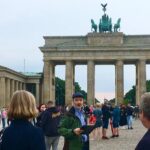
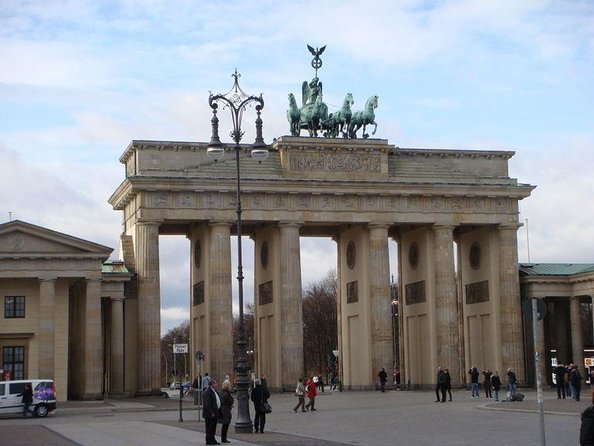
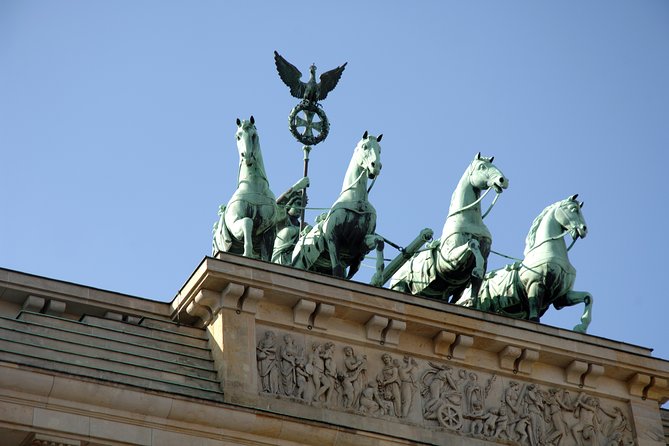
From government to national symbol, you move to the Brandenburg Gate. It’s described as an old gateway to Berlin and one of Germany’s main icons. It’s hard to overstate how often this gate appears in photos of German history. On your own, you’ll likely see it as a landmark. With a guide, you’ll understand it as a marker that has been used and interpreted across different political eras.
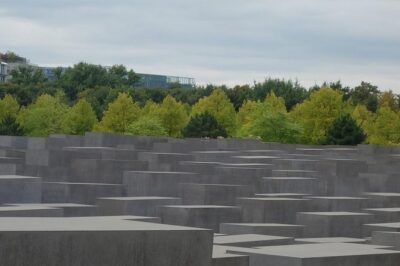
Then comes one of the most important stops on the route: the Holocaust Memorial (Memorial to the Murdered Jews of Europe). This isn’t a “look and move on” place in a thematic sense. Even if the stop is short, the memorial’s purpose is remembrance, and the guide’s job is to keep the tone respectful while helping you understand what you’re seeing.
The time listed for this stop is about 10 minutes. That’s enough to grasp the basic intent and symbolism, but not always enough for personal reflection if you want to stand and absorb it slowly. If this kind of site tends to affect you, use the guide’s explanation as a starting point, then spend a little extra minute letting the space do its work.
A balanced approach is key here: you’re getting context, but you’re also visiting a place that deserves steadiness. If you want more time, you can always pair this tour with independent exploration later.
Sony Center: Modern Architecture Near Potsdamer Platz
Next up is Sony Center, near the Berlin Potsdamer Platz underground station. This stop is about architecture and the feel of modern Berlin, right in the middle of where you’d expect movement, transit, and big-city energy.
Why it’s a good addition: after the heavier stops (politics, then remembrance), it’s useful to shift your senses. Sony Center gives you a clear visual contrast—sleek, contemporary design that signals how Berlin redefined itself after division. The guide can point out details that you’d otherwise miss, like how the architecture frames space and how it fits into the Potsdamer Platz area.
The listed time is around 10 minutes, so you’re not going to “tour” Sony Center like a museum. You’ll mostly be observing, absorbing the setting, and getting a quick interpretive explanation.
If you like modern design or you’re the type who notices how buildings shape public life, you’ll likely enjoy this stop more than you expect.
Checkpoint Charlie: The Berlin Wall Story You Can Walk To
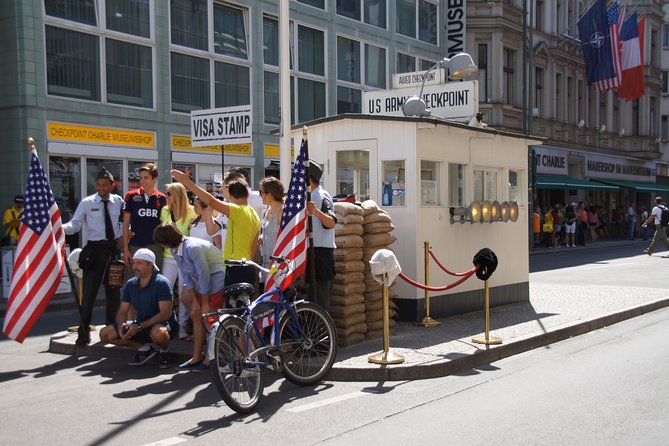
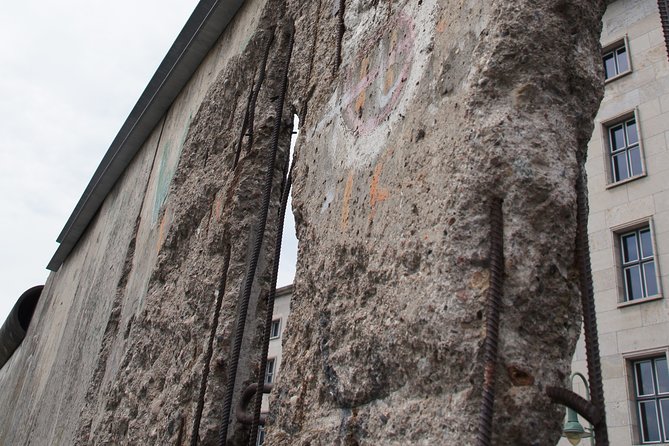
Now you hit one of the most famous Berlin Wall border crossing locations: Checkpoint Charlie. The tour notes it as the most famous crossing between 1945 and 1990.
This stop is valuable because it turns “the Berlin Wall” from a textbook topic into something physical. You’ll see the spot and hear the explanation of what a border crossing meant in daily life, not just in headlines. The guide’s storytelling helps you understand how movement was controlled and how that control shaped the city.
Checkpoint Charlie is also one of those places where people often over-focus on the “wow” factor of the landmark. With a guide, the emphasis can shift toward the human impact—how the border worked, why it became symbolic, and why it remains part of Berlin’s public memory.
Time listed is about 10 minutes. Again, that’s enough for a strong overview, but not enough for deep study. Still, for most first-time visitors, it provides the anchor you need before you start making your own choices later in the trip.





Gendarmenmarkt and Museum Island: Postcard Beauty With a Purpose
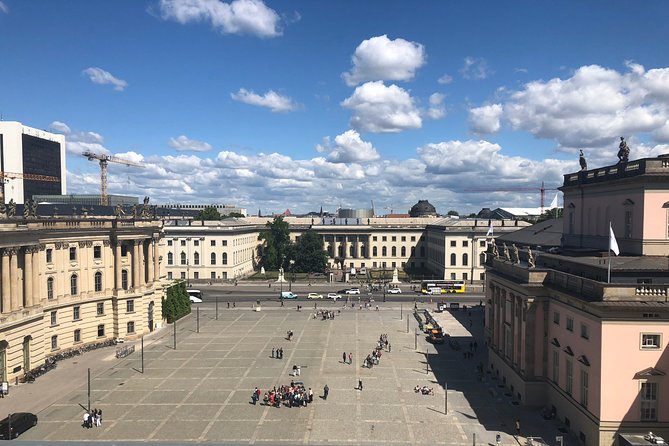
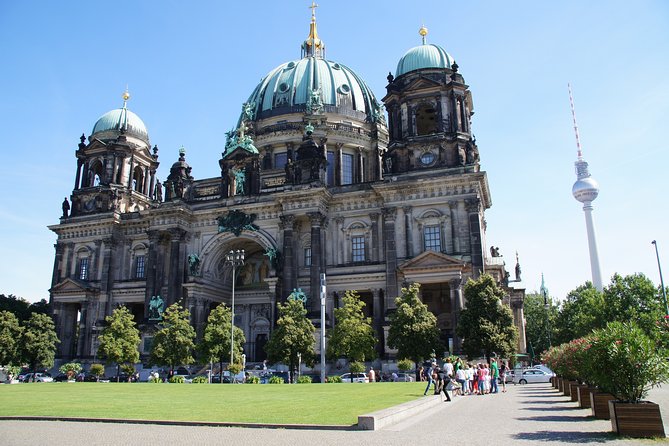
Then the tour moves into the heart of central Berlin’s “city-life” zone with Gendarmenmarkt. This square is considered the most beautiful square in Berlin, and it earns that reputation through its symmetry and classic looks. On a guided stop, you’ll learn what you’re looking at and why this kind of urban space matters to how a city feels.
The schedule assigns about 10 minutes here. That’s enough time to take photos and understand the design ideas, but not enough to sit for an hour. If you want a longer break, plan to return later. The good news: this is central, so it’s easy to extend your day independently.
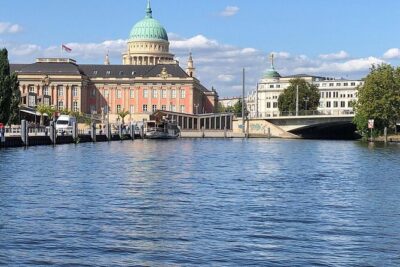
After that comes Museum Island, the northern half of Spreeinsel on the Spree River. The itinerary describes it as home to five museums that belong to the city’s public museum network. The tour doesn’t promise museum entries (and the “not included” list confirms it), so what you’ll get is the experience of being in the setting—understanding the concentration of culture there and the significance of the island as a cultural district.
This is where you should make your decision. If your priority is landmark viewing and context, Museum Island is a perfect fit inside a 4-hour plan. If your priority is museum time, you’ll need to build separate ticketed visits, because museum admission isn’t included.
Nikolaiviertel: Berlin’s “Start Here” Neighborhood Feeling
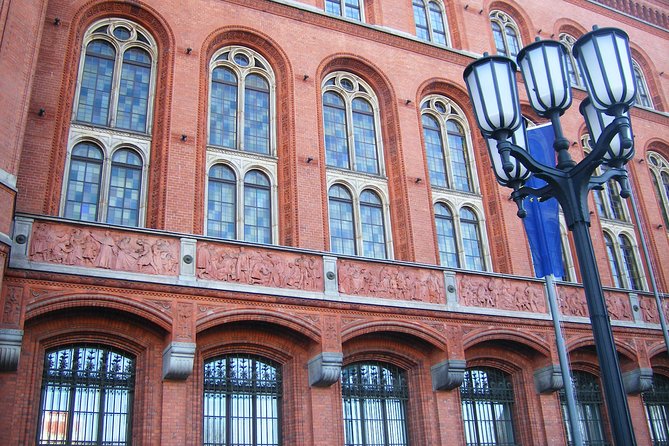
The final neighborhood stop is Nikolaiviertel. The description is simple and useful: it’s the corner that most reminds you of the city’s origins.
This part of Berlin tends to give first-time visitors a “how it began” feeling, especially compared with the more monumental political and Wall-era sites elsewhere on the route. It’s less about the biggest headlines and more about urban roots—streets and spaces that help you imagine older Berlin.
The time listed is around 15 minutes, which is slightly longer than several other stops. That extra time helps here, because neighborhood-feeling stops benefit from slow looking, not just quick listening.
If you like your history through streets and atmosphere, you’ll probably enjoy this ending. It makes the entire tour feel less like a checklist and more like a full-day-style walk, just compressed.
Price and Value for a Group Up to 15
The tour price is $404.49 per group for up to 15 people, lasting about 4 hours. That pricing is the biggest factor in whether this is a “great deal” or “only okay.”
Here’s the practical way to look at it: divide the group price by how many people you actually bring. If you’re:
- 2 people: about $202 each
- 4 people: about $101 each
- 6 people: about $67 each
- 10 people: about $40 each
The value is strongest when the cost is shared, because you’re paying for guide time and a tight route through central landmarks. The fact that many itinerary landmarks have free admission tickets listed also helps your budget, since the tour itself covers the walking and the explanation.
Also, the tour includes pickup offered and a mobile ticket, which reduces stress if you’re juggling directions on your own.
If you’re traveling solo or as a couple and you’re used to DIY tours, you might compare this to a self-guided route. But the reason people book it anyway is usually the same: you want the context, you want someone to point out what matters, and you don’t want to spend your energy figuring out the “what first” order.
The Guide Makes or Breaks It
One of the most praised aspects in feedback is the guides’ ability to explain clearly and keep attention. Names that show up include Julia, Celia, Helena, Romina, Juan, Clara, Evelyn Morales, and Fran. Across those examples, the themes are consistent: strong knowledge paired with a warm, engaging style, and explanations that feel didactic rather than rushed.
That matters because Berlin’s story is layered. If the guide handles it well, you leave with a coherent picture instead of disconnected photos. In feedback, people also mention flexibility, including adjusting language options beyond standard Spanish in at least one instance.
This is where private format helps. You can ask follow-up questions when something doesn’t make sense. You’re not forced into a single group rhythm.
If you’re the kind of traveler who likes asking why something happened, this is the right kind of tour for you.
Timing, Logistics, and How the Day Feels
The start time is 10:00 am, and the experience is about 4 hours. That length is a sweet spot for first-time Berliners who want the essentials without burning an entire day.
Because many stops are around 10 minutes, the best mindset is: treat each as a “chapter.” You’ll get a compact explanation at each point, plus time to look and take photos. If you want longer time at one site, you’ll get the best results by speaking up to adjust the pace where you care most.
The tour also states it’s near public transportation, which is good to know if you’re meeting up independently or if pickup arrangements don’t cover exactly where you’re staying.
One more practical note: since museum entry isn’t included, you should expect outside viewing and orientation rather than deep museum time. If Museum Island is a big priority for you, plan separate museum tickets.
Should You Book This Private Berlin Tour?
Book it if you want a guided Berlin greatest-hits route that connects political history, Wall-era memory, and central-city landmarks into one understandable story. It’s a strong fit for couples, families, and small groups who prefer not to plan every stop and want a guide who can adapt to your pace.
Skip or add extra time elsewhere if you know you want deep museum time or you prefer slow, reflective visits—some major stops here are brief by design. The Holocaust Memorial and other heavy sites are powerful, and you may want more than a 10-minute overview if you’re the type who processes on-site.
If you’re trying to decide, this is a good bet when: you’re short on days, you want structure, and you value explanation over wandering.
FAQ
What is the price for this private Berlin tour?
It costs $404.49 per group, with a maximum of up to 15 people.
How long is the tour?
It runs for about 4 hours.
Is the tour private, or will I join other groups?
It’s private. Only your group participates.
Do you pick us up, and do you use a mobile ticket?
Pickup is offered, and you’ll receive a mobile ticket.
Are any admissions included?
Admission tickets are listed as free for the Reichstag Building, Brandenburg Gate, the Holocaust Memorial, Sony Center, Checkpoint Charlie, Gendarmenmarkt, Museum Island, and Nikolaiviertel. Museum entries are not included.
What time does the tour start?
The start time is 10:00 am.
Can I cancel for free?
Yes. Free cancellation is available up to 24 hours in advance for a full refund. If you cancel less than 24 hours before, the amount paid is not refunded.