REVIEW · BERLIN
Where It All Began: Berlin’s Queer & Trans History Tour
Book on GetYourGuide →Operated by BerlinGuide.de · Bookable on GetYourGuide
Three hours, 150 years of queer Berlin.
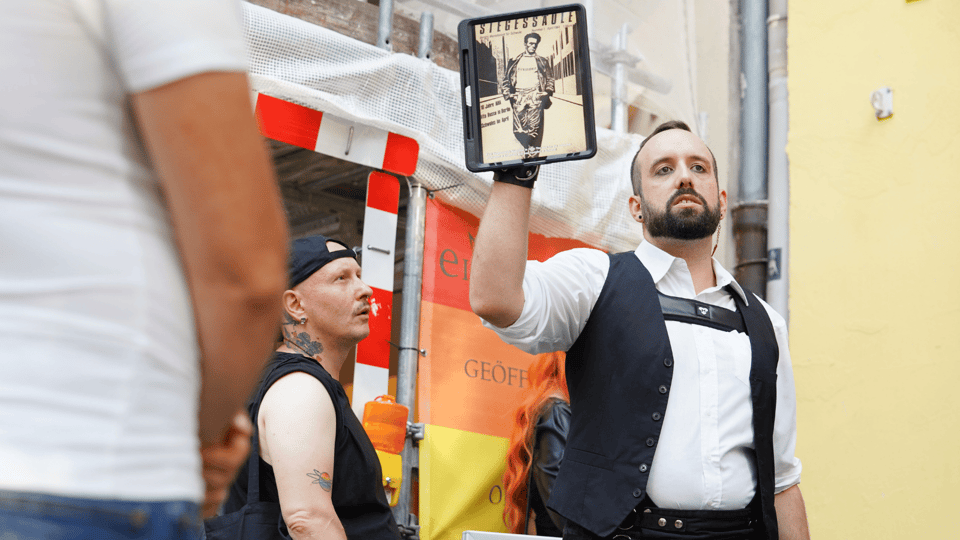
This Berlin queer & trans history tour traces the modern LGBTQIA+ movement from early activists through Nazi persecution and into today’s club culture. What makes it different is the multimedia layer: videos, rare audio snippets, photos, and AR moments along a tight walking route around Nollendorfplatz.
I especially like two things. First, you get a serious amount of material for the time: 200+ historic photos, videos, and rare audio clips woven into the stops. Second, the tour isn’t only lecture-mode, because it adds AR selfies (Mixies) and little quiz check-ins that keep you paying attention. One drawback to plan for: the content is heavy, and some stops are in areas with louder or brighter sensory input, so it may not feel easy for everyone.
In This Review
- Key moments you’ll remember
- A Berlin queer history tour that treats context like a main character
- Price and what you actually get for $81
- Following the route: from Alnatura to Metropol (and why this area matters)
- Alnatura Super Natur Markt (start at Nollendorfplatz)
- Karl-Heinrich-Ulrichs-Straße
- A short stop at a lesser-known location
- Schwerinstraße
- Nollendorfstraße
- Magnus-Apotheke
- Denns BioMarkt
- Prinz Eisenherz
- Connection Club
- Internationale Stele GEGEN DAS VERGESSEN
- Metropol
- What you’ll learn: Ulrichs, Hirschfeld, trans history, and the Nazis
- Lesbian nightlife and feminist movements: where community becomes power
- AIDS crisis, SchwuZ, and why the Berlin Wall gets called the condom of the GDR
- Today’s pride, Dyke March, Folsom Europe, and Berlin club legend links
- The AR and Mixies selfies: fun, but with a purpose
- Accessibility, sensory moments, and content notes (read this before you go)
- Who should book this Berlin queer & trans history tour
- Quick practical tips so you enjoy the full 3 hours
- Should you book it?
Key moments you’ll remember
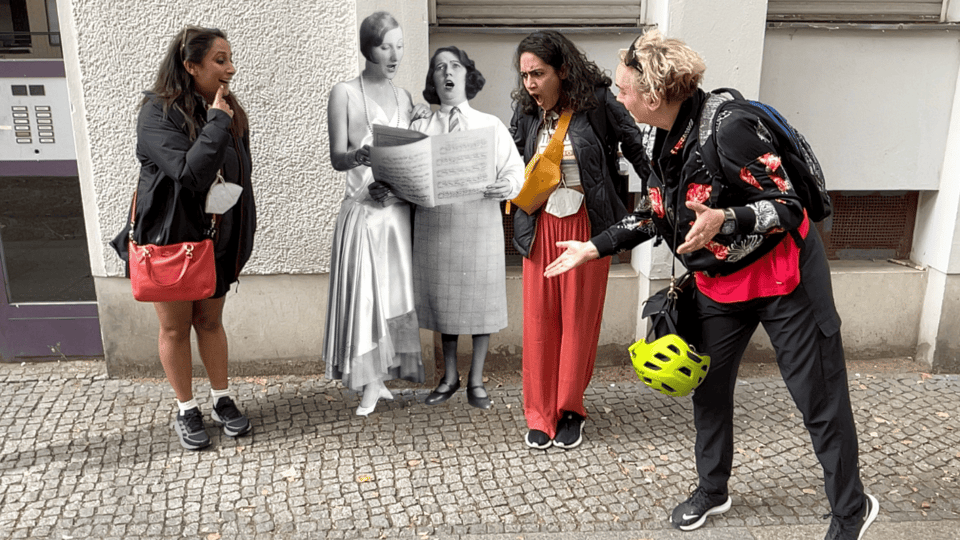
- AR Mixies selfies with historic figures turn the past into something you can take home as a photo
- 200+ rare archival files (photos, videos, audio) make the timeline feel real, not abstract
- Jeff’s guide mix of queer activism, social science, and certified sex education brings context without flattening complexity
- Trans history coverage includes early gender-affirming surgeries and how trans people lived with documentation systems
- Nightlife connections link 1920s queer spaces to today’s scene, with names like Berghain and Pride events in the story
A Berlin queer history tour that treats context like a main character
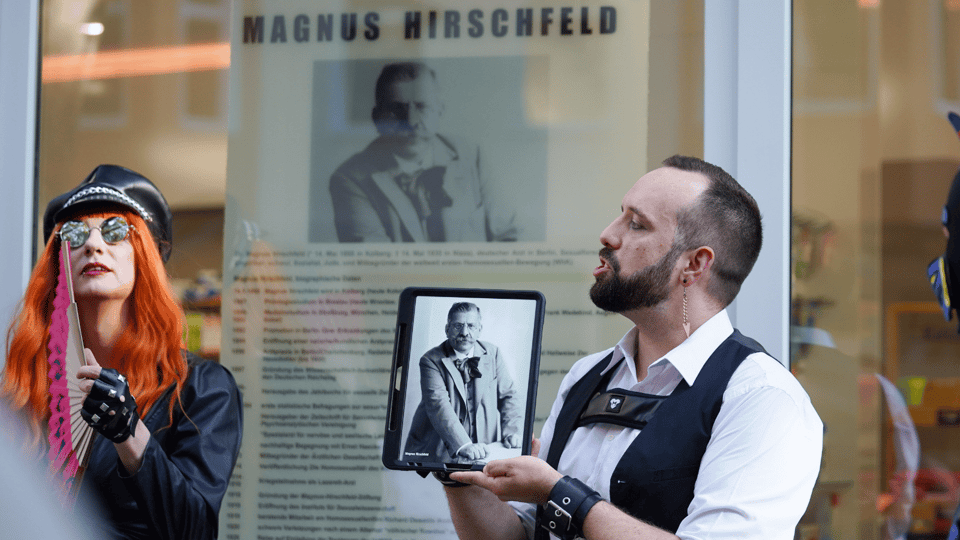
Berlin’s LGBTQIA+ story is often told like a list of milestones. This tour tries something smarter: it keeps showing you how one era’s ideas, laws, and violence shaped what people could safely say, love, and build. That’s why the guide’s tone matters. You’ll be led by Jeff, a queer activist and gender scholar with a sex-education background, plus a social-science lens. The result is part history lesson, part human story, and part reality check.
And yes, it’s fun in the way that matters. There are quizzes, interactive AR scenes, and personalized AR photos (Mixies). It’s not clowning. It’s a way to help your brain stick with what you learn.
You can also read our reviews of more historical tours in Berlin

Price and what you actually get for $81
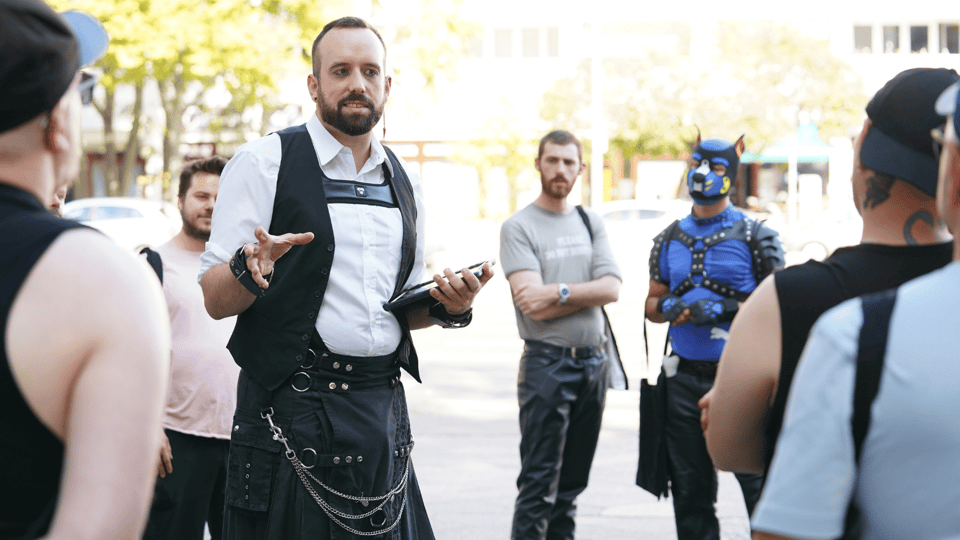
For $81 per person (3 hours), the value comes from three places.
- Small group size (max 10): you’re not trapped in a crowd. That tends to make questions and engagement feel natural.
- High production effort: 200+ archival items plus AR scenes is not just printed handouts.
- A specific guide profile: Jeff is not only a narrator; he’s a queer activist and gender scholar with sex-education credentials, so the tour can handle details responsibly.
Could you do cheaper research on your own? Sure. But most self-guided options won’t give you the same mix of archival media, AR photo moments, and guided framing that ties the timeline together into one walk.
Following the route: from Alnatura to Metropol (and why this area matters)
The tour meets at Nollendorfplatz, in front of Alnatura Super Natur Markt (Else-Lasker-Schüler-Straße 18). From there, you move stop to stop for short guided moments, ending at Nollendorfplatz again near Metropol. The pacing is brisk but not rushed, which helps if you want your feet to keep up with your brain.
Here’s what the walking sequence is like, and what each stop is doing for the story:
Alnatura Super Natur Markt (start at Nollendorfplatz)
This is where you get oriented. It’s also a practical start point: easy to spot, public-facing, and close enough that you don’t feel like you need a map degree to begin.
Karl-Heinrich-Ulrichs-Straße
This is your early anchor. Ulrichs is one of the key names behind early LGBTQIA+ organizing, and this first stretch helps set the tone: the tour doesn’t treat queer history as a recent invention. You’ll start with the idea that activism and identity have roots deeper than most people expect.
Consideration: the first minutes often set expectations. If you arrive late, you’ll miss the start of that timeline thread.



A short stop at a lesser-known location
The tour includes a quick “off the main script” point. These short pauses tend to work well on a walking format because they break up the route and give the guide a moment to connect place to story without turning it into a single long lecture.
Schwerinstraße
This segment continues the move through the neighborhood and keeps the pace steady. It’s a good time to mentally switch into timeline mode, since the tour is set up to flow through multiple eras.
Nollendorfstraße
By now, the tour has likely started weaving activists, culture, and survival strategies together. In Berlin, names tied to streets often point toward communities and institutions that changed over time. That’s what you’re watching for: what stays recognizable, and what gets erased.
Magnus-Apotheke
A pharmacy stop can sound random on paper, but it helps to show how ordinary city life intersected with queer and trans communities. The tour uses these kinds of anchors to remind you that history isn’t only monuments. It’s also everyday infrastructure and how people navigated it.
Denns BioMarkt
This is another quick guided moment. You’ll get the sense the guide is mapping identity onto place, so the route feels like a story you’re walking through, not just a sequence of photo stops.
Prinz Eisenherz
This is where the tour’s nightlife theme tends to get more concrete. Berlin’s queer nightlife didn’t appear from nowhere. It grew as people created spaces to be seen and safe enough to exist socially.
Connection Club
A stop like this is where modern scenes start to matter in the timeline. Even if you’re not a club person, it helps to understand that venues are part of political history too: who was allowed in, who felt welcome, and how that changed across decades.
Internationale Stele GEGEN DAS VERGESSEN
This is a memory-focused marker. Stops like this help the tour keep one foot in remembrance while it moves forward into later chapters. Expect the guide to connect the idea of remembering to what happens when communities are forced underground.
Metropol
Metropol is part of the concluding energy. By this point you’ve covered early activism, trans history, persecution under the Nazis, the AIDS crisis, and how activism and nightlife feed into each other. The final stop helps tie it all back into what Berlin became—and what people keep building.
What you’ll learn: Ulrichs, Hirschfeld, trans history, and the Nazis
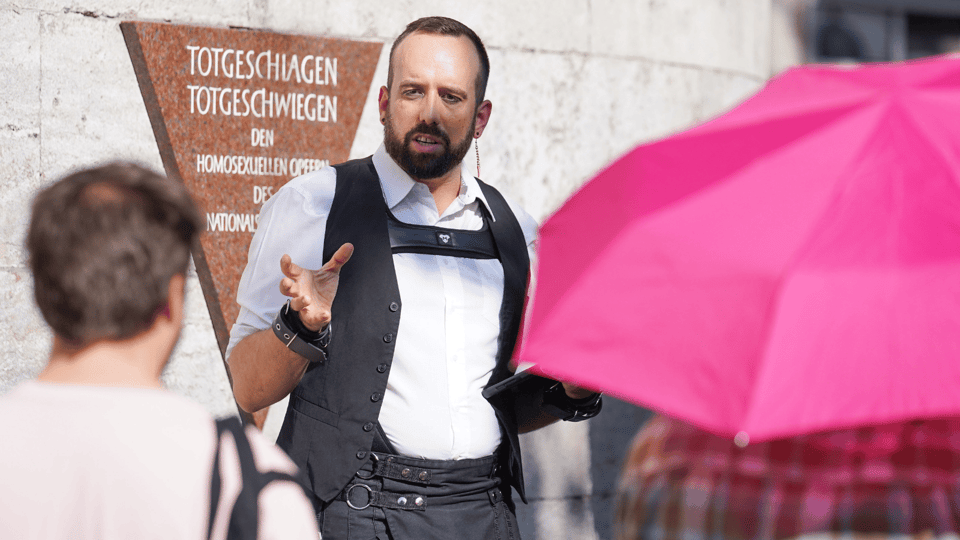
The tour’s arc runs long, but the guide aims to keep it understandable. You start with Karl Heinrich Ulrichs and Magnus Hirschfeld, early pioneers in LGBTQIA+ rights activism. Then the tour moves into trans history, including the world’s first trans identities and gender-affirming surgeries, plus how trans people lived openly with “transvestite certificates.” That part matters because it shows trans history wasn’t only oppression in one direction. There were systems, contradictions, and real ways people managed daily life.
Then you hit the Nazi chapter, where the tour doesn’t sugarcoat the stakes. It covers Hitler’s contradictory stance on homosexuality and the persecution of queer people, including imprisonment in concentration camps. You also get how queer resistance survived—because if you only learn about oppression, you miss the whole point of survival.
Lesbian nightlife and feminist movements: where community becomes power
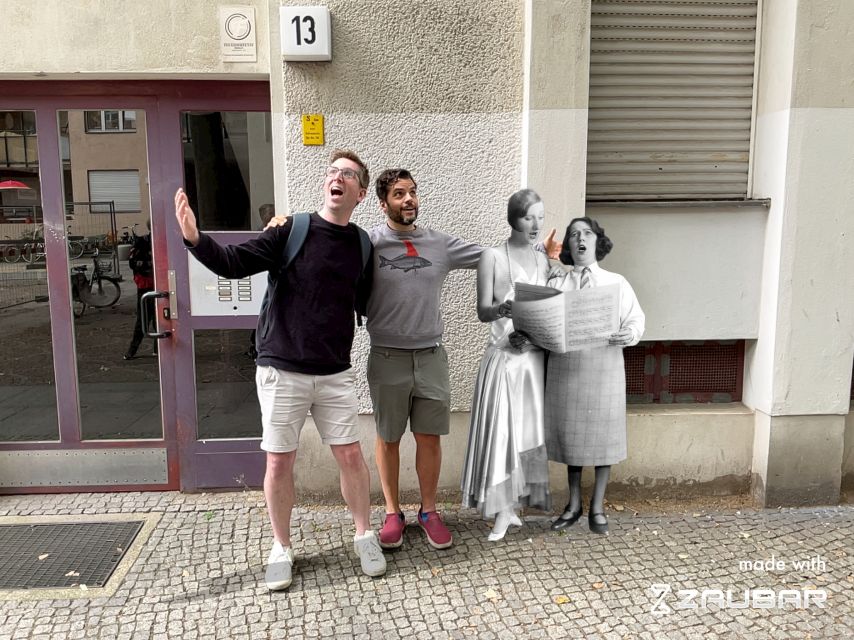
The tour includes a section on 1920s Berlin, focusing on lesbian bars and cabarets where queer women found community and resistance. It brings in famous cultural figures tied to that era—names like Claire Waldoff, Marlene Dietrich, and Josephine Baker—and links them to activism during and after the Nazi period.
What I like here is the framing. The guide’s approach is less about celebrity trivia and more about what those spaces enabled. You’re looking at nightlife as social infrastructure: a place where people could meet, organize, and refuse isolation.
AIDS crisis, SchwuZ, and why the Berlin Wall gets called the condom of the GDR
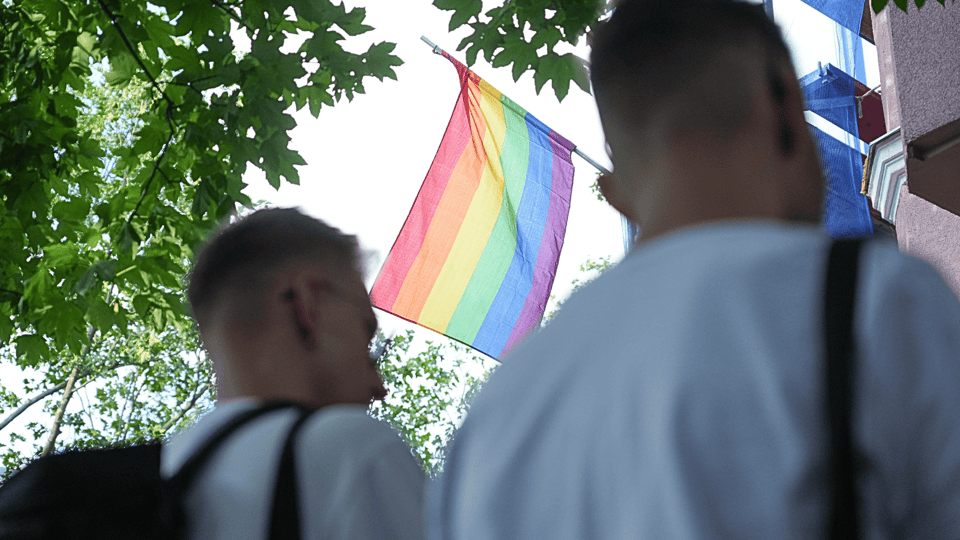
Later in the story, the tour shifts to the AIDS crisis and queer activism in divided Berlin. It highlights SchwuZ nightclub as an activist hub, which helps explain why venues weren’t only for dancing. In periods of fear and misinformation, people built support networks wherever they could.
It also includes a line you’ll probably remember: the Berlin Wall being called the condom of the GDR. The tour uses phrases like that to make a grim reality easier to talk about, without pretending the damage wasn’t real.
Today’s pride, Dyke March, Folsom Europe, and Berlin club legend links
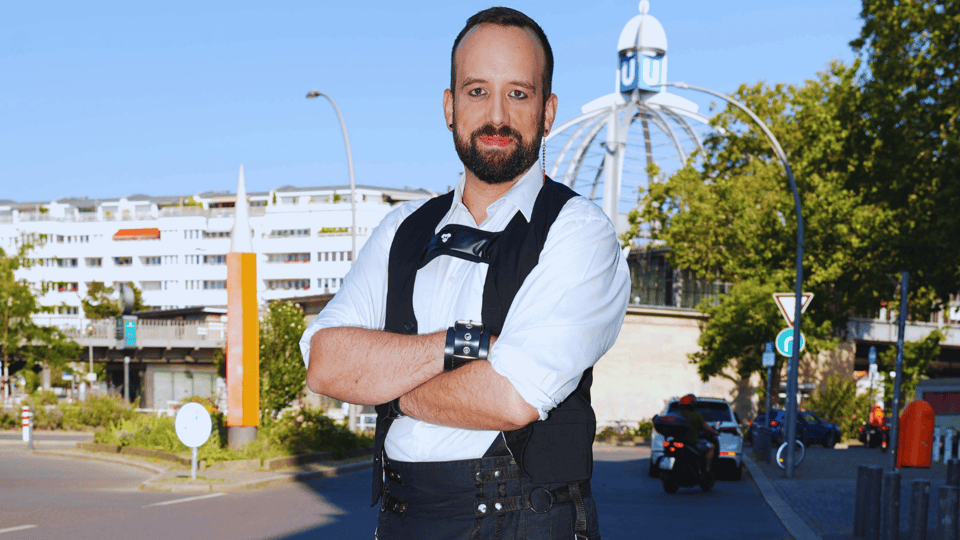
One of the best parts of this tour is the “then and now” stitching. You’ll see how LGBTQIA+ culture shaped Berlin’s club scene from earlier queer expression to later institutions and scenes, with names like Chez Romy Haag and Berghain referenced in the narrative.
The modern angle also includes Pride continuations and activism events like Dyke March and Folsom Europe. If you’re visiting Berlin and want to understand why the club and pride culture feels so political here, this is where that question gets answered.
The AR and Mixies selfies: fun, but with a purpose
The tour uses augmented reality through Mixies: AR selfies with historic queer activists. You’re also offered other AR scenes that help “see” history come alive. It’s not random tech. The idea is to create a personal memory hook so that the names and stories stick after the walk ends.
You’ll also get interactive quiz elements. The quizzes aren’t there to test you. They’re there to keep you awake and checking whether the timeline makes sense.
Accessibility, sensory moments, and content notes (read this before you go)
This tour is wheelchair accessible, and there’s a wheelchair-friendly route. That said, some paths may be bumpy. Accessible toilets are available upon request.
If you’re sensitive to lights, sound, or crowded-feeling spaces, note the tour includes areas with high sensory input (like bright lights and loud noises). Also, the tour includes videos with subtitles in German, English, or both. If you have visual disabilities, the guide can describe all visual materials.
Content-wise, this isn’t a lighthearted walk. Topics include antisemitism and racism (including sexualized racism), homophobia, transphobia, queerphobia, BDSM/kinks/fetishes/sex work, drugs and HIV/AIDS, Nazi Germany and mass murder, nudity, poverty, sex/sexism/sexual abuse, and sexualized violence plus suicide. The tour also is not suitable for children under 18.
My practical advice: if you’re choosing between a “happy history” tour and this one, go with the version that matches your day’s emotional energy. This tour aims for honest context.
Who should book this Berlin queer & trans history tour
This is a strong fit if you want:
- A guided LGBTQIA+ and trans history timeline in Berlin, not just self-reading
- A tour that connects identity history to nightlife and activism
- A small group experience led by Jeff, with sex-education context and queer activist framing
You might skip it if you want a purely upbeat overview, or if you know you’d struggle with heavy themes and sensory moments.
Quick practical tips so you enjoy the full 3 hours
Bring comfortable clothes and weather-appropriate gear. Wear shoes you trust for a walking route, since you’ll be on foot through the neighborhood.
If you care about media formats: the tour’s videos have subtitles, and the guide can describe visuals. If you want health precautions, the provider says masks indoors can be arranged if needed.
Also, plan your mental schedule. You’ll cover early activism, trans history, Nazi persecution, AIDS crisis, and modern nightlife influence. It’s a lot of emotional territory for one session.
Should you book it?
I’d book this tour if you want a guided Berlin LGBTQIA+ and trans history experience that also explains why the city’s modern queer culture is what it is. The best reasons are the 200+ archival materials, the AR Mixies photo moments, and Jeff’s ability to connect history to social reality without turning it into either propaganda or trivia.
Skip it if you’re looking for something family-friendly, light, or purely nightlife-focused. This walk carries heavy content and some sensory moments, so it’s best when you can handle serious topics with care.
If you’re in Berlin for a first visit and you want one tour that gives you a meaningful foundation before you hit bars and clubs, this is a smart way to start.