REVIEW · BERLIN
Berlin Half-Day World War II Walking Tour
Book on Viator →Operated by Original Berlin Tours · Bookable on Viator
World War II stories, with Berlin on your doorstep. This half-day walk saves you hours of planning and keeps you moving between major sites, without wrestling with a map. I like that the route is built around the places you actually want to see, including Checkpoint Charlie and the Berlin Wall Memorial.
My favorite part is how the guide ties landmarks to what happened here, from the Third Reich capital to the fighting around Berlin. One thing to think about: it ends at a different spot than it starts (near Brandenburg Gate), so plan how you’ll get back, and be aware that one unhappy review claims the paid tour didn’t run as expected.
In This Review
- Key Things You’ll Like Right Away
- Why a WWII-focused Berlin walk works in just four hours
- Starting at Generator Berlin Alexanderplatz, ending near Brandenburg Gate
- Checkpoint Charlie, the Berlin Wall Memorial, and East Side Gallery
- The Reichstag area and the Third Reich capital angle
- Hitler’s bunker site area and why street-level context matters
- Flak Tower and the Russian-German War Museum stop
- Prenzlauer Berg and how the walk connects neighborhoods to events
- Price, value, and what you’re really paying for
- The guide experience: stories, local legends, and what to listen for
- One drawback you should take seriously before you book
- Who this tour is best for (and who should choose something else)
- Should you book this Berlin half-day WWII walking tour?
- FAQ
- How long is the Berlin Half-Day World War II Walking Tour?
- Where does the tour start and end?
- What ticket do I need for this tour?
- What sights are included?
- How much does it cost?
- Is cancellation free?
Key Things You’ll Like Right Away
- A half-day plan for first-timers that hits several top WWII and Berlin landmarks without long setup
- Guide-led storytelling focused on what the sites meant, not just what they look like
- A concrete, street-level approach to WWII leftovers like a flak tower and the bunker site area
- Mobile ticket convenience so you’re not hunting for printed documents
- A finish near Brandenburg Gate, handy if you want to keep exploring afterward
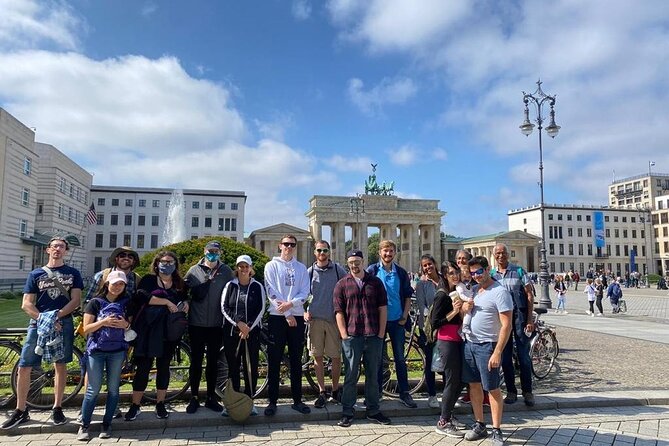
- Small-ish group feel for a big city, with a stated max of 100 people
Why a WWII-focused Berlin walk works in just four hours
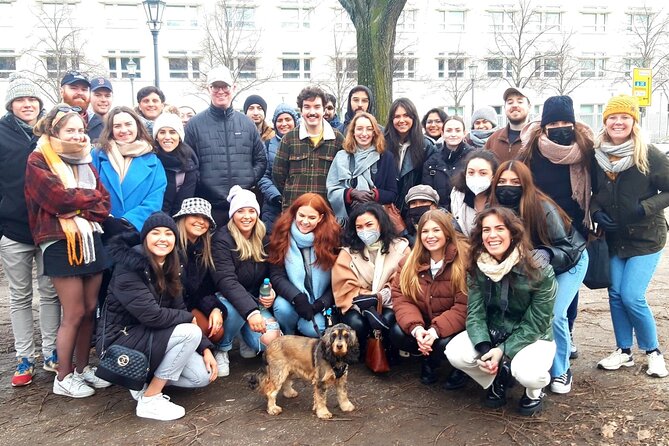
Berlin can swallow your schedule fast. Museums, memorials, crossing town on transit—before you know it, the day is gone. This tour is designed for people who want to see key WWII context and Berlin’s most famous historical landmarks in a single stretch.
At $35 for about 4 hours, the value is the guide’s time. You’re paying for direction and meaning, not just walking from point A to point B. The tour format also helps you avoid the common mistake of picking “a few great stops” and then realizing you spent half the day figuring out routes.
You also get the right pacing for Berlin history at street level. Sites like the Berlin Wall Memorial and East Side Gallery have real emotional weight, but they’re also easy to misunderstand if you show up with only general facts. The guide’s job is to connect the dots in a way that doesn’t require you to be a WWII scholar.
You can also read our reviews of more walking tours in Berlin



Starting at Generator Berlin Alexanderplatz, ending near Brandenburg Gate
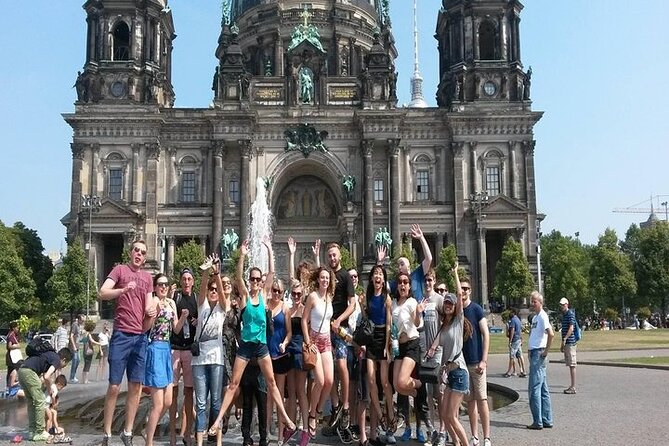
Your tour starts at Generator Berlin Alexanderplatz (Otto-Braun-Straße 65, 10178 Berlin) and ends at Brandenburger Tor (10117 Berlin). That means you’re not doing a full round-trip walk back to the same neighborhood.
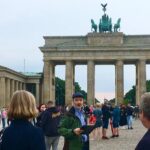
This is a plus if you like finishing in a classic area. Brandenburg Gate is a strong “wrap-up” location because it’s central to many Berlin sightseeing plans. It’s also a practical benefit: if you want to keep going afterward, you usually can.
The consideration is logistics. Since the ending point is different from the start, you’ll want a simple plan before you go—like where you’ll hop on public transportation afterward or whether you’ll walk on to your next stop. The tour notes that public transportation isn’t included, so treat transit like your responsibility.
If you’re the type who likes to be early, arrive a bit before the 12:00 pm start time. The tour uses a mobile ticket, and you’ll want a smooth check-in moment so the day gets moving.
Checkpoint Charlie, the Berlin Wall Memorial, and East Side Gallery
Even when a tour calls itself WWII-focused, Berlin doesn’t let you stay in just one era. The big reason I like this itinerary is that it threads WWII power and conflict into what Berlin became afterward—divided, watched, and rewritten in concrete.
Here’s what you can expect from the “Wall-era” landmarks:
- Checkpoint Charlie: a name that instantly signals Cold War tension. It’s the kind of place where it helps to know what made it important and why it became a symbol.
- Berlin Wall Memorial: this is where you’ll likely slow down mentally. A wall is a simple object; understanding it as a human reality is the hard part. A guided explanation makes the memorial more than a photo spot.
- East Side Gallery: Berlin’s history in public art form. You’ll get a sense of how the city processed division and then transformation.
The practical value of including these sites is that you can tie Berlin’s WWII story to the later political reality—without needing multiple separate days. If your time in Berlin is tight, these are the stops that most often make it into any “must-see” list for a reason.
The Reichstag area and the Third Reich capital angle
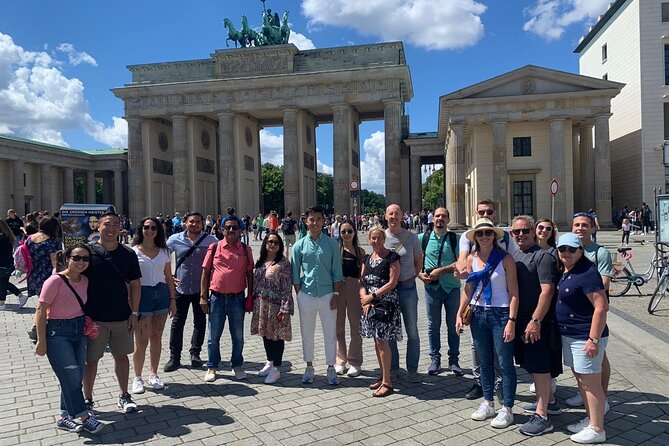
A tour like this is at its best when it gives you a sense of scale and intent—how the Nazi state tried to project power through buildings, institutions, and political theater. The itinerary includes a focus on:
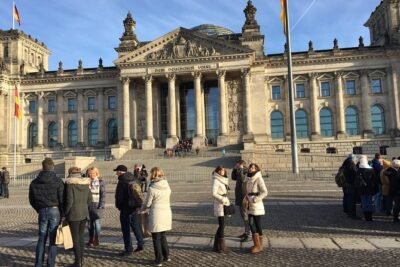
- The Reichstag
- The Third Reich capital
- Battle of Berlin
Even if you’ve seen photos of the Reichstag, hearing how it fits into the “Third Reich capital” story changes what your eyes catch. Buildings become clues, not backdrops.
The Battle of Berlin angle matters too. Berlin isn’t only a “memorial city.” It was also a city under assault. When a guide brings that context, you’re less likely to treat memorial sites like isolated exhibits and more likely to see them as part of a wider sequence of events.
One caution: this is a lot of heavy material in a short time. If you prefer lighter pacing or want plenty of museum time for reading at your own speed, consider pairing this walk with one shorter day later. The tour is built for momentum.
Hitler’s bunker site area and why street-level context matters
The itinerary includes the site of Hitler’s bunker. That’s the kind of place where you don’t need extra drama; the weight comes from the fact that history happened right here, not in a textbook.
Street-level tours can be powerful because they force you to slow down and imagine the real layout. In Berlin, that often means understanding how different neighborhoods shifted meaning after the war. Even if you can’t grasp everything at once, a guide’s framing helps you avoid the common trap: thinking about WWII as a remote conflict.
If you’re bringing curiosity, ask yourself what the guide emphasizes: command centers, survival, propaganda, aftermath. Those themes tend to shape how you remember the stop later when you’re back in your hotel searching photos and maps.
You can also read our reviews of more tours and experiences in Berlin





Flak Tower and the Russian-German War Museum stop
The tour includes a flak tower and the Russian-German War Museum. Both fit the theme of “how the war left marks you can still read.”
- Flak tower: These structures were part of air defense. When you see one in person, you get a sense of how military planning became architecture.
- Russian-German War Museum: A museum stop can help you reset from outdoor symbolism to documented context. It’s often where a guide’s timeline connects with what you can read and understand more directly.
A helpful note from the itinerary details: the first listed segment shows admission ticket free for the initial stop. That doesn’t automatically mean every stop is free, but it does suggest you’re not being hit immediately with paid entries right at the beginning. Since the rest of the stops have no explicit admission notes here, I’d treat museum admission costs as something you should double-check on the day (or during booking details) if you’re budget-tight.
Prenzlauer Berg and how the walk connects neighborhoods to events
The itinerary also mentions Prenzlauer Berg. In a city like Berlin, neighborhoods aren’t random. After the war, places changed roles. They were rebuilt. They gained new identities. That makes neighborhood context important, even when the tour is focused on WWII.
In practical terms, this part of the route helps you avoid the “history in a vacuum” feeling. You’re not just seeing names; you’re seeing how Berlin’s geography relates to what happened and how people lived after.
If you like to understand why a city looks the way it does—street patterns, districts, proximity—this kind of connection is exactly what you want from a half-day tour.
Price, value, and what you’re really paying for
Let’s talk money in plain terms: $35 for about 4 hours is not cheap in the sense of being “just walking,” but it’s also not the kind of premium you’d pay for a full-day guided program with lots of museum time.
You’re paying for:
- An enthusiastic local guide who organizes your route
- Reduced planning time, which is often the hidden cost of self-guided Berlin history
- A fixed route through major landmarks: Checkpoint Charlie, Berlin Wall Memorial, East Side Gallery, and Brandenburg Gate are all part of the tour’s highlight set
What you’re not paying for is public transportation, since it’s listed as not included. That’s fine. Berlin transit is easy to use, but budget a little time and money to hop between areas if you’re not starting and ending exactly where you need to be.
Also, the tour is limited to a maximum of 100 travelers. That number tells you it can be larger than a private tour, but it shouldn’t feel like a runaway crowd at every stop.
The guide experience: stories, local legends, and what to listen for
This tour promises stories about Berlin history and local legends, plus famous landmarks. That matters because WWII history in Berlin has layers. If you only read a sign, you’ll miss why people felt what they felt, and why particular places became charged symbols.
So here’s how to get more out of it:
- Listen for the guide’s timeline language. You’ll usually remember it later when you try to connect places on your own.
- Watch for why a site is included, not just what it is. A flak tower isn’t only a tower.
- If the guide asks you to look at something from a particular angle, do it. Street-level details can be easy to miss when you’re thinking about photography.
No guide name is provided in the information here, so your best bet is to focus on the role: you’re hiring someone to make the city make sense fast.
One drawback you should take seriously before you book
The overall rating is strong: 4.6 with 48 reviews, and 92% recommended. Still, there is one clear negative note included: a person reports that the paid tour didn’t exist at the stated time and was replaced with an offer for free tours instead.
That doesn’t prove a widespread issue. But it is enough to justify one simple safety habit: show up at the correct meeting point on time, with your confirmation ready, and verify the group you join matches the tour you booked.
If you’re worried, pick a meeting point nearby that’s easy for you to reach and allow buffer time so you aren’t stressed if there’s any minor delay.
Who this tour is best for (and who should choose something else)
This is a strong fit if:
- You have limited time in Berlin and want a half-day plan
- You want major WWII and Cold War landmarks connected into one route
- You like guided interpretation more than solo wandering
It may be less ideal if:
- You want deep, long museum time for reading and exhibits. A 4-hour walking tour can only do so much.
- You get overwhelmed by intense WWII material and prefer a lighter introduction first.
The good news: the tour says most people can participate, so it’s designed for a wide range of visitors. Still, if walking for a few hours is hard for you, think carefully about your own comfort and energy.
Should you book this Berlin half-day WWII walking tour?
I’d book it if you want an efficient, guide-led way to understand Berlin’s WWII-to-postwar story without spending your whole day planning. The price is reasonable for what you’re getting: major landmarks, organized routing, and interpretation that helps the sites click.
If you do book, go in prepared:
- Wear comfortable shoes. This is a walking tour.
- Arrive a bit early to find your group calmly.
- Decide how you’ll handle getting from Brandenburger Tor to your next plan.
If your heart is set on WWII facts but you also want quiet time to read every plaque, you might pair this with a later self-guided museum day. As a first “get oriented fast” experience, though, it’s a smart use of a half-day.
FAQ
How long is the Berlin Half-Day World War II Walking Tour?
It’s listed as approximately 4 hours.
Where does the tour start and end?
It starts at Generator Berlin Alexanderplatz, Otto-Braun-Straße 65, 10178 Berlin. It ends at Brandenburger Tor, 10117 Berlin.
What ticket do I need for this tour?
You receive a mobile ticket.
What sights are included?
The highlights include Checkpoint Charlie, the Berlin Wall Memorial, the East Side Gallery, and Brandenburg Gate, plus additional WWII-focused sites.
How much does it cost?
The price is $35.
Is cancellation free?
Yes. You can cancel for a full refund up to 24 hours before the experience start time.