REVIEW · BERLIN
Berlin: Samurai Museum Entry Ticket
Book on GetYourGuide →Operated by Samurai Museum Berlin · Bookable on GetYourGuide
Samurai armor in the middle of Berlin. This museum uses high-tech interactions to make Japan’s warrior past feel close, not dusty. You’ll move through authentic objects, live-style performances, and culture spaces designed to look like they belong in Japan.
What I like most is the mix of real collections and playful tech that helps you connect the dots fast. Two standouts for me are the big sword-and-armor focus and the staged cultural spaces like the Nō theatre and tea house.
One possible drawback: it’s not a huge “walk at your own pace for hours” kind of museum. If you’re the type who hates interactive questions and touchscreens, you might find parts feel more like an experience than a quiet gallery.
In This Review
- Key highlights you should know
- Berlin-Mitte location: Auguststraße, near major sights
- Ticket value: $15, smart timing, and a 1–14 day window
- The museum flow: high-tech exhibits that keep you engaged
- Interactive tech you’ll actually notice
- The Peter Janssen Collection: armor, weapons, and tea culture
- What you’ll learn from seeing the objects close up
- Nō theatre and tea house: Japanese-built spaces in Berlin
- Why these spaces feel more than themed rooms
- Sword Collection, ninja techniques, and holographic performances
- The AI fox guide makes the learning stick
- Who this museum is best for (and who might not love it)
- Practical tips: what to know before you go
- FAQ
- FAQ
- Where is the Samurai Museum Berlin located?
- How much is the entry ticket?
- Is the ticket time-limited?
- What is included in the ticket?
- Can I skip the ticket line?
- What public transport stops are closest?
- What can’t I bring inside?
- Should you book this Samurai Museum entry ticket?
Key highlights you should know
- High-tech learning with interactive installations, projections, and touchscreens
- The Peter Janssen Collection: thousands of samurai-culture objects, including armor, weapons, and tea utensils
- On-site Nō theatre and tea house concept, built using traditional Japanese materials and methods
- Swordsmithing and blade-making topics, plus ninja technique displays you can follow step by step
- AI fox guide (Kitsune) that prompts you with questions and keeps the experience moving
Berlin-Mitte location: Auguststraße, near major sights
The Samurai Museum Berlin is located on Auguststraße in Berlin-Mitte, around the Alexanderplatz and Museum Island area. That’s a good setup because you’re not stuck with an isolated attraction. You can pair your visit with a walk through Mitte streets afterward, or squeeze it in between bigger sights.
Getting there is straightforward on public transport. You can use the U-Bahn at Oranienburger Tor (U6) or Rosenthaler Platz (U8). If you prefer the S-Bahn, Oranienburger Straße is served by S1, S2, S25, and S26. Tram options include M1 and M5 at Oranienburger Straße, plus M8 at Rosenthaler Platz.
If you like knowing where you’re headed, your start point is at Auguststraße / Mitte, and the visit ends back there. That matters if you’re planning lunch nearby or trying to time your day around other Berlin stops.
You can also read our reviews of more tours and experiences in Berlin



Ticket value: $15, smart timing, and a 1–14 day window
The entry ticket is $15 per person, and it’s valid for 1 to 14 days. You’ll still want to check available starting times when you book, because this kind of timed-entry setup helps the museum manage crowds around interactive installations.
For value, I look at what you get beyond the entrance price. Here, the ticket covers a lot of “active” content: interactive displays, performance-style experiences, and access to key exhibition spaces like the Nō theatre and tea house. If you’ve ever felt museum tickets are just you standing in front of labels, this one is built to avoid that.
Also, the ticket includes skip-the-line entry. Instead of waiting at a desk, you go to the entrance barrier with your smartphone ticket. That’s a practical win in a busy central area where lines can form.
The museum flow: high-tech exhibits that keep you engaged
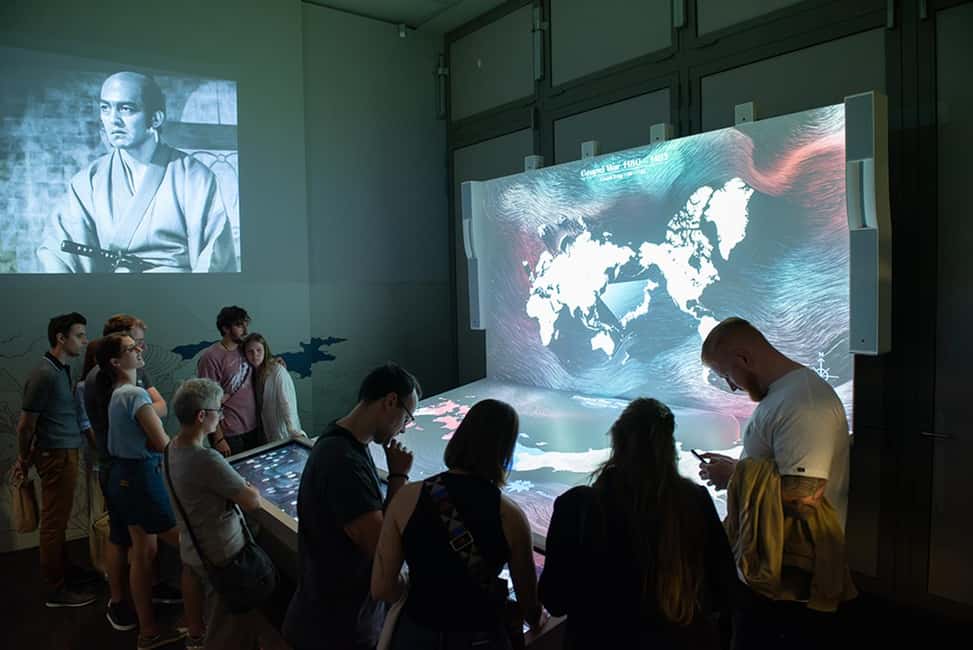
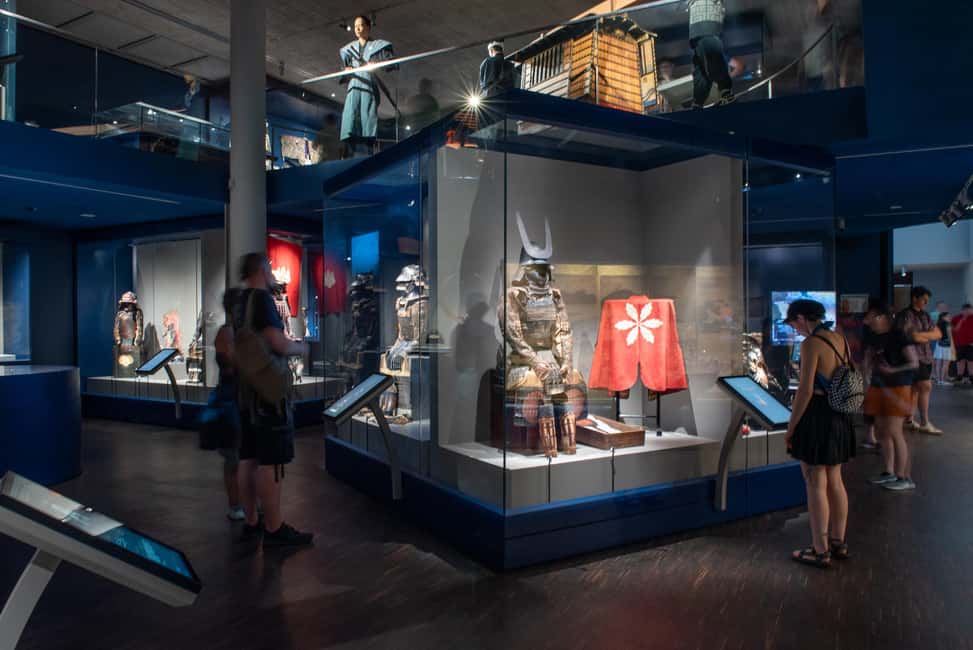
From the start, the museum is designed like a guided experience even when you’re visiting independently. There are projections and touchscreens that lead you through the exhibition, so you’re not just looking at objects—you’re answering questions and following along with what each feature is trying to teach.
One of the most memorable “glue” elements is the Kitsune fox system. You’ll be prompted with questions as you go, which turns learning into something closer to a game. It also helps the museum feel coherent, because each area connects back to the same story thread.
Language support is also a practical point. The interactive parts work for both German and English speaking visitors, so you don’t have to worry about missing key explanations if you’re not fluent.
Interactive tech you’ll actually notice
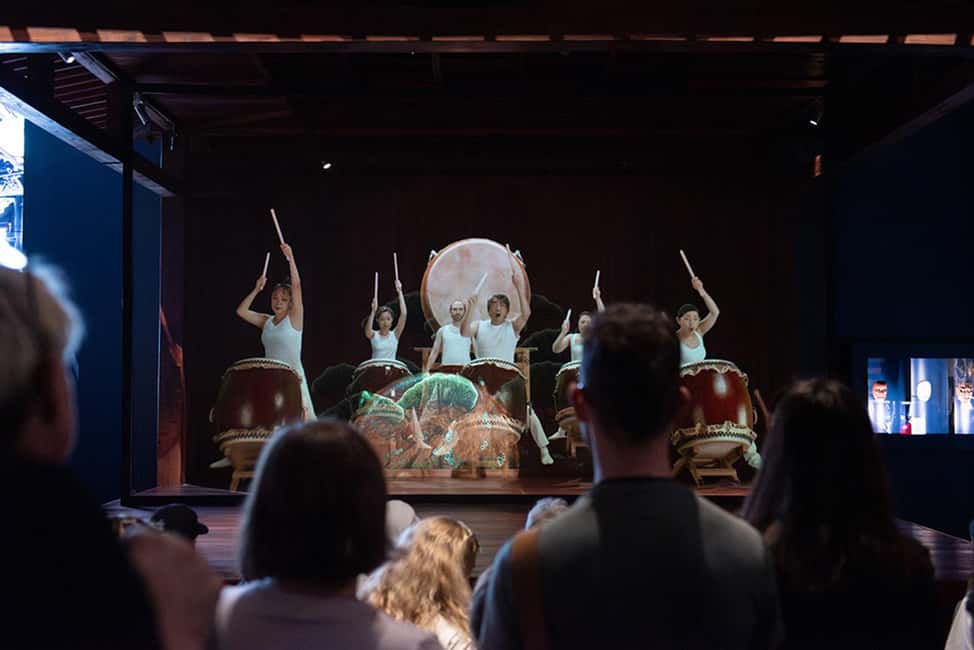
You should expect to see a lot of “hands-on” learning formats: touchscreens, guided projections, and interactive installations. There’s also a holographic drum performance and other presentation-style elements that help break up the exhibition so it doesn’t feel like one long room of displays.
If you enjoy learning by doing, this place is made for you. If you’d rather read slowly in silence, treat the interactive pieces like optional layers rather than the whole point.
The Peter Janssen Collection: armor, weapons, and tea culture
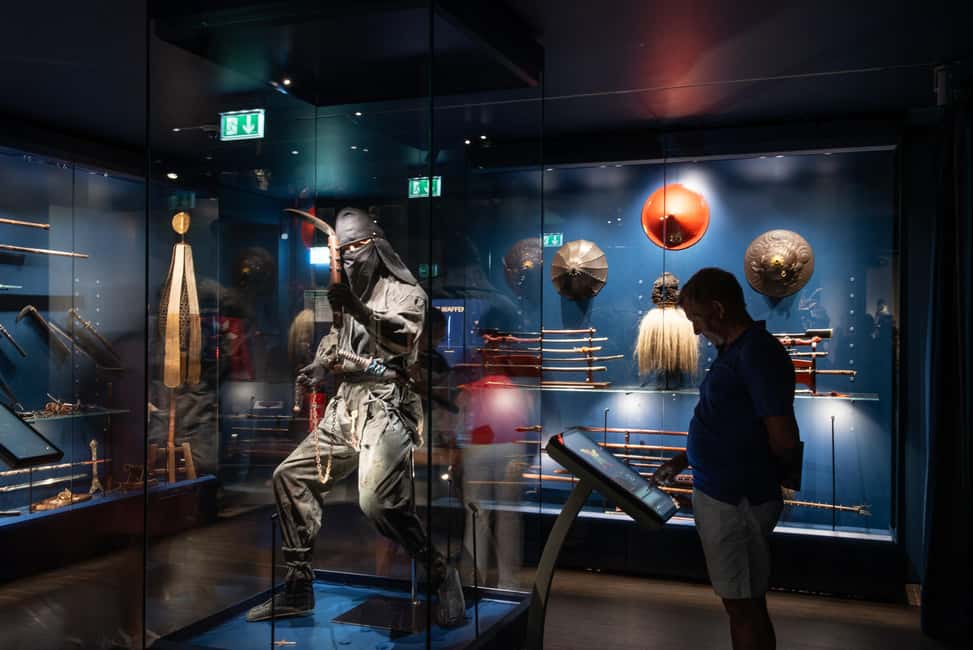
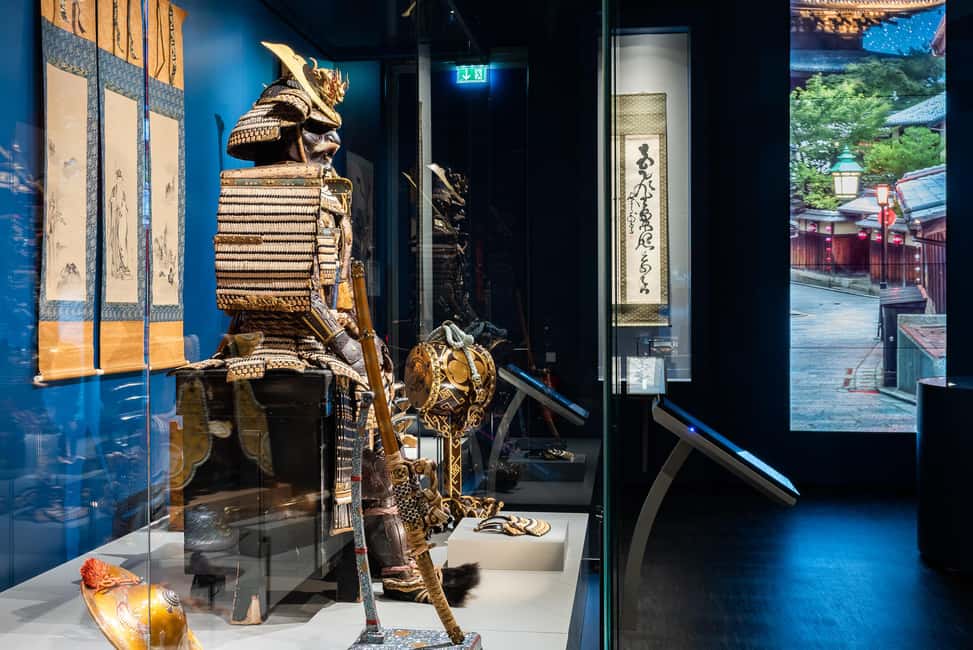
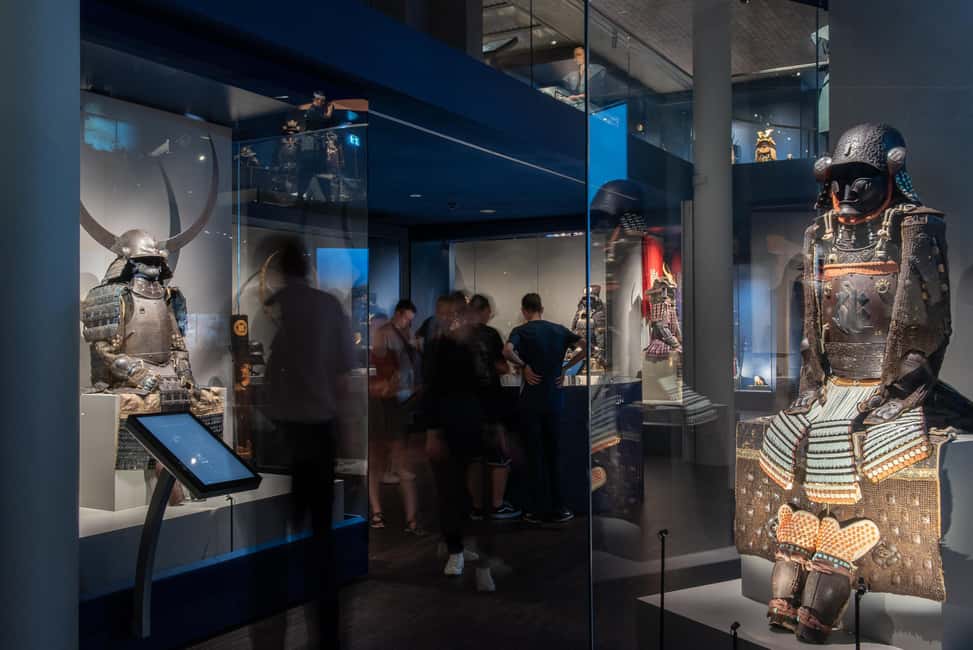
The heart of the visit for many people is the collection. The museum houses the Peter Janssen Collection, one of the world’s largest private collections connected to samurai culture. It began with an item found at a flea market in Berlin and grew into a private collection of more than 4,000 objects.
The time span is broad in a way that matters. The pieces cover from the late Kofun period through the early Meiji period (6th to 19th century). That range helps you see how Japanese craftsmanship and warrior culture changed over centuries, rather than thinking of samurai as one single snapshot.
You also get meaningful highlights rather than just “random artifacts.” Look out for:
- An 18th-century palanquin
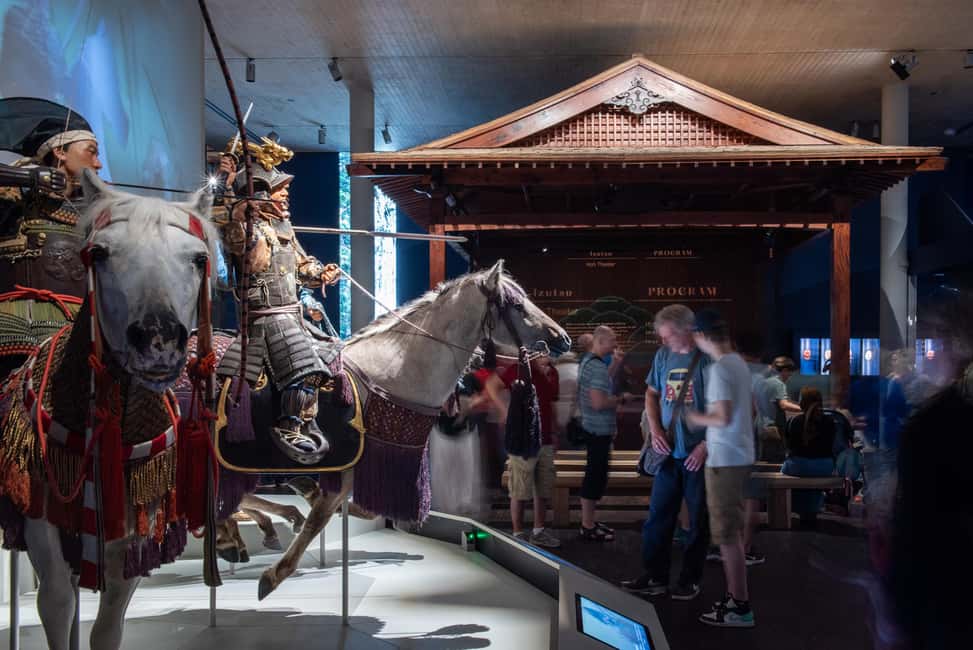
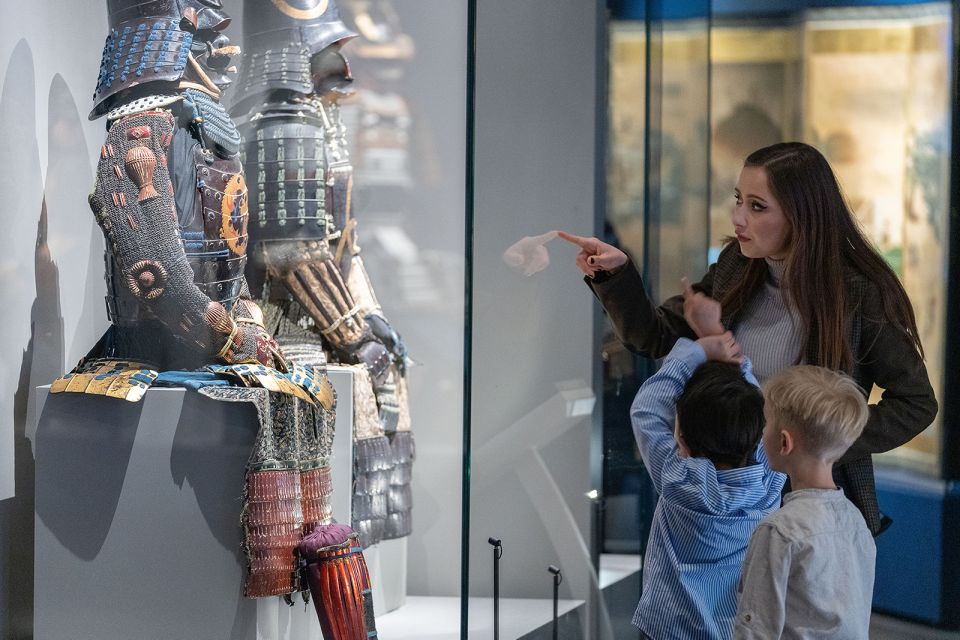
- A 17th-century armor linked to the Matsudaira clan
- Tea utensils from the time of Sen no Rikyū (1522–1591)
That last detail is a big deal if you think samurai culture equals only swords and helmets. The museum pushes the idea that warrior life and refined arts overlap—tea ceremony tools are part of that world too.
You can also read our reviews of more museum experiences in Berlin





What you’ll learn from seeing the objects close up
The museum leans into the idea that objects are more than decoration. Up close, you can appreciate the skill behind armor construction and weapon design, and you can better understand why certain aesthetics mattered in addition to function.
If you’re a photos-first visitor, you’ll still find this works, but don’t rush. The artifacts are the reason the experience holds weight. The tech is the wrapper; the craft is the main course.
Nō theatre and tea house: Japanese-built spaces in Berlin
One of the most unusual features is the Nō theatre and tea house concept. These spaces were built using traditional Japanese materials and techniques, then erected in Berlin afterward. That means you’re not just watching projections on a generic set. The museum is aiming for an atmospheric, architectural experience.
You’ll see realistic projections in connection with these spaces. The museum uses them to show the long-lasting cultural influence of samurai traditions on Japanese customs. It’s a clever pairing: a performance space (Nō) and a culture practice (tea ceremony) both tied to discipline, ritual, and training.
The tea house part is especially useful if you came for “samurai” but also want context. You get an insight into how the tea ceremony works across centuries—not just a quick cultural taste.
Why these spaces feel more than themed rooms
A lot of museums put historic themes into decorative packaging. Here, the Nō theatre and tea house are treated like places with purpose. Even if the projections are what catch your eye first, they help you connect culture and identity, not just weapons and armor.
This is also a good section to slow down. Give yourself a few minutes to watch, read, and take in how the space changes your understanding of what samurai culture included.
Sword Collection, ninja techniques, and holographic performances
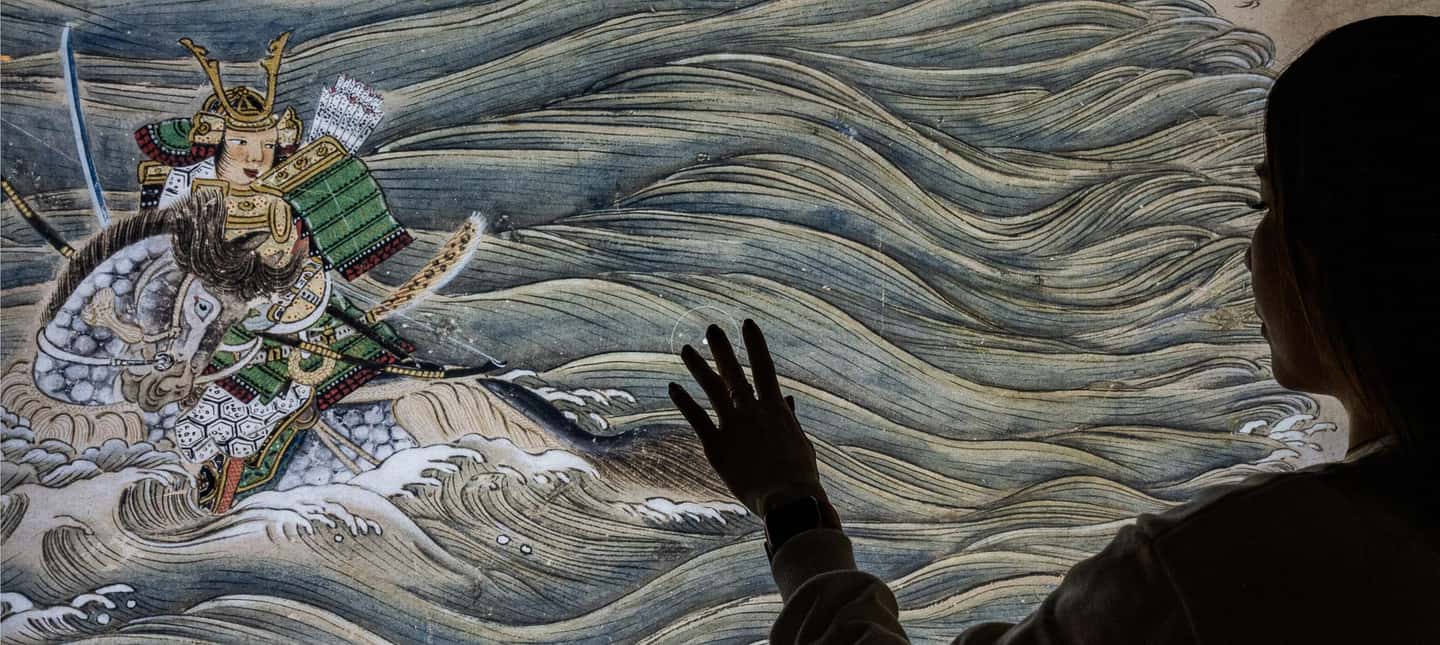
The museum doesn’t stop at armor. It pushes into how things are made and how skills work.
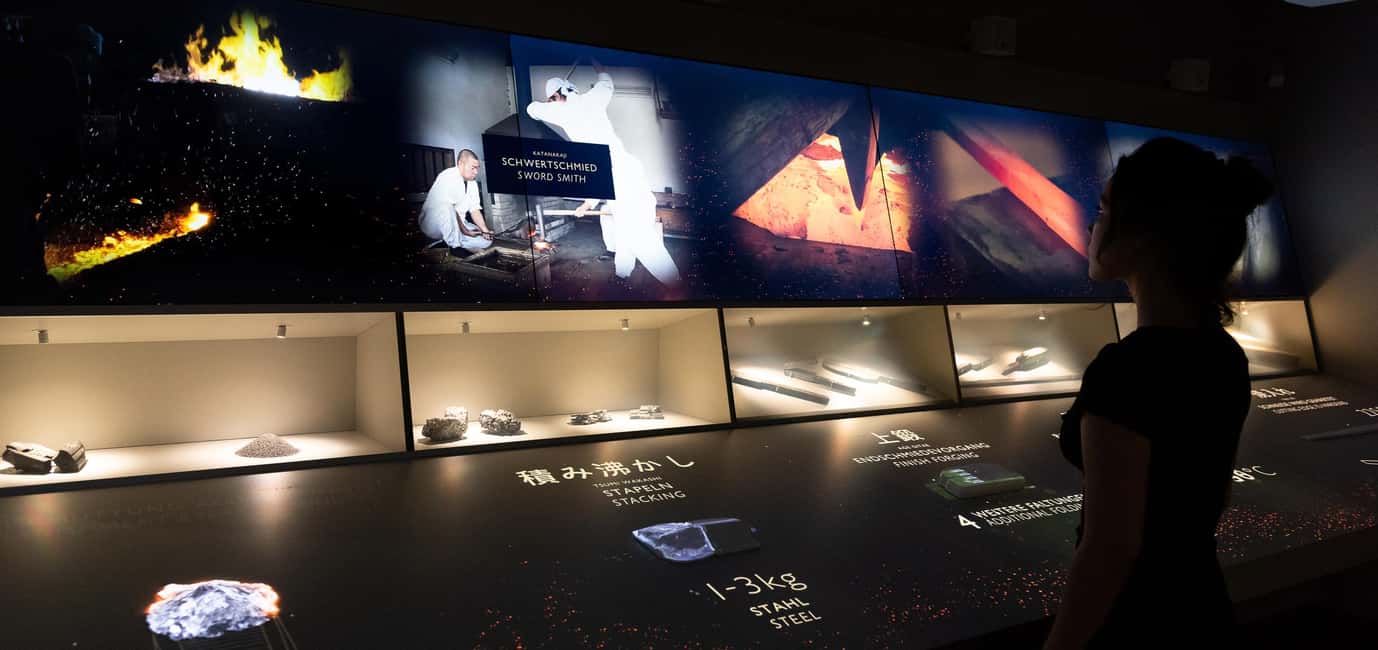
The Sword Collection is tied to the art of swordsmithing, which helps you understand the craft side of the samurai myth. If you’ve ever wondered why sword design varies, this type of section can help you notice patterns and make sense of the “why” behind the appearance.
There are also displays and interactive features connected to ninja techniques. You should expect a learning format where you can follow the ideas through guided installations rather than just reading a text panel.
Plus, there’s more than one performance-style moment. The museum includes a holographic drum performance, and it also uses other projection elements for music/performance effects. These moments are short enough to keep your energy up, but vivid enough to stick.
The AI fox guide makes the learning stick
A final note on the Kitsune interaction: this isn’t just a cute mascot. Having a character-like guide ask questions helps you remember what you just saw. It’s the kind of reinforcement that works well for families and also for adults who don’t want to feel like they’re studying.
If you’ve watched anime, you might recognize the vibe too. The AI fox guide is described as looking like a nine-tailed fox-style character, which is exactly the kind of pop-culture familiarity that draws people into a serious topic.
Who this museum is best for (and who might not love it)
This is one of those places that works for different motivations.
Families tend to like it because the experience is built around interactive tech and short “wow” moments like holographic performance elements. Kids can stay engaged without needing to read every label.
Anime fans can also enjoy the experience because the Kitsune guide has that nine-tailed fox-style feel. It makes the museum’s tone more playful while still pointing you toward real historical objects and craft.
If you’re a history buff, you’ll want to focus on the collection details—especially highlights like the Matsudaira armor and Sen no Rikyū-era tea utensils. The museum uses craft and culture overlap to show samurai life as more than just weapons.
A possible mismatch: if you want a quiet, strictly academic museum experience with minimal interaction, you may find the touchscreens, prompts, and guided elements a bit too active.
Practical tips: what to know before you go
Here’s the practical stuff that will save time.
The museum is wheelchair accessible, so plan an easy visit if mobility is a concern. For what not to bring: pets aren’t allowed, and food and drinks aren’t allowed. You also can’t bring luggage or large bags.
Given the “hands-on” nature of many installations, pack like it’s an active museum. Leave bulky items at your hotel. Bring a small bag you can manage comfortably.
If you’re planning your day, the location in Mitte makes it easy to combine with cafes and shopping. You’re close to major landmarks, so treat this as both a focused stop and part of a larger Berlin walk.
FAQ
FAQ
Where is the Samurai Museum Berlin located?
It’s in Berlin-Mitte on Auguststraße, near the Alexanderplatz and Museum Island area.
How much is the entry ticket?
The ticket price is $15 per person.
Is the ticket time-limited?
The ticket is valid for 1 to 14 days. You’ll need to check availability to see starting times.
What is included in the ticket?
The ticket includes entry to the exhibition. An exhibition catalog is not included.
Can I skip the ticket line?
Yes. You can skip the ticket line and go directly to the entrance barrier with your smartphone ticket.
What public transport stops are closest?
You can use the U-Bahn at U6 Oranienburger Tor or U8 Rosenthaler Platz. Tram stops include M1 and M5 at Oranienburger Straße and M8 at Rosenthaler Platz. S-Bahn access is at Oranienburger Straße via S1, S2, S25, S26.
What can’t I bring inside?
The museum does not allow pets, food and drinks, or luggage/large bags.
Should you book this Samurai Museum entry ticket?
I’d book this if you want samurai culture that feels current and interactive, not just static displays. The value is in the combination of authentic objects (including major highlights from the Peter Janssen Collection) and the culture spaces like the Nō theatre and tea house, plus tech features that keep you moving.
Skip it (or at least consider carefully) if you prefer quiet, label-only galleries and you strongly dislike touchscreens, prompts, and guided projections. This museum is built to teach through action and performance.
If you’re in Berlin-Mitte and you want a memorable, different kind of museum stop for $15, this is a solid bet.