REVIEW · BERLIN
Berlin Segway Adventure: Explore the City in Style!
Book on Viator →Operated by 2 Wheel Tours Berlin · Bookable on Viator
Berlin is one of Europe’s best cities for moving fast. This Segway tour strings together the big-name sights with a guide, so you get distance and meaning without hopping rail lines all day. I like the way the route hits key landmarks in an efficient loop, and I also like that the group stays small with real coaching before you ride.
What makes it especially appealing is the mix: you’re not just doing sightseeing photos. You’ll stop at places like the Holocaust Memorial and the Reichstag, where the guide adds context while you’re actually there, moving through the city. One thing to consider: you must meet the stated safety rules, including a minimum age and a weight range for riding.
In This Review
- Key highlights worth bookmarking
- A 1-to-2 hour Segway loop that actually fits a short Berlin stay
- Getting rolling: meeting point, training, and the ride style
- Museum Island to Bebelplatz: architecture first, then the moral weight
- Brandenburg Gate and the Reichstag: unity, power, and glass over glass
- Bellevue Palace and Victory Column: modern Germany’s face, plus a Prussian reminder
- Holocaust Memorial and Checkpoint Charlie: two different kinds of silence
- Potsdamer Platz, Gendarmenmarkt, and Alexanderplatz: Berlin’s change story
- Upgrades, guide personality, and what people get most from the day
- Price and value: when $54.05 is a smart buy
- Who this Berlin Segway tour fits best (and who should skip it)
- Should you book this Berlin Segway highlights tour?
- FAQ
- How long is the Berlin Segway adventure?
- Is the tour offered in English?
- What’s included in the price?
- What stops will we see during the tour?
- Is there an age requirement?
- Is there a weight requirement for riding?
- Do I need a passport on the day of travel?
- Can I cancel for a full refund?
Key highlights worth bookmarking
- Small-group pace (up to 12 per booking) keeps the ride feeling personal and lets your guide adjust for your questions
- Guided training and helmet use help first-timers get confident before rolling out
- Top Berlin landmarks in one run: Brandenburg Gate, Reichstag, Holocaust Memorial, Checkpoint Charlie, and more
- English-led commentary with stops designed for both photos and understanding
- Short stops built into a tight itinerary so you can cover a lot in about 1 to 2 hours
- Optional upgrade paths may be available depending on what’s offered that day
A 1-to-2 hour Segway loop that actually fits a short Berlin stay
If your schedule is tight, this kind of tour makes sense. Berlin’s center is packed with major landmarks, but walking between all of them can eat your day. A Segway keeps you moving, so you spend more time seeing and less time transferring.
The duration is listed as about 1 to 2 hours, and the timing works like you’d expect: short photo-and-story stops, plus actual riding time between sights. People doing this tour tend to want the “greatest hits” without committing to a full-day plan, and the structure here is designed for exactly that.
The price—$54.05 per person—can feel like a splurge until you translate it into time saved. In a city where major sights cluster near each other, paying for speed and a guide can be good value, especially if you’re visiting for just a day or two.
You can also read our reviews of more city tours in Berlin



Getting rolling: meeting point, training, and the ride style
You start at Claire-Waldoff-Straße 6, 10117 Berlin, and the tour ends back at the meeting point. It’s near public transportation, which matters if you’re arriving from a museum day or trying to fit this between dinner plans.
Before you head out, you get training and use a helmet. That’s not just for formality; it’s the difference between a stressful first-time ride and a relaxed one. The tour also includes insurance, which is a small comfort when you’re trying something active in a big city.
Safety rules are part of the deal. The tour requires riders to weigh between 45kg and 110kg, and you must be at least 15 years old. If you’re traveling with teens, note that 15 to 17-year-olds must be accompanied by an adult with a valid driver’s license.
Museum Island to Bebelplatz: architecture first, then the moral weight
The route begins at Museum Island, a UNESCO site famous for the line-up of world-renowned museums. You won’t be doing a museum deep dive here, but that’s okay. The outside views let you appreciate the grand architecture and the setting along the Spree River while your guide frames what each museum is known for.
Even at a short stop, this is a strong opener because it puts you in the mindset of the day: Berlin isn’t one story—it’s layers. From the riverfront, the city’s civic and cultural identity feels close and readable.
Next up is Bebelplatz, where you’ll see the monument tied to the 1933 book burnings. This is the first point where the tour’s tone shifts from “look at this” to “understand what happened.” It’s a place where the architecture and history sit side-by-side, and a good guide will help you keep both in your head without rushing past the meaning.
Watch for your comfort level with reflective stops. This part can feel quiet in a good way, but you’ll still be moving on Segways soon after, so don’t expect long contemplation. Bring a respectful pace, not a slow walk-and-stare pace.
Brandenburg Gate and the Reichstag: unity, power, and glass over glass
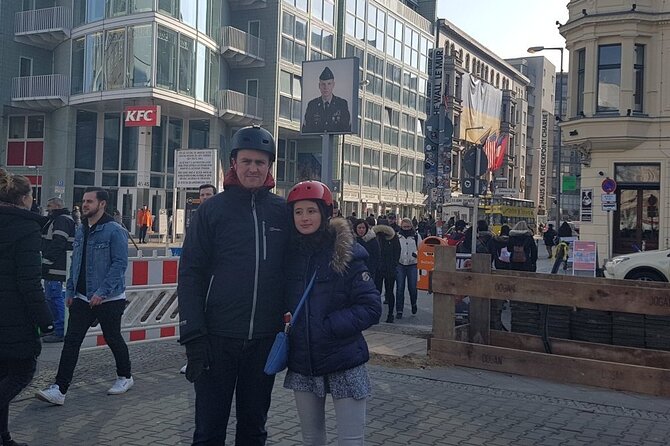
At Brandenburg Gate, you get the symbol that’s become shorthand for Berlin’s idea of unity and peace. You approach it with the guide’s explanation, which matters because it’s easy to view this landmark as just a photo spot. With the context, you start seeing it as a political barometer across German history.
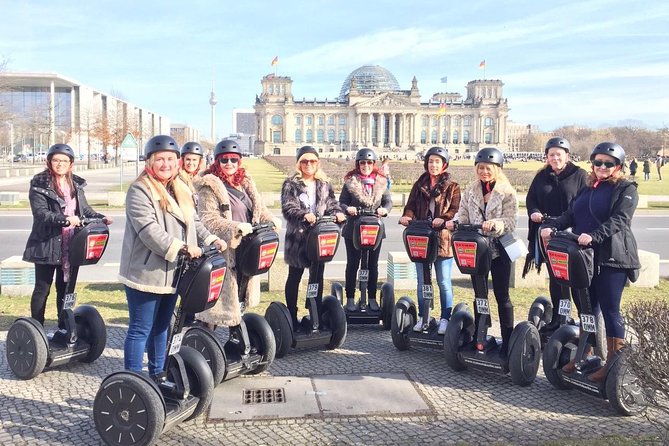
Then comes the Reichstag Building and its iconic glass dome. The value here is the way the guide connects the building to Germany’s parliamentary role and the country’s reunification story. Even if your stop is only a few minutes, it still helps you place the Reichstag in the larger national timeline.
The pairing of Brandenburg Gate + Reichstag works well because they’re both “big public meaning” landmarks. One is about civic identity and unity; the other is about government and the real-world process of rebuilding after major political break points.
One practical note: your time at each stop is brief. If you prefer slow “read every plaque” travel, you may want to add separate time on your own at just one or two places later.
Bellevue Palace and Victory Column: modern Germany’s face, plus a Prussian reminder
Next you roll by Schloss Bellevue (Bellevue Palace), the official residence of the German President. You get exterior views of the palace and also a bit of the ceremonial and architectural background. This stop is a nice change of pace after the heavier political sites, because it feels more formal and present-day.
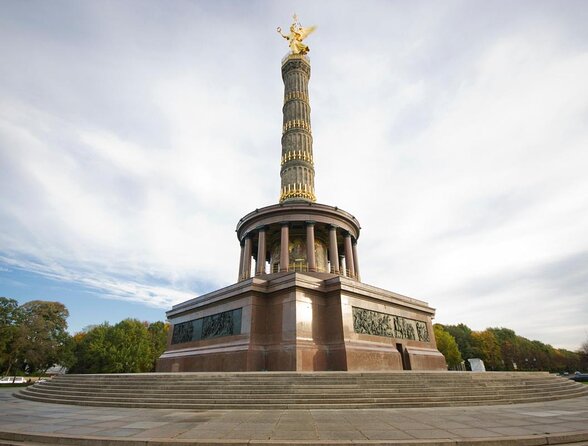
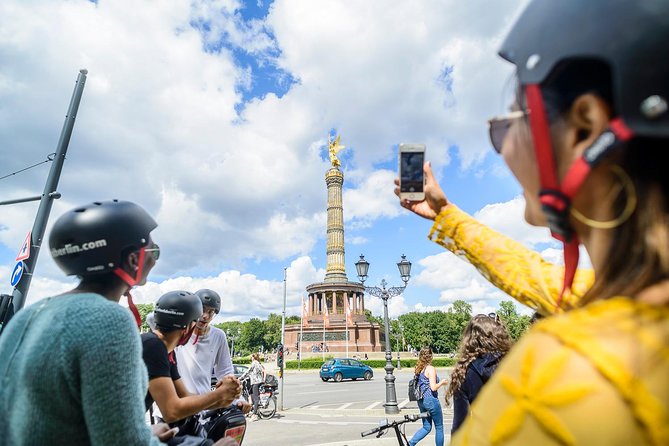
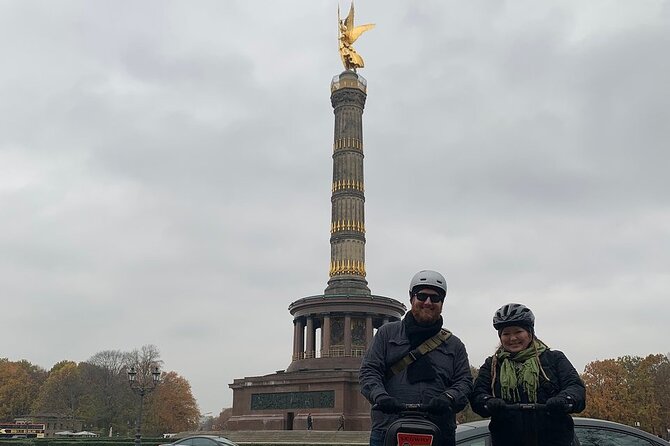
Then the tour moves to Victory Column, a striking monument connected to Prussian military victories. The guide’s stories here help you interpret what you’re seeing instead of treating it like a random big tower. The golden angel on top is a memorable visual, and the surrounding views toward Tiergarten and across the city help you “read” Berlin in motion.
For me, these stops are useful because they show two different layers of power and symbolism. Bellevue represents modern authority and continuity; Victory Column points back to older historical narratives that still shape Berlin’s skyline.




Holocaust Memorial and Checkpoint Charlie: two different kinds of silence
The Holocaust Memorial – Memorial to the Murdered Jews of Europe is one of the tour’s most serious moments. You encounter the 2,711 concrete slabs of varying heights, and the design creates a somber space where the guide’s explanation carries weight. Walking through the memorial paths is the core experience here, and the emotional impact is the point.
After that, the tour heads to Checkpoint Charlie, the Cold War crossing point between East and West Berlin. You’ll see the guard shack and hear stories tied to the division of Berlin and escape attempts. This stop brings the Cold War from “textbook history” into something you can almost picture in your head.
I like that these two stops sit back-to-back in the tour structure. They’re not the same topic, but they both teach you how places can hold memory—one through deliberate design for remembrance, the other through a preserved symbol of division.
The main consideration is simple: keep your phone use respectful here. Quick photos happen, but the memorial is not a “tourist checklist” stop.
Potsdamer Platz, Gendarmenmarkt, and Alexanderplatz: Berlin’s change story
After the heavier stops, the route shifts into areas where you can see Berlin’s reinvention. At Potsdamer Platz, you’ll get a taste of the city’s blend of old geography and newer development. This square used to be a crossroads; now it’s a lively commercial and architectural center. The Sony Center is one of the landmarks you can look for during the stop.
Next comes Gendarmenmarkt, often called one of Berlin’s most beautiful squares. The key draw is the sightline and the architecture: the German Cathedral, the French Cathedral, and the concert hall create a strong visual rhythm. It’s the kind of place where the square itself feels like a stage, and it’s easy to take solid photos without needing a drone or a lot of setup.
Finally, you roll through Alexanderplatz, one of the city’s busiest public squares. The TV Tower anchors the scene, and you’ll feel the area’s energy in a way that’s hard to get from museum-only days. The stop is also useful if you want a simple city orientation point before you head elsewhere.
This last third of the tour is where the Segway really earns its keep. Moving quickly between these zones means you experience Berlin’s “then and now” story without turning the whole day into transit.
Upgrades, guide personality, and what people get most from the day
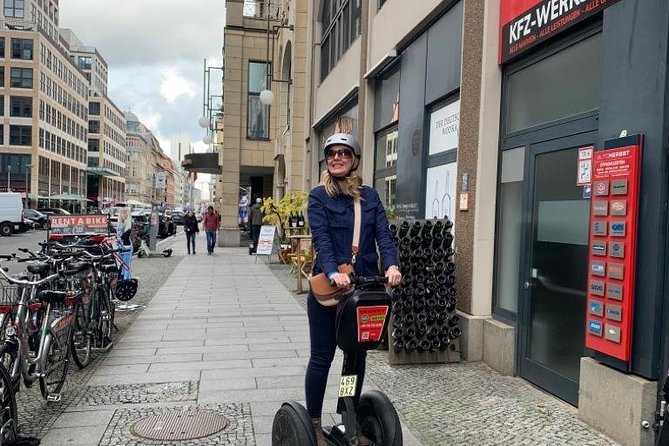
The tour includes a professional local guide, Segway and helmet, training, and insurance. That combination is what makes it work for first-timers. If you’re new to Segways, training is the difference between fun and frustration, and the small-group size helps your guide keep an eye on everyone.
You’ll also see evidence of guide quality in the names people highlight. Eishan is praised for story-driven history and patient answers. Raza is singled out for making a complete beginner feel comfortable. Morgan gets credit for being both personable and well informed. Vicente is mentioned for friendliness and lots of information. Different personalities, same goal: keep the ride safe and keep the history clear.
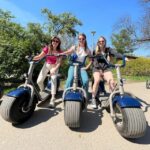
There’s also mention of an upgrade to an electric motorcycle in at least one case. The tour summary specifically notes an upgrade to a private tour, so availability may vary by day. If you see options at checkout or on-site, you can ask what’s offered and whether the upgrade fits your comfort level.
Price and value: when $54.05 is a smart buy
Here’s how I think about the cost. You’re paying for three things: a guided route through major landmarks, the Segway + helmet + training experience, and time efficiency. If you walked, you’d cover many of these sights, but you’d spend hours and you’d lose the guide context.
This tour’s stops are designed for quick context plus quick photos. That’s great value for visitors who want a fast overview and then plan one or two deeper visits on their own—like the Reichstag dome on a different day or a longer museum time later.
If you already know you want slow sightseeing, you might find this tour feels too fast. But if you want a “get it done” highlights circuit with a guide, the price looks more reasonable.
Who this Berlin Segway tour fits best (and who should skip it)
This tour is best for people who want a guided highlight sweep and prefer to reduce walking in a central city area. It’s also a great fit for first-time Segway riders, since training happens before you ride.
It may be less ideal if you:
- want long stays at a single site
- are not comfortable riding for the duration (even with training)
- need to avoid outdoor activities, since the route includes multiple stops outdoors
- don’t meet the stated age and weight requirements
Should you book this Berlin Segway highlights tour?
If you’re short on time and you want the biggest Berlin landmarks plus real context, I’d book it. The route logic is strong: you get culture and architecture at Museum Island, moral weight at Bebelplatz and the Holocaust Memorial, political landmarks at Brandenburg Gate and the Reichstag, and a modern-city feel at Potsdamer Platz and Alexanderplatz.
Do it if you want a quick, guided “Berlin map in motion.” Skip it if your ideal trip is slow and deep at only one museum or one memorial. In Berlin, this kind of Segway loop is a practical way to see a lot without spending your vacation stuck between stops.
FAQ
How long is the Berlin Segway adventure?
The tour duration is listed as about 1 to 2 hours.
Is the tour offered in English?
Yes. The tour is offered in English.
What’s included in the price?
Included are a professional local guide, Segway use and a helmet, insurance, and training.
What stops will we see during the tour?
You’ll stop at Museum Island, Bebelplatz, Brandenburg Gate, the Reichstag Building, Schloss Bellevue, Victory Column, the Holocaust Memorial, Potsdamer Platz, Checkpoint Charlie, Gendarmenmarkt, and Alexanderplatz.
Is there an age requirement?
Participants must be at least 15 years old. Children ages 15 to 17 must be accompanied by an adult with a valid driver’s license.
Is there a weight requirement for riding?
Yes. For safety reasons, guests must weigh at least 100 pounds (45kg) and up to 240 pounds (110kg).
Do I need a passport on the day of travel?
A current valid passport is required on the day of travel.
Can I cancel for a full refund?
Free cancellation is available. You can cancel up to 24 hours in advance for a full refund, and cut-off times are based on local time.