REVIEW · BERLIN
Berlin: The Time of National Socialism Walking Tour
Book on GetYourGuide →Operated by You In Berlin · Bookable on GetYourGuide
Berlin can feel frozen in time. This walk helps you read the city’s past.
I like how the tour keeps things practical, moving street by street from propaganda showpieces to the places where violence and control were run. I also like the guide style: in German, with real energy and a knack for making buildings make sense, even when the weather turns unfriendly. One drawback to plan for: it’s a 2-hour outdoor walk in all weather, so you’ll want proper layers and shoes.
You start at the Brandenburg Gate and end at Topography of Terror, but it’s not a “big monuments only” loop. You’ll also catch less obvious traces of World War II and hear how resistance operated under the dictatorship—stories that land harder when you’re standing where they happened. The tour is priced at $43 per person, and with a small group capped at 10, I think it can be good value if you want context, not just photos.
If you’re expecting a gentle, lighthearted stroll, adjust your expectations. This is Nazi-era Berlin, Holocaust remembrance, and the machinery behind state terror. It’s handled seriously, with plenty of historical framing, but it will still be emotionally heavy in places.
In This Review
- Key highlights worth your attention
- Entering Nazi-era Berlin from Pariser Platz to the Brandenburg Gate
- Reichstag viewpoint: power changes fast when crowds show up
- Tiergarten Soviet War Memorial: WWII traces you can stand next to
- Holocaust Memorial: remembrance you experience with your feet
- Johann Georg Elser Memorial: resistance isn’t only abstract
- Detlev-Rohwedder-Haus and the government district shift
- Topography of Terror: where the regime’s offices were
- Price and logistics: $43 for 2 hours, and what you get for it
- Who this tour suits best (and how to get the most out of it)
- Should you book Berlin: The Time of National Socialism Walking Tour?
- FAQ
- How long is the walking tour?
- Where do I meet the guide?
- What language is the live guide in?
- Is the tour wheelchair accessible?
- Does the tour run in bad weather?
- How big is the group?
Key highlights worth your attention
- Brandenburg Gate to Reichstag: propaganda architecture explained in plain language
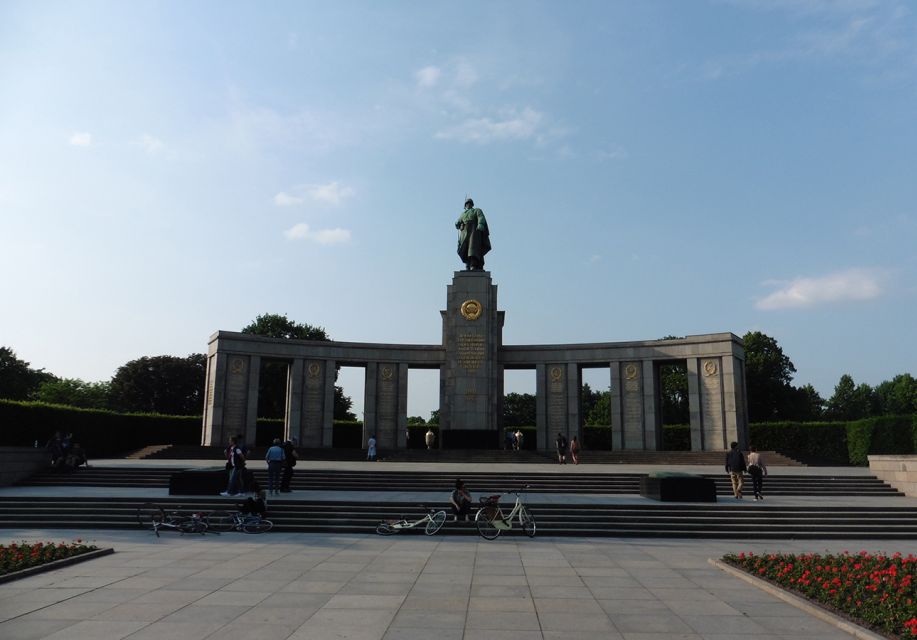
- Tiergarten Soviet War Memorial: visible WWII hardware, not textbook-only history
- Holocaust Memorial stops with clear context: remembrance you can actually reach on foot
- Johann Georg Elser Memorial: a resistance-focused moment in the route
- Topography of Terror details: where SS, secret police, security offices, and aviation ministry were based
- Small group pacing: limited to 10, so questions are realistic
Entering Nazi-era Berlin from Pariser Platz to the Brandenburg Gate
The tour kicks off near S+U Bhf. Brandenburger Tor, exit B—aim for the area toward Pariser Platz / Straße des 17. Juni and look for the guide with the GetYourGuide – You in Berlin flag. The starting point is listed as Call a Bike, which basically means you’ll be meeting in the real flow of city foot traffic, not at some remote “tour office” bubble.
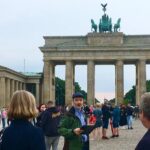
Then you move to Pariser Platz and the Brandenburg Gate. This part matters because the gate isn’t just a famous photo. During the time of National Socialism, it was used for propaganda marches. Standing there, you get how spectacle works: how the state turned space into stagecraft. The guide’s job is to connect the dots between what you see now (a landmark in a modern city) and what it meant then (a tool for public messaging and mass display).
I like this approach because it doesn’t demand you already know German history dates and names. The walk keeps bringing you back to the most important question: what were the leaders trying to achieve, and how did the city help them do it?
Practical note: the weather can be brutal. One guide-handling detail shows up in real-world feedback—when it was cold and even icy, the guide kept the group moving and stayed attentive so nobody got stranded halfway. In other words, the route is straightforward, but your comfort depends on what you wear.
You can also read our reviews of more walking tours in Berlin


Reichstag viewpoint: power changes fast when crowds show up
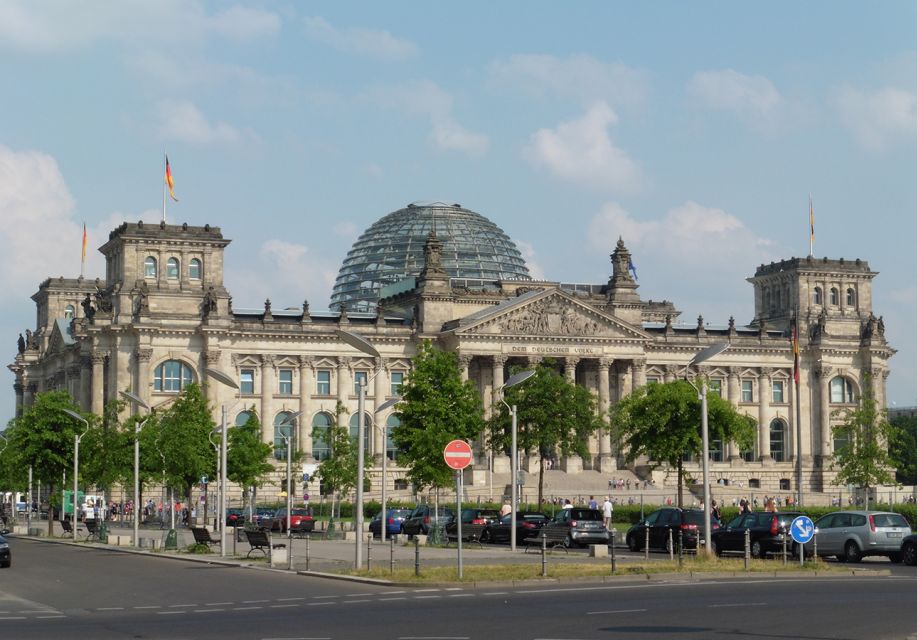
From the Brandenburg Gate, you continue to the nearby Reichstag. Today, it’s the seat of the German Parliament, but the tour frames it as a key step in how power was seized. In 1933, the Nazi Party NSDAP and Adolf Hitler came to power, and the tour uses the Reichstag area to explain the shift from politics to dictatorship.
The value here is contrast. You’re seeing a building used now for democracy while learning how it became wrapped into the rise of a brutal regime. Even if you’ve read about 1933 before, it hits differently when you can look around and imagine crowds, uniforms, speeches, and the pressure of being watched.
This is also where the guide’s storytelling style really matters. Multiple accounts point to a guide who answers questions and stays engaged, even when the group is small. If you’re the type who asks, why here, why that, how did it work—this tour format usually rewards that.
If you don’t like solemn topics and would rather keep the mood light, you may find this section heavy. But that’s the point: history has a location in Berlin, and the tour uses that fact responsibly.
Tiergarten Soviet War Memorial: WWII traces you can stand next to
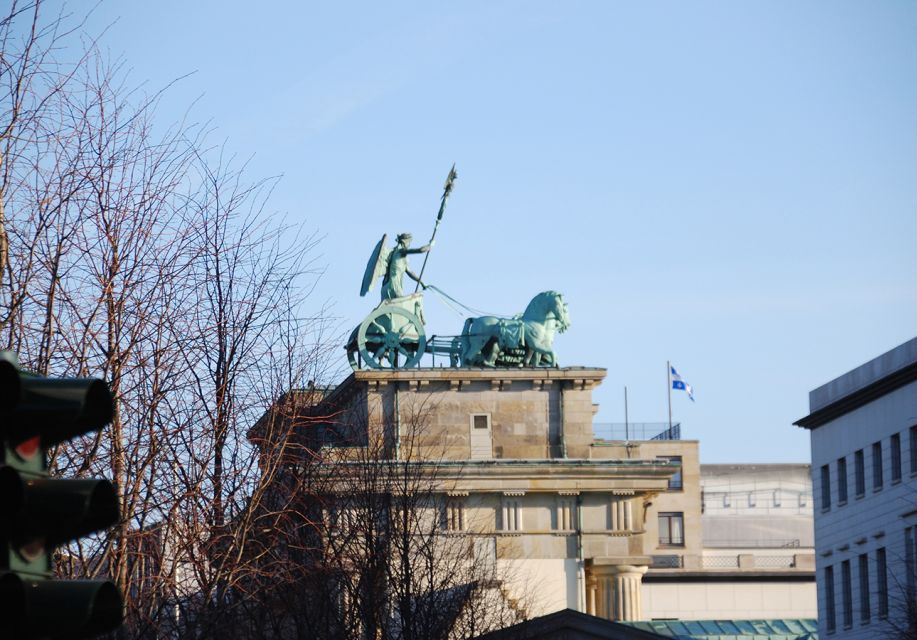
Next is Tiergarten, the inner-city park area. The tour uses it to pivot from Nazi power to the broader WWII reality—especially with the Soviet War Memorial. Here you’ll see Soviet T-34 tanks and artillery still displayed as part of the memorial complex.
This stop is smart because it prevents the tour from becoming a one-track lecture about one side. WWII wasn’t only about politics and propaganda; it was also about the physical cost. Seeing military hardware in the park brings that home quickly.
It’s also a useful reset moment. You go from architecture and institutions tied to the dictatorship to something blunt and visual. The guide can use the memorial setting to explain how war leaves artifacts behind, not just stories.
One small consideration: parks can be windy and cold in winter. If the day is wet, expect the ground to be slippery. The tour is designed for walking, but your comfort depends on traction and layers.
Holocaust Memorial: remembrance you experience with your feet
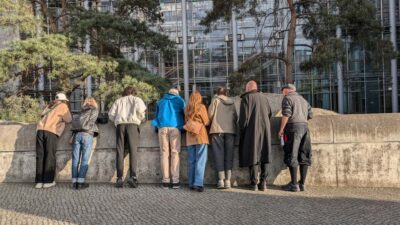
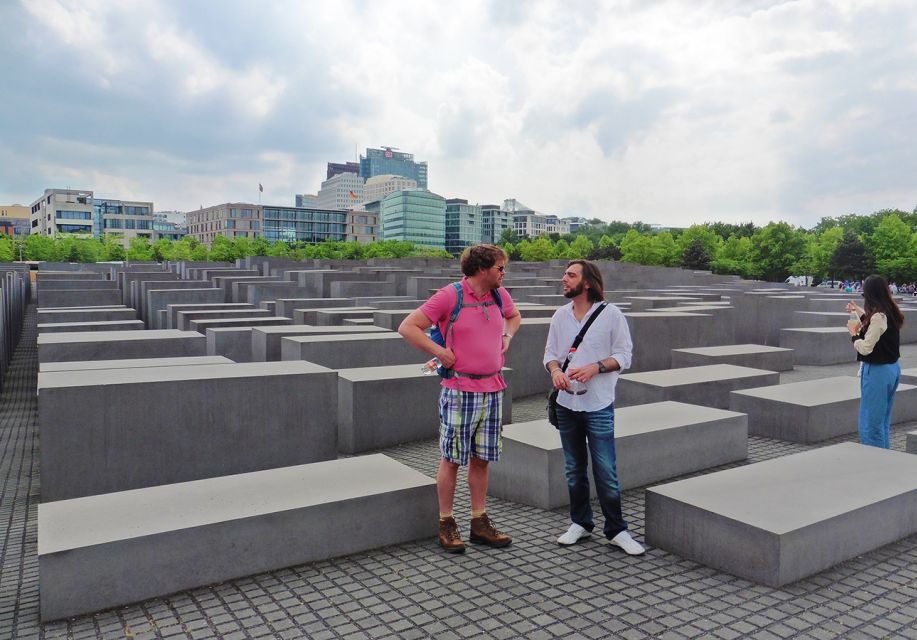
After the Soviet memorial area, you continue to the Holocaust Memorial, described as the memorial to the murdered Jews of Europe. This stop is emotionally significant, and the tour includes it for a reason: you need space for remembrance, not only facts.
What I appreciate about including it in a walking route is timing. The tour has already covered propaganda and power, then it shifts to the human cost through a memorial you can reach on foot within the city’s central district. By the time you arrive, your brain is prepared for seriousness. That makes the stop feel less like a checklist item and more like a turning point.
I also like that the guide work stays focused on context—what the memorial represents in the wider story of Nazi rule, mass murder, and how Berlin chooses to remember today.
If you’re traveling with teens or young adults, this memorial stop tends to be one of the parts that makes the learning stick, especially when the guide explains not just who was targeted, but what the state system did and how it worked in practice.
Johann Georg Elser Memorial: resistance isn’t only abstract
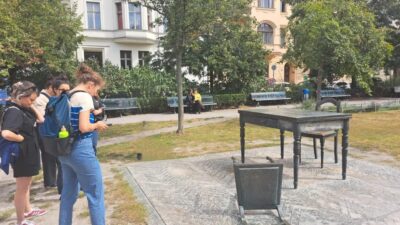
The tour then goes to the Johann Georg Elser Memorial. This is a key resistance-related name in the route, and it fits the tour’s broader theme: the German Resistance against the dictatorship.
You don’t get a vague “people tried their best” vibe. Instead, the walk gives you a named example tied to the idea that opposition existed, even under intense surveillance and fear. You’ll hear stories that place resistance in the same Berlin map as the regime’s power centers.
This stop is especially valuable if you’ve only heard one narrative about dictators: that they controlled everything. The resistance story complicates that. It shows that control had limits—limits made of people with courage, plans, and consequences.
If you’re sensitive to heavy material, this part can still feel intense, but it also adds balance. It’s not only about the machinery; it’s also about the human pushback.




Detlev-Rohwedder-Haus and the government district shift
From there, you continue walking through the government district of Berlin during that time and stop at the Detlev-Rohwedder-Haus. The goal of this segment is to keep connecting buildings and street-level geography to how the dictatorship functioned.
This is where a walking tour earns its ticket. On paper, “government district” sounds generic. On foot, it becomes a set of locations you can picture as you listen. You start to understand why certain places mattered: they weren’t chosen randomly, and they weren’t isolated. They were part of a system.
If you’re the type who likes seeing how cities are planned—where authority concentrates, how movement routes exist, why certain landmarks sit where they do—you’ll probably enjoy this portion.
The only possible drawback here is attention fatigue. After several serious stops, you’ll want the guide’s pacing to keep you mentally fresh. From what I’ve seen in the way the guides handle small groups, there’s usually enough room for questions to prevent you from zoning out.
Topography of Terror: where the regime’s offices were
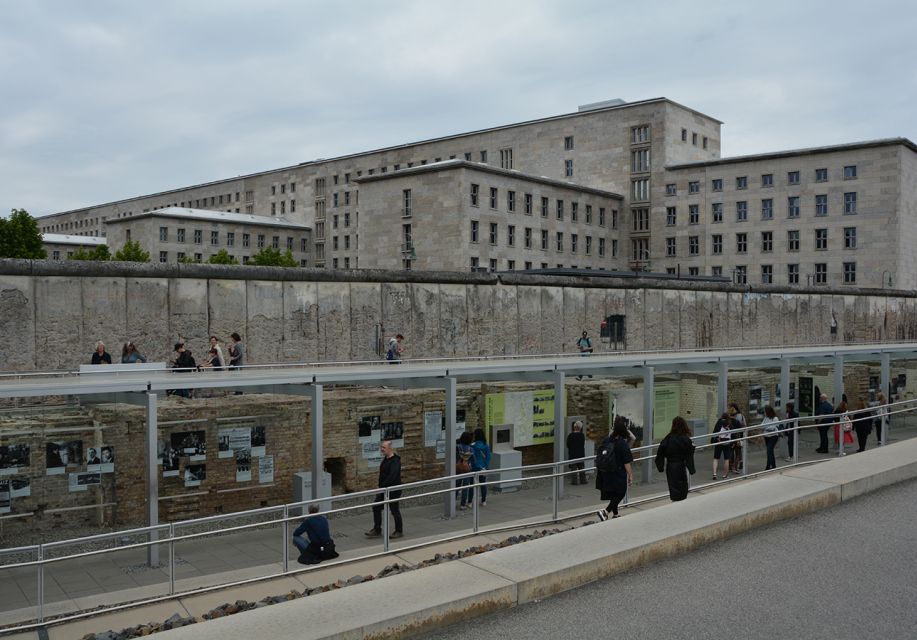
The final stop is the Topography of Terror Documentation Center, and it’s the tour’s payoff. The walk ends here, so by the time you arrive you’ve already built the story brick by brick.
This part includes specific details about where key Nazi institutions were located during WWII, including the headquarters of the SS, the Secret State Police, the Reich Security Main Office, and the Reich Aviation Ministry. That’s a lot of names, but the tour handles them in the way that matters: as a map of power.
I find this ending important because it ties the themes together. You’ve seen the symbolic architecture of propaganda. You’ve seen visible WWII remnants. You’ve stood near memorials tied to mass murder and resistance. Now you’re shown the administrative and security framework that made it all possible.
And because you finish at Topography of Terror, you can keep exploring if you want more depth. The walk plants the context; the center gives you options for follow-up reading and exhibits.
One more practical thought: this last segment can feel like a lot of information in a short time. If you’re someone who likes to process slowly, bring the energy to ask the guide for quick clarifications while you’re still moving.
Price and logistics: $43 for 2 hours, and what you get for it
At $43 per person for about 2 hours, the real question isn’t whether it’s cheap. It’s whether you get enough guidance to justify the time and the emotional weight.
With a small group limited to 10 participants, you’re not stuck in a huge crowd where questions disappear. The guide format is built for interaction, which is exactly what people praise in feedback: guides who know the material, answer questions, and keep the group moving safely.
The reviews also show a pattern: strong guide presence matters. One guide named Carlo comes up repeatedly in feedback, with travelers describing him as very knowledgeable on where the buildings were at the time, enthusiastic, and attentive about difficult weather. That last point is quietly huge. If it’s cold or wet, the quality of the guide shows in the practical decisions: slowing down when needed, watching footing, keeping the group together.
So who is this good for?
- You want a focused route through central Berlin connected to specific WWII and Nazi-era locations.
- You like history that has coordinates—buildings and street names, not only dates.
- You’re okay with serious topics and want context for remembrance and resistance.
Who might skip it?
- You need a purely sightseeing vacation with light content.
- You hate outdoor walking in cold or rainy conditions.
- You want a long museum-style experience with lots of time inside documents and exhibits.
Who this tour suits best (and how to get the most out of it)
If you’re traveling solo or as a couple, this can be a particularly good format. One small-group experience reported by travelers even turned out to be nearly private, and that kind of setup usually makes it easier to ask questions and get tailored explanations.
It’s also a strong choice for families with older kids and teens. One account explicitly mentioned teens and twens would likely be interested in a tour like this. That makes sense because the learning is grounded in real spaces they can see, not just a story told from a screen.
To get the most out of it, come with one mindset: you’re not just collecting landmarks. You’re learning how power used the city. Each stop is there to explain a different layer—propaganda, governance, war aftermath, genocide remembrance, and resistance.
And bring practical gear. Wear suitable clothes for a walking tour and expect the tour to run in all weather conditions and on public holidays. Wheelchair accessibility is listed, so the operator is thinking about mobility, but you’ll still be on foot for the duration.
Should you book Berlin: The Time of National Socialism Walking Tour?
Book it if you want a short, structured way to understand Nazi Berlin in context—through Brandenburg Gate, Reichstag, Tiergarten’s Soviet memorial, Holocaust Memorial, resistance-focused sites, and Topography of Terror—with a guide who can connect the details to the city around you.
I’d skip it if you’re looking for a relaxed, casual walk or you’re not ready for Holocaust-related remembrance. Also think twice if outdoor cold and rain drain you quickly; the tour lasts 2 hours, and you’ll be moving the whole time.
If you do book, plan for layers, good shoes, and a willingness to listen. This tour doesn’t just tell you what happened. It helps you see how Berlin still carries the marks—sometimes in tanks and memorial stones, sometimes in the shape of power itself.
FAQ
How long is the walking tour?
It lasts 2 hours.
Where do I meet the guide?
Meet at the exit of metro station S+U Bhf. Brandenburger Tor, exit B, toward Pariser Platz / Straße des 17. Juni. Look for the tour guide with the GetYourGuide – You in Berlin flag near Call a Bike.
What language is the live guide in?
The live guide language is listed as German.
Is the tour wheelchair accessible?
Yes, the tour is wheelchair accessible.
Does the tour run in bad weather?
Yes. The tour takes place in all weather conditions and on public holidays.
How big is the group?
The group is small, limited to 10 participants.
If you’d like, tell me what month you’re going and whether you prefer more museum time or more walking, and I’ll suggest how to pair this with nearby stops in Berlin.