REVIEW · BERLIN
Berlin: Third Reich, Hitler, and WWII Walking Tour
Book on GetYourGuide →Operated by Insider Tour Berlin · Bookable on GetYourGuide
Nazi Germany is still written into Berlin’s streets. This 3-hour walking tour takes you from the machinery of the Third Reich to the places tied to Hitler’s final days, with stops that also cover the Soviet assault and the aftermath. I especially like the focus on real locations instead of distant storytelling, and I like how guides keep the tone respectful when talking about brutal events. One thing to think about: it’s a straight walking route, rain or shine, so comfortable shoes matter.
Meeting up is simple and repeatable: you’ll start outside Friedrichstraße train station on the square beside the Tränenpalast, and the tour ends back where you began. You’ll walk the historic corridor of Nazi Berlin, including the site connected to Hitler’s suicide in the Führer Bunker and the area tied to the Reich’s Chancellery. If you get worried when tours are “too much,” note the subject matter is heavy and direct—this isn’t a casual history stroll.
In This Review
- Key moments you’ll hit on this tour
- Walking Berlin’s WWII story, site by site
- Where you meet near Friedrichstraße (and how to spot the guide)
- The Nazi power sites: Luftwaffe planning, propaganda, and terror HQs
- Hitler’s grand plan meets reality: the Germania axis to the Bunker area
- Topography of Terror: where the system behind the uniforms is explained
- Reichstag, the Soviet assault, and the endgame of 1945
- Brandenburg Gate to the Soviet War Memorial: the aftermath is part of the lesson
- Guides, language options, and what 3 hours feels like
- Price check: what $20 gets you in Berlin
- Who this tour is best for (and who might want a different day)
- Should you book this Berlin Third Reich walking tour?
- FAQ
- How long is the Berlin Third Reich, Hitler, and WWII walking tour?
- How much does it cost?
- Where do I meet the guide?
- Where does the tour end?
- What languages is the tour available in?
- Does the tour run in bad weather?
- What should I bring for the tour?
- Is pickup available?
- Are private or small groups available?
- FAQ
- What is included in the ticket price?
- Is there free cancellation?
Key moments you’ll hit on this tour
- Führer Bunker site: where Hitler’s suicide is tied to the end of the regime
- Nazi power-site trail: places connected to Goering’s Luftwaffe planning and Goebbels’ propaganda machine
- Topography of Terror: a stop that frames the system of terror behind the uniforms
- Germania axis: Hitler’s grand building plan, associated with Albert Speer’s layout
- Reichstag final-battle context: you’ll follow the path of the Soviet assault in the area
- Brandenburg Gate to Soviet memorial: T-34 tanks and Red Army Howitzers set the tone for what followed
Walking Berlin’s WWII story, site by site
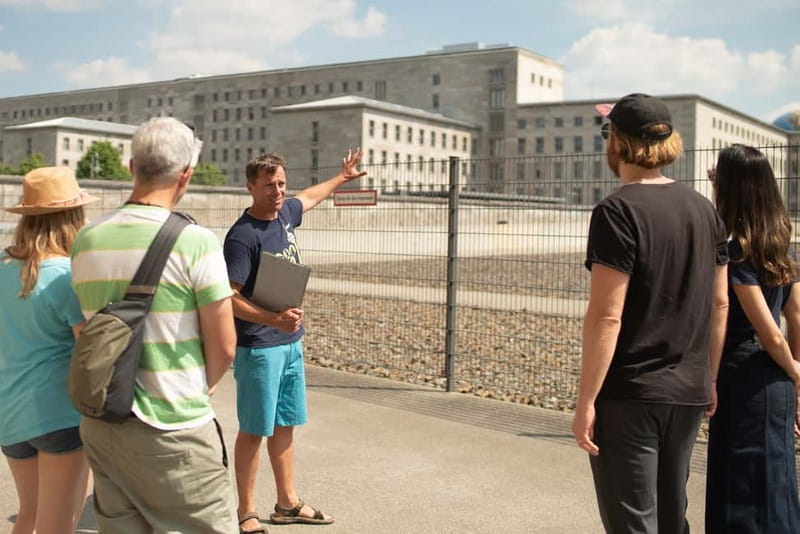
Berlin can feel like a city of layers. One moment you’re looking at modern streets and transit signage, and the next you’re standing near the physical stages where power was exercised, propaganda was churned out, and war was set in motion. This tour uses that layering on purpose. You go stop to stop across key locations tied to the Third Reich and then follow the story into collapse, with the Soviets and the postwar reality right in view.
I like the way the route is built around cause and effect. Instead of treating WWII as one huge event, you see how the regime built control, shaped public life, and then tried to hold on as the battlefield closed in. You’ll also hear the story of Hitler’s last days and what happened to his remains—covered as a sequence, not as random facts.
The value here isn’t just seeing famous names. It’s seeing them connected to specific places you can point at. Standing outdoors near former government sites and then pairing that with an exhibit stop at Topography of Terror helps the timeline click.
You can also read our reviews of more walking tours in Berlin


Where you meet near Friedrichstraße (and how to spot the guide)
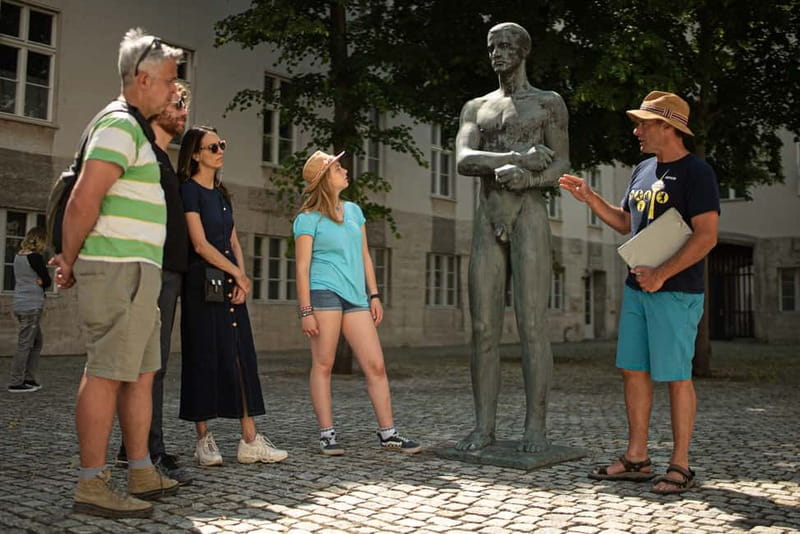
Your start point is outside Friedrichstraße train station, on the square between the Tränenpalast (Palace of Tears) and the station. The guides wear a blue lanyard and a yellow name tag, and they carry yellow umbrellas, which makes it easier to find the group fast.
This matters more than you’d think. A 3-hour tour moves at a real pace, so you want your first 10 minutes to be smooth. The tour also ends back at the meeting point, so you’re not trying to solve a new transit problem halfway through your day.
If you’re planning other sights the same day, build in a little buffer. The route covers weighty ground and you’ll likely want time for quick photos and for looking down at what your guide is pointing out.
The Nazi power sites: Luftwaffe planning, propaganda, and terror HQs
The walk starts by connecting Nazi authority to the institutions that made war and control possible. You’ll stand by the former area connected to Goering’s Air Defence Ministry, where the Luftwaffe’s planning for the Blitz is associated with decisions made from behind desks and briefing rooms. That shift—from street-level viewing to strategic war planning—helps you understand how quickly political power turns into real destruction.
Next you move through the orbit of propaganda and internal enforcement. Your route includes former locations tied to Goebbels’ Propaganda Ministry and the headquarters connected to Himmler’s SS and the Gestapo. These names are famous, but the real impact comes from hearing them explained next to the places they were tied to—because it shows the system wasn’t one mastermind. It was a network of offices, messages, policing, and fear.
A good guide is key here, and the tour has a strong reputation for guiding people through sensitive material with care. Names like Hannah, Xavier, Will, and Mikhail come up repeatedly in the guide feedback you’ll see for this experience. The consistent theme: they’re described as communicative, respectful on tough topics, and willing to answer questions without rushing.
One consideration: many of these stops are associated with former sites rather than intact monuments. So don’t expect every location to have a big sign telling you what stood there. Bring a bit of mental focus so the guide’s context does its job.
Hitler’s grand plan meets reality: the Germania axis to the Bunker area
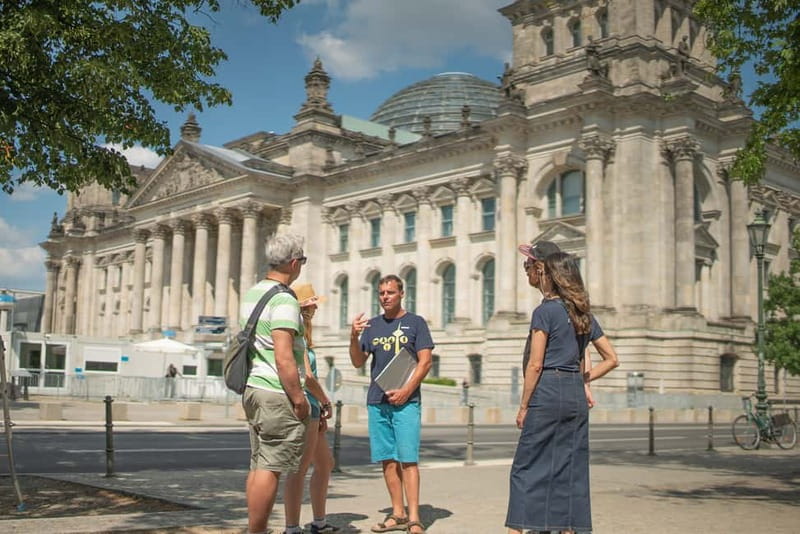
A turning point in the tour is moving toward the story of Hitler’s vision of Berlin. You’ll walk along Hitler’s planned Germania axis, a design associated with Albert Speer. This is the contrast piece: it’s the dream of order, monuments, and control—set against what that control eventually produced.
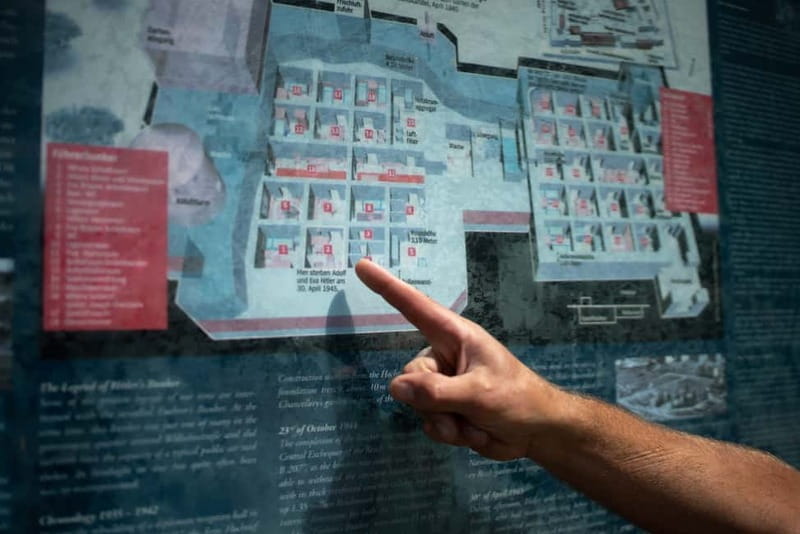
Then the tour guides you above the Führer’s Bunker area, connected to the place where Hitler’s suicide is tied to the end of the regime. Standing near where the final collapse happened changes the feel of everything you heard earlier. Instead of discussing the rise of the Third Reich as a historical arc, you’re guided through the last-days timeline and the fate of Hitler’s remains.
The heavy subject matter is handled as history, but it won’t feel light. It’s worth reminding yourself what you’re doing: you’re not “visiting a theme.” You’re learning how one of history’s most destructive regimes functioned up close, and then how it ended.
If you’re the kind of person who likes to ask questions, this section is where that pays off. Many guide comments mention they take time with questions and provide clear explanations rather than just reading facts.
Topography of Terror: where the system behind the uniforms is explained
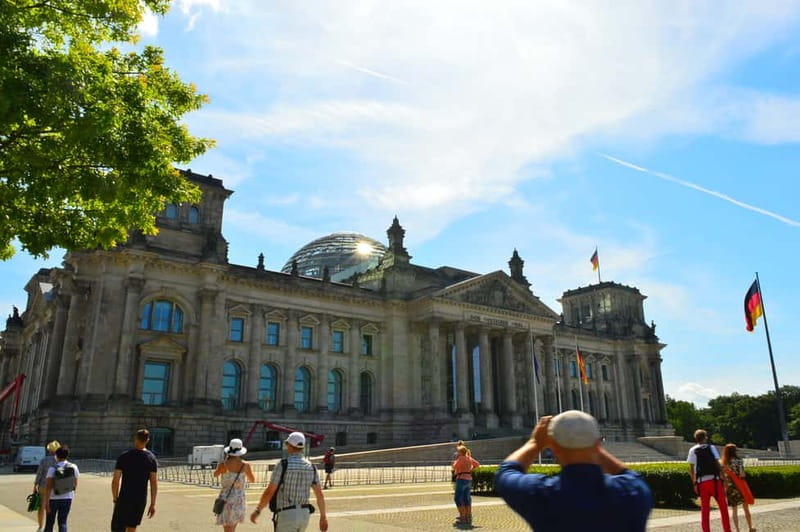
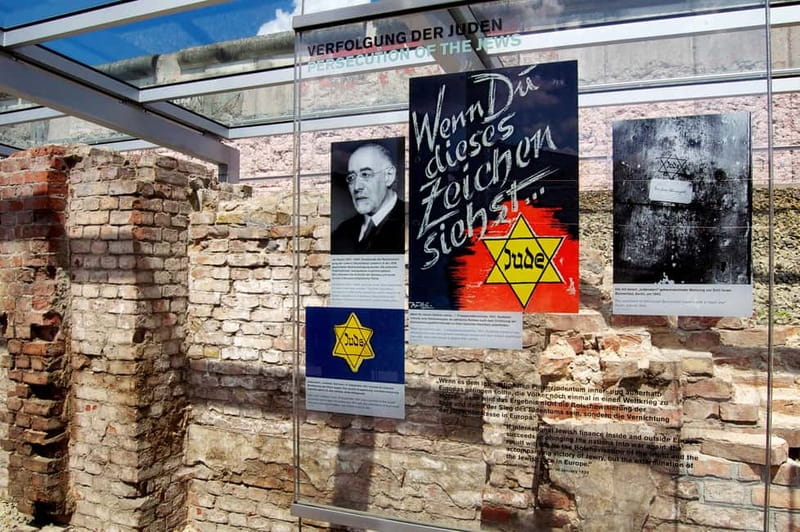
After walking the streets tied to Nazi institutions, you also visit the Topography of Terror exhibit. This stop is useful because it adds structure to what you’ve seen outside. The street locations tell you where things happened; the exhibit helps you understand how and why it happened that way.
If you’ve only ever skimmed WWII on a timeline, Topography of Terror gives you a more grounded sense of the machinery behind it. You’ll connect names, departments, and enforcement methods to the broader system of terror the regime used to control society.
The exhibit stop is also where the tour’s tone matters most. Multiple guide notes highlight respectful handling of sensitive content. That’s exactly what you want here: honest, clear history without spectacle.





Reichstag, the Soviet assault, and the endgame of 1945
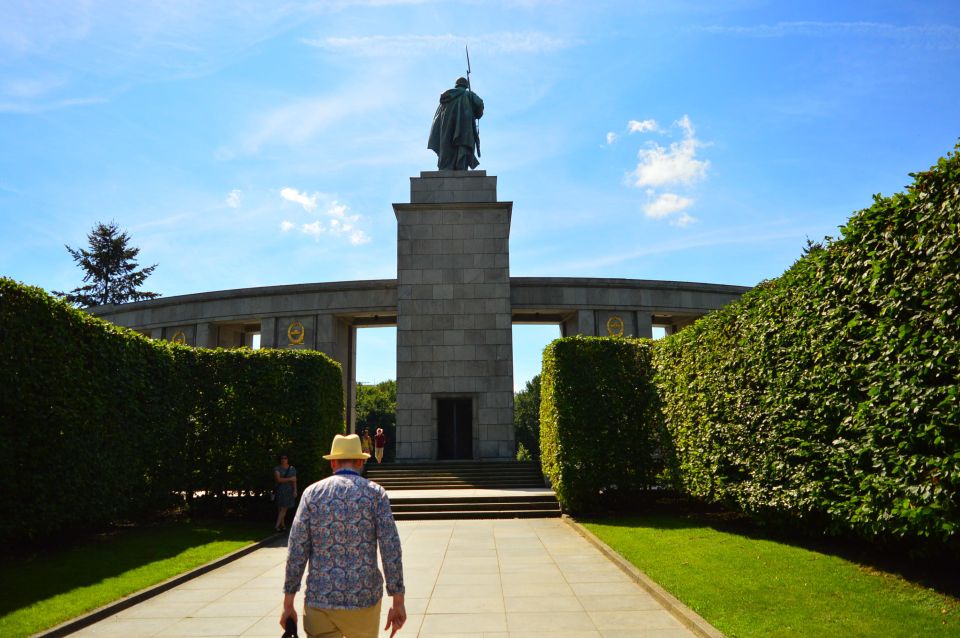
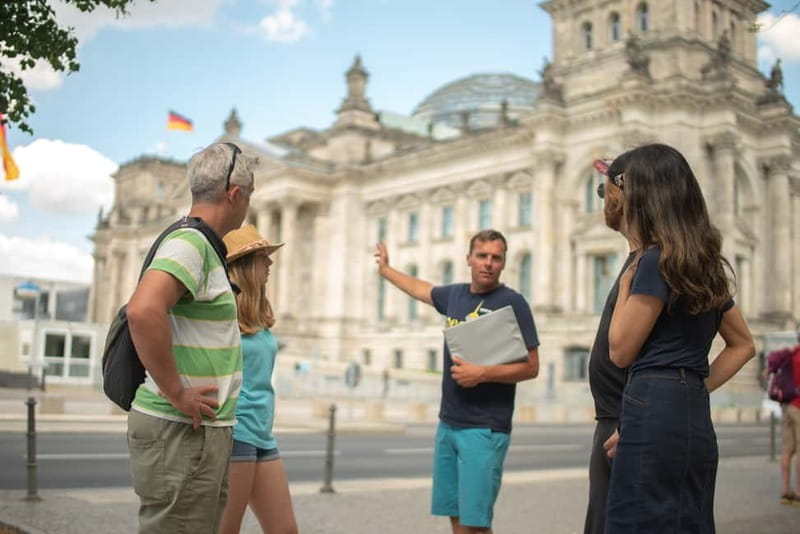
The story moves from Nazi control to battlefield reality. You’ll stand near the Reichstag area, described as the final battlefield point for Nazi Germany, and your guide follows the path of the Soviet assault as you look around.
This part works well because it links politics to geography. You see how power centers were positioned, then you watch the narrative shift toward how those centers were overtaken. The Reichstag reference isn’t just a name-drop—it’s a way to talk about the final phase of the war from the perspective of where the fighting actually mattered.
If you like your history with clear momentum, you’ll probably enjoy how the guide keeps the timeline moving. Comments about pacing on this tour often mention the 3 hours can feel fast, which usually means the guide is moving you along without skipping context.
Brandenburg Gate to the Soviet War Memorial: the aftermath is part of the lesson
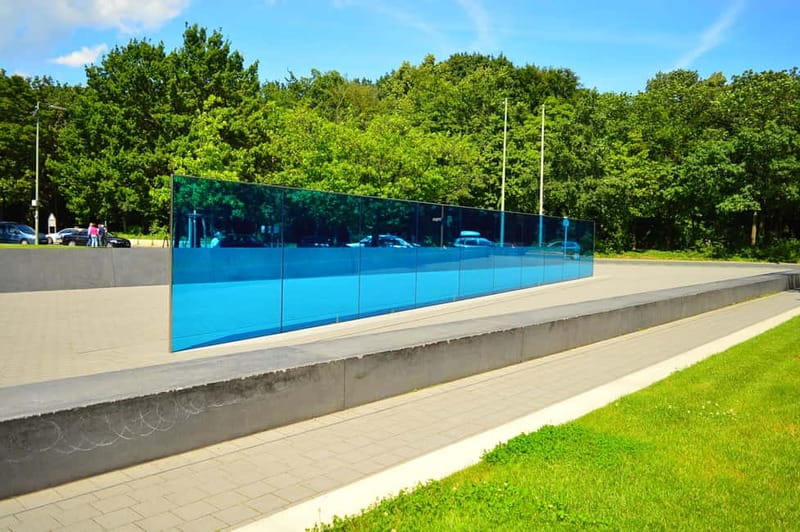
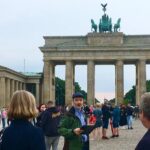
The tour also includes a stop at the Brandenburg Gate, a landmark that carried symbolic meaning in the Nazi era and later became part of the Cold War divide. It’s one of Berlin’s most photogenic sites, but on this tour it’s not just about a picture. The guide places it into the political story so you understand why the symbolism stuck.
From there, you end with the Soviet War Memorial, flanked by T-34 tanks and Red Army Howitzers. This is a powerful way to close because it makes the post-regime reality unavoidable. You’re standing among reminders of what replaced the Nazi world, and the tone is more grounded and physical than the earlier government-site story.
Ending here also helps your brain sort through the whole arc. Rise, system, control, war, collapse, then the new order represented by the Soviet presence.
Guides, language options, and what 3 hours feels like
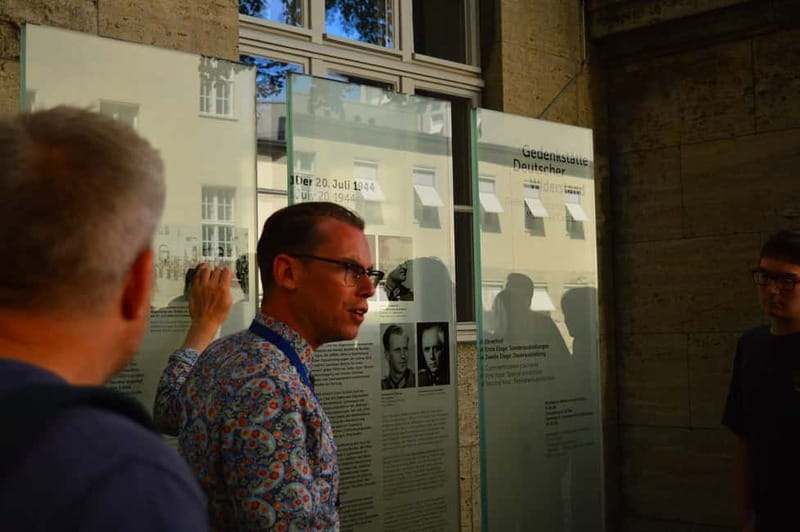
This is a guided walking tour with a live guide, offered in English, German, and Spanish. A 3-hour duration is long enough to matter, short enough to fit into a normal Berlin day. You’re not stuck for half a day, and you’re not being rushed through a long checklist that leaves you drained.
Group size is another practical point. The tour offers private or small groups, and guide comments mention some people care about group size. If you want a quieter pace and more chances to ask questions, choosing the smaller option may be worth it.
Rain or shine, the tour still runs. That’s good for planning, but you should take weather seriously. Bring weather-appropriate clothing and keep your shoes comfortable and grippy.
One practical heads-up from guide feedback: there are no water or toilet breaks built into the tour. So plan ahead. Bring your own drinks and handle bathroom needs before you meet the group.
Price check: what $20 gets you in Berlin
At $20 per person for a 3-hour walking tour with a guide, this is strong value—especially compared with the cost of many museum-heavy days. The money mostly pays for guided time and for the effort to connect street-level locations to an organized WWII narrative.
You’re also paying for specificity. Many self-guided Berlin history plans end up as a loose collection of landmarks. Here, the stops are connected by a single story: Nazi institutions, Hitler’s endgame, and the Soviet assault and aftermath.
Is it expensive relative to a free walk? Of course not. But it’s not a “light” history stop either. For $20, you get a guided experience that helps you interpret what you see so you’re not just staring at plaques and guessing what you’re looking at.
Who this tour is best for (and who might want a different day)
This tour fits best if you want WWII history anchored to real Berlin locations. If you like learning how propaganda, state control, and military planning worked together, you’ll likely feel the logic of the timeline click at each stop.
It also works well for students or anyone who has a school-level interest in the period. Some guide feedback even mentions it helps people studying history, because the guide format is structured and question-friendly.
If you’re someone who gets overwhelmed by heavy topics, you might want to mentally plan for that. This is centered on the Third Reich and the fall of Nazi Germany, including places tied to Hitler’s suicide and the machinery of terror. The guide handling is described as respectful, but the content is still direct.
Should you book this Berlin Third Reich walking tour?
If your goal is to understand Nazi Germany through the places in Berlin where it was built and broken, I’d say book it. The route is short enough for a single afternoon, and the stop choices—Germania axis, Führer Bunker area, Topography of Terror, Reichstag context, and the Soviet memorial—give the story shape.
I’d skip it only if you want something lighter, or if you know you can’t handle direct, heavy WWII subject matter in a guided walking format. Otherwise, $20 for a 3-hour, guide-led route through key sites is exactly the kind of Berlin value that helps the city’s history make sense fast.
FAQ
How long is the Berlin Third Reich, Hitler, and WWII walking tour?
The tour lasts 3 hours.
How much does it cost?
It’s listed at $20 per person.
Where do I meet the guide?
You meet outside Friedrichstraße train station on the square between the Tränenpalast (Palace of Tears) and the station. Guides wear a blue lanyard and a yellow name tag holding yellow umbrellas.
Where does the tour end?
The tour ends back at the same meeting point.
What languages is the tour available in?
The live guide offers the tour in English, German, and Spanish.
Does the tour run in bad weather?
Yes, it operates rain or shine.
What should I bring for the tour?
Wear comfortable shoes and comfortable clothes, and bring weather-appropriate clothing.
Is pickup available?
Pickup is optional only for private options. You wait in the hotel lobby 5 minutes before your scheduled pickup time, and the guide will be wearing a yellow name tag for easy recognition.
Are private or small groups available?
Yes, private or small groups are available.
FAQ
What is included in the ticket price?
The included items are a walking tour and a guide.
Is there free cancellation?
Yes. You can cancel up to 24 hours in advance for a full refund.