REVIEW · BERLIN
Berlin Uncensored: A History of Sex & Freedom
Book on GetYourGuide →Operated by BerlinGuide.de · Bookable on GetYourGuide
Berlin has a way of telling stories you didn’t ask for. This immersive walking tour maps the city’s sexuality from the 1920s to today using iPad AR and a real expert guide, Jeff.
Two things I really like are the 200+ rare archival images, audio, and videos you see in context, and the fact that the whole walk is led by a sociologist and certified sex educator who keeps the tone thoughtful, not prurient.
One possible drawback to plan for: it’s 210 minutes, and because the tour uses tech at multiple stops, you may spend moments standing on sidewalks while information loads and you watch projections rather than just passively strolling.
In This Review
- Key highlights worth showing up for
- Berlin’s sex story, walked street by street
- Jeff the guide: why the tone stays respectful
- iPad AR on the street: seeing lost venues in your hands
- The storyline: from 1920s freedom to censorship and back again
- Getting started at Alnatura Super Natur Markt and Nollendorfplatz
- Magnus-Apotheke and the first historical projections
- Memorial to the Homosexuals Persecuted Under Nazism
- Kurfürstenstraße and Schwerinstraße: where freedom and control clash
- Nollendorfstraße and Denns BioMarkt: modern Berlin in the same frame
- Prinz Eisenherz and Metropol: from archives to today’s scene
- Price ($81) and time (210 minutes): is it good value?
- Who should book, and who should skip
- Should you book Berlin Uncensored?
- FAQ
- How long is the Berlin Uncensored tour?
- What is the meeting point location?
- Is the tour in English?
- How big are the groups?
- Is the tour wheelchair accessible?
- Do I need to bring a public transport ticket?
- What ages is the tour for?
- What technology is used during the walk?
Key highlights worth showing up for

- AR that triggers on real street locations, turning missing venues into something you can see
- A sociologist and sex educator guide (Jeff) who connects sex culture to politics and social change
- 200+ archival photos, videos, audio, and quotes that give the story weight
- Mixies AR photos so you leave with more than just memories in your head
- A clear arc from Nazi repression to today’s sex-positive Berlin
- Small group size (up to 10) which helps when the subject gets sensitive
Berlin’s sex story, walked street by street

If your Berlin memories are mostly museums and photo spots, this tour changes the angle. You’re looking at the city through how people talked about sex, how governments tried to control it, and how Berliners—again and again—found ways around the rules.
What makes it work is the mix of education and street-level pacing. You get a chronological storyline, but it’s anchored in actual neighborhoods and intersections you can stand on. I also like the practical way it’s designed: you’re not stuck in one room watching clips. The tech shows up where the history happened, then you keep moving.
This is also a good fit for people who want Berlin to feel modern in the way it handles taboo topics: direct, sometimes awkward, but usually honest. Just note the content is adult-focused. The tour is not suitable for children under 18.
You can also read our reviews of more historical tours in Berlin

Jeff the guide: why the tone stays respectful

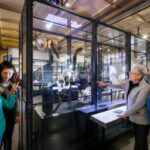
A lot of sex-themed tours go one of two ways: either they’re too wild to be useful, or too clinical to feel human. Here, Jeff’s background as a sociologist and certified sex educator keeps it grounded. He’s also a journalist and has spent more than a decade studying Berlin’s sexual history, so you’re not getting random gossip—you’re getting social context.
You can feel that in how the tour moves from places to themes. The story covers early sexual science, contraception innovation, Nazi censorship and persecution, and then the Cold War split between East and West. That’s heavy material, and the tour is designed to handle it with sensitivity.
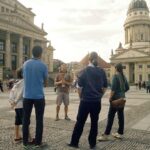
It’s also a small group (limited to 10 participants). That matters when questions come up, and when the subject turns from history into how different communities shaped Berlin’s modern sex-positive scene.
iPad AR on the street: seeing lost venues in your hands

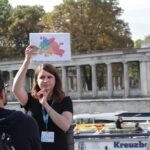
The headline tech here is Augmented Reality (AR) shown on the guide’s iPad. You’ll stand at real spots and trigger historical media—photos, videos, audio recordings, and quotes—that line up with what happened there.
Practically, AR can go two ways. It can feel like a gimmick, or it can add information you can’t otherwise see. The good news is that this tour uses AR to connect you to missing places—historic clubs, cabarets, institutes—rather than just overlaying random graphics. You’re also taking AR-enhanced photos via Mixies, so you get something tangible to remember the exact moments you were standing in.
One thing to keep in mind: not every AR system will meet your personal expectations. Because the tour relies on the tech at multiple stops, a small portion of your time is spent pausing to watch and read. If you hate stopping, bring your patience.
The storyline: from 1920s freedom to censorship and back again

The tour doesn’t just list dates. It gives you a cause-and-effect timeline of how Berlin became known for sexual experimentation and how that freedom kept colliding with power.
It starts in the 1920s, when Berlin’s nightlife and sexuality were unusually visible compared with much of Europe. You’ll hear about the hedonistic era—sex clubs, nudism, and the way performance and art blurred with erotic expression. This part also includes a standout contraception note: the tour highlights the invention of the first rubber condom as something tied to Berlin.
Next comes Berlin’s role in early sexual science. You visit the site of the Institute for Sexual Science, where pioneers explored questions around desire, attraction, and sexual behavior across societies, along with contraception and sexual health. The point isn’t trivia; it’s that Berlin was doing research and pushing public discussion long before many other places were willing.
Then the tone turns darker with Nazi censorship. The tour explains how the Nazi regime criminalized desire and tried to shut down erotic expression, and it connects that crackdown to the persecution of people for sexuality. After the Nazi period, the city’s story fractures again with the Cold War divide between East and West.
Finally, it brings you to today. Berlin is now known for sex-positive culture, major nightlife institutions, and underground scenes. The walk closes with modern references like KitKat Club, Berghain, and Lab.Oratory, and it points you toward events such as Europe’s largest fetish festival, Folsom Europe.
Getting started at Alnatura Super Natur Markt and Nollendorfplatz

Your meeting point is in front of Alnatura Super Natur Markt at Nollendorfplatz (Else-Lasker-Schüler-Straße 18, 10783 Berlin). The walk starts with a short on-foot stretch, so you can settle into the group and the rhythm of Jeff’s narration before the tech and historical stops begin.
This location choice is smart. Nollendorfplatz is easy to recognize and helps you feel oriented fast, which matters because the tour later asks you to connect streets with institutions and clubs that may no longer exist in the same form.
If you want a smoother start, arrive a few minutes early and get comfortable with the group size. Because the tour caps at 10 people, you’ll feel like you’re on a real guided experience, not a crowd.
Magnus-Apotheke and the first historical projections

One of the early stops is Magnus-Apotheke. This is the kind of location where the building might look ordinary at street level, but the tour uses it as a trigger for historical context through AR.
That’s a key part of the experience. You’re not just hearing stories about Berlin’s sexual past—you’re learning how modern-looking facades can sit above older social realities. AR helps you connect layers: what a place looks like now, what it meant then, and why people fought to control or express sexuality there.
Even early on, the tour builds a sense of continuity. You start with the era of visible nightlife, then you’re quickly guided toward the idea that sex culture didn’t float in a vacuum—it was shaped by institutions, education, law, and politics.
Memorial to the Homosexuals Persecuted Under Nazism

Next you stop at the Memorial to the Homosexuals Persecuted Under Nazism. This is where the tour shifts from nightlife history to the consequences of state repression.
The memorial visit is brief but significant in tone, and it frames what comes later: under Nazi rule, erotic expression was restricted and persecuted. The tour’s larger message here is clear—this wasn’t only about morality. It was about power, policing, and cruelty, including persecution tied to sexuality.
If you’re sensitive to heavy content, this is the moment to slow your pace a bit and mentally reset. You’re not on a party walk. This part is meant to change how you interpret everything before and after it.
Kurfürstenstraße and Schwerinstraße: where freedom and control clash

The tour continues through streets where Jeff helps you connect shifting eras to geography—especially Kurfürstenstraße and Schwerinstraße.
These stops support two bigger themes. First, they show how neighborhoods hosted different kinds of spaces over time: clubs, cabarets, institutes, and other meeting points for people who wanted community. Second, they help explain how repression changes the map. When the state clamps down, spaces vanish or go underground, and public expression gets punished.
As the narrative progresses, Jeff brings in the Cold War divide. Berlin becomes split East and West, and so does the relationship between sexuality and everyday life. West Berlin is presented as a center of sexual liberation. East Germany is described as embracing nudism through FKK, but with strict control of sexuality.
The practical takeaway for you: as you walk these streets, don’t treat sex history like a separate topic. Treat it like a lens on social policy. The streets help you see that.
Nollendorfstraße and Denns BioMarkt: modern Berlin in the same frame
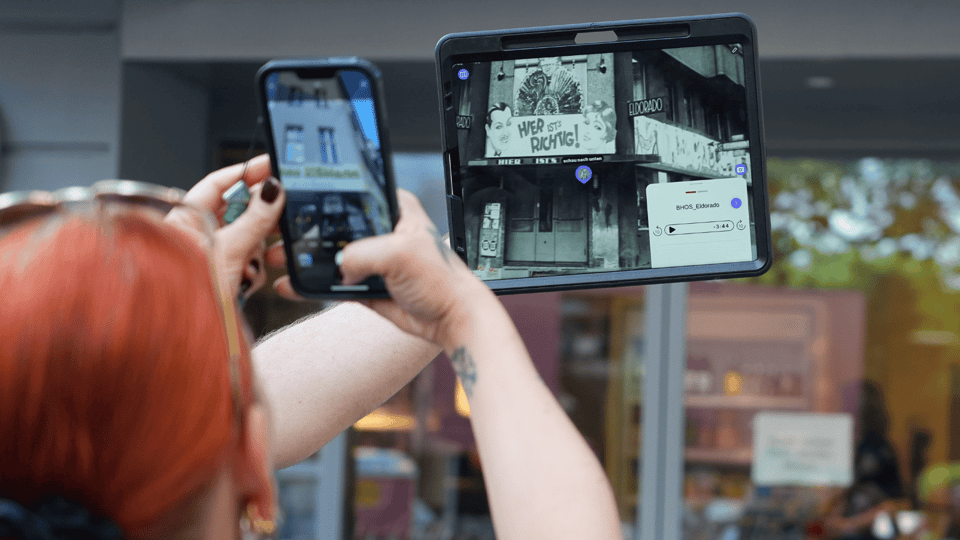
At Nollendorfstraße you keep the same walking logic: pause, project, explain, then move on. The tour uses these street stops to keep the timeline anchored in places you can still stand in today.
Then you visit Denns BioMarkt. Again, it’s about the contrast between today’s storefront normalcy and the older social worlds the tour brings back using AR. This is one of the reasons the technology matters. Without it, you’d just be walking past everyday businesses and missing how much layering exists in Berlin.
This section also supports the tour’s goal of making sex-positive Berlin feel more than like a trend. The guide connects modern scenes to the long history of repression and reinvention behind them.
Prinz Eisenherz and Metropol: from archives to today’s scene
The later stops include Prinz Eisenherz and Metropol, and this is where you feel the tour’s ending arc—how Berlin’s story returns to expression rather than silence.
Jeff uses these pauses to connect the past to today’s reputations and realities: sex-positive culture, famous nightlife, and more underground scenes that keep shaping the city’s identity. The tour points you to names like KitKat Club, Berghain, and Lab.Oratory and then widens the lens to festivals such as Folsom Europe.
This is also where the tour tends to feel most interactive. Some moments involve quizzes and engaging prompts that keep you paying attention during a long walk. After hours of history and politics, these prompts give your brain a way to stay awake without making the tour feel like a lecture hall.
At the end, you return to Alnatura Super Natur Markt, closing the loop where it started.
Price ($81) and time (210 minutes): is it good value?
For $81 and a 210-minute duration, you’re paying for three things at once: expert guided interpretation, street-based AR technology, and a heavy load of archival media (200+ rare photos, videos, audio, and quotes), plus Mixies AR photos.
If you’ve ever done a walking tour where most of the value is in the guide’s storytelling alone, this one adds something tangible: you’re shown media tied to specific locations. That’s worth money if you like visual context and if you want a story you can remember beyond words.
You also get a small group cap (up to 10), which usually means you spend less time waiting and more time actually hearing Jeff. And since it’s led by a sociologist and certified sex educator, you’re not stuck with pure nightlife branding.
What could make it feel less like value is if you strongly dislike tech-based pauses or if you prefer long stretches of uninterrupted walking. Plan to be standing in place at least some of the time.
Who should book, and who should skip
This is a strong choice if you want Berlin with context. It’s for you if you care about queer history, feminist liberation movements, contraception and public health innovation, and how governments try to control private life—and what happens when people resist.
It’s also a good match if you enjoy AR experiences done with care. The best kind of tech tour doesn’t just entertain; it teaches you how to see.
Skip it if you’re expecting a light city walk. This tour includes Nazi censorship and persecution, plus other adult themes. It is not suitable for children under 18, and the tour notes that some parts are high-stimulation.
Should you book Berlin Uncensored?
If you like history that’s socially honest—and you’re comfortable with adult themes—yes, book it. The combination of Jeff’s background, AR tied to real locations, and the clear arc from the 1920s through Nazi repression, Cold War division, and today’s sex-positive scene makes it more than a gimmick.
If AR annoys you or you need long uninterrupted walking time, consider whether the tech stops and overall length will fit your style. Otherwise, this is a rare way to understand Berlin: not by looking at sex as scandal, but by seeing how power, science, and community shaped the city.
FAQ
How long is the Berlin Uncensored tour?
The tour duration is 210 minutes.
What is the meeting point location?
Meet in front of the entrance to the organic supermarket Alnatura Super Natur Markt at Nollendorfplatz, Else-Lasker-Schüler-Straße 18, 10783 Berlin.
Is the tour in English?
Yes, the tour is guided in English.
How big are the groups?
The tour is a small group limited to 10 participants.
Is the tour wheelchair accessible?
The tour is wheelchair accessible. Some paths may be bumpy, and accessible toilets can be arranged upon request.
Do I need to bring a public transport ticket?
Yes. A public transport ticket is not included, so you should bring one.
What ages is the tour for?
The tour is not suitable for children under 18.
What technology is used during the walk?
The tour uses Augmented Reality (AR) elements shown through the guide’s iPad, plus Mixies for fun personalized AR photos.