REVIEW · BERLIN
Berlin: Sightseeing Walking Tour of the Top 20 Attractions
Book on GetYourGuide →Operated by TOURGUIDEME BERLIN · Bookable on GetYourGuide
Three hours can feel like a week. In this private Berlin walking tour, you move fast but never feel rushed, guided through Nazi and Cold War sites with Berlin humor and street-level stories you can picture as you walk.
I love the way you get a small-group feel with a real human guide, plus the freedom to ask questions and shift focus mid-walk. One thing to plan for: it’s about 6 km on foot in roughly 3 hours, so comfortable shoes matter if you want to enjoy every stop.
Berlin humor plus major historical landmarks.
A private guide who adjusts pace to your questions.
About 6 km, with plenty of stops to sit in the story.
Stops that connect Nazi history to the Cold War and Wall fall.
Museum Island and the government district in one compact route.
In This Review
- Why a Top 20 Berlin walk beats the classic short list
- Meeting at Paul-Löbe-Haus: your starting point and first “Berlin lesson”
- German Chancellery and Reichstag: seeing modern power with historical weight
- Holocaust Memorial and Bebelplatz: history you can’t “speed-run”
- Potsdamer Platz to Checkpoint Charlie: Cold War reality, not just a postcard
- Topography of Terror and the Martin-Gropius-Bau area: reading the street for meaning
- Gendarmenmarkt: when Berlin looks “perfect,” the guide keeps it honest
- Lustgarten, Berlin Cathedral, and Museum Island: Prussian ambition meets the Spree
- New City Palace and the “Wall logic” that connects the whole walk
- What to expect from the guide: humor, attention, and real-time adaptation
- Price and value: is $94 per person worth it?
- Who should book this walking tour (and who should reconsider)
- Should you book this Berlin Top 20 walking tour?
- FAQ
- How long is the Berlin walking tour?
- Where do I meet the guide?
- How much walking is involved?
- What languages are offered?
- Is it private or small group?
- Does the tour run in bad weather?
Why a Top 20 Berlin walk beats the classic short list
Berlin is one of those cities where the “big sights” are also the heavy sights. This tour handles that mix by keeping everything walkable and connected, so you don’t bounce between random locations with no thread tying them together.
What makes it work is the storytelling style: you get a guide who blends dry local humor with clear context about politics, division, and reunification. Instead of just naming places, you learn why they mattered to real people, and how Berlin’s geography helped shape daily life.
The route also gives you more than a “Top 10 highlights” version. You’ll cover additional landmarks tied to Nazi and Cold War history, including longer stretches of Wall-era context and major memorial ground.
Meeting at Paul-Löbe-Haus: your starting point and first “Berlin lesson”
You meet at the main entrance of the Paul-Löbe Haus, right across from the Federal Chancellery on Konrad-Adenauer-Straße 1. It’s a smart place to start because you begin in the modern government district, with the scale of power right in front of you.
From the start, you’ll get that Berlin habit of reading a city like a document. Standing in this part of town, it’s easier to understand how today’s politics grew out of the wreckage of the 20th century.
Practical note: because the walk is roughly 3 hours, you’ll want to keep your camera handy early. Several of the first stops are perfect for quick photos before the day fills up with more serious sites.
You can also read our reviews of more walking tours in Berlin


German Chancellery and Reichstag: seeing modern power with historical weight
The early stops lead you into the center of German governance, where architecture does more than look impressive. The guide helps you connect the look of the buildings to how Berlin reinvented itself after division.
The Reichstag stop is a highlight for a reason: it’s one of the places where you can feel Germany trying to project permanence and stability after turbulent decades. Even if you’re not focused on politics, the viewpoint and the setting tend to grab your attention.
What I like about this part of the walk is the pacing. You’re not stuck at one spot for too long, but you still get enough time to orient yourself, then move on with the story in your head.
Holocaust Memorial and Bebelplatz: history you can’t “speed-run”
This tour places remembrance in the middle of sightseeing, not off to the side. That matters, because it forces you to understand that Berlin’s landmarks aren’t just backdrops—they’re part of how the city processes what happened.
At the Holocaust Memorial, you’ll get the context you need to make sense of what you’re seeing on the ground. The memorial’s design feels quiet and deliberate, and a good guide makes sure you understand the point without turning it into a lecture.
Then comes Bebelplatz, where books were burned. This stop is especially effective because it connects ideology to everyday culture: censorship isn’t abstract when you can stand on the exact place where it happened. Pair that with the nearby monumental architecture, and the contrast hits harder.
One consideration: these are emotionally serious stops, so if you’re sensitive to heavy subjects, bring a bit of flexibility. You may want an extra moment at the edges to breathe before moving on.
Potsdamer Platz to Checkpoint Charlie: Cold War reality, not just a postcard
Potsdamer Platz is often treated like a modern Berlin showcase, but on this route it’s used as a bridge to the divided city. The guide connects the area to the idea that Berlin wasn’t only political—it was physical, with neighborhoods shaped by borders and control.
Checkpoint Charlie is the obvious magnet, and it delivers because it’s easy to picture the tension right there. The guide’s value is how they explain what this “crossing point” represented in everyday terms and why it became famous far beyond Berlin.
If you care about photography, this is one of the segments where you can get more usable time. In small groups, the guide can slow down at the right moments so you don’t just snap and sprint.
Topography of Terror and the Martin-Gropius-Bau area: reading the street for meaning
The Topography of Terror stop is one of the most important sections of the tour. It’s tied to the former Gestapo headquarters grounds, so the guide’s job here isn’t just to summarize history—it’s to make the location make sense.
That’s also where Berlin can feel complicated. You’re walking in an urban environment, and the guide helps you connect what’s visible today to what used to be enforced here.
The Martin-Gropius-Bau area adds another layer because you’re moving through a part of Berlin where the buildings and the history sit close together. Your guide turns that closeness into clarity, explaining how architecture and institutions shaped what people experienced.
A helpful detail for your planning: the tour runs in all-weather conditions, and you’ll likely keep moving through wind or rain. So bring a jacket you can actually tolerate for 3 hours, not just something you hope will work.





Gendarmenmarkt: when Berlin looks “perfect,” the guide keeps it honest
Gendarmenmarkt is famous for a reason. The square is visually satisfying—symmetry, classical facades, and that staged sense of order you can feel in the layout.
Here’s why I think this stop is worth keeping in the itinerary: the guide doesn’t let it be only a pretty place. You get the historical and cultural meaning behind the square, so it’s not just a photo break. It becomes another clue in how Berlin imagined itself during different eras.
Also, it’s a good moment to reset mentally. After heavier sites like Checkpoint Charlie and Topography of Terror, this open square gives you room to breathe while still staying in the story.
Lustgarten, Berlin Cathedral, and Museum Island: Prussian ambition meets the Spree
As you move toward the Lustgarten area, you shift from division to display. This part of Berlin is about grand urban planning and state power expressed through monumental spaces.
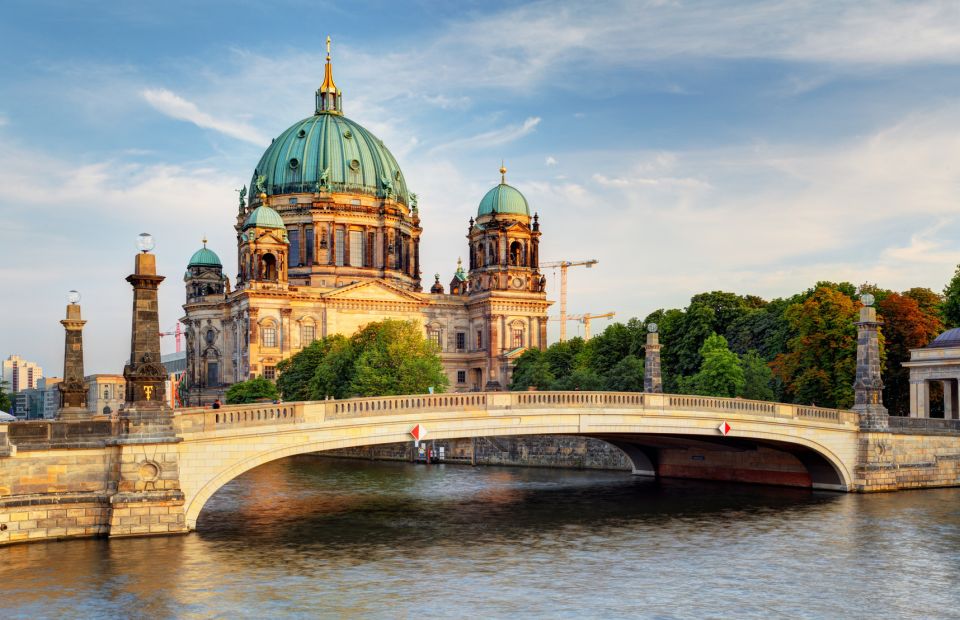
The Berlin Cathedral stop is a strong anchor here. The guide helps you appreciate how the cathedral’s presence fits into the broader “center of gravity” of the city, not just as a standalone building.
Then you step into Museum Island territory, where the layout makes sense of why this area became such a cultural magnet. You’ll see key Museum Island components, including the Alte Nationalgalerie, and the guide points out what to look for so the museums feel connected rather than random.
A practical note: museum-area stops can mean extra waiting for sightlines and photo angles. If you’re someone who likes to linger, this is where your guide’s small-group pace becomes a real advantage.
New City Palace and the “Wall logic” that connects the whole walk
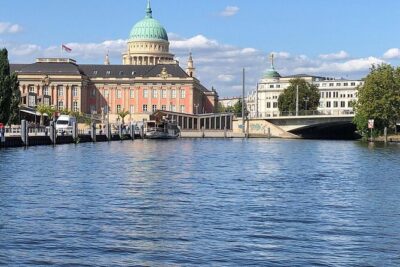
The tour includes the New City Palace area as part of the arc between different Berlin eras. It helps you understand how the city rebuilt its center and how memory gets physically reworked over time.
This is also where the route’s design becomes obvious: you’re not just checking boxes; you’re walking a line that shows how Berlin’s borders and power systems shaped the city form. When the Wall story comes up again, it feels less like trivia and more like a thread connecting what you already saw.
Finishing at Friedrichsbrücke is a fitting end point. Bridges are where history gets literal: crossings, control, movement, and the idea of whether a city lets people flow freely or not.
What to expect from the guide: humor, attention, and real-time adaptation
One of the most praised parts of this tour is the guide quality. People have had guides such as Antonella, Max, Carlos, and Carlo, and the common theme is warmth plus strong command of story.
You’ll likely notice three things about how the best guides handle the walk:
- They point out details you’d miss if you were solo, then explain why those details matter.
- They keep the tone human, using Berlin humor to keep long historical stretches from becoming heavy and flat.
- They adapt when you show interest, sometimes shifting timing to fit your questions.
There are also hints that timing can flex a bit when the guide finds a story worth extending. That’s usually a sign the guide is paying attention, but it’s also smart to keep other plans nearby—but not glued to the minute.
If you care about photos, look for moments where the guide slows the pace. In smaller groups, you’ll often get more chances to photograph key sites without feeling like you’re sprinting through.
Price and value: is $94 per person worth it?
At $94 per person for a 3-hour private guide format, you’re paying for three things: expert storytelling, time on foot to see the city in sequence, and a route that goes beyond a shorter “top highlights” version.
The value jumps if you fall into any of these categories:
- First-time in Berlin and you want orientation that doesn’t feel like a checklist.
- You want both landmark sightseeing and serious context, especially around division and Cold War history.
- You prefer a guide who can answer questions, not just recite facts.
It’s also meaningful that the tour includes visits to major landmarks such as Brandenburg Gate and Museum Island, and that it states skip ticket line. That can save time at the specific stops where lines or entry processes exist.
The main “cost” is your energy. With about 6 km of walking, the best value comes when you show up with good shoes, hydration, and a willingness to spend the whole 3 hours on foot.
Who should book this walking tour (and who should reconsider)
This tour is a strong fit for:
- First-time visitors who want a lot of Berlin in a short time.
- Couples and small groups who like walking with one guide rather than merging into a larger crowd.
- People who want Nazi and Cold War history explained with context and clarity, plus practical tips about what to do next.
Consider another option if you:
- Struggle with 6 km on foot in 3 hours.
- Want only light, casual sightseeing with no serious memorial stops.
- Are limited by time so tightly that even a flexible pace could cause stress.
For everyone else, it’s a smart way to turn Berlin’s scale into something manageable. In one afternoon, you’ll see how the city’s center of power, its borders, and its cultural institutions all connect.
Should you book this Berlin Top 20 walking tour?
I think you should book it if you want more than a highlights loop. The best part is how the guide links places so they feel like chapters, not isolated photos.
If your goal is quick sightseeing with minimal walking, you might prefer a shorter route. But if you can handle the about 6 km pace, you’ll come away oriented fast, with context that makes later self-guided stops click.
FAQ
How long is the Berlin walking tour?
The tour runs for 3 hours (180 minutes).
Where do I meet the guide?
You meet in front of the main entrance of the Paul-Löbe Haus, opposite the Federal Chancellery, Konrad-Adenauer-Straße 1, 10557 Berlin.
How much walking is involved?
Plan for about 6 km of walking during the 3-hour tour.
What languages are offered?
The live tour guide is available in English, Spanish, and German.
Is it private or small group?
The activity offers private or small groups.
Does the tour run in bad weather?
The tour runs in all-weather conditions, so bring clothing that works for wind or rain.