REVIEW · BERLIN
East Berlin and the Berlin Wall 2-Hour Walking Tour
Book on Viator →Operated by Original Berlin Walks · Bookable on Viator
Cold War Berlin can feel close enough to touch. This 2-hour walk through East Berlin connects major Wall landmarks to daily life, and yes, you’ll get the rare chance to touch preserved Wall remains while your guide makes the Cold War human, not just political. I also love how the route threads through key places like the Berlin Wall Memorial and the former border area around Friedrichstraße, with named guides such as Anastasia and Dylan praised for turning facts into clear, grounded storytelling. One possible drawback: two hours is quick, so you may finish with questions you’ll want to explore on your own afterward.
The group stays small (up to 20), which helps. Just keep in mind that the walk moves briskly between sites, so comfortable shoes matter more than you might expect—especially in weather that feels very Berlin.
In This Review
- Key things I’d clock before you go
- Walking East Berlin: what this two-hour Wall route gives you
- Starting at Hackescher Markt: Cold War setup, then real streets
- Friedrichstraße and the Palace of Tears: a border you can still feel
- Berlin Wall Memorial: touching history and learning what the Wall controlled
- Chapel of Reconciliation and the nearby remnants: faith, memory, and scars
- Seeing the oldest Wall relics: the GDR watch tower and Ackerstraße
- Bornholmer Strasse on Nov 9, 1989: the moment the wall fell
- Stasi headquarters and the surveillance machine behind the Wall
- Finishing around Alexanderplatz and the TV tower: the city remade
- Price and logistics: is $21.78 worth your time?
- Who should book this East Berlin Wall walk?
- Should you book this tour?
- FAQ
- What does the tour include?
- How long is the walking tour?
- Where does the tour start and where does it end?
- Is English available?
- Is admission included for the main sites?
- Do I need public transport?
- How big is the group?
- Is cancellation allowed?
- Do you run the tour in bad weather?
Key things I’d clock before you go
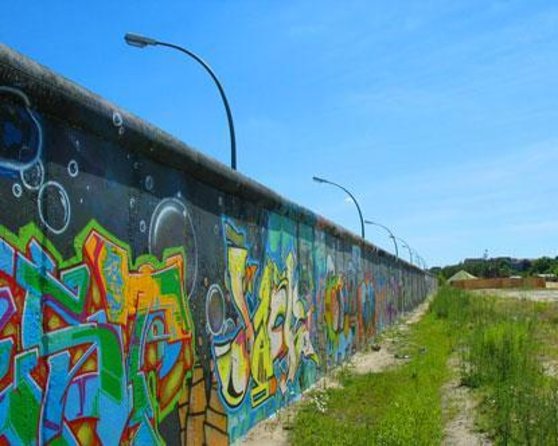
- Touch the Wall remains at the preserved section of the Berlin Wall Memorial
- Death Strip context with a viewpoint explanation of how escape zones were controlled
- Bornholmer Strasse and Nov 9, 1989 told as the turning point that toppled the system
- Stasi headquarters and surveillance reality—how control reached daily life
- Palace of Tears at Friedrichstraße—a sobering border-crossing stop you can’t ignore
- Small-group pace (max 20, with some groups reported around a dozen) for real Q&A time
Walking East Berlin: what this two-hour Wall route gives you
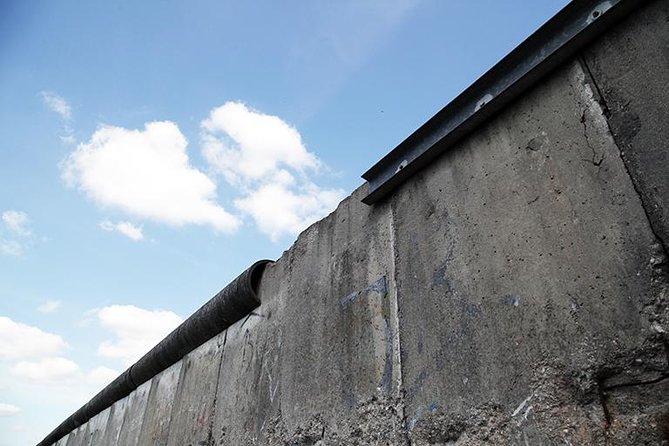
This is the kind of tour that helps you see Berlin as a divided city, not just as a collection of monuments. In two hours, you cover the logic of the split—where borders tightened, where people tried to escape, and how the Stasi helped the East German state keep its grip.
What makes it work for real travelers is the balance. You get big-picture Cold War framing at the start, then the tour zooms in on smaller, emotional details along the way. If you like history explained in plain language (with just enough structure to follow), this is a strong fit.
You can also read our reviews of more walking tours in Berlin



Starting at Hackescher Markt: Cold War setup, then real streets
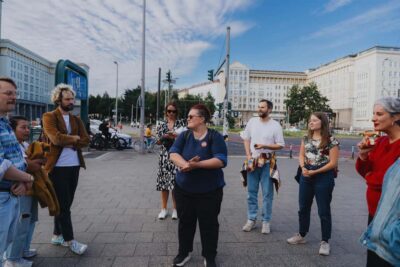
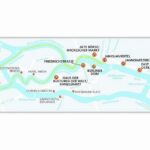
The walk begins near Hackescher Markt at Neue Promenade 3, with a start time of 10:00 am. Your guide sets the scene right away: how the US and the USSR slid into Cold War thinking, how Berlin got trapped in the middle, and what “two sides” actually meant on the ground.
I like this opening because it prevents the common problem—seeing the Wall as a random landmark instead of a system. Guides such as Ariel and Jimmy are often praised for making the story flow, including when they add light humor to keep the mood from going totally heavy too fast.
Practical tip: stand where the group gathers and listen early. Early clarity makes the rest of the stops click.
Friedrichstraße and the Palace of Tears: a border you can still feel
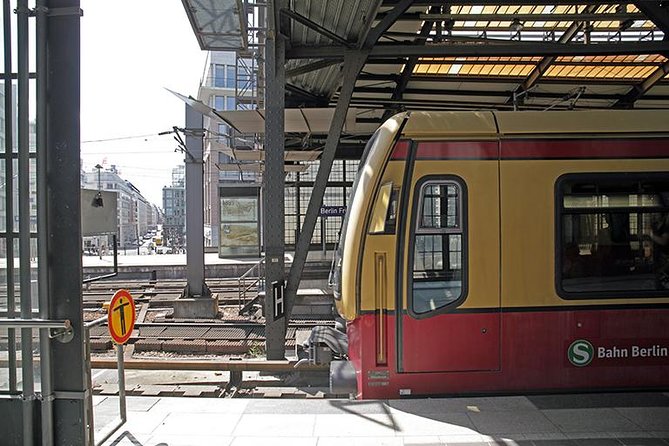
Next comes Friedrichstraße, a main hub area where East and West Berlin life collided in daily rhythms. The tour pauses briefly here, then it zeroes in on the Palace of Tears, the Berlin nickname for the former border crossing station at Berlin Friedrichstraße railway station.
This stop hits differently because it’s about goodbyes—families separating, visitors moving between worlds, and everyone knowing the border wasn’t just paperwork. Even if you’ve read about the Wall, this is the part that turns the concept into a location with emotional weight.
If you’re the type who likes to take photos, slow down for a moment and just absorb. The point isn’t a perfect picture. It’s letting the site do its job.
Berlin Wall Memorial: touching history and learning what the Wall controlled
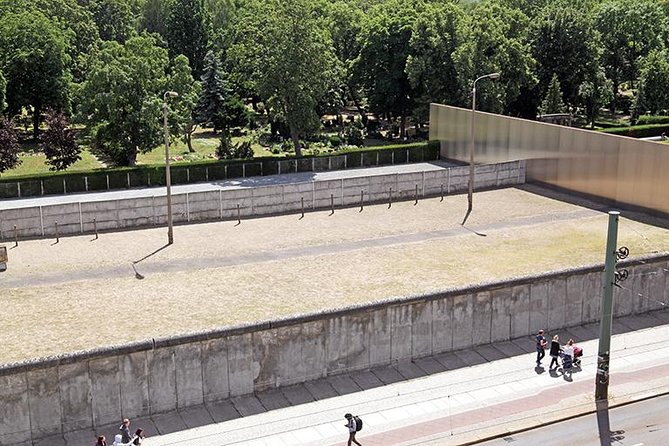
After the border-focused section, the tour heads to the Gedenkstätte Berliner Mauer (Berlin Wall Memorial). This is where you’ll spend about an hour at the preserved Wall section, and this is also where the tour offers its most unforgettable action: the chance to touch the remains of the Berlin Wall.
That single moment is surprisingly powerful. Touch turns “history” into material—cold, rough, and real. It’s also a reminder that the Wall wasn’t symbolic; it was engineered to stop movement.
Your guide also explains a key idea from the escape story: the Death Strip. You’ll get a birds-eye view explanation of the area where East Germany’s shoot-to-kill orders were carried out against people trying to flee. It’s handled with context, but it’s still intense, so expect the emotional tone to shift here.
What to watch for: the preserved section is only part of the lesson. Listen closely to the way your guide connects the Wall’s physical design to the daily fear and tight control that came with it.
Chapel of Reconciliation and the nearby remnants: faith, memory, and scars
Between the largest Wall moments, the tour includes the Chapel of Reconciliation (Kapelle der Versöhnung) and nearby pieces that help explain how the city processed what happened. The stop is short, but it adds balance: the story doesn’t end at the Wall’s function.
This is one reason I like this tour format. It doesn’t keep you trapped in “doom mode.” You still get seriousness, but you also get signals of how Berlin rebuilt its identity after division.
If you prefer quiet stops, this is one of them. Use it to reset before the tour presses forward into the final chapters.
You can also read our reviews of more tours and experiences in Berlin

Seeing the oldest Wall relics: the GDR watch tower and Ackerstraße
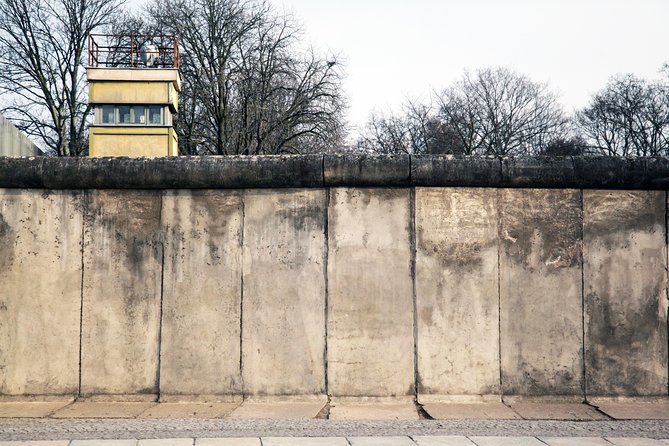
The next sequence brings you to the GDR watch tower, described as the oldest relic of the Berlin Wall. Even if you don’t know Berlin well, a watchtower is easy to understand once a guide puts it into context: observation, intimidation, and control built into the skyline.
Ackerstraße is another quick stop where your guide fills in background on what you’re seeing. These short pauses matter because the tour isn’t just about checking boxes. It’s about teaching you how to read the city’s details—why certain structures survived and what they represent.
You’ll walk past clues that might otherwise look ordinary. With a guide’s framing, those same structures become evidence.
Bornholmer Strasse on Nov 9, 1989: the moment the wall fell
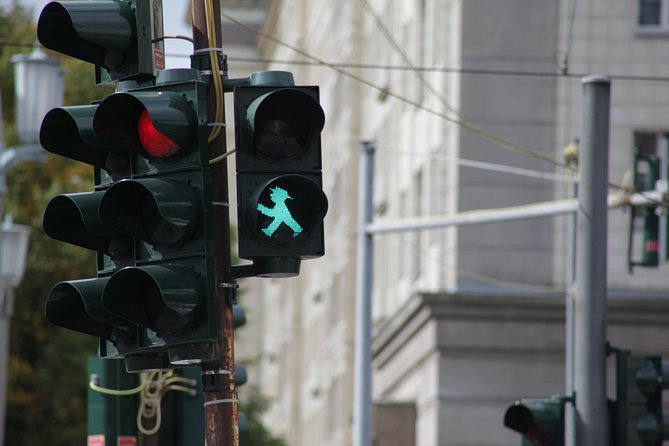
A core payoff arrives when the tour heads to Bornholmer Strasse, tied to November 9, 1989—the day the Berlin Wall came down. Your guide explains how it wasn’t just one grand plan unfolding. It traces the sudden collapse of the system to an East German politician’s mistake, a misstep that triggered people to act and borders to open.
I like this part for one simple reason: it makes history feel less inevitable. The tour helps you understand why the fall was so dramatic—because people weren’t waiting for a slow, controlled transition. They were waiting inside a pressure cooker.
Listen for the explanation of why the crowd reaction mattered, and how a bureaucratic error turned into real-world motion. That thread helps you connect the Cold War setup at the beginning to the turning point you’re watching unfold in your mind.
Stasi headquarters and the surveillance machine behind the Wall
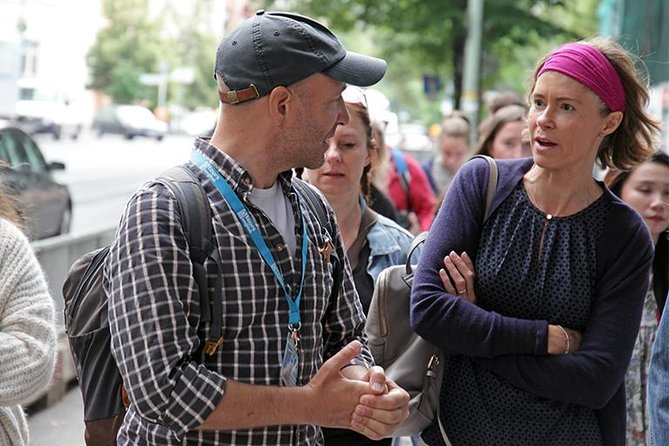
Next, the tour moves into the heavier material: the headquarters of the East German secret police (the Stasi). This is where the story shifts from buildings and borders to people and systems.
Your guide explains how the East German state increasingly spied on its own citizens, creating a situation where the government’s control wasn’t limited to checkpoints. It extended into daily life through surveillance logic.
This stop is one of the tour’s highest-value sections because it answers a question you’ll have been carrying since the Wall Memorial: how could a city keep people trapped so effectively? The answer is that the Wall was only one layer. The Stasi was another layer—often invisible until you understand how it worked.
If you’re sensitive to topics involving coercion and oppression, go in ready for a serious tone. The guide’s job is to make it clear, not sensational.
Finishing around Alexanderplatz and the TV tower: the city remade
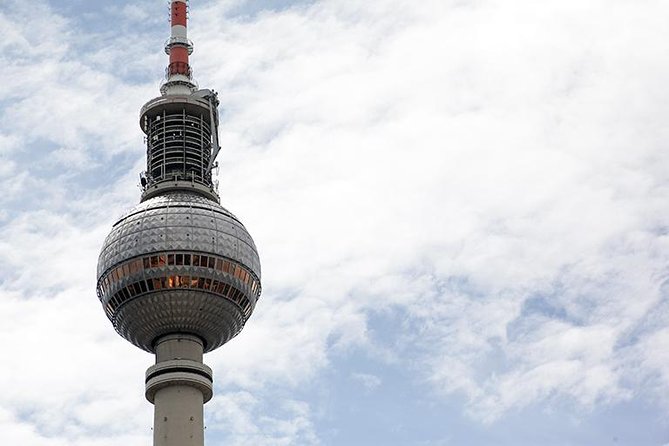
The walk finishes near the heart of the former East German capital, Alexanderplatz, where the iconic TV tower stands. This ending location works because it forces you to think about continuity. Berlin didn’t freeze in 1989; it changed. You’re ending in a spot that still feels like the center of life.
One of the smartest ways to use your final minutes is to look back on your route. You’ve seen the border crossing concept (Friedrichstraße), the preserved Wall evidence, the systems behind escapes, and the fall moment. Then you end somewhere that looks forward, not back.
If you want a quick next step, plan to keep walking afterward at your own pace. This kind of tour gives you bearings fast; it doesn’t try to be a full Berlin encyclopedia in two hours.
Price and logistics: is $21.78 worth your time?
At $21.78 per person for about 2 hours, this tour is solid value—mainly because your time buys access to interpretation, not just walking. Most of the major stops are free to see on your own, but without the guide you’d likely miss the connections: what the Death Strip meant, why the politician’s mistake mattered, and how the Stasi made control feel normal.
Two extra practical notes matter:
- Transport isn’t included. You’ll want a Berlin Transport AB zone pass (approx. €10.60).
- Admissions aren’t on top of the ticket for the main memorial-style stops. That keeps your costs predictable.
Also, it’s in English, with a mobile ticket, and it runs in all weather conditions, so dress for comfort. This isn’t a sit-and-watch tour, so plan for walking time to add up.
Who should book this East Berlin Wall walk?
This is a great choice if you:
- Want an organized history thread without hunting for context yourself
- Like emotional, human-scale stories alongside Cold War structure
- Are visiting Berlin for the first time and want the Wall story explained clearly and early
- Prefer a small group setting for questions (max 20)
It’s also a good fit for families, as some guides (like Hannah and Georgia in feedback) are praised for making the story approachable for mixed ages.
I’d skip it—or at least pair it with extra time elsewhere—if you need a super-slow pace or want to spend long minutes alone at each memorial. The tour is designed to cover the main beats within two hours.
Should you book this tour?
Yes, if you want the Wall and East Berlin’s Cold War story explained in a way that feels real, not academic. The strongest reason to book is the combination of a preserved Wall touch experience, a clear walk-through of the border and escape logic, and the Stasi-focused explanation that makes the whole system make sense.
If you’re the kind of traveler who likes to leave a tour with a short list of places to revisit, this one will do that. You’ll likely want to come back for a second look—especially around the Wall memorial area—because two hours is the right length for understanding, not the right length for lingering.
FAQ
What does the tour include?
You get a professional guide and the 2-hour walking tour.
How long is the walking tour?
It’s listed at about 2 hours.
Where does the tour start and where does it end?
It starts near Neue Promenade 3, 10178 Berlin and the end point is listed as close to the S-Bahn station Nordbahnhof, with the end location also shown at the Berlin Wall Memorial (Bernauer Str. 111).
Is English available?
Yes, it’s offered in English.
Is admission included for the main sites?
Most stops shown are free admission in the tour description, but the Berlin TV Tower admission is not included.
Do I need public transport?
The Berlin Transport AB zone pass (approx. €10.60) is not included, so you’ll likely want transit for parts of the walk.
How big is the group?
The maximum group size is 20 travelers.
Is cancellation allowed?
Yes, free cancellation is offered if you cancel up to 24 hours in advance for a full refund.
Do you run the tour in bad weather?
Yes, it operates in all weather conditions, so dress appropriately.