REVIEW · BERLIN
Berlin: Berlin Wall and the Cold War Walking Tour
Book on GetYourGuide →Operated by Original Berlin Walks GmbH · Bookable on GetYourGuide
Berlin’s Wall still has sharp edges. This 2-hour Cold War walking tour focuses on Bernauer Straße, a place where you can read the Berlin Wall like a timeline: the barriers, the death strip, and the human choices made on both sides. You’ll also hear the stories behind Tunnel 57 and the eerie concept of ghost stations, all tied to what everyday life became in East Germany.
I like the licensed guide format here because it stays specific, not generic. And I like that you get real physical remnants to anchor the story—watchtower lines, walls, and barriers—so the Cold War doesn’t float by as abstract politics.
One consideration: the tour is about 2 hours on foot and it uses public transport (you may need the right ticket/option). Also, the focus on border victims and escape attempts can feel heavy, even when it’s handled with care.
In This Review
- Key things you’ll notice on this Berlin Wall tour
- Why Bernauer Straße makes the Wall feel real
- Price and what $23 buys you in real learning time
- Getting there: a simple public-transport flow
- Entering Bernauer Straße Wall Memorial with a licensed guide
- Stop-by-stop: death strip, watchtower sightlines, and barrier logic
- Tunnel 57: how people tried to get under the border
- Ghost stations and the eerie idea of motion without freedom
- Everyday life in the GDR: the stories behind the fear
- How the guide experience shapes your learning
- What to bring and how to enjoy it more
- Who this tour is best for
- When you might want a different option
- Should you book this Berlin Wall and Cold War walking tour?
- FAQ
- How long is the Berlin Wall and Cold War walking tour?
- How much does the tour cost?
- Is the guide available in English?
- What parts of the Berlin Wall experience are included?
- Where does the tour start?
- Does the tour use public transportation?
- Is there a skip-the-line benefit?
- Can I cancel or pay later?
- Are private or small groups available?
Key things you’ll notice on this Berlin Wall tour

- Bernauer Straße Wall Memorial guided walk with a licensed guide for tight, accurate storytelling
- Original death strip views, including watchtower, walls, and barriers
- Tunnel 57 explained in context, not as trivia
- Ghost stations and border-regime details that show how control worked day to day
- A tour approach that can adjust to your group’s pace; guides like Nathan have been praised for staying responsive
Why Bernauer Straße makes the Wall feel real

Berlin’s division wasn’t just a line on a map. It was built into streets, building facades, and the odds of getting across before you were stopped. Bernauer Straße is one of those special places where you can stand and understand how a city could be cut in two overnight—and why that mattered to families who had lived in the same neighborhoods for years.
I especially like that this tour keeps pulling you back to cause and effect. You’ll learn what the border regime was trying to accomplish, then you’ll see the physical design that supported it. When you’re looking at the death strip concept from the right vantage points, it stops being a Cold War phrase and starts looking like a system: watch, restrict movement, and punish attempts to escape.
You can also read our reviews of more walking tours in Berlin



Price and what $23 buys you in real learning time

At $23 per person for a 2-hour guided walk, the value is mostly about density. You’re not paying for a long day. You’re paying for an expert-led way to make sense of a complicated period without getting lost in details.
If you’re the type of traveler who wants facts but also wants them to connect—how policy became street-level reality—this format works well. A licensed guide can explain why certain places were chosen, what daily pressure looked like, and how escape attempts were treated. That’s the difference between reading a plaque and building a coherent picture in your head.
Also, the track record matters. The tour is offered by Original Berlin Walks GmbH, with a reported rating of 4.7 from 12 reviews, and the recurring praise is about engagement and clarity. That’s what you want at this kind of stop: enough narrative that you leave with understanding, not just images.
Getting there: a simple public-transport flow

This tour uses public transport as part of the experience, with about 15 minutes allocated to that transit. That means two things for you, practically.
First, plan to arrive a bit early so you don’t feel rushed. The meeting point can vary depending on the option you book, but one listed start is Starbucks on Gartenstraße 85. Second, choose the correct option based on whether you need a train ticket. The tour isn’t a private car drop-off; it’s built like a local stroll through an actual city.
The upside: you’re moving through real Berlin, not just marching between isolated exhibits. The downside: if you’re tight on time or hate coordinating transit, you’ll want to keep your schedule clean and your ticket sorted.
Entering Bernauer Straße Wall Memorial with a licensed guide

The heart of the tour is the Berlin Wall Memorial at Bernauer Straße, where the guided portion runs for about 2 hours. This is the space where the wall’s presence is most obvious, and where the story stays grounded in what you can see.
With a licensed, English-speaking guide, you’ll get two main benefits:
- You’ll get context for what you’re seeing, so the details mean something.
- You’ll get answers to the tough questions—without the awkward feeling of guessing based on partial information.
This matters because the Wall wasn’t just built. It was operated. Once you understand the mechanics of the border regime, the stories of escape attempts make more sense—and the memorial’s “why” becomes clearer.
Stop-by-stop: death strip, watchtower sightlines, and barrier logic

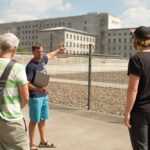
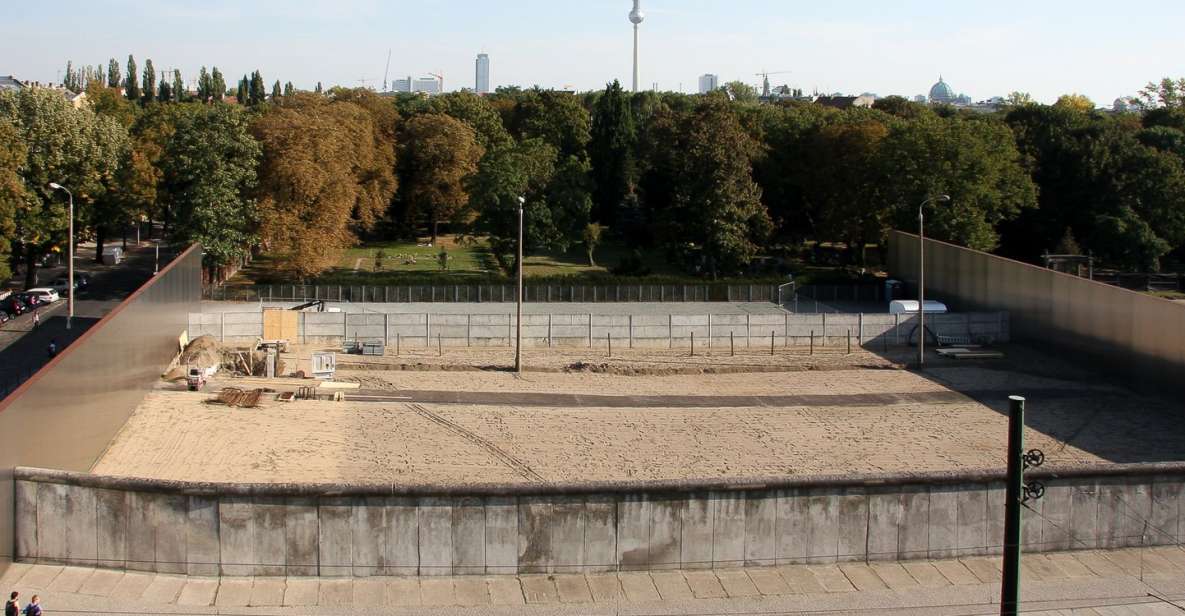
One of the biggest highlights is that you’ll see the original death strip, including watchtower, walls, and barriers. That’s not only dramatic. It’s educational.
Here’s what the visuals help you understand:
- How distance and open ground became deadly.
- How barriers weren’t meant to be negotiable; they were designed to control movement in predictable ways.
- How a surveillance posture could turn an ordinary street into a high-risk zone.
This is where the walking format pays off. You’re not just looking at a single angle—you’re moving in a way that lets you compare lines of sight and spatial constraints. Even if you’ve read about the Cold War before, this kind of on-site geometry tends to change how you imagine events.
It also helps you grasp why escape attempts were both tempting and terrifying. The closer you get to the physical layout, the easier it is to see how desperation, hope, and risk collided in real minutes—not in a movie scene.





Tunnel 57: how people tried to get under the border

Another major focus is Tunnel 57—the kind of topic that can sound almost unbelievable until you understand what made it possible and what made it dangerous.
In a tour like this, the value isn’t just that a tunnel existed. It’s the explanation of what the border regime meant for anyone trying to break through. The guide’s job is to connect the tunnel story to the broader system: secrecy, control, and the consequences for victims of the regime.
You should expect the story to sit in the same emotional neighborhood as the memorial itself. This is not presented as a fun stunt. It’s presented as evidence of how far people would go when a normal life could be taken away.
If you love escape stories but still want the serious side, this section is a strong fit.
Ghost stations and the eerie idea of motion without freedom

The tour also includes ghost stations—another element that helps you understand how the Wall disrupted the daily rhythms of a city.
Even when trains and infrastructure were still there, movement across borders was restricted by policy and enforcement. The guide ties the ghost-station idea to the reality that the border system affected more than just borders. It changed how people interacted with space, routes, and public life.
I find this part particularly effective because it shows the Cold War as something mechanical. Not just ideology. Not just slogans. Just systems that controlled who could go where, and when.
That’s also why it complements the death strip visuals. One is about preventing escape on foot. The other is about controlling life and transit through design and rules.
Everyday life in the GDR: the stories behind the fear
What makes this tour feel worth the time is the emphasis on everyday life in the GDR. You’ll hear about neighbors and the pressure to watch one another, which is a crucial piece of the story that’s easy to miss when you focus only on dramatic escape attempts.
This topic matters because it reframes the Wall. Yes, the Wall was physical. But the border regime also lived in households, workplaces, and personal relationships. When neighbors are encouraged to spy, trust becomes fragile, and the stakes of ordinary conversation change.
The guide’s storytelling style can make a big difference here. A number of the higher-rated experiences highlight guides who kept the group engaged and willing to ask questions. One review specifically praised Nathan for being informative and for adjusting the walk to the group’s level, including stopping when needed. Another pointed to Rebecca as very informative.
That kind of pacing helps you absorb heavy material without feeling overloaded.
How the guide experience shapes your learning

You’re getting an English-speaking live guide (and German is also listed), and the tour is designed around conversation, not monologue. That means you can ask tough questions about the secret police, border enforcement, and the consequences for people who tried to cross.
This is one of those tours where the guide is the difference between “I saw things” and “I understood what those things meant.” The best guides do two things at once:
- They explain the context clearly.
- They keep the group engaged so you stay attentive, especially when the material gets dark.
Based on the reviews, that’s exactly where the praise has landed: guides described as informative, engaging, and caring about history. One specific note even mentioned a guide making time for a stop to get hackepeter when asked, which tells me the guides can adapt to real group needs while still keeping the focus on the story.
What to bring and how to enjoy it more
Because this is a walking tour, wear comfortable shoes. You’ll be on foot for about 2 hours, and the route is tied to the memorial’s layout. If you’re sensitive to standing still at memorial sites, plan accordingly and pace yourself with the group.
Also, consider your headspace. This is a Cold War story that includes victims of the border regime and daring escape attempts. You might want to save it for a day when you can reflect afterward, not a day when you’re rushing straight into something else.
Finally, bring curiosity. If you’re the sort of traveler who likes asking why things were built the way they were, this tour gives you enough detail to ask better questions.
Who this tour is best for
This tour is ideal if you:
- Want a guided, on-the-ground explanation of the Berlin Wall’s real-world impact
- Like to pair physical sites with human stories
- Prefer a focused, 2-hour format instead of a half-day commitment
- Want to understand both sides of the divide, including daily life in the GDR
It’s also a good match for people traveling in small groups or couples, since private or small groups are listed as available. If you’re traveling solo, you’ll still get the structure of a walking tour, but you may find it easier to absorb the material if you’re open to group pacing.
When you might want a different option
If you want a lighter, purely visual experience with minimal discussion of enforcement and victims, this may feel intense. The tour’s focus on the border regime, escape attempts, and victims means it’s not just a photo stop.
Also, if your trip is tight and you can’t handle public-transport timing, that’s a consideration. The tour uses public transport, and one option depends on whether you need a train ticket.
Should you book this Berlin Wall and Cold War walking tour?
I’d book it if you want your Berlin Wall visit to make sense, fast. For $23 and 2 hours, you’re paying for a licensed guide to connect the physical remnants at Bernauer Straße with the stories that explain the system behind them. Seeing the original death strip and learning about Tunnel 57 and ghost stations is a strong mix of place-based learning and human context.
Don’t book it if you want a casual stroll with minimal heavy content, or if you strongly dislike coordinating public transport. Otherwise, this is the kind of tour that leaves you understanding what a divided city cost people, not just what it looked like.
FAQ
How long is the Berlin Wall and Cold War walking tour?
The tour lasts 2 hours.
How much does the tour cost?
It costs $23 per person.
Is the guide available in English?
Yes. The tour includes an English-speaking live guide (English and German listed).
What parts of the Berlin Wall experience are included?
You’ll visit the Bernauer Straße Wall Memorial and see the original death strip with watchtower, walls, and barriers. You’ll also hear about Tunnel 57, ghost stations, and victims of the border regime.
Where does the tour start?
Meeting point may vary depending on the option booked. One listed starting point is Starbucks on Gartenstraße 85.
Does the tour use public transportation?
Yes. The tour uses public transport and includes about 15 minutes for getting there.
Is there a skip-the-line benefit?
Yes. The tour includes skip the ticket line.
Can I cancel or pay later?
The tour offers free cancellation up to 24 hours in advance for a full refund, and it also offers reserve now & pay later.
Are private or small groups available?
Yes. Private or small groups are available.