REVIEW · BERLIN
Berlin History Walking Tour with a French-Speaking Guide
Book on Viator →Operated by Vive Berlin Tours · Bookable on Viator
Berlin history comes at you fast on foot. This 3-hour morning walk turns key WWII and Cold War sites into a clear timeline, with stops like the Holocaust Memorial and Hitler’s Bunker.
I like how it works for first-time visitors: you get a guided overview of Berlin’s big turning points in a short time. I also love the French-speaking, professional guides reported to be engaging and responsive, including guides such as Anouk and Martin.
One consideration: the tour has no mention of audiophones, and at least one group wished for that kind of audio support. If you depend on it, plan to take notes or use your phone for context.
In This Review
- Key highlights worth circling
- A French-guided timeline: what you’ll really get in 3 hours
- Starting at Potsdamer Platz: the modern anchor for older stories
- Checkpoint Charlie: how the Cold War shows up in plain sight
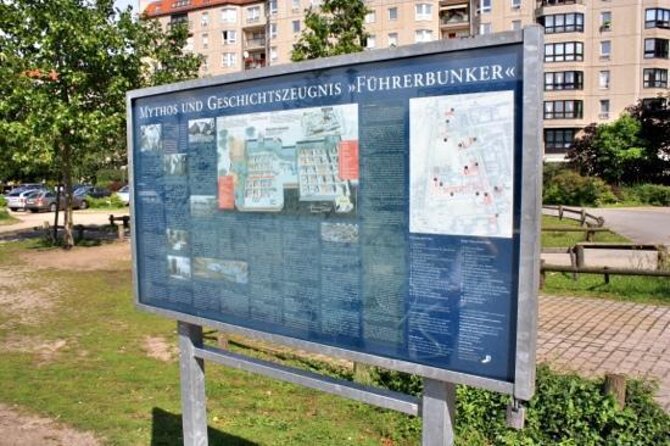
- Fuhrerbunker and the last days of Hitler: when the tour gets heavy
- Holocaust Memorial: how to handle emotion and meaning
- Unter den Linden and Bebelplatz: reading the city’s scars
- Museum Island to Alexanderplatz area: the end of the morning arc
- Brandenburg Gate: reunification as the final photo moment
- Price and value: why $27.81 can make sense
- The guide experience: clarity, humor, and a rare accuracy complaint
- Practical planning: shoes, weather, and how to get the most
- Who should book this history walk
- Should you book this Berlin History Walking Tour with a French-Speaking Guide?
- FAQ
- What language is the tour offered in?
- How long is the tour?
- What’s included in the price?
- Which sites are covered during the walk?
- Is transportation included?
- What is the cancellation policy?
Key highlights worth circling
- A tight 3-hour timeline that connects WWII trauma, Cold War tension, and reunification-era symbolism
- Included admission to Hitler’s Bunker and the Holocaust Memorial
- Small group feel with a maximum of 25 people and plenty of chances to ask questions
- Designed to end near Museum Island so you can finish in time for lunch
- A French-speaking guide who brings structure, clarity, and sometimes humor to hard topics
A French-guided timeline: what you’ll really get in 3 hours
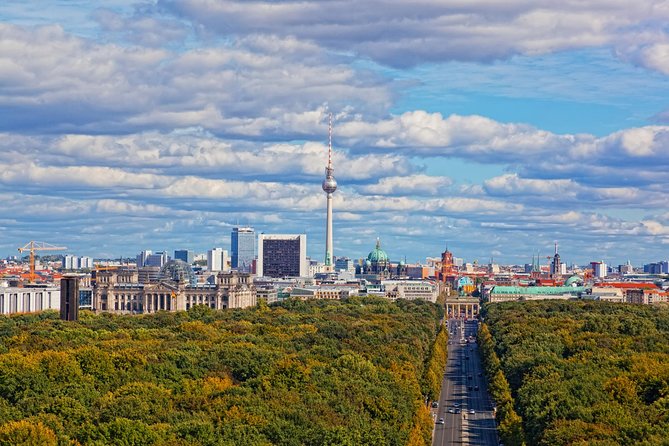
This tour is built for people who want orientation fast. Berlin can feel like it has multiple cities layered on top of each other. Instead of making you research on your own, the guide connects places in a way that helps the history stick.
You’ll move at a walk-and-stop pace that still feels efficient. Each place is treated as a chapter, not just a photo moment. And because it runs in the morning (starting at 10:00 am), it naturally turns into your first “big Berlin” activity, before the day gets complicated.
The quality signal here is the guide factor. Past groups specifically praised guides for being articulate, well-prepared, and happy to answer questions. I also like that the tour is capped at 25 travelers, which usually means your questions don’t get swallowed by the crowd.
You can also read our reviews of more walking tours in Berlin



Starting at Potsdamer Platz: the modern anchor for older stories
You meet at Potsdamer Platz 10, on the corner of Gabriele-Tergit-Promenade. Starting here matters because Potsdamer Platz is a central, recognizable point—good for getting everyone oriented. Even if you’re new to Berlin, it helps you build a mental map right away.
This stop is short, about 10 minutes, and includes an admission ticket. In practice, that means you’re not just standing around while the guide talks in generalities. You’re given enough grounding to understand why the rest of the route is worth your attention.
If you’re the type who likes a plan, you’ll probably enjoy this part. You get a structured start, then the tour shifts from “here’s where we are” into “here’s what this place means.”
Checkpoint Charlie: how the Cold War shows up in plain sight
Next comes Checkpoint Charlie, a symbolic Cold War site where East and West confronted each other for four decades. This is one of those stops where the history can feel abstract until you’re standing on the spot.
Time is tight here too—around 10 minutes—but that’s not a drawback. The idea is to hit the emotional and political meaning quickly, then carry that understanding forward to what comes next. The itinerary notes that admission is free at this stop, which also helps keep the tour cost focused where it matters.
You’ll likely get the most value if you pay attention to cause-and-effect: not just who was fighting, but what this kind of standoff created in everyday life and in the city’s layout.
Fuhrerbunker and the last days of Hitler: when the tour gets heavy
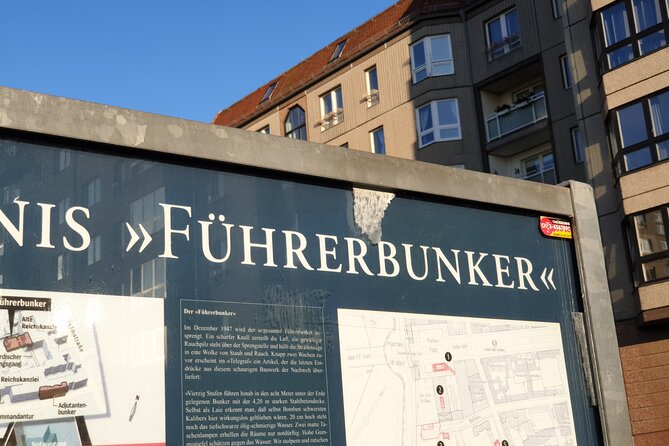
Then the tone changes at Fuhrerbunker (Hitler’s bunker). The stop is about 10 minutes and includes admission. You’re visiting the place where the bunker was, and where Hitler spent his last days.
This kind of stop can feel uncomfortable, and that’s the point. A good history tour doesn’t look away. The guide’s job here is to explain what the site meant at the time and why it exists in the present—so you’re not left with only shock or only politics.
A practical note: this is the part where it helps to be mentally ready. Dress for a morning walk, and come prepared to slow down. Even if the stop is brief, the topic carries weight.
Also, one of the tour’s strengths in general is that guides are described as giving clear explanations and being available for questions. That matters here, because people often want to understand context, not just dates.
Holocaust Memorial: how to handle emotion and meaning
The Memorial to the Murdered Jews of Europe is next, with about 15 minutes and admission included. This is described as a place of great emotion, and the guide frames it as a Berlin symbol to remember the German state’s greatest crime in the era of Nazism.
If you’re worried the tour will rush the moment, don’t. The extra time (compared with some stops) suggests the tour treats this as a central point, not a checkbox.
This is also where a good guide really matters. In past experiences, people praised the guides for making the stories clear and for being engaging enough that you feel like you understand what you’re seeing. That doesn’t erase the sadness, but it helps you leave with meaning instead of just images.
My advice: keep your expectations realistic. The tour is only half-day, and it covers a lot. If you want an even deeper study, plan to return later on your own. But as a first guided encounter, this stop gives you an important foundation.
You can also read our reviews of more guided tours in Berlin






Unter den Linden and Bebelplatz: reading the city’s scars
After the memorial, the route shifts to more visible symbols of power, culture, and destruction. You’ll walk along Unter Den Linden, a major avenue once used as an access road to the emperor’s palace. The guide also points out different construction periods and the wounds left by the war.
This segment is about 20 minutes with admission included. I like this stop because it’s not only about one regime. It’s about layers. You’re learning how a city changes over time, and how damage can remain part of the city’s visual story.
Then you reach Bebelplatz, about 10 minutes with admission included. This square is known for the burning of books during the Nazi dictatorship and it’s also described as the seat of Humboldt University and the Catholic Cathedral.
That combination is powerful. It turns “book burning” from a historical slogan into a live contradiction: education and culture happening in the same urban space where censorship was violently enforced. It’s the kind of contrast a guide can explain better than a phone screen.
Museum Island to Alexanderplatz area: the end of the morning arc
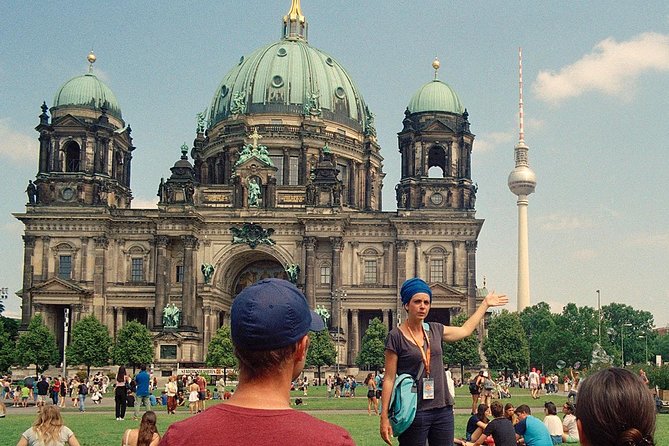
The tour wraps near Museum Island with an ending point close to Museumsinsel 10178 Berlin, and the itinerary notes the finish near the Alexanderplatz area on Museum Island. The stop highlights include the Protestant Cathedral (Berliner Dom) and the reconstructed Humboldt Forum. Admission at this stop is listed as free.
This matters because it gives you a practical reward for your morning effort: you land in a strong sightseeing zone. You can keep going right away, or step out for lunch without needing a transit hop.
If you’re the type who plans your day around food and energy, you’ll appreciate this. The tour is specifically described as a morning departure that helps you finish in time for lunch.
Brandenburg Gate: reunification as the final photo moment
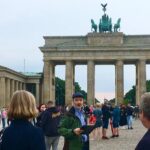
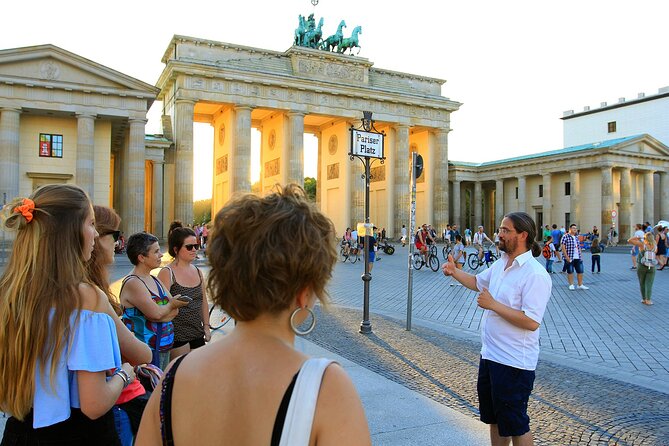
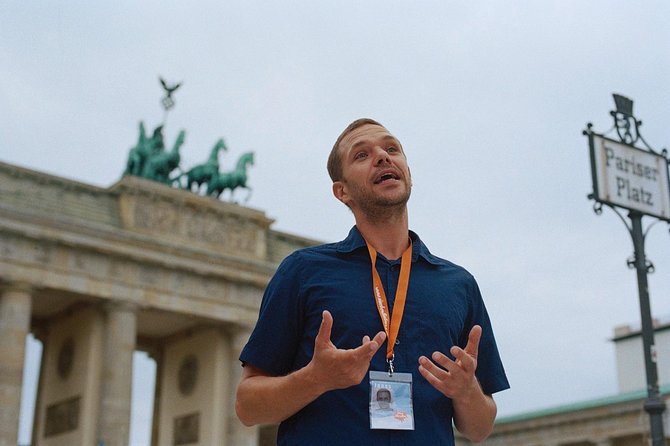
The last major landmark on the route is Brandenburg Gate, about 10 minutes, with admission included. It’s framed as Berlin’s most famous gateway and one of the most photographed spots in the city.
But the guide doesn’t treat it as a postcard. The story here moves from a symbol of a king’s strength, to a Cold War marker, and then to a symbol of German reunification.
This closing stop works well because it gives you a narrative payoff. You’ve just walked through WWII and Nazi-era memory, then Cold War confrontation, then scars on the city. Ending with a reunification symbol helps your brain connect the dots into something like a timeline arc rather than a pile of separate facts.
Price and value: why $27.81 can make sense
At $27.81 per person, this isn’t a budget-strawberry tour. It’s priced like a proper guided walk with ticketed stops. And the value comes from the mix of:
- A professional French-speaking guide
- Included admission for Hitler’s Bunker and the Holocaust Memorial
- Local taxes included
- A route that covers major central landmarks without you having to plan each connection
It’s also booked ahead in a noticeable way (on average 22 days), which usually means demand is steady. If you want a specific time, you may as well grab it earlier rather than later.
Two practical cost notes. First, the tour doesn’t include food or drinks, so keep that lunch plan ready. Second, tipping is optional, but if your guide delivered the kind of clear, question-friendly explanations people praised, tipping is often a nice way to support good work.
The guide experience: clarity, humor, and a rare accuracy complaint
One of the most consistently praised things in the feedback is how guides teach. People described guides as enthusiastic, articulate, and precise. Names that came up include Anouk, Martin, Jean-Charles, Arthur, Paul, Thierry, and Céline. The common theme is that the guide doesn’t just talk; they respond, keep a good pace, and help you understand how the city’s past shaped its present.
Humor also came up with Arthur, which can be a relief when you’re handling dark material. Light touches aren’t the point; timing and balance are. When it works, it makes the tour feel human, not like a lecture hall.
There was also a smaller downside note: one group felt that some details were inaccurate and had to correct them afterward. I can’t predict that will happen on your date. But it’s a useful reminder: if something sounds off to you, trust your instincts and verify with a reliable source later.
Practical planning: shoes, weather, and how to get the most
This is a walking tour, and it’s scheduled for around 3 hours. One report mentioned the tour running about 3 hours 30 minutes instead of 3 hours, while still leaving on time. Plan for a bit of buffer, not because it’s slow, but because you’re stopping often and hearing stories.
It operates in all weather conditions, so dress appropriately. Berlin mornings can be crisp, and you’ll be outside for the full route. Also, service animals are allowed, and the tour asks for a moderate physical fitness level. If you’re comfortable with city walking and short stops, you should be fine.
Two more practical tips:
- Bring a notebook or take notes on your phone. The tour covers a lot of heavy themes fast.
- If you’re sensitive to emotionally intense history, consider going in with some downtime afterward. This route spends real time on memorial space and Nazi-era topics.
Who should book this history walk
This tour is a strong fit if you want:
- First-time Berlin orientation with a clear, guided storyline
- A short morning activity that covers major WWII memory and Cold War landmarks
- A French-speaking guide who can answer questions as you go
- Included admission where it matters most
It may be less ideal if you want a totally silent, self-paced experience. This is guide-led, with discussion and explanation. Also, if you strongly prefer audiophones for every stop, be aware the tour doesn’t mention that kind of audio system.
Should you book this Berlin History Walking Tour with a French-Speaking Guide?
Yes, I’d book it if you want a guided “big picture” Berlin history walk that still lands at major, meaningful sites without eating your whole day. For the money, you’re paying for a professional French-speaking guide plus included admissions to the tour’s two biggest emotional anchors.
If you can handle the emotional weight, this is one of the better ways to get oriented quickly. And if you love to ask questions, the small group size helps you actually get answers.
My one “wait” scenario: if you need audiophone-style support or you’re very worried about any single detail being perfect, you might want to pair the tour with a bit of independent reading after. For most people, though, this is exactly the kind of structured morning walk that makes Berlin feel understandable fast.
FAQ
What language is the tour offered in?
The tour operates in French with a professional French-speaking guide.
How long is the tour?
It’s listed at about 3 hours, and the meeting time is 10:00 am for the morning departure.
What’s included in the price?
The price includes local taxes, the local guide, and a professional French-speaking guide. Admission is included for key sites on the route, and the tour uses a mobile ticket.
Which sites are covered during the walk?
The route includes stops such as Potsdamer Platz, Checkpoint Charlie, Fuhrerbunker, the Holocaust Memorial, Unter Den Linden, Bebelplatz, Museum Island (end area), and Brandenburg Gate.
Is transportation included?
No. Transportation to and from attractions is not included.
What is the cancellation policy?
Free cancellation is available up to 24 hours in advance for a full refund. If you cancel less than 24 hours before the start time, the amount paid is not refunded.