REVIEW · BERLIN
Berlin: Private Sightseeing Tour in Iconic Oldtimer VW Bus
Book on GetYourGuide →Operated by T1 Berlin · Bookable on GetYourGuide
A 1965 VW T1 Samba makes Berlin click. I love the 1965 VW T1 Samba as a moving time machine, and I love that you get a photo booklet tailored to the stops so the city makes sense fast. This is a private, chauffeur-guided loop through iconic places and lesser-known corners, all in about two hours.
One catch: it’s a 2-hour ride-and-sight tour, so you’re not in “museum all day” mode. If you want long entries or lots of walking, plan that separately and use this tour to set your bearings.
In This Review
- Key things I’d prioritize
- The 1965 VW T1 Samba: why the transport is part of the story
- What happens during the 2-hour private loop
- The sights you’ll pass: Berlin Cathedral to the TV Tower
- Berlin Cathedral: the city’s visual anchor
- Alte Nationalgalerie and Berlin State Opera: culture as power
- Potsdamer Platz: past meeting present
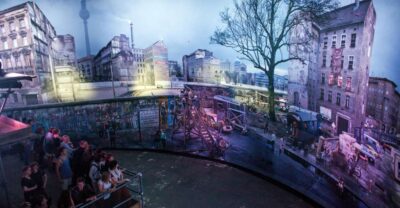
- Berlin Wall: the reminder you can’t unsee
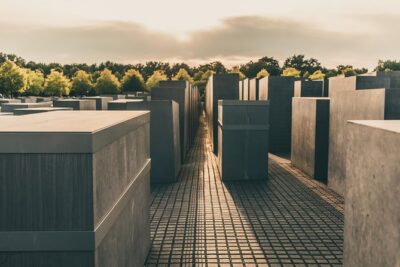
- Holocaust Memorial: careful context, not just a photo stop
- Führer Bunker: the WWII layer
- Berlin City Palace and Jungfern Bridge: city form and the river axis
- Galgenhaus: a reminder that the past was physical
- Rotes Rathaus: governance in red stone
- TV Tower and Neptune Fountain: icons with easy photo logic
- St. Mary’s Church: old-town grounding
- How the photo booklet turns a drive into real understanding
- Guides, small-group feel, and the flexibility factor
- Comfort and practical considerations (the stuff that affects your day)
- Price and value: $347 per group up to 7 people
- Who should book this VW T1 Berlin tour
- Should you book this private Berlin VW T1 Samba tour?
- FAQ
- How long is the Berlin private sightseeing tour in the VW T1 Samba?
- What’s the price for this tour?
- Is pickup from my accommodation included?
- What vehicle is used for the tour?
- Which sights does the route include?
- Is the photo booklet included?
- What languages are available for the live guide?
- Is the tour accessible and is there a weight limit?
- What’s the cancellation and payment flexibility?
Key things I’d prioritize
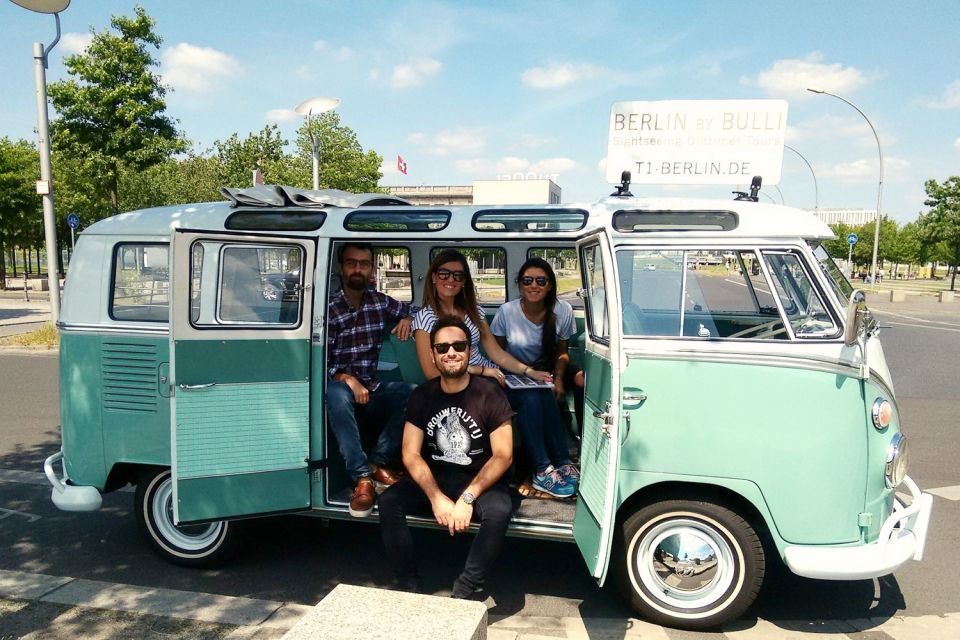
- A pristine 1965 T1 Samba experience with a vehicle that draws smiles as you roll through the city
- Customized photo booklet that helps you connect what you’re seeing with what came before
- A flexible private route with the guide adjusting to your interests
- Big Berlin moments, handled carefully, from the Wall and the Holocaust Memorial to places tied to WWII
- Comfort details that matter: heated bus if needed and water on board
- Pickup from your accommodation, so you start right away without stress
The 1965 VW T1 Samba: why the transport is part of the story
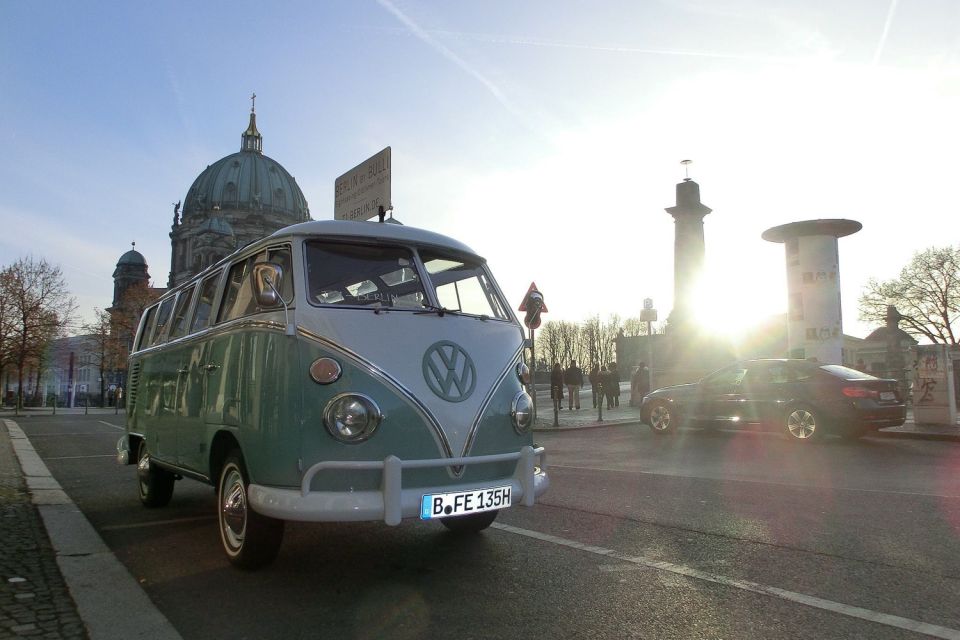
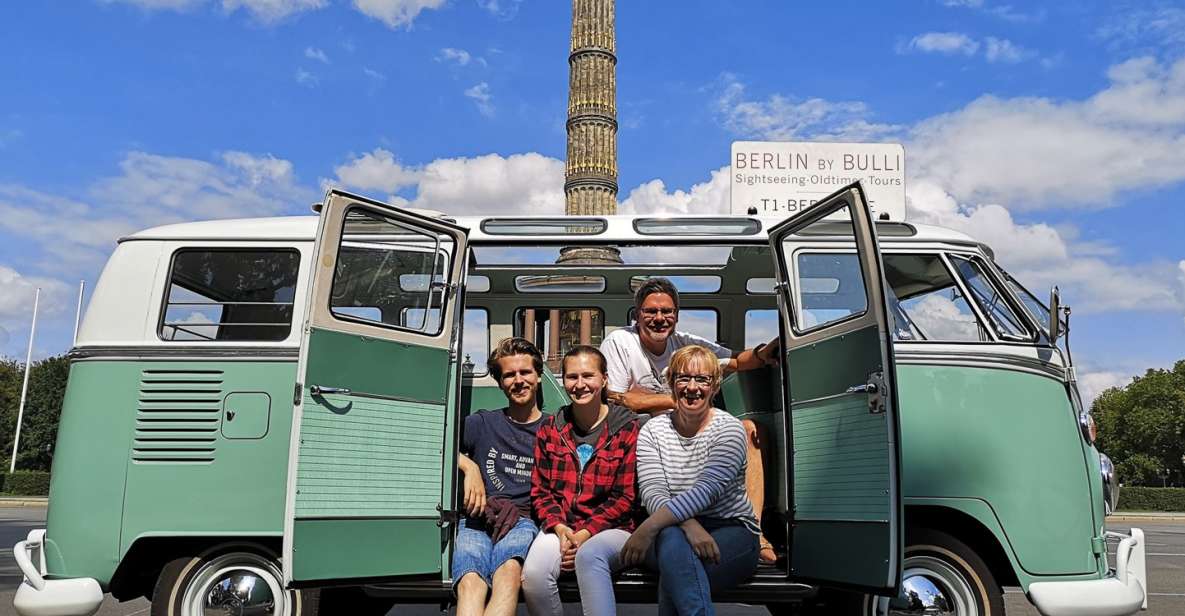
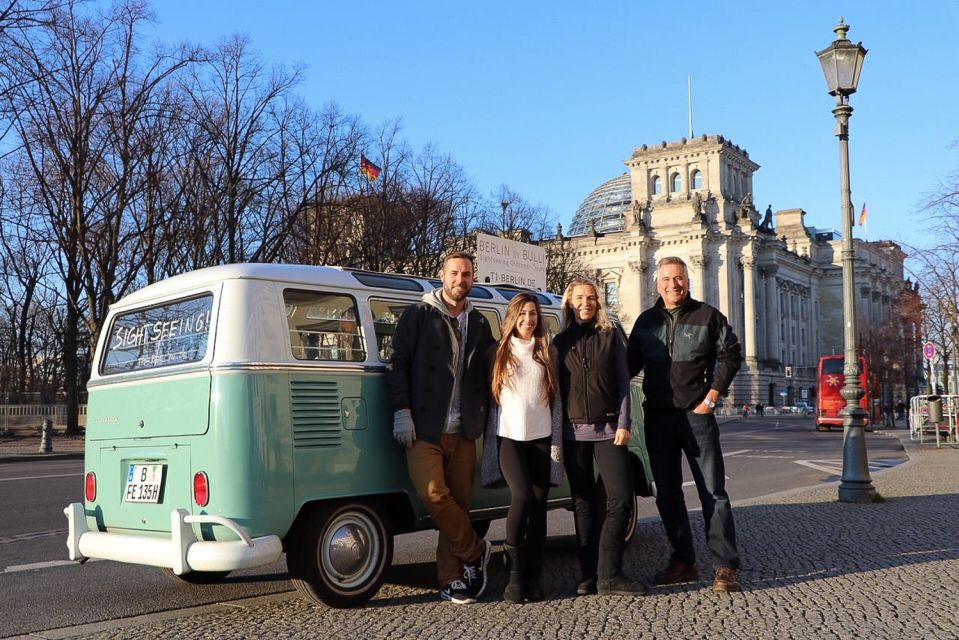
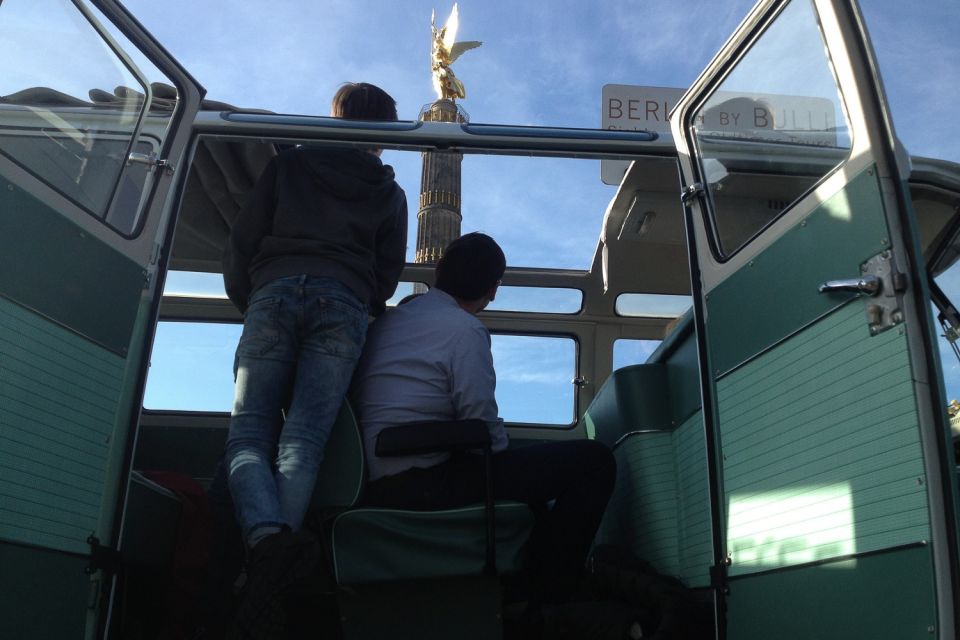
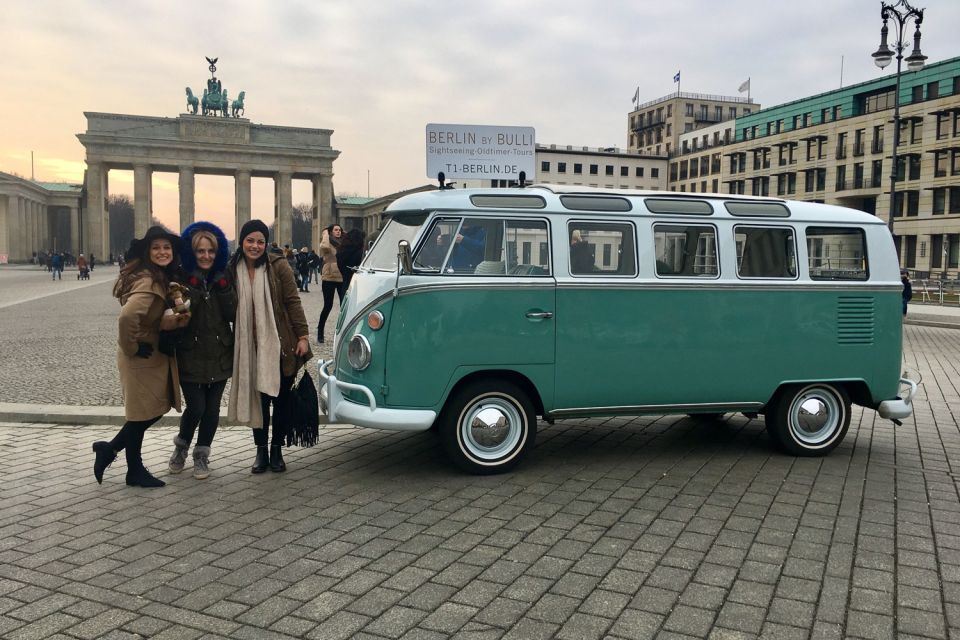
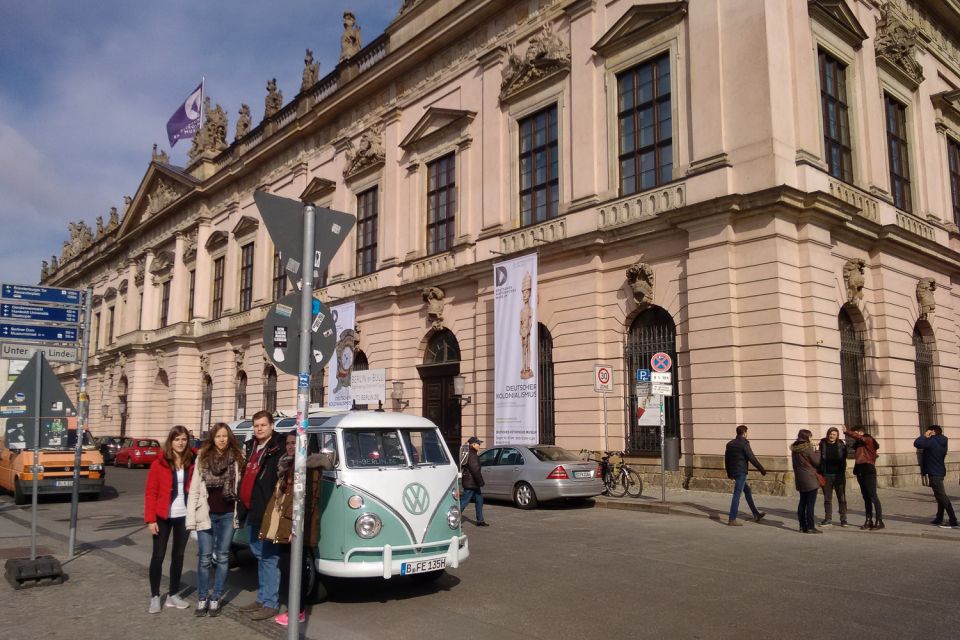
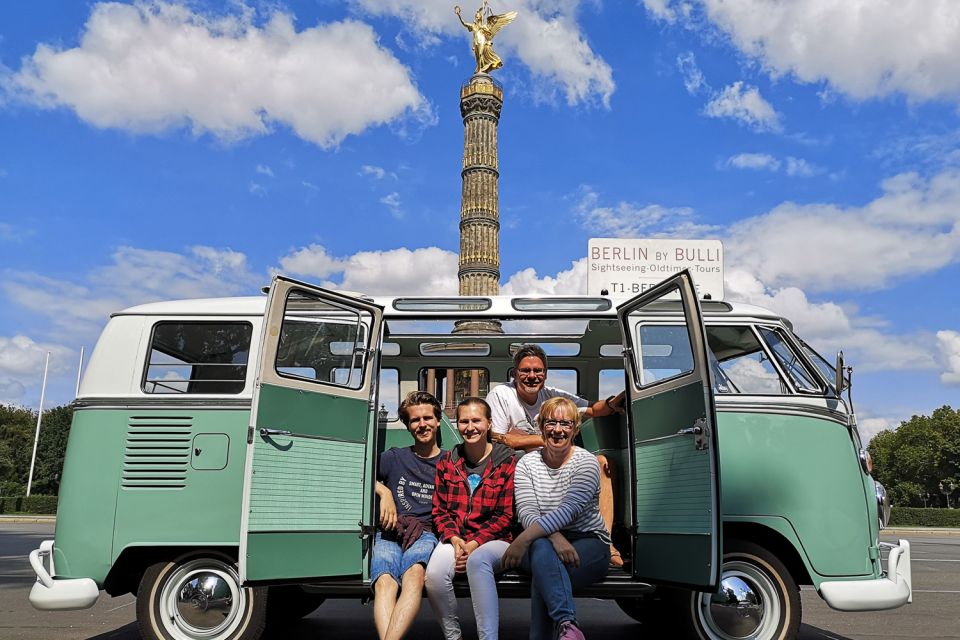
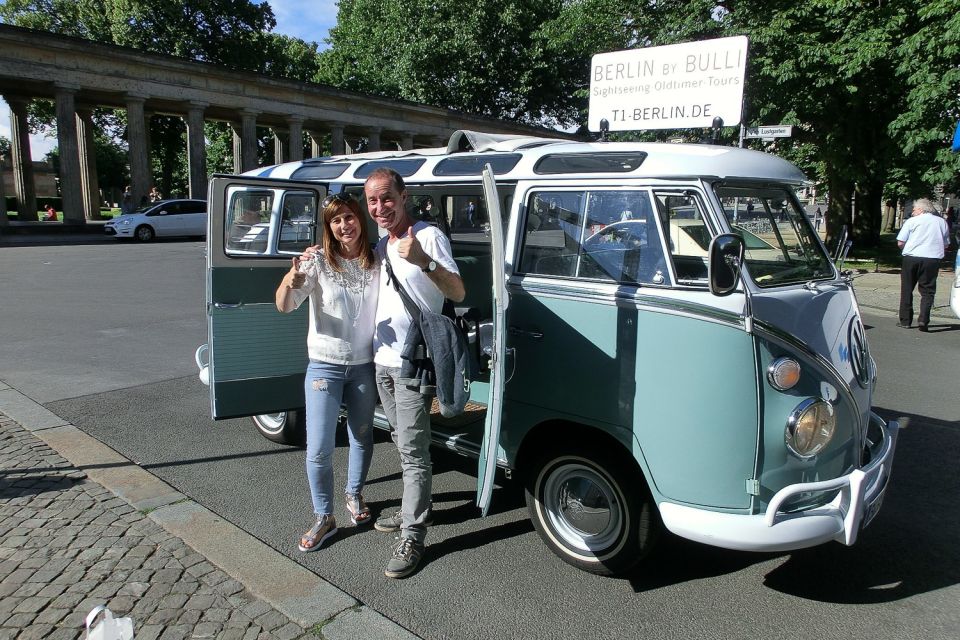
Berlin by bus can be fine. Berlin by a restored 1965 VW T1 Samba feels personal. This tour uses an original, vintage T1 Samba from 1965, and the point is more than looks. The slower pace and open, classic vehicle vibe make it easier to take in architecture, street scale, and the way neighborhoods connect.
The bus also adds practical comfort. You’ll have water onboard, and the vehicle is heated if needed, which is a big deal in Berlin weather. Plus, it’s wheelchair accessible, and it’s a private group, so you’re not stuck listening to a crowded audio set or fighting for the best side of the road.
And yes, you get the smiles. Multiple past customers described the van as a head-turner, the kind of vehicle that brings friendly waves from strangers and makes photo stops feel fun instead of staged.
You can also read our reviews of more private tours in Berlin

What happens during the 2-hour private loop
This is a chauffeur-and-guide format, not a “here’s a map, good luck” stroll. In roughly two hours, you follow a guided route through small side roads as well as main sights—enough time to cover a lot, without turning the day into logistics.
Because it’s private, the guide can steer the conversation toward what you care about. I like that several customers described their routes as flexible to personal interests, not locked into a rigid script. If you’re traveling with teenagers, the driving pace tends to help: you see plenty without constant stop-and-go.
You should also expect a storytelling style that moves across eras of Berlin. The tour is built around the city’s evolution across almost 800 years, so the guide’s job is to help you stitch together what looks like a random mix of historic buildings, modern landmarks, and memorial spaces.
The sights you’ll pass: Berlin Cathedral to the TV Tower
The tour covers an impressive set of well-known landmarks and a few places that don’t always make it into first-timer itineraries. You won’t get every detail of every site, but you will get context you can carry with you afterward.
Here’s how the major stops fit together, and what makes each one worth a coach window moment.
Berlin Cathedral: the city’s visual anchor
Berlin Cathedral (Berlin Cathedral is listed on the route) is one of those buildings that instantly tells you where the city wants to focus attention. From the road, you can appreciate the scale and symmetry, but what makes it useful on this tour is the guide’s framing—how different eras shaped the idea of what Berlin should look like.
Possible drawback: if your goal is to enter and tour inside, you’ll need separate time. In this format, you’re mostly here for the exterior presence and the story around it.
Alte Nationalgalerie and Berlin State Opera: culture as power
Seeing the Alte Nationalgalerie and Berlin State Opera in one stretch makes sense because Berlin’s cultural institutions have long been tied to identity and public life. The guide can connect the architecture and placement to how the city marketed itself and how power showed up in public buildings.
What I like about this pairing is the rhythm. You shift from religious grandeur to museum and then to performing arts, so Berlin feels less like a checklist and more like a planned worldview.




Potsdamer Platz: past meeting present
Potsdamer Platz is listed, and it’s a key stop for understanding how Berlin rebuilt itself. It’s also the kind of place where you can see modern city energy while still being reminded that the area wasn’t always the way it is today.
In a two-hour tour, Potsdamer Platz works as a transition: you’re leaving one story behind and heading into the Cold War and its physical reminders.
Berlin Wall: the reminder you can’t unsee
The Berlin Wall stop is one of the reasons this tour is so worth doing early in your first visit. Even from outside viewpoints, the guide can explain how the Wall changed movement, neighborhood life, and the city’s daily reality.
Practical note: road conditions and traffic can affect how closely you can get to certain sections. That’s not a “tour problem,” it’s Berlin. The benefit of a private van is that the guide can route around obstacles better than a fixed bus path.
Holocaust Memorial: careful context, not just a photo stop
The route includes the Holocaust Memorial, and you’ll want to treat it with the respect it demands. This kind of stop matters because it turns the monument from an image on postcards into something grounded in why Berlin became the place it is.
If you prefer quiet time at memorials, this tour may feel fast. In that case, use what you learn here to guide where you return on your own with more time.
Führer Bunker: the WWII layer
The tour also includes the Führer Bunker area. This is one of those stops where the guide’s spoken context is the main value. Without explanation, you might just see a point on the map; with explanation, it becomes part of the city’s WWII narrative.
Drawback to consider: if you’re the kind of visitor who wants to read every sign slowly and take in archives, a 2-hour tour can’t replace a dedicated WWII visit. This tour gives you a starting point.
Berlin City Palace and Jungfern Bridge: city form and the river axis
The route lists Berlin City Palace and Jungfern Bridge. These stops help you understand how Berlin organizes itself around major spaces and crossing points. The river and its bridges are part of the city’s body, and the guide can connect architecture and urban planning to the stories they represent.
What I like here is how it breaks the tour out of “headline sightseeing.” It’s history, but also city design.
Galgenhaus: a reminder that the past was physical
Galgenhaus is on the route. In a tour like this, places like that are useful because they add texture: Berlin wasn’t only made of royal palaces and museums. It also had older, harsher sides, where law and punishment were part of everyday reality.
From the van, you won’t get a deep architectural lecture, but you will get the why behind the location—enough to make it feel like more than a name.
Rotes Rathaus: governance in red stone
The Rotes Rathaus (Red City Hall) is listed, and it brings you back to civic life. This is the kind of stop where the guide can connect Berlin’s changes to how government and public institutions evolved.
In a tight schedule, it helps to have someone point out what you’re looking at rather than just passively driving by.
TV Tower and Neptune Fountain: icons with easy photo logic
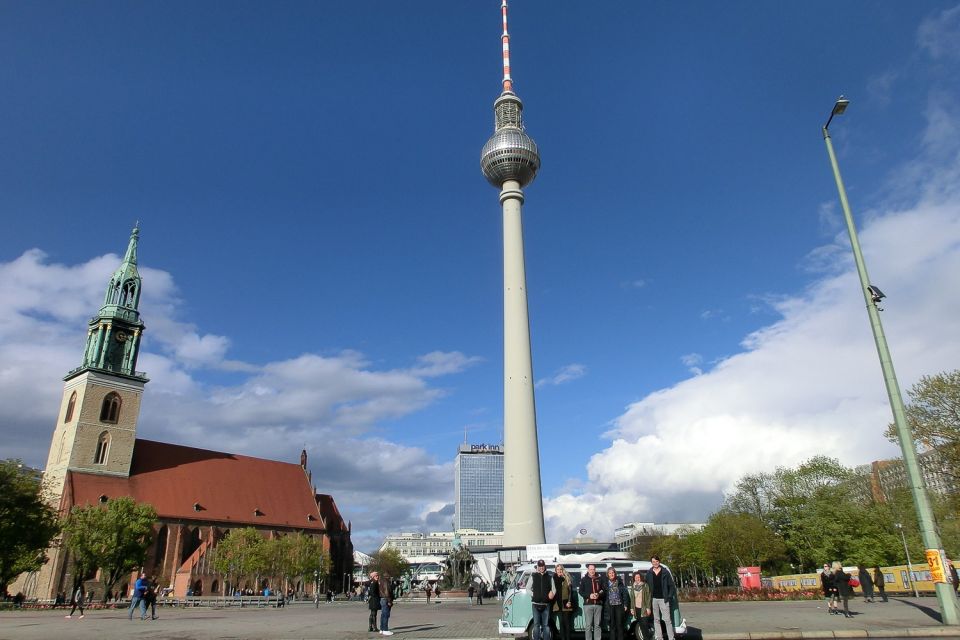
The TV Tower and Neptune Fountain are also on the route. These are the stops that make Berlin feel like Berlin on your camera screen. The TV Tower gives you a clear orientation point; the Neptune Fountain gives you a classic “center of things” landmark feel.
Possible drawback: because these are popular photo areas, you might find viewpoints are busy or road access is limited. Again, the private format helps because the guide can pick smart roadside angles.
St. Mary’s Church: old-town grounding
Finally, the route includes St. Mary’s Church. Stops like this are excellent for visitors who want at least one moment where Berlin feels medieval/old-town again, instead of purely twentieth-century.
This is the kind of location you’ll likely remember even after the rest blurs—especially if the guide helps you connect its presence to how the city started and why it grew where it did.
How the photo booklet turns a drive into real understanding
This tour isn’t just audio facts. You get a photo booklet included in the price, and it’s tailored to the tour’s individual locations.
Here’s what that means in practice: as you move past each stop, you’re not relying solely on roadside impressions. The booklet gives you a visual bridge to how places looked in the past and can include interiors during the journey. Multiple customers called out the value of the booklet in helping them picture what they were hearing.
I like this approach for first-time Berlin visits. Berlin can feel “layered” in a confusing way—so having printed visuals keeps the stories straight in your head.
Guides, small-group feel, and the flexibility factor
The tour is private, and that changes everything about how the information lands. Several people in past bookings highlighted guide personalities and presentation: some mentioned Ryco, Rajko, Reiko, Carson, Richael, and Carsten by name. Even without comparing style, the pattern is consistent: people felt the guide had done real research and used visuals to make it click.
One review also noted that if roads are closed due to demonstrations, the driver can route around it. That’s a reality in Berlin, and it’s reassuring when your plan adapts without you having to scramble.
Small detail, big payoff: a few customers described stops that went beyond the usual bus-route checklist—places off the beaten track that larger tours simply can’t reach. The payoff isn’t just novelty. It helps you understand the city’s origins and how neighborhoods grew, not just the most photographed monuments.
Also, if you like a food or drink tip, you might get one. One customer mentioned a craft beer suggestion to BRLO BRWHOUSE, which is the kind of local-minded add-on that makes the day feel less like sightseeing on rails.
Comfort and practical considerations (the stuff that affects your day)
Before you book, check these points so expectations match reality:
- The tour lasts 2 hours, and it’s built around driving and guided viewpoints. You should expect limited time for lingering or entering inside.
- It’s private and set for a group up to 7 people, which keeps the experience intimate while letting families and small friend groups share the cost.
- It includes water on board and offers a heated bus if needed—useful for cold seasons.
- It’s wheelchair accessible (so the vehicle setup works for that need).
- It’s not suitable for people over 287 lbs (130 kg), so double-check if weight capacity is relevant to your group.
Languages listed are Spanish, English, and German. If you have a language preference, this can help you pick the most comfortable start time when you’re confirming availability.
Price and value: $347 per group up to 7 people
At $347 per group (up to 7 people), the pricing is best understood as a group value, not a solo bargain. If you can fill the group to the maximum, you’re looking at roughly $50 per person. If you’re only two people, it’s closer to a more typical private-guide rate per person.
Where the value gets interesting is what’s included: the photo booklet, the printed informational material, the driver and guide, pickup included, water, and heated comfort when needed. You’re also paying for the unique part: the restored 1965 VW T1 Samba itself, which is hard to replicate with standard tours.
If your goal is to get oriented on a first trip, this price can be worth it because you leave with a clearer mental map and you’ll likely know where to go next day—especially to places like the Wall and memorial areas where context matters.
Who should book this VW T1 Berlin tour
I’d point this tour toward people who want more than a drive-by sightseeing list.
You’ll probably love it if you’re:
- visiting Berlin for the first time and want a guided backbone in two hours
- traveling with family or friends and want a private, comfortable vehicle
- into history, but you don’t want to spend the entire day inside museums
- the type who likes to ask questions and adjust the route based on interest
It may not be the best fit if you:
- need long entry time at monuments and museums
- prefer walking tours where you move block by block for hours
Should you book this private Berlin VW T1 Samba tour?
If your top priority is getting context quickly—especially for the twentieth-century Berlin story—this tour is an easy yes. The photo booklet, the private van pace, and the combination of iconic stops (Wall, Holocaust Memorial, major city landmarks) with lesser-visited streets make it feel like orientation plus depth, without exhausting you.
Book it if you want your first day in Berlin to feel organized and meaningful. Skip it only if you’re chasing a long on-foot plan with museum entrances; then you’ll want a different format and time on the ground.
If you’re flexible, this can also be a smart “first-visit anchor” tour. You’ll come away knowing what to revisit, what to ignore, and where Berlin’s layers actually connect.
FAQ
How long is the Berlin private sightseeing tour in the VW T1 Samba?
The tour lasts 2 hours.
What’s the price for this tour?
It costs $347 per group (up to 7 people).
Is pickup from my accommodation included?
Yes. Pickup is included at your accommodation.
What vehicle is used for the tour?
You’ll ride in an original 1965 VW T1 Samba.
Which sights does the route include?
The route includes stops such as Berlin Cathedral, Alte Nationalgalerie, Berlin State Opera, Potsdamer Platz, Berlin Wall, Holocaust Memorial, Führer Bunker, Berlin City Palace, Jungfern Bridge, Galgenhaus, Rotes Rathaus, TV Tower, Neptune Fountain, and St. Mary’s Church, plus other locations.
Is the photo booklet included?
Yes. A photo booklet tailored to the tour’s locations is included in the price.
What languages are available for the live guide?
The tour offers live guidance in Spanish, English, and German.
Is the tour accessible and is there a weight limit?
The tour is wheelchair accessible. It is not suitable for people over 287 lbs (130 kg).
What’s the cancellation and payment flexibility?
You can cancel up to 24 hours in advance for a full refund, and you can reserve now and pay later.