REVIEW · BERLIN
Private Walking Tour Berlin Third Reich Hitler and World War II
Book on Viator →Operated by Insider Tour Berlin · Bookable on Viator
Berlin’s darker landmarks come with a plan.
This private walking tour strings together the places that made Nazi rule work and the sites Berlin uses today to remember what happened. You’ll move through memorials and key locations connected to Hitler’s reign, from Soviet commemoration to the Holocaust Memorial.
I love the hotel pickup and drop-off. It makes a big, emotionally intense route easier to manage—especially when your day includes lots of walking and some indoor stops. I also like that most stops are free (many have free admission), so your budget stays mostly under control.
The main consideration is simple: the subject matter is heavy and emotionally intense, and the tour runs in all weather. Dress for the walk and plan for your head to feel tired after.
In This Review
- Key highlights worth packing for
- A Berlin WWII Route That Starts at the End and Works Back Through Power
- Tiergarten Soviet Memorial: where Berlin’s 1945 story is framed
- Aviation Ministry and Wilhelmstraße: the administrative brain of the Third Reich
- Topography of Terror: the SS and Gestapo headquarters sites
- German Resistance Memorial Center: resistance as more than a footnote
- Bebelplatz book burning: censorship you can still see
- Reichstag Building: the Nazi-era turning point and Germany’s reset
- Holocaust Memorial: memory made physical
- Anhalter Bahnhof: deportation as a departure point
- T4 Memorial: remembering the Nazi euthanasia program
- Fuhrerbunker viewpoint and Moltkebrücke: the final collapse, then the crossing
- Private pacing, hotel pickup, and what the $192.97 buys you
- What to expect on the ground: walking, transit, and comfort
- Should you book this Third Reich Berlin walking tour?
- FAQ
- How long is the Private Walking Tour Berlin Third Reich Hitler and World War II?
- Is hotel pickup and drop-off included?
- Is the tour private, or is it shared with other people?
- What’s included in the price?
- Are tickets and entry fees included?
- Does the tour run in bad weather?
- Can I cancel for a full refund?
Key highlights worth packing for
- Hotel pickup and drop-off so you start close to home
- Private group format for a pace that fits your questions
- Topography of Terror + major memorials in one connected route
- Most admissions are free, with the Reichstag ticket not included
- All-weather schedule, so comfort and layers matter
- Guides tailor the day, with past guides like Georgia, Emma, Simon, Jimmy, and Daniel noted for clear explanations and pacing
A Berlin WWII Route That Starts at the End and Works Back Through Power
Berlin can feel like three cities in one: the prewar capital, the Nazi administrative machine, and the postwar city that built memorials over the wreckage. This tour takes that confusing feeling and gives you a spine. You see how the war and persecution played out in specific buildings and streets—not just as dates, but as physical places.
The route also helps you understand why Berlin today still talks about these events so directly. The landmarks aren’t tucked away. They sit in neighborhoods, near museums and transit lines, and in some cases right along major civic spaces. That’s powerful, and it’s also why a guided format matters here.
You can also read our reviews of more walking tours in Berlin


Tiergarten Soviet Memorial: where Berlin’s 1945 story is framed
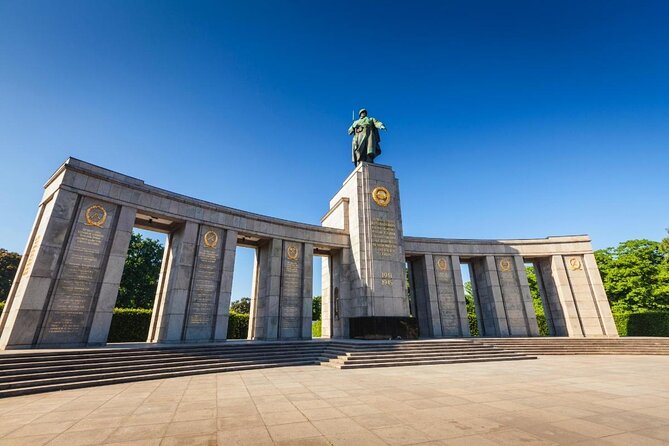
Stop 1 is the Soviet Memorial in Tiergarten. It commemorates Soviet soldiers who died during the Battle of Berlin in 1945 and was inaugurated in 1949. The statue of a soldier holding a sword and a shield is a clear visual cue: victory and sacrifice, presented in stone and scale.
Why this stop matters: it sets the ending context before you walk through the Nazi-era sites. It also reminds you that Berlin’s story is not only the Nazi perspective. Your guide’s narration connects the memorial’s architecture to the wider WWII reality—how the Soviet Army helped defeat Nazi Germany, and how remembrance in Berlin grew after the war.
Practical note: plan a short, respectful pause here. Even though the stop is listed as about 10 minutes, it’s a site where you’ll likely want a moment to take in the symbolism before the tour shifts gears.
Aviation Ministry and Wilhelmstraße: the administrative brain of the Third Reich
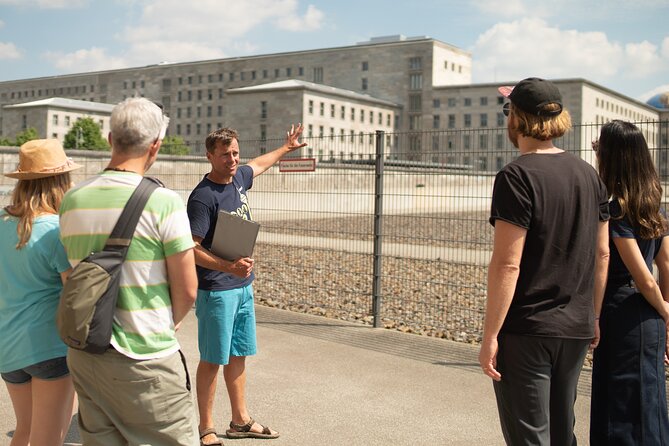
A big chunk of the tour’s meaning comes from German government buildings—because Nazi power wasn’t only street-level propaganda. It was administration. Stop 2 takes you to the Detlev-Rohwedder-Haus on Wilhelmstraße, tied to Berlin’s Nazi-era government decisions.
Here’s the key story your guide will connect: the building was originally built in the 1930s as the Reichsbank headquarters, then used as the Ministry of Aviation under Hermann Göring. In other words, you’re standing in a place that moved from financial power to war-focused governance.
After WWII, the building became the German Federal Treasury, which gives you a “then and now” contrast without the museum curtain. That matters in Berlin—you often see postwar functions operating in the same urban footprint as the darkest chapters.
Also, the tour returns to Wilhelmstraße at Stop 12. That makes sense, because Wilhelmstraße is described as the heart of Nazi government administration, lined with ministries and offices. You’ll get another chance to tie together what you saw earlier at the Detlev-Rohwedder-Haus with the broader administrative system.
Consideration: government streets can be visually uniform. A guide’s job is to point out which address matters and why, so ask questions early if you’re the type who likes cause-and-effect links.
Topography of Terror: the SS and Gestapo headquarters sites
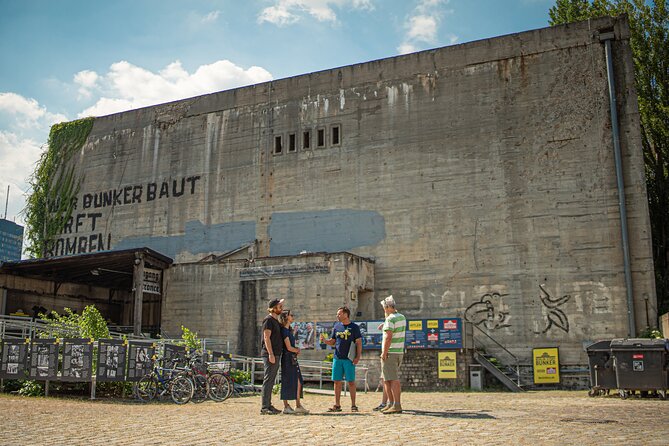
Stop 3 is Topography of Terror, a crucial place for understanding the repression side of Nazi rule. The exhibition sits on the grounds of the former SS and Gestapo headquarters, and the tour includes both indoor and outdoor exhibition areas.
What you’ll get from a good guide here is structure: the rise of the Nazi regime, how political repression worked, and what “terror methods against dissenters” meant in practice. The site uses photographs, documents, and testimonies to show victim lives and the societal impact of state-sponsored violence.
Why this stop is valuable on a walking tour: it anchors the story to place. You’re not only hearing about persecution—you’re learning where the machinery operated.
Time reality: the stop is listed around 20 minutes, so it’s not designed to replace a longer self-paced visit. If you’re the kind of person who likes to read carefully, you’ll appreciate that you can revisit details later—especially if your guide also points out what to focus on.
German Resistance Memorial Center: resistance as more than a footnote
Stop 4 brings you to the Bendlerblock area for the German Resistance Memorial Center. This memorial honors Germans who opposed the Nazi regime, with attention on major resistance movements.
A highlight is the focus on Claus von Stauffenberg and the July 20, 1944 assassination attempt on Hitler. Your guide should connect motivations and consequences, so resistance isn’t treated as a movie scene—it’s framed as moral courage under extreme risk.
Why I like pairing this with Topography of Terror: repression and resistance are two sides of the same moral ledger. When you walk from the headquarters site of terror to a memorial for resistance, the contrast clarifies the stakes for individuals.
Emotional note: this section can be intense. If you’re traveling with teens or younger kids, you’ll want a guide who can explain with care and pacing. Based on the guide feedback for this tour style, you might find exactly that kind of adjustment—some guides are praised for tailoring the tone for kids.
You can also read our reviews of more private tours in Berlin


Bebelplatz book burning: censorship you can still see
Stop 5 is Bebelplatz, known for the Nazi book burning on May 10, 1933, when thousands of books deemed un-German were destroyed. This square is also surrounded by notable landmarks like the State Opera House and Humboldt University, which helps your guide place censorship in the center of public life.
The memorial beneath the square—empty bookshelves—turns the idea of lost literature into something physical. It’s a small visual moment with a big psychological punch: you can stand over what’s missing and feel the cost of enforced silence.
Why it’s worth the visit even if you’ve heard the book burning story before: Berlin lets you connect it to modern debates about free expression. Your guide will likely tie totalitarian control to what that does to thought, culture, and who gets to speak.
Possible drawback: in a city as photogenic as Berlin, it can be tempting to treat this stop like a quick photo. Give it a minute of stillness instead. This one is about memory and loss, not architecture bragging rights.
Reichstag Building: the Nazi-era turning point and Germany’s reset
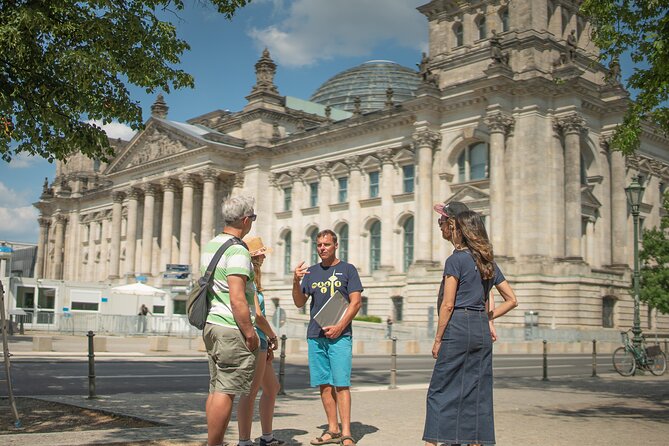
Stop 6 is the Reichstag Building. Your guide will focus on its Nazi-era role, including the Reichstag Fire in 1933, which the Nazis exploited to consolidate power and suppress opposition. The building took damage during WWII and later became a symbol of democracy as it was restored.
This stop is important because it’s about political transformation—how a democratic space became a tool for authoritarian control, and how postwar Germany turned the building back into a democratic symbol.
Practical note: the admission ticket for the Reichstag isn’t included in the tour price. That means you should budget extra for that one item if your plan depends on entering.
If you’re a politics person, ask your guide to explain what changed between 1933 and the rebuilt Germany. The building itself helps make that shift concrete.
Holocaust Memorial: memory made physical
Stop 7 is the Memorial to the Murdered Jews of Europe, made of 2,711 concrete slabs in a grid pattern. The design creates a disorienting experience—intentional, so you don’t just look and move on.
Your guide should explain the design meaning and the historical context of the Holocaust, including the impact of Nazi policies on European Jewry. This is one of those stops where a guide’s framing helps you slow down, because it’s easy to rush through something this emotionally charged.
Time is listed around 15 minutes. That’s enough for an introduction, but not enough for everyone to process. If you want to linger, you’ll often have that chance after the guided walk ends—especially since you’ll be in the area.
Sensitivity note: this memorial asks for quiet attention. It’s not the place for loud conversation or jokes—though your guide will likely keep the tone human and respectful.
Anhalter Bahnhof: deportation as a departure point
Stop 9 is Anhalter Bahnhof, once one of Berlin’s busiest terminals and a key departure station during WWII. Your guide will connect it to the deportation of Jews to concentration camps.
This is a very different kind of site. It’s not a single building used for one event. It’s a transportation hub, which makes the story harder and more chilling. Your guide should explain how the station became part of how families were torn apart during the Holocaust.
Why this stop matters: it shows how logistics enabled genocide. That’s not abstract. It’s routes, schedules, platforms, and doors.
Practical note: the station setting can feel less solemn than a pure memorial space. Let the guide bring you back to what it means instead of letting the environment distract you.
T4 Memorial: remembering the Nazi euthanasia program
Stop 10 is the T4 Memorial for the Victims of the Nazi Euthanasia Program. This one is often overlooked in shorter WWII tours, and that’s why it’s a strong addition.
The memorial commemorates victims of the T4 program, described as a systematic extermination campaign aimed at people considered unworthy of life, including those with disabilities and mental illnesses. Your guide should explain the history and impact, including the ethical questions that still matter.
Why it’s valuable: it expands your understanding beyond the commonly discussed camps and ghettos. It forces you to see the broader ideology of persecution and how discrimination escalated into mass killing.
Time listed is around 10 minutes. If the subject hits hard for you (it will), you’ll likely wish for more time here. Still, even a short stop can give you enough grounding to read more later.
Fuhrerbunker viewpoint and Moltkebrücke: the final collapse, then the crossing
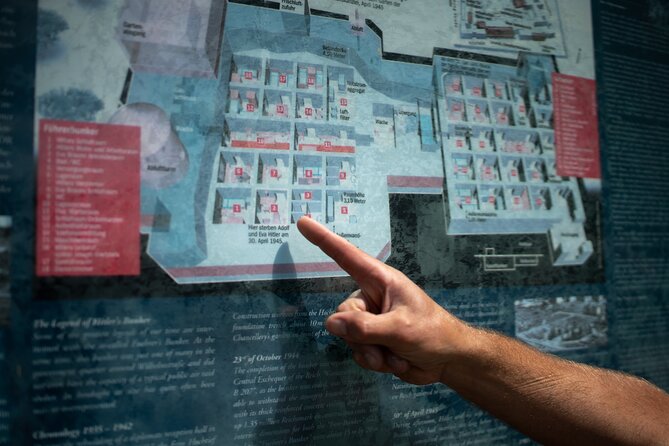
Stop 8 is the Fuhrerbunker site, the underground complex beneath the Reich Chancellery where Hitler spent his last months. The guide will explain what remains and what happened in the final days as Allies closed in on Berlin.
Even though much of the original structure was destroyed after the war, this stop is about mindset and last decisions. Your guide’s job is to connect the physical space to the atmosphere of despair described in the narrative.
Then Stop 11 is Moltkebrücke. This bridge matters because Soviet forces crossed it in 1945 during their assault on Berlin. From a bridge, the story becomes movement: a route for troops, the speed of advance, and the changing tide from Nazi control to Soviet entry.
If you like a clear “then what happened” chain, you’ll appreciate this pairing. Fuhrerbunker is about a leadership trapped at the end. Moltkebrücke is about armies pushing forward.
Weather reality: both stops involve outdoors time. If it’s cold or wet, your coat becomes part of the experience.
Private pacing, hotel pickup, and what the $192.97 buys you
At $192.97 per person for about 3 to 4 hours, this tour is priced for a focused, guided route, not a casual museum day. The value comes from three things you can feel right away:
1) Hotel pickup and drop-off reduce dead time.
2) A private format helps the guide respond to what you want to understand most—administration, terror, resistance, or victim memorials.
3) Many stops are free admission, so you’re not paying again and again just to see the core sites.
A walking tour like this can also be mentally demanding. When the tour is private, you can take a breath when you need it, rather than syncing up with a bigger group.
In past group experiences tied to this tour style, guides such as Georgia, Emma, Jasper, Simon, Jimmy, Daniel, Oren, and Mikhaïl have been praised for clear explanations and adjusting pace. One guide even connected the story beyond WWII toward what came next, including the Cold War angle. That can be useful if you want the wider arc, not just the Nazi years.
Possible drawback: because it’s a private tour, the experience depends heavily on the guide’s approach. If you have very specific interests, bring them up right at the start. If you want more direct answers, say that early.
What to expect on the ground: walking, transit, and comfort
The route is described as near public transportation, so you’re not stuck far from transit if you have to rethink plans. The tour also runs in all weather, which means you should dress for real Berlin conditions, not postcard weather.
Bring solid walking shoes. Even if the day doesn’t feel like a hardcore hike, you’ll be on your feet enough that comfort turns into a quiet performance booster.
Food and drinks are not included. I’d plan a simple meal before or after the tour and keep water with you if you tend to get dry on walking days. This is not a snack-stop route.
Should you book this Third Reich Berlin walking tour?
Book it if you want a structured, respectful Third Reich and WWII route through the exact places Berlin commemorates today. It’s especially strong if you like clear storytelling that links policy, buildings, and memorial meaning in a single day.
Skip it or consider a lighter plan if you’re easily overwhelmed by heavy content or you want a more leisurely self-paced day. Also, if you specifically want to enter the Reichstag, check how that works for your schedule and budget since the Reichstag admission ticket is not included.
If your goal is understanding—without having to stitch the story together yourself—this private, hotel-pickup Berlin walk is a smart way to spend a few hours.
FAQ
How long is the Private Walking Tour Berlin Third Reich Hitler and World War II?
The tour lasts about 3 to 4 hours.
Is hotel pickup and drop-off included?
Yes. Hotel pickup and hotel drop-off are included.
Is the tour private, or is it shared with other people?
It’s private. Only your group participates.
What’s included in the price?
Included items are hotel pickup, hotel drop-off, and a professional guide.
Are tickets and entry fees included?
Most stops list free admission tickets, but the Reichstag building admission ticket is not included.
Does the tour run in bad weather?
Yes. It operates in all weather conditions, so dress appropriately.
Can I cancel for a full refund?
Yes. You can cancel up to 24 hours in advance for a full refund.