REVIEW · BERLIN
Berlin: Private Reichstag and Glass Dome Tour
Book on GetYourGuide →Operated by Regional Tours · Bookable on GetYourGuide
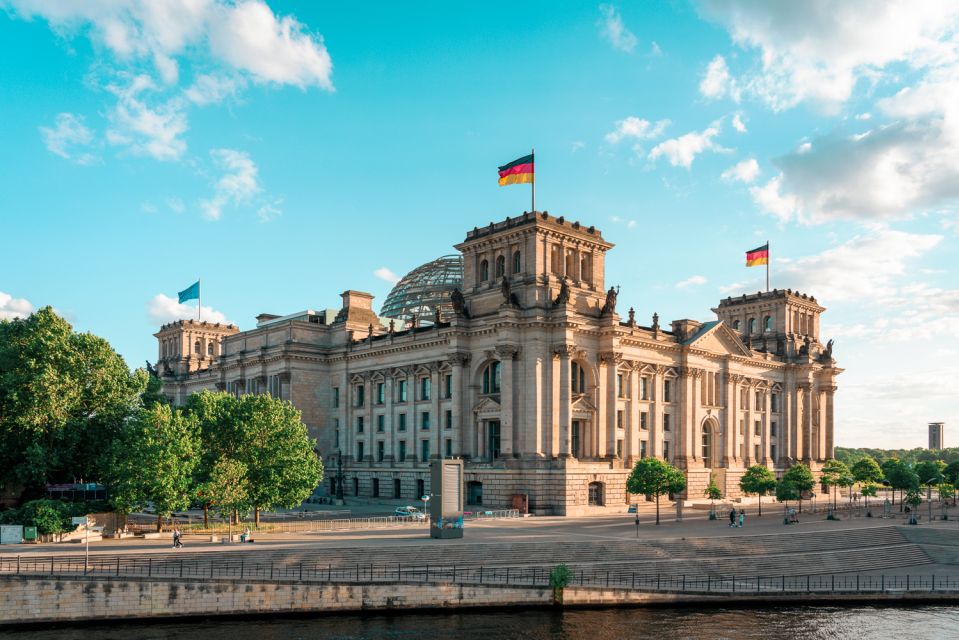
The Reichstag dome makes politics feel close. This private walk and entry experience threads the government district from the Brandenburg Gate to the roof terrace and glass dome, with an expert guide turning architecture and history into an easy story. I especially love the small-group feel—this is just you and your party, not a parade of strangers—and I also like how the dome view is explained so you know what you’re looking at, not just what you’re seeing.
One caution: the dome visit can be affected. Access depends on the Bundestag’s current work situation and on weather and security conditions, so it isn’t something you should assume is 100% guaranteed.
Still, for the time you have, it’s a strong way to orient yourself fast. You start near Pariser Platz, move through the key landmarks around the German parliament buildings, and finish inside for the skyline moments that make Berlin’s modern story click.
In This Review
- Key highlights you’ll actually feel
- Getting Oriented at Pariser Platz (Meeting Point That Puts You in the Right Frame)
- A small practical note
- From the Brandenburg Gate Area to the Embassies: Why This Route Works
- Brandenburg Gate to the Government District: History You Can See, Not Just Read
- Why I like this part
- The Reichstag Rooftop Terrace: Where the Skyline Becomes Part of the Story
- Into the Reichstag Dome: The View, the Meaning, and the Security Reality
- Skip the ticket line, but still plan for security
- If the dome is what you came for
- Optional Plenary Hall Talk: A Bonus for German-Speaking Groups
- Price and Value: How $288 per Group Actually Plays Out
- What Guides Typically Do Right (Based on Real Patterns in Feedback)
- Weather, Timing, and a Simple Reality Check
- Who This Tour Fits Best
- Should You Book This Reichstag Private Tour?
Key highlights you’ll actually feel
- A true private group pace from Pariser Platz to the Reichstag roof and dome
- Dome access with a guide-led viewpoint, so the panorama has meaning
- Security handled as part of the experience, with registration at the Bundestag
- Prime photo stops at Brandenburg Gate and the surrounding government buildings
- Language options (Italian, German, French, English) with guides who adapt well
- Optional plenary hall talk for German-speaking groups, if available
Getting Oriented at Pariser Platz (Meeting Point That Puts You in the Right Frame)
You meet at Pariser Platz 4, in front of the Academy of Arts, a glass-faced building by Hotel Adlon. The key detail here is location: you’re standing in one of Berlin’s most central “picture-perfect” squares with the Brandenburg Gate visible—so the tour starts with context, not with “Now here’s what Berlin is…”
This is also where the tour’s private format matters. You’re not waiting behind crowds, and you’re not stuck listening to generic facts that don’t match your questions. Your guide can set the tone right away, explaining how this area shifted from imperial and wartime symbolism into Germany’s post-reunification political center.
You can also read our reviews of more private tours in Berlin

A small practical note
Bring your passport or ID card. The Reichstag security check is part of the process, and they’ll ask you for identification before you go inside. If you forget it, you’ll lose time—and in this area, time is security.
From the Brandenburg Gate Area to the Embassies: Why This Route Works
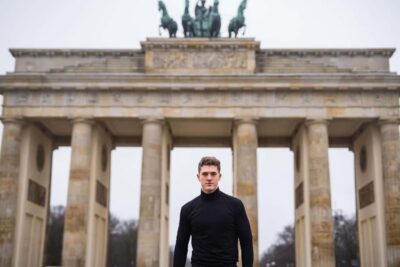
Your walk begins with short stops and guided commentary around Pariser Platz. You’ll have time for a photo, but the real value is what gets added: the tour frames Brandenburg Gate not as a postcard, but as a lens on power, reunification, and Berlin’s constant reinvention.
You then move past landmarks that show Berlin as both “capital city of government” and “international crossroads.” There are brief stops around Hotel Adlon and the nearby embassy area (including the French and U.S. embassies). These segments are short by design—enough for orientation, not a random sightseeing shuffle.
This is a good place for your guide to do the heavy lifting. In the feedback, guides like Tobias and Jean-Pierre get praised for blending history with personal perspective, and that kind of storytelling works well along these streets. You start to notice how the skyline, the street design, and the building choices reflect different eras—and why Berlin’s political symbolism can feel different from other European capitals.
Brandenburg Gate to the Government District: History You Can See, Not Just Read
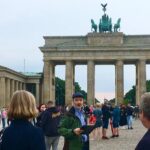
When you reach the Brandenburg Gate, you’ll get the classic photo moment. But don’t treat it as the finish line. The guide uses the Gate as a starting point to explain why the surrounding government district looks the way it does today.
From there, you’ll keep moving through the cluster of parliamentary and civic buildings—areas you might otherwise breeze past without understanding. The tour includes stops around places like Platz des 18. März and several important buildings in the government zone (including Jakob-Kaiser-Haus, Marie-Elisabeth-Lüders-Haus, and Paul-Löbe-Haus). You’ll also spend time in the government district area itself, with a longer guided segment designed to connect the dots.
Why I like this part
It turns “I walked around the parliament buildings” into “I understand what those buildings represent.” Even if you don’t care about German politics on day one, you’ll leave with basic orientation: how the modern Bundestag area sits in the city, how the buildings relate, and what changed in Berlin after the Wall came down.
One more thing I appreciate: the pace stays relaxed. The tour is structured, but the guide can pause for your questions. In the past experiences, guides have been described as patient with questions and willing to tailor the story to the group’s interests—so if you’re the type who asks why something is placed where it is, this format helps.




The Reichstag Rooftop Terrace: Where the Skyline Becomes Part of the Story
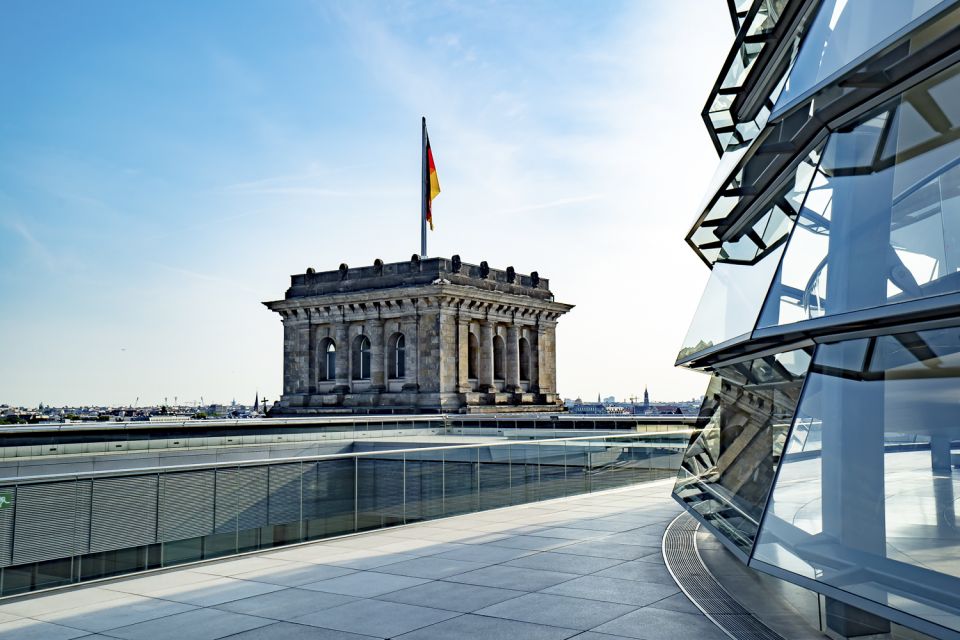
Next comes the Reichstag rooftop terrace, with a good block of time set aside for the views. This is where Berlin starts to feel less like a map and more like a place you can understand.
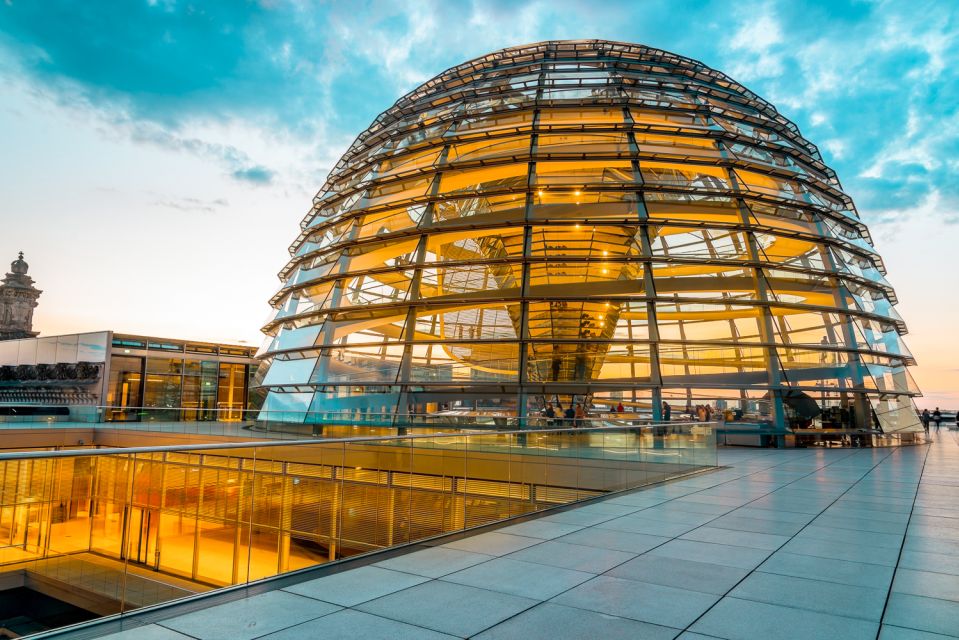
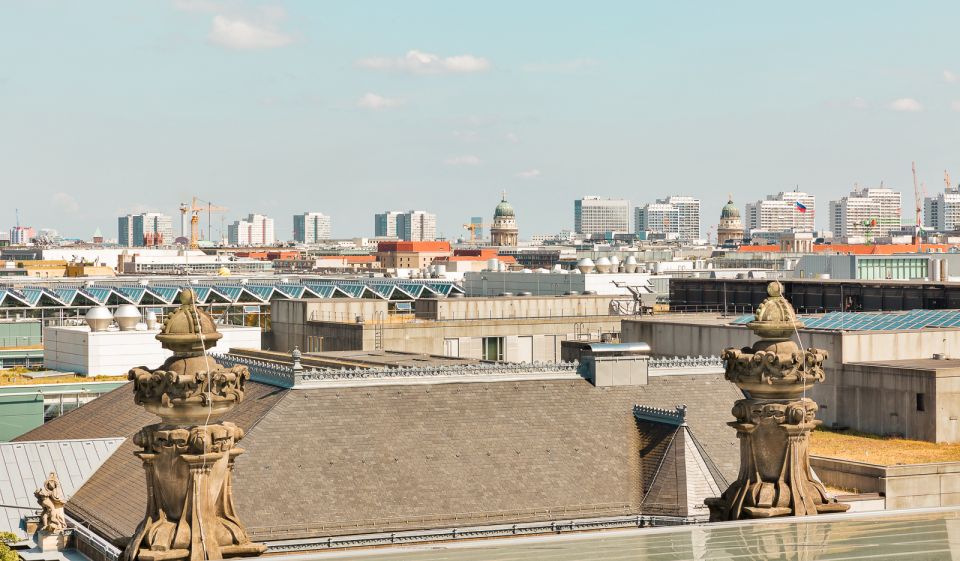
You’ll spend about 15 minutes here, and that time is intentional. The rooftop terrace helps you preview what the dome will do later. You get a first look at the surrounding buildings and the way the Reichstag sits within the city fabric. A guide typically uses this moment to point out key sights so the panorama in the glass dome doesn’t feel random.
Even on gray days, this terrace stop still gives you value. The dome’s big advantage is that it’s both a view and a symbol—but the terrace helps you orient before you go higher. It’s easier to appreciate design and placement when you’re already grounded in what’s around you.
Into the Reichstag Dome: The View, the Meaning, and the Security Reality
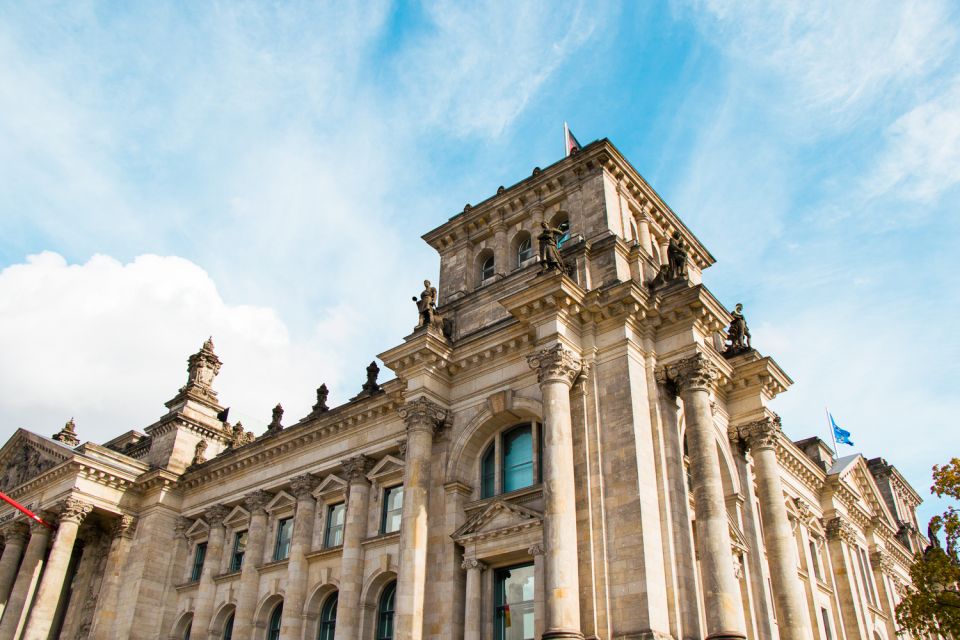
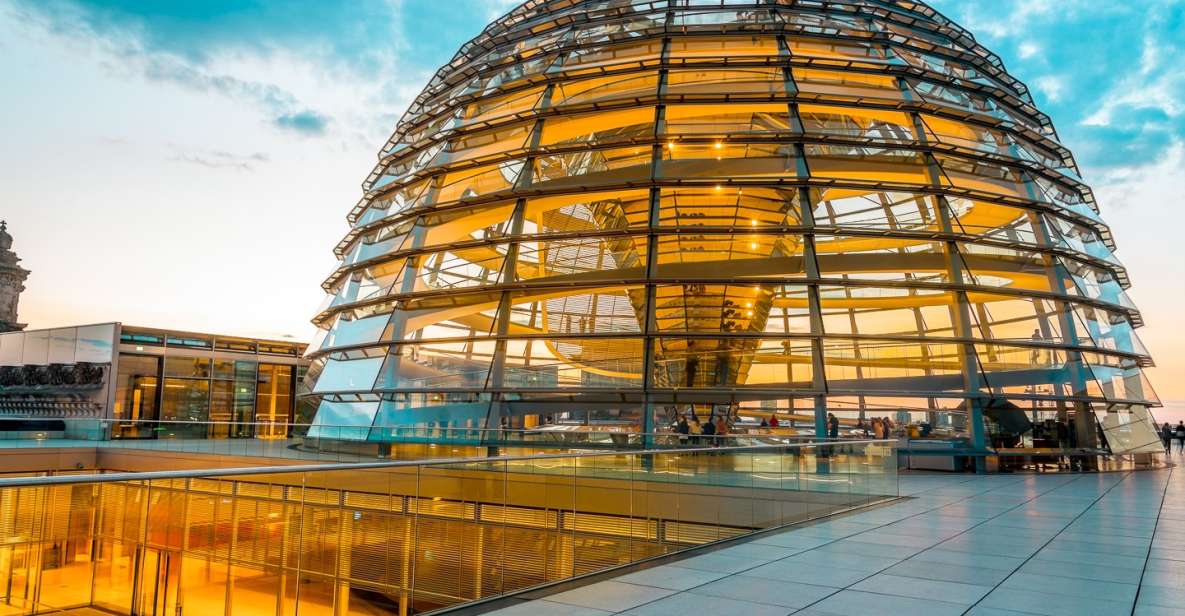
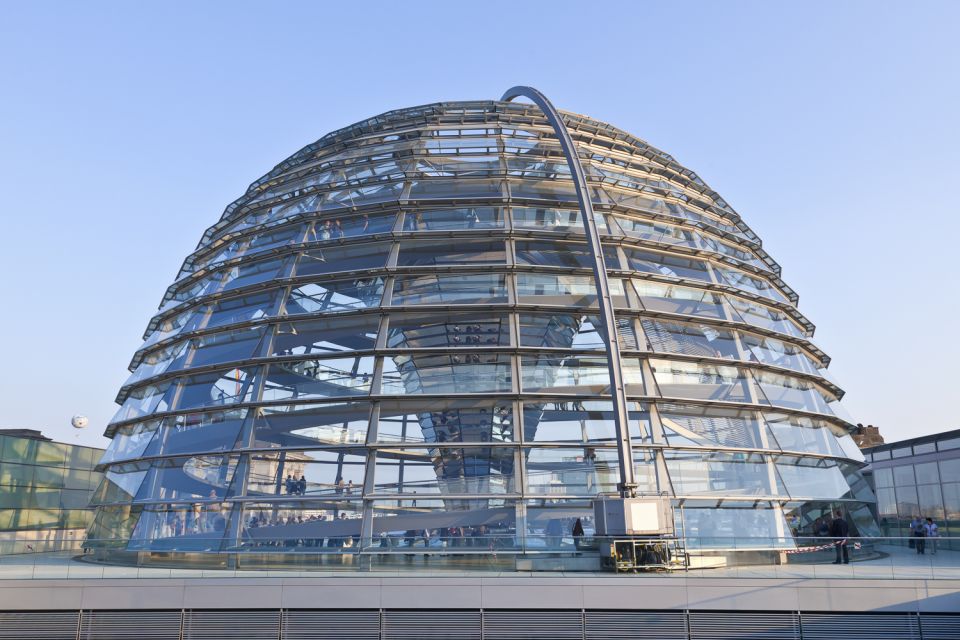
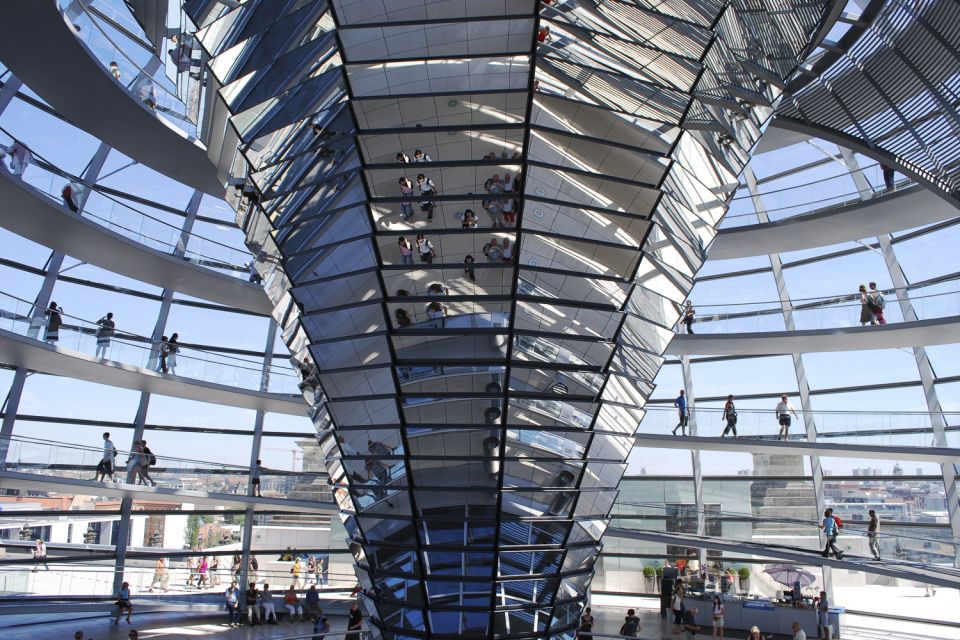
This is the signature moment: the Reichstag dome area, with roughly 20 minutes inside for guided sightseeing and photos. The dome is famous for a reason—light, design, and the sensation that you’re looking at the city while also standing inside a modern emblem of parliamentary openness.
But here’s the honest part: the dome visit isn’t something you can always treat as guaranteed. Access depends on the Bundestag’s current work situation and also on weather and security conditions. That’s not a scare tactic; it’s just the reality of visiting a working political building. If you’re planning around a tight schedule, keep some flexibility.
Skip the ticket line, but still plan for security
The experience includes registration at the German Bundestag and skips the ticket line, which is a big deal here. You’re still going through security, but your guide helps manage the flow so you don’t waste energy figuring out procedures on your own.
In feedback, people often praise the guides for moving confidently through these steps. Some have even been described as very mindful when someone in the group had mobility issues, which is worth noting if you’re traveling with a person who might need extra patience.
If the dome is what you came for
Ask your guide to focus the dome explanation on what you can see from your viewpoint. You’ll get more from the visit if you understand why the dome is designed the way it is and how to relate what’s outside to what you’re standing in.
Optional Plenary Hall Talk: A Bonus for German-Speaking Groups
There’s an optional informational talk in the plenary hall for German-speaking groups. It’s German language only, arranged on request, and subject to availability. You also have to request it at least 5 days in advance, and it can’t be guaranteed.
What you should take from this: it’s a meaningful add-on if you speak German and you want more than just sightseeing. Since it’s tied to the hall itself, it’s best treated as a chance to understand how parliamentary space functions—not as a sure extra attraction.
Price and Value: How $288 per Group Actually Plays Out
The price is $288 per group up to 6, and the tour runs about 90 minutes. On paper, that can sound steep compared to “cheap walking tours.” In practice, the value comes from three places:
First, it’s genuinely private. You’re not negotiating for attention or sharing your guide with strangers who might be on a different pace.
Second, you get guided access through a highly controlled site. Registration at the Bundestag and the ability to skip the ticket line mean you’re buying time and coordination, not just storytelling.
Third, the dome and rooftop terrace are the kind of experiences where context changes everything. The view is impressive on its own, but with a good guide you’ll understand what you’re looking at and why the building matters.
If you’re traveling as a couple, it’s still often worth it because the guide can tailor the walk to your interests. If you’re a family or a small friend group, the price becomes easier to justify because you’re splitting the cost while keeping the private format.
What Guides Typically Do Right (Based on Real Patterns in Feedback)
Even though you choose the language, the bigger factor is how the guide tells the story and handles your group. The strongest praise in the feedback clusters around a few behaviors:
- Guides like Tobias and Jean-Pierre are praised for strong, calm explanations and handling questions well.
- Arvid is frequently mentioned for personal perspective and passion for Berlin’s story.
- Matthias gets credit for making links between past events and modern German life feel clear.
- Daniela stands out for engaging delivery that works even for younger visitors.
- Some guides have adapted when language support is needed—for example, a guide switching to Russian when English was difficult for part of the group.
What this means for you: if you want more than dates and facts—if you want context, why-things-happened, and what it means today—this private format gives your guide room to do that.
Weather, Timing, and a Simple Reality Check
Berlin weather can change quickly. Rain doesn’t have to ruin the tour, but it can affect the dome viewing and comfort on the rooftop terrace. Since the dome visit is tied to weather and security conditions, you should treat it as the high point that might happen, not a promised checkbox.
Also, the dome experience takes time to do properly—roughly 20 minutes there, plus the terrace and walking segments. That’s why the tour is 90 minutes rather than longer. You’ll get focus, not exhaustion.
Who This Tour Fits Best
This is a great match if:
- You’re visiting Berlin for the first time and want a fast, meaningful orientation to the German capital area
- You care about history and politics but want it explained through place, not lectures
- You want a private guide in your chosen language, with room for questions
- You’re okay with the small uncertainty that comes with entering a working political building
It’s less of a match if:
- You’re allergic to security lines and identification checks (though your guide helps, it’s still part of the process)
- You’re visiting during a time when dome access may be unlikely, and you can’t adjust plans if conditions change
Should You Book This Reichstag Private Tour?
If your top goal is to see the Reichstag dome with context and you value a private guide who can answer questions, I’d book it. The price is easier to justify when you’re splitting the cost across up to six people, and when you recognize that you’re buying both coordinated access and a guided narrative that makes the buildings make sense.
Just keep one thing in your planning: dome access can be affected by parliament activity, weather, and security. If you’re choosing between a few Berlin tours, treat this as the one that gives you the deepest political landmark experience—while still leaving your schedule flexible enough for a change in conditions.