REVIEW · BERLIN
Berlin: Walking Tour of the Top 10 Sightseeing Attractions
Book on GetYourGuide →Operated by TOURGUIDEME BERLIN · Bookable on GetYourGuide
Berlin history moves at a walking pace. This 2-hour circuit threads the German government district to Museum Island with a guide who keeps the story snappy and human.
I love two things: the witty, question-friendly guide and the photo-and-story balance at the big stops. In the guides’ style, you can feel they want you to understand what you’re looking at, not just snap a picture and hurry off. One guide named Max in particular was praised for answering questions and giving time for photos while still keeping the schedule moving.
The main catch is the pace. You’ll cover about 4 km on foot, so it’s not the tour for slow wandering, deep museum study, or long pauses at every viewpoint.
In This Review
- Key highlights worth planning around
- Where You Start: Paul-Löbe-Haus to the Chancellery Zone
- German Chancellery and Reichstag: How the Story Gets Official
- Brandenburg Gate and the Cold War Lens You Can Actually See
- Holocaust Memorial: Meeting a Weighty Site with Straight Talk
- Potsdamer Platz: A Major Hub in the Midst of the Timeline
- Gendarmenmarkt: Three Buildings, One Stop That Clicks
- Bebelplatz and Lustgarten Free Time: When You Can Breathe
- Berlin Cathedral and Museum Island: Turning the Finish Line into a Strong Finale
- The Price and the Real Value of $82 for 2 Hours
- Pace, Distance, and What to Bring on This Walk
- Languages and Group Style: How the Experience Feels
- Who This Tour Fits Best (and Who Should Skip It)
- Should You Book This 2-Hour Top 10 Berlin Walk?
- FAQ
- FAQ
- Where does the Berlin walking tour start?
- How long is the tour, and how much do you walk?
- What time does the tour run?
- What languages are available?
- Which major sights are included?
- Does the tour run in bad weather?
- Is it wheelchair accessible, and are there small-group options?
Key highlights worth planning around
- Paul-Löbe-Haus starting point right opposite the Federal Chancellery keeps you centered in Berlin’s decision-making zone
- Brandenburg Gate + Cold War landmarks are treated as a story, not a photo backdrop
- Unter den Linden as a “power corridor”—where emperors, revolutionaries, and state symbolism all show up
- Gendarmenmarkt in full architecture mode with the three landmark buildings as your visual anchor
- Bebelplatz and Lustgarten add the darker book-burning and Prussian layers
Where You Start: Paul-Löbe-Haus to the Chancellery Zone

The tour begins at the Paul-Löbe-Haus, at Konrad-Adenauer-Straße 1, directly opposite the Federal Chancellery. That location matters because it’s the entrance ticket into Berlin’s modern political core—glass, stone, and big ideas in the same view.
From there, you’ll walk through the government district where Berlin tends to feel both official and oddly personal. The guide sets the tone quickly: you’re not only seeing buildings, you’re learning how Berlin’s power has changed shape over time.
You can also read our reviews of more walking tours in Berlin



German Chancellery and Reichstag: How the Story Gets Official
Next up is the German Chancellery, followed by the Reichstag, seat of the German Parliament. Even if you’ve seen photos of these places, on foot they land differently—less postcard and more “this is where decisions happen.”
This is also where the tour’s pacing earns its keep. In a short span, you get the political context needed to understand why the next stops hit so hard. If you’re the kind of visitor who likes to connect dots fast, you’ll appreciate how the guide links the places into one timeline.
A practical note: bring your patience for a busy urban area. You’ll move through public spaces where timing matters, and photo opportunities are real but not endless—plan on shooting when the guide calls it.
Brandenburg Gate and the Cold War Lens You Can Actually See
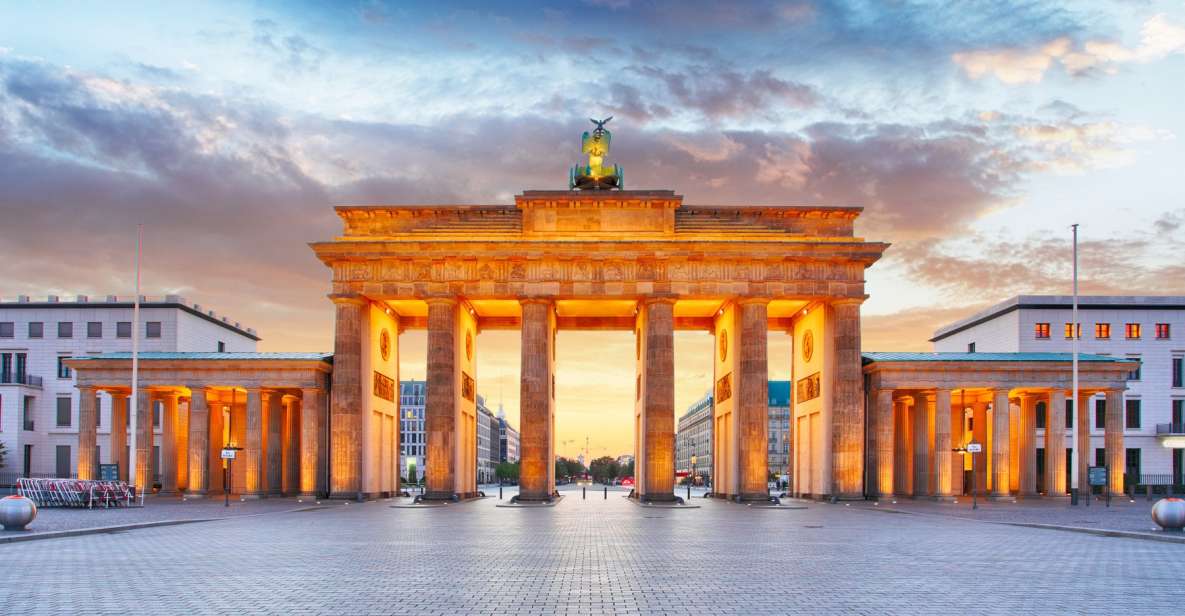
The tour’s signature highlight is the Brandenburg Gate, with time for photos and guided context. It’s described as Germany’s most iconic landmark, and the guide uses it that way—like a turning page in Berlin’s modern history.
From the Gate area, you also get a visual sweep that helps the city feel whole: you can admire the American and French embassies, the Hotel Adlon, and in the distance the Victory Column plus the Soviet War Memorial. Even without stepping inside anything, those “in-between” details make your understanding more complete.
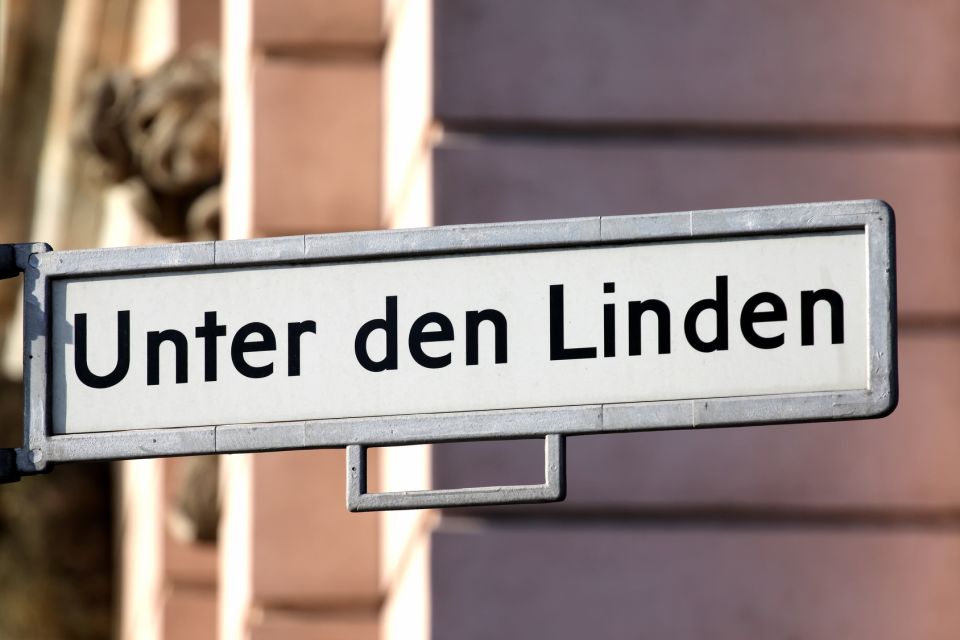
Then comes the boulevard walk along Unter den Linden, framed as a place where emperors and revolutionaries shaped the city. This stretch is a good reset moment. You go from heavy symbolism to a long, readable avenue where Berlin’s layers line up—ideal if you want your guide’s humor and storytelling to stay grounded in what’s right in front of you.
Holocaust Memorial: Meeting a Weighty Site with Straight Talk
After the Gate, the route heads to the Holocaust Memorial. This stop carries emotional weight, and the tour treats it seriously without turning it into a confusing lecture.
What’s useful here is how the guide keeps the narrative connected to the rest of the city. Berlin isn’t compartmentalized; it keeps echoing. The tour’s value is that you don’t just arrive at a memorial and leave with a vague feeling—you connect it to the broader story the walk is building.
If you want to process quietly, that’s fair. The tour style includes guided time and then keeps moving, so if you like long silent moments, you’ll need to balance that with the tour’s schedule.
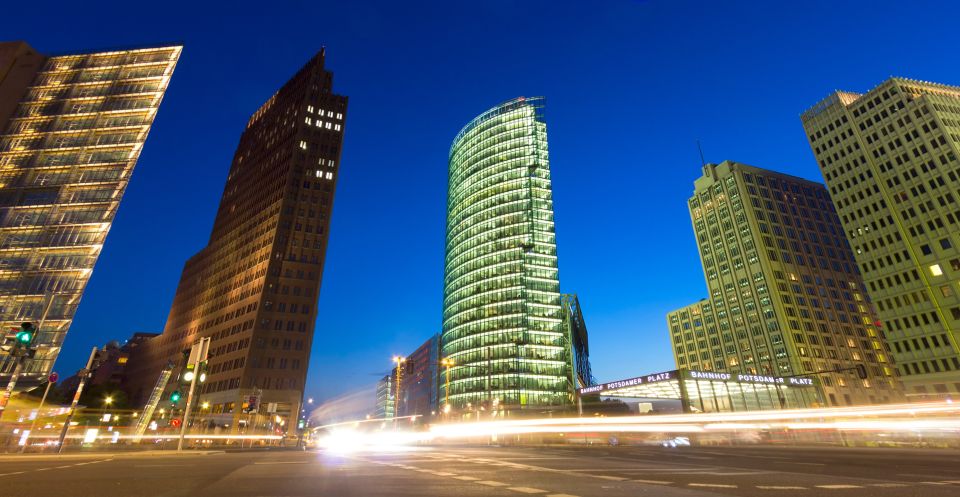
Potsdamer Platz: A Major Hub in the Midst of the Timeline
The walk continues to Potsdamer Platz, a big central square that helps anchor the middle of the route. Here’s where the tour’s “top 10” format makes sense: the walk doesn’t just bounce between monuments—it connects the government story to the city’s lived space.
The guide’s job is to connect eras, and Potsdamer Platz gives them a strong platform to do it. By the time you reach it, you’ve already seen the political engine and the symbolic landmarks, so the square reads as part of Berlin’s real-world transformation.






Gendarmenmarkt: Three Buildings, One Stop That Clicks
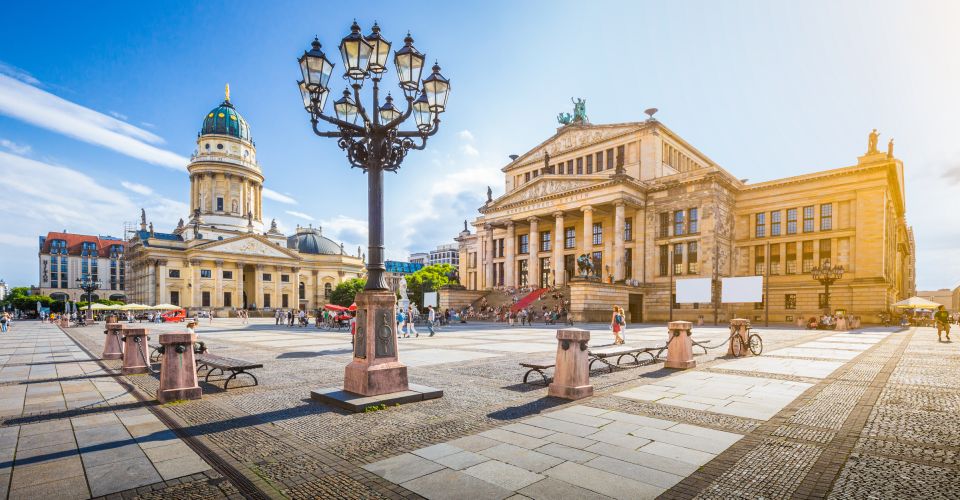
The tour then arrives at Gendarmenmarkt, often considered one of Berlin’s most beautiful squares. This part is especially fun because the guide turns architecture into a kind of story map.
You’ll see the three major buildings that define the square: the German Cathedral, the French Cathedral, and the Konzerthaus. Once you understand how they relate to one another, the area stops being just “pretty buildings” and becomes a visual lesson in Berlin’s identity and international influences.
This is one of the best places on the route to slow down for a moment, even if the tour overall is brisk. If you like taking pictures of symmetry and details—portals, domes, and facades—you’ll likely find a satisfying rhythm here.
Bebelplatz and Lustgarten Free Time: When You Can Breathe
After Gendarmenmarkt, you reach Bebelplatz. This is where the tour brings in the book-burning story—one of those Berlin facts that changes how you look at the city afterward. The stop includes guided time plus free time, which is a smart setup. You get context first, then you can read, observe, or just stand with the meaning.
From there you continue toward Lustgarten, another area linked to Prussian history, again with guided time plus free time. This split is one of the tour’s practical strengths: you don’t lose the tour to constant “just keep walking,” and you also don’t spend the whole 2 hours waiting for the group to catch up.
Berlin Cathedral and Museum Island: Turning the Finish Line into a Strong Finale
Next comes the Berlin Cathedral, a major visual anchor of the route. It’s the kind of place that works well as a guided stop because you can look upward, study shapes, and let the guide connect it to the city’s evolving power centers.
Then you head toward Museum Island. This is where your earlier context pays off. Museum Island isn’t just a collection of famous spaces; the walk frames it as part of Berlin’s long relationship with ideas, culture, and identity.
You’ll finish at Friedrichsbrücke, which is a convenient landing point for figuring out your next move. The route ends right where it makes sense to keep exploring on your own, rather than dropping you back far away.
The Price and the Real Value of $82 for 2 Hours
At $82 per person for a 120-minute guided walk, the value depends on your travel style.
If you want a guide to help you connect landmarks into one coherent storyline, the pricing makes sense. You’re getting stops across major eras—Nazi era, Cold War, and the Wall fall are explicitly part of what the guide covers—plus a certified local guide and a fixed, transparent price.
It also helps that the tour includes skip-the-ticket-line time. In Berlin, that sort of friction matters. Even when you’re not entering every building, minimizing delays keeps the narrative intact, which is the whole point of a tight 2-hour circuit.
Pace, Distance, and What to Bring on This Walk
Expect about 4 km of walking across public areas and major sights. That’s a reasonable distance, but the tour is still fast-paced, so comfort matters.
I recommend:
- Comfortable walking shoes you’re happy to wear on uneven sidewalks
- A water bottle (even on mild days, the pace adds up)
- A camera or phone with enough storage for repeated photo stops
The tour also runs in all-weather conditions, so bring a light layer or rain gear. If weather is bad, it’s still structured—so you won’t lose the tour to uncertainty.
Languages and Group Style: How the Experience Feels
The guide is live and speaks English, Spanish, and German. That’s useful if you’re sharing the trip with friends who prefer a different language.
Group size is kept small for a more personal experience, and the tour also offers private or small groups. In practical terms, that usually means more question time. One review highlighted a guide who answered questions and made sure people could take in the information without feeling rushed, which matches the tour’s overall teaching rhythm.
Who This Tour Fits Best (and Who Should Skip It)
This walking tour is a strong choice if you want:
- A fast way to get your bearings in Berlin
- A guide who connects the major sights into one timeline
- A mix of iconic landmarks and emotionally serious stops, handled with care
It’s less ideal if you’re the type who wants to spend a long chunk of time inside museums or you hate moving quickly between stops. Think of it as a guided “story route,” not a slow museum day.
Should You Book This 2-Hour Top 10 Berlin Walk?
I’d book it if you want a structured way to see Berlin’s biggest landmarks without getting lost in the details. The route hits the Brandenburg Gate, Unter den Linden, Gendarmenmarkt, Bebelplatz, Lustgarten, Berlin Cathedral, and Museum Island, and the guide’s humor plus serious context gives the walk a balanced feel.
If you’re short on time, this is one of the smarter ways to get a coherent overview fast. If you hate brisk walking or you’re hoping for long independent exploration at each stop, you might be happier pairing this with extra time on your own later.
FAQ
FAQ
Where does the Berlin walking tour start?
It starts in front of the main entrance of the Paul-Löbe-Haus, opposite the Federal Chancellery, at Konrad-Adenauer-Straße 1, 10557 Berlin, Germany.
How long is the tour, and how much do you walk?
The tour lasts about 2 hours (120 minutes) and includes approximately 4 km of walking.
What time does the tour run?
Daily start times are listed as 10:00 AM and 2:00 PM.
What languages are available?
The live guide offers tours in English, Spanish, and German.
Which major sights are included?
The tour covers top stops such as Brandenburg Gate, Reichstag, Holocaust Memorial, Gendarmenmarkt, Bebelplatz, Lustgarten, Berlin Cathedral, and Museum Island, with the walk finishing at Friedrichsbrücke.
Does the tour run in bad weather?
Yes. The tour runs in all-weather conditions.
Is it wheelchair accessible, and are there small-group options?
Yes, it is wheelchair accessible. You can also choose private or small groups, and the tour is designed for a more personal experience.