REVIEW · BERLIN
From Berlin to Sachsenhausen Camp: Private Tour by Car or Train
Book on Viator →Operated by Vexperio · Bookable on Viator
Sachsenhausen hits fast, and hard. What makes this trip especially compelling is the private, local guide who keeps the story clear and humane, and the built-in context before and after the camp. One consideration: this is heavy subject matter, so you’ll want to pace yourself and not rush.
I like that you don’t just pass through. You spend real time at Sachsenhausen, moving through key locations—gates, barracks, roll call grounds, prison spaces, and the execution site—so you leave with a better mental map of how the camp worked. You also get an essential follow-up with the Holocaust Memorial to the Murdered Jews of Europe and other Berlin reminders of Nazi terror.
Because it’s a private tour with multiple stops, plan a day that’s mostly walking and standing. Also, food and drink are not included, so you’ll feel best if you eat beforehand or build in time to grab something nearby.
In This Review
- Key things to know before you go
- Why this private Sachsenhausen day feels different
- Getting context at Topography of Terror
- Walk through Sachsenhausen: gates, barracks, prison spaces, Station Z
- The Holocaust Memorial to the Murdered Jews of Europe
- Stiftung Neue Synagoge and Jewish Berlin’s memorials
- Transport and timing: car or train, and why the pacing matters
- Price and value: is $327.72 per person worth it?
- Who should book this tour (and who should consider alternatives)
- Should you book it?
- FAQ
- How long is the tour?
- Is this a private tour?
- What language is the tour offered in?
- Does the tour include pickup?
- Is there a mobile ticket?
- Are entrance fees included?
- Is food and drink included?
- What transport is used from Berlin?
- What is the cancellation policy?
Key things to know before you go
- Private format means only your group, guided by a professional local expert in English.
- Sachsenhausen time is substantial at about 3 hours, with emphasis on major camp areas you can actually locate and understand.
- The itinerary frames the camp with Berlin sites like Topography of Terror and the SS/Gestapo headquarters context.
- You’ll visit the Holocaust Memorial with its field of 2711 concrete stelae, covering about 20,000 square meters.
- Jewish Berlin stops add texture, including the New Synagogue area, Stolpersteine, and the Auschwitz Trees (with the synagogue entrance not included).
Why this private Sachsenhausen day feels different
Sachsenhausen is not a place for a quick photo stop. The camp grounds are large, and the details can get lost if you don’t have help connecting what you see to what happened. With a private tour, you’re not at the mercy of a big group’s pace, and your guide can slow down when a question matters.
What stands out is the emotional care in how the story is handled. In the feedback I saw, guides such as Sara and Nathalie were praised for sensitivity, respect, and strong historical knowledge without losing empathy. That matters here, because the subject isn’t just academic. It’s personal, and the site demands a steady, respectful approach.
Also, the day isn’t only about Sachsenhausen. The other stops do something practical: they help you place the camp inside the broader machinery of Nazi persecution. That turns your visit from a single-site experience into a fuller understanding.
You can also read our reviews of more private tours in Berlin

Getting context at Topography of Terror
Before you enter Sachsenhausen, you’ll get a short but important grounding visit at Topography of Terror. It’s only about 20 minutes, but it’s positioned for a reason: it contextualizes the concentration camp system within the wider Nazi apparatus of terror.
The stop is tied to the former headquarters of the SS and Gestapo in Berlin. Even in a brief visit, knowing that these were not vague institutions helps you interpret what you’ll see later. You’ll understand this wasn’t random cruelty—it was organized, documented, and administered.
A small time note: with only 20 minutes, don’t expect a full museum read-through. Think of it as a mental setup. You’ll be ready to notice patterns when you reach the camp.
Walk through Sachsenhausen: gates, barracks, prison spaces, Station Z
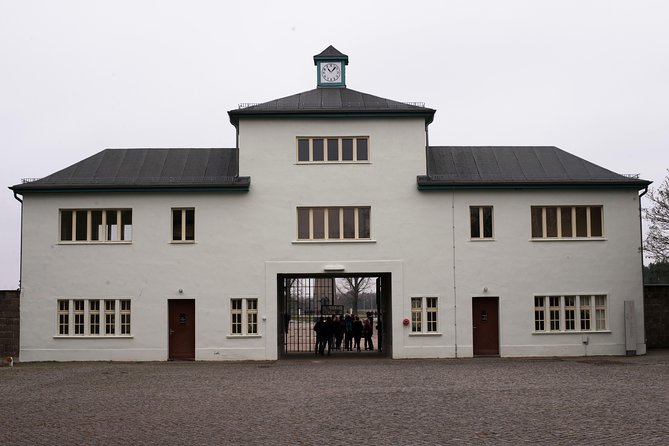
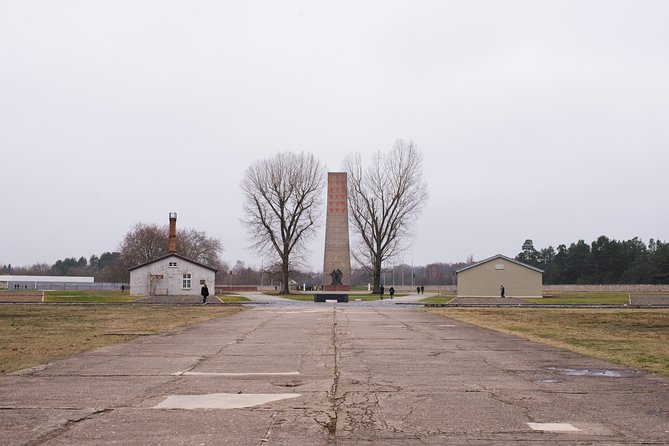
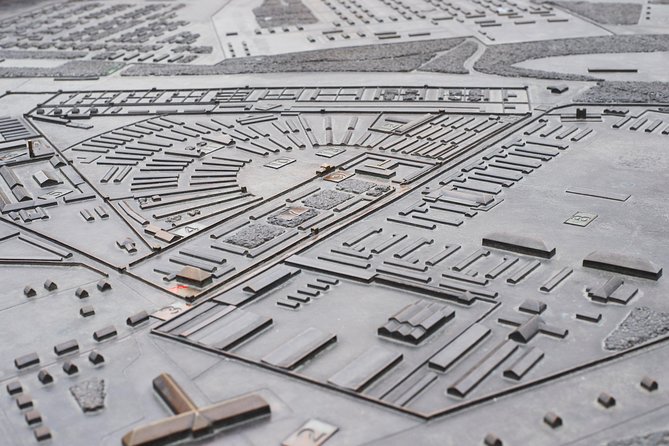
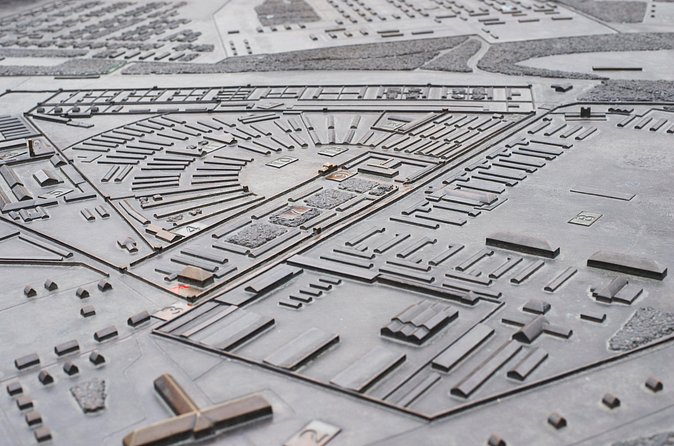
This is the anchor of the day. You’ll spend about 3 hours at the Memorial and Museum Sachsenhausen, and it’s laid out so you can follow the camp’s structure instead of wandering in confusion.
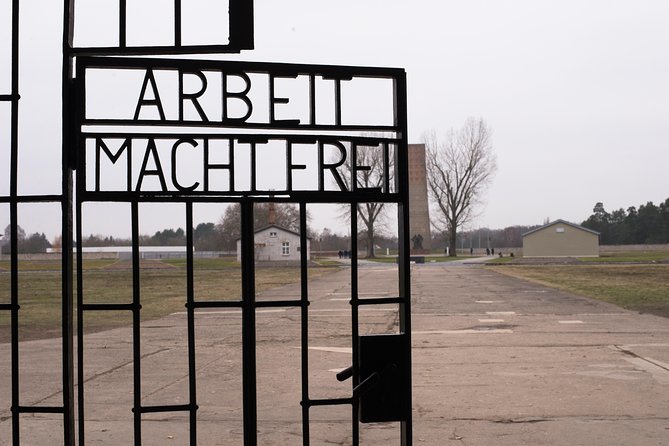
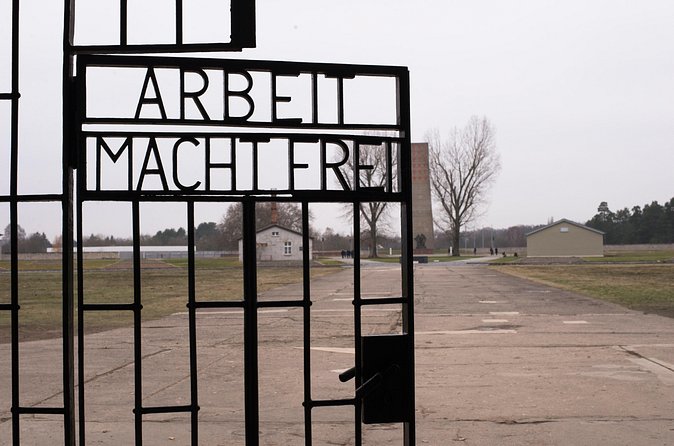
The tour route brings you through the camp gates under the words Arbeit Macht Frei—work will set you free. It’s chilling because you can feel the lie in the phrase. Your guide’s job is to connect that symbolism to the reality on the ground: systematic brutality powered by starvation, disease, and planned murder.
From there, you’ll tour several key areas, including:
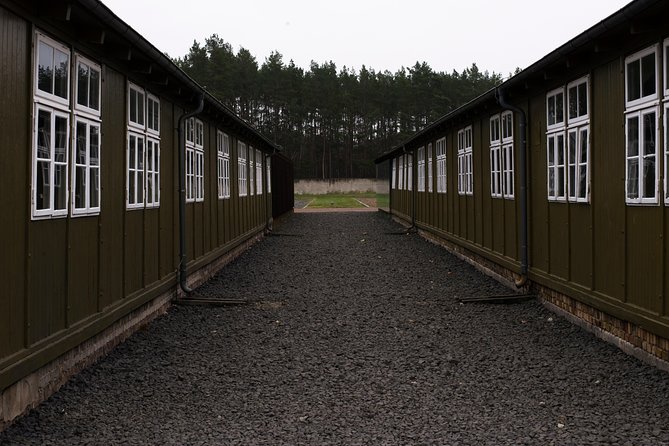
- Jewish Barracks: a direct look at how people were housed and categorized.
- Kitchen and Laundry block: the spaces that show daily camp life and forced labor systems.
- Appelplatz (roll call area): where people were counted and controlled.
- Camp prison: a reminder that confinement wasn’t only outside—punishment operated within.
- Pathology and hospital buildings: places tied to the camp’s physical and medical violence.
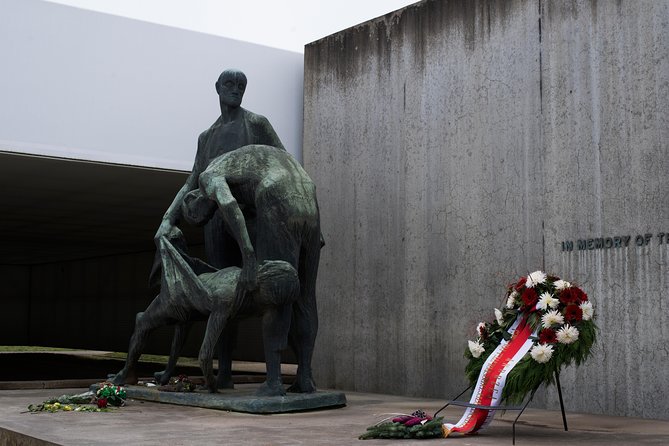
- Station Z: the execution grounds and killing center.
One detail I really appreciate is that this stop isn’t framed only through numbers or dates. It’s framed through locations you can picture afterward. If you’re the type who wants to remember where things were, this kind of guided route helps a lot.
A practical reality: even though the memorial visit is listed as ticket free, there’s mention of a small donation at the memorial site. Don’t treat that as optional trivia—bring a bit of cash or be ready to follow the on-site instructions.
The Holocaust Memorial to the Murdered Jews of Europe
After Sachsenhausen, your day shifts to remembrance. You’ll visit the Memorial to the Murdered Jews of Europe for about 15 minutes.
This memorial is the field of about 2711 concrete stelae spread across roughly 20,000 square meters. It’s not a building you enter. It’s a space you move through, and the design encourages you to slow down.
What I like here is that it’s guided with purpose. You’ll get background on the Holocaust and you’ll hear stories focused on everyday bravery and resilience—people who were persecuted, yet still showed courage in small, human ways. That balance matters after a camp visit. It helps you hold onto the victims as individuals, not just as victims of a system.
Time is short, so if you need a longer moment to sit or reflect, you may want to ask your guide where to pause without disrupting the group flow.
Stiftung Neue Synagoge and Jewish Berlin’s memorials
The final major stop is in the area of Stiftung Neue Synagoge Berlin – Centrum Judaicum. You’ll spend about 30 minutes here, and the entrance is not included, so plan for that cost separately.
This part of the itinerary aims at something hopeful but still honest: it connects Berlin’s Jewish neighborhood history with the destruction carried out by the Nazis. In the backstreets of the former Jewish Quarter, you’ll see the New Synagogue area as well as Stolpersteine—small stumbling stones installed as memorials—and also the Auschwitz Trees along with other visible reminders.
I find this a useful counterweight to the heavier camp sections. You’re still in the same historical world, but you’re not stuck only in the machinery of terror. You’re watching memory become something you can walk past, touch with your eyes, and understand as part of the city’s ongoing story.
Because the synagogue entrance is separate, check your interest level. If you want to spend more time inside, you can be ready to take that option when you’re there.




Transport and timing: car or train, and why the pacing matters
The tour is set up as a private trip from Berlin to Sachsenhausen with transport by car or train, and pickup is offered. That’s a big deal in practice. Sachsenhausen is outside the center, and getting there without juggling schedules makes it easier to keep the day focused.
The full duration is about 6 hours. With multiple stops, the pacing is tight by design: around 3 hours at Sachsenhausen, shorter visits at Topography of Terror and the Holocaust Memorial, and a 30-minute block for the synagogue-area remembrance.
If you’re sensitive to crowds or prefer a steadier rhythm, the private format is your advantage. If you’re hoping for long museum reading time at every stop, you’ll likely find the structure too compact—but that’s not the point of this day. The point is clarity and flow.
Price and value: is $327.72 per person worth it?
At $327.72 per person for about 6 hours, the price can look steep at first glance. Here’s how I’d judge value for this specific experience:
You’re paying for:
- A professional local guide (not just audio or a generic script)
- Time allocation that focuses on key locations rather than random touring
- A route that links Sachsenhausen + Berlin context sites (Topography of Terror and the Holocaust Memorial)
- The convenience of pickup and private transport coordination (by car or train)
What you’re not paying for:
- Food and drink
- Any separate entrance costs for places like the synagogue area
- Any public transportation you might need outside the included transport plan
- A likely small donation expectation at the memorial site
So the question becomes: do you want someone to help you read Sachsenhausen properly? If you do, the guide-driven value makes sense. If you’d rather explore at your own pace with just signage and a self-made route, you might not need this price level.
For me, the biggest value piece is the guide’s role in making sure you’re seeing the right things in the right order—and understanding what you’re looking at while keeping respect and emotion at the center.
Who should book this tour (and who should consider alternatives)
This tour is a strong fit if you:
- Want a structured, respectful visit to Sachsenhausen with guidance at major locations
- Prefer private pacing and a chance to ask questions
- Like connecting the dots between camp history and Berlin’s Nazi-era terror infrastructure
- Want remembrance that includes the Holocaust Memorial and Jewish Berlin sites, not only the camp
It may be less ideal if you:
- Need a very flexible schedule with lots of free time at museums
- Get overwhelmed by emotionally heavy content quickly
- Are traveling with strict dietary needs and rely on meal stops (since food isn’t included)
Should you book it?
I’d recommend booking if you want your day to feel guided, coherent, and carefully handled. The schedule is built for meaning, not for sightseeing volume, and the combination of Sachsenhausen with Topography of Terror, the Holocaust Memorial, and the Jewish Berlin remembrance points is exactly what helps the history land.
If you’re going, come prepared: wear comfortable shoes, plan your lunch or snacks, and give yourself permission to slow down when your guide offers context. This is the kind of tour where the quality of the guidance—like the sensitivity praised for Sara and Nathalie—really changes what you take away.
FAQ
How long is the tour?
The tour lasts about 6 hours.
Is this a private tour?
Yes. It’s a private tour, with only your group participating.
What language is the tour offered in?
The tour is offered in English.
Does the tour include pickup?
Yes, pickup is offered.
Is there a mobile ticket?
Yes, a mobile ticket is included.
Are entrance fees included?
Some stops are listed as admission ticket free, but you should expect a small donation at the Sachsenhausen memorial site. Entrance for the Stiftung Neue Synagoge Berlin – Centrum Judaicum is not included.
Is food and drink included?
No. Food and drink are not included.
What transport is used from Berlin?
The tour is by car or train.
What is the cancellation policy?
You can cancel for a full refund up to 24 hours before the experience starts.