REVIEW · BERLIN
Kreuzberg kulinarisch – Die Food Tour
Book on Viator →Operated by Adventure World Tours · Bookable on Viator
Kreuzberg on foot is the lesson. This food tour mixes included tastings with on-the-street history, so you’re not just eating—you’re also reading the neighborhood as you go. I especially like the fact that you don’t have to stop and pay for food, and that the guide connects the bites to the culture and architecture around you.
One thing to consider: this tour is built as much around storytelling and local context as it is around food, so if you’re only chasing a heavy, food-obsessed crawl, this may feel more balanced (not purely gastronomic).
In This Review
- Key things to know before you go
- Kreuzberg kulinarisch: what you’re really buying for $52
- Meeting at Kottbusser Tor (Kotti): get your bearings first
- Kreuzberg’s working-class story, explained through real spaces
- Oranienstraße and the architecture lesson you’ll notice later
- Tastings plus snacks: how the food stops work
- International food in Kreuzberg, without the tourist guessing game
- Guides matter: why the storytelling lands
- Price and value: when this $52 ticket really makes sense
- Practical tips so you have a smooth 3-hour walk
- Who should book this Kreuzberg food-and-culture tour
- Should you book? My take
- FAQ
- How long is the Kreuzberg kulinarisch food tour?
- What is the price per person?
- Where does the tour start?
- Where does the tour end?
- Are food tastings included in the price?
- Are drinks included?
- Is there a vegetarian option?
- Does it run in bad weather?
- How big is the group?
- Is hotel pickup included?
- Is free cancellation available?
Key things to know before you go
- Included tastings and snacks: food is part of the ticket, not an add-on you have to budget for mid-walk
- Kotti start point: you begin at Kottbusser Tor and get orientation fast before the tastings start
- More than German food: you’ll sample beyond traditional Berlin dishes, including international and fusion ideas
- Guides who connect food to place: commentary ties architecture and Kreuzberg’s social history to what you’re eating
- Small-group feel (max 25): easier conversation and better pacing than huge tour crowds
- Weather-proof plan: it runs in all weather, so you’ll want clothing that can handle a cool Berlin afternoon
Kreuzberg kulinarisch: what you’re really buying for $52
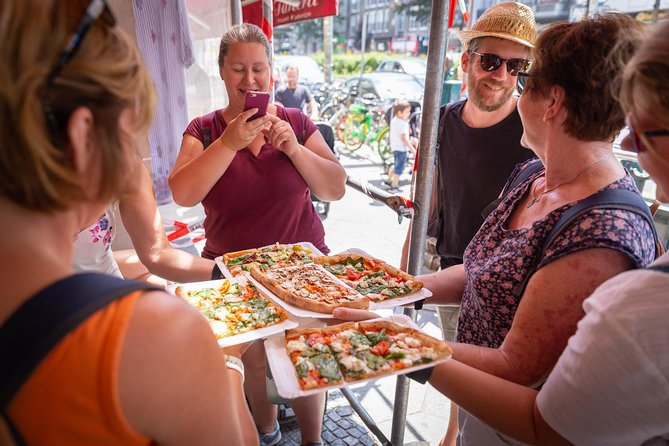
At $52.18 per person for roughly 3 hours, you’re paying for two things: time with a local guide and tastings that are already built into the route. In other words, you’re not constantly checking your phone for menu prices or deciding whether a stop is worth it. That matters in Berlin, where you can eat well for cheap—but you can also accidentally spend more than you planned if you’re moving from place to place on your own.
The other big value is the format. This isn’t a long bus-style lecture. You’re walking through Kreuzberg while your guide explains why the neighborhood looks the way it does, and how people lived there when times were harder. That turns “where should I eat?” into “how should I understand this place?”—and you’ll carry that mental map longer than any restaurant recommendation.
You can also read our reviews of more food & drink experiences in Berlin


Meeting at Kottbusser Tor (Kotti): get your bearings first
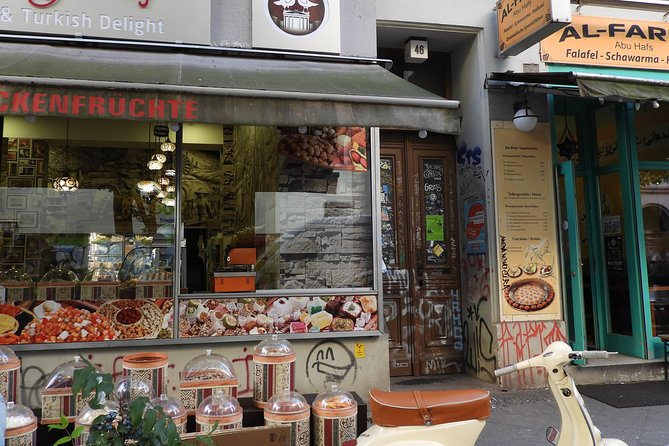
You start at Kotti (Kottbusser Tor), right in central Kreuzberg. The meeting location on Reichenberger Str. 174 makes it easy to find, and the tour gets you oriented quickly with a short intro before you move on. Even if you’re new to Berlin, this first segment helps you connect street names and building styles to real people and real constraints.
From there, your guide’s focus isn’t only “what to eat next.” It’s also how to look at the neighborhood in layers: the street you’re standing on, the courtyards behind it, and the built-in clues about how working-class residents lived. It’s one of those tours where you start paying attention to the details because the guide is pointing them out for you.
Kreuzberg’s working-class story, explained through real spaces
One of the strongest parts of this tour is how it uses geography to explain social history. Kreuzberg grew as a working-class area in the middle of the 19th century, and your guide frames the neighborhood as a place where people faced constant pressure and limited options.
You’ll get a mental picture of life in those early days: huge building complexes, and homes tucked into the 5th or 6th backyard level. Fresh air was hard to come by, and instead of having a whole flat or even a proper private room, some residents had an eight-hours-stay on a mattress. Hearing that while you’re standing in Kreuzberg’s street-and-courtyard environment makes it easier to understand why architecture here doesn’t feel like a clean museum backdrop. It feels like the city’s lived reality.
Practical takeaway: if you’ve ever wondered why Berlin neighborhoods look the way they do—courtyards, back buildings, layered entrances—this tour gives you a clear reason. You’re not memorizing dates. You’re understanding a housing pattern.
Oranienstraße and the architecture lesson you’ll notice later
After the initial orientation, the route brings you into Oranienstraße territory, where the guide helps you imagine what it must have been like to live in tight quarters with limited access to air and light. This is where the tour’s tone becomes especially effective: it slows down just enough that you can look at the space you’re in, not just walk past it.
You’ll also start noticing something that Berlin does well: the close proximity of very different living conditions. Even without getting lost in statistics, the tour’s approach makes it feel personal—poverty and hardship side-by-side with prosperity and change over time. That’s a useful lens for the rest of your Berlin trip. Later, when you pass similar blocks on your own, you’ll instinctively ask, Who lived here? What did this building allow?
Possible drawback for some people: if you wanted a pure bite-by-bite food crawl, this segment can feel more about history and architecture than about tasting variety. The good news is that the guide keeps it relevant, and once the tastings come, you’ll understand why the story mattered.
Tastings plus snacks: how the food stops work
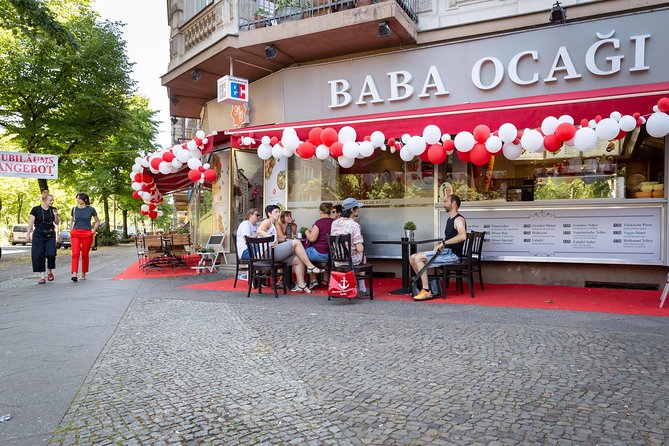
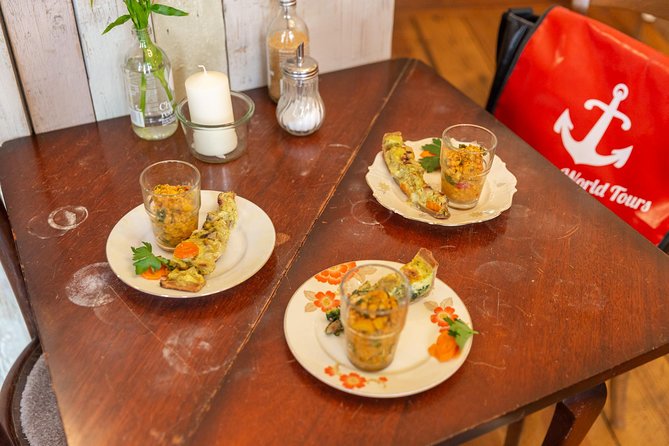
Food-wise, the tour is straightforward: no need to stop and pay for food during tastings, because tastings and snacks are included. Drinks are not included, so if you like beer, wine, or non-alcoholic spritzers, plan to handle that separately.
You can expect multiple tasting moments across different kinds of places—this is not restricted to traditional Berlin fare. Kreuzberg’s reputation for diversity shows up in what you try, with international and fusion cuisine sitting alongside more classic Berlin-style choices. That mix is a big part of why the tour is worth it: you get breadth without the planning work.
A smart way to think about the food: these are tastings, so you’re not trying to “finish” a meal. You’re sampling enough to learn the flavor styles that define Kreuzberg right now. If you normally hate committing to full portions while sightseeing, this format feels built for you.
Tip: since you’re walking for about three hours, bring a mindset of small bites and stop-by-stop pacing. The tour is designed around that rhythm.
You can also read our reviews of more tours and experiences in Berlin




International food in Kreuzberg, without the tourist guessing game
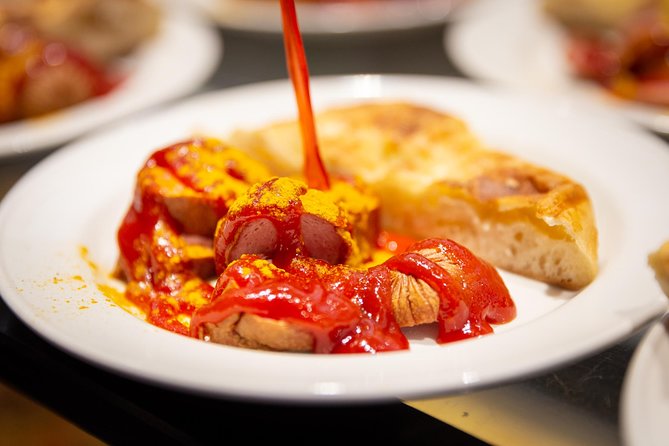
Kreuzberg can be a tricky area for independent planning. You’ll see plenty of restaurants, but it’s not always obvious which ones are best for a short window of time. This tour solves that by giving you an insider shortlist, guided by someone who understands the neighborhood’s food scene beyond the obvious names.
What I like about this approach is that you’re not stuck with one category. You’ll sample across styles—traditional Berlin dishes plus international and fusion concepts—so you leave with a better sense of what Kreuzberg’s food identity actually feels like.
If you’re traveling with limited time, this is also a confidence booster. Instead of spending your first evening googling and second-guessing, you start with a curated path where the guide is doing the hard decisions for you.
Guides matter: why the storytelling lands
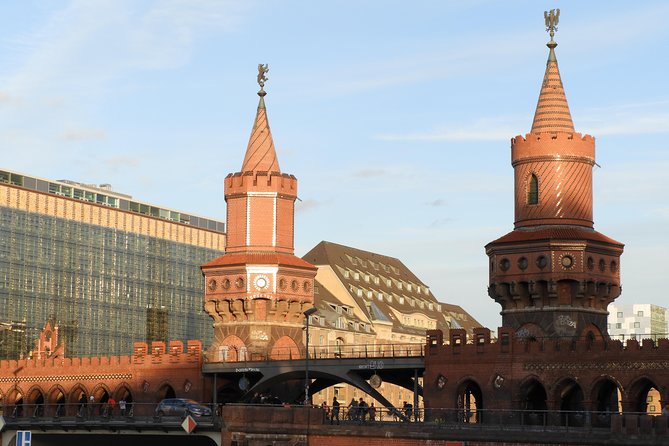
The quality of this tour depends heavily on the guide, and the standout theme in the feedback is clear: the best guides tell the story well and connect it to the food in a natural way. You may meet guides such as Nike or Dan (different dates use different staff), and the common thread is engaging delivery.
What that means for you: you’ll get history and culture commentary that feels practical, not like a dry lecture. When the guide makes architecture and social history make sense, the tastings feel less random. They become part of a bigger picture: how a neighborhood’s past shaped its present habits and food culture.
Also, this is one of those tours where you’re likely to enjoy the walk more because the guide gives you something to look for. You stop treating Kreuzberg as just a backdrop and start treating it as the lesson.
Price and value: when this $52 ticket really makes sense
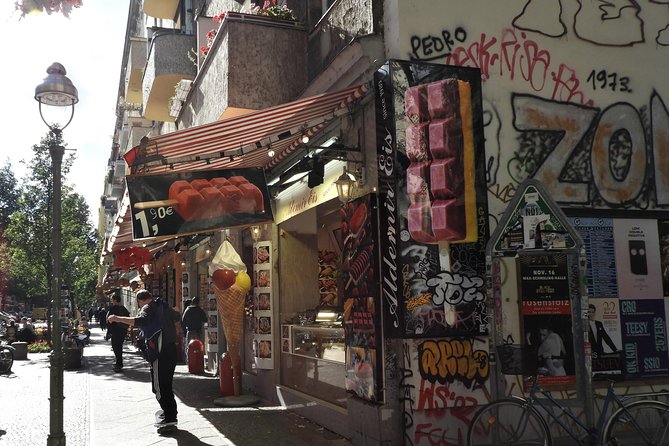
Let’s talk value plainly. At $52.18, you’re paying for included tastings, snacks, and a professional local guide. Drinks aren’t included, and there’s no hotel pickup, but that’s typical for a neighborhood walking tour.
Here’s when this is a smart buy:
- You want a mix of food + context, not just a list of restaurants
- You like learning why places look and feel the way they do
- You’d rather let someone else select the stops so you can enjoy the walk
- You’re okay with tastings being smaller by design (not a full dinner meal)
Here’s when you might consider a different option: if you mainly want a big, food-heavy outing with lots of drinks and minimal discussion. This tour leans into history and architecture, and it sounds like that’s a feature, not a bug, for many people—just not for every taste.
From a budgeting angle, the included tastings are the key win. You avoid the “that stop was great, now I owe €€” situation that can sneak up on you.
Practical tips so you have a smooth 3-hour walk
This is a public walking tour, and you’ll need to keep up with the guide. If you have major walking problems, it’s not recommended. Also, because the tour operates in all weather conditions, dress for the day you actually get—not the day you hoped for.
A few more helpful notes:
- Group size tops out at 25 travelers, which makes it easier to hear and move
- A vegetarian option exists, but you need to request it when booking
- You’ll use a mobile ticket
- You start near public transportation and end near the same kind of convenience, with the tour finishing at Kottbusser Damm 95 (near Kottbusser Tor area)
One more practical detail: since drinks aren’t included, decide ahead of time whether you want to add one on your own afterward. That way you don’t feel “behind” or stuck when you hit a tasting and still want something to sip.
Who should book this Kreuzberg food-and-culture tour
This tour is ideal if you fall into one of these categories:
- You want a short, high-impact plan for a limited time in Berlin
- You love neighborhood context as much as you love food
- You’re comfortable walking for about three hours
- You want international and fusion tastings without doing the research
It’s also a good choice for the “I’m overwhelmed by options” traveler. Kreuzberg has lots of food. This tour narrows it down and gives you an easy way to sample without second-guessing.
If you’re the “show me the tastings, skip the talk” type, you’ll still eat well—but you might find the history and architecture commentary more dominant than you expected.
Should you book? My take
Book this tour if you want a Berlin experience that connects your plate to the street. The included tastings and snacks remove the budgeting friction, and the guide’s focus on Kreuzberg’s social history and architecture gives your food stops meaning beyond flavor.
Skip it only if you’re strictly chasing a heavy food binge with minimal narrative. Otherwise, it’s a strong value for a first or second day in Kreuzberg—especially if you’d like your Berlin days to feel organized without feeling scripted.
FAQ
How long is the Kreuzberg kulinarisch food tour?
It runs for about 3 hours.
What is the price per person?
The price is $52.18 per person.
Where does the tour start?
The meeting point is Reichenberger Str. 174, 10999 Berlin (near Kottbusser Tor).
Where does the tour end?
The tour ends at Kottbusser Damm 95, 10967 Berlin.
Are food tastings included in the price?
Yes. Food tastings and snacks are included.
Are drinks included?
No. Drinks are not included.
Is there a vegetarian option?
Yes. A vegetarian option is available, and you should advise the operator at the time of booking.
Does it run in bad weather?
Yes, it operates in all weather conditions, so dress appropriately.
How big is the group?
The tour has a maximum of 25 travelers.
Is hotel pickup included?
No. Hotel pickup is not included.
Is free cancellation available?
Yes. You can cancel up to 24 hours in advance for a full refund.