REVIEW · BERLIN
Love and War in Berlin: Self-Guided Story Puzzle Walk
Book on Viator →Operated by Questo · Bookable on Viator
Berlin turns into a story on foot. This self-guided puzzle walk in central Berlin links WWII-era moments to real buildings, squares, and monuments, using a game format so you can move at your pace.
Two things I really like: you control the timing, including breaks, and you get a solid overview of major WWII and Nazi-era themes without needing a person in your ear. You also pass unforgettable stops such as the Memorial to the Murdered Jews of Europe and Bebelplatz, where Nazi book burnings took place.
One thing to plan for: the route is puzzle-driven, so if a question locks you up, progress can slow. Also, you may hit busy seasonal areas like Christmas markets along the way, which can mean small detours to stay on track.
In This Review
- Key highlights worth your time
- Why this puzzle walk fits Berlin so well
- Getting started at Alexanderplatz and the Urania World Clock
- Rathaus and the thrill of architecture you can actually see
- Neptunbrunnen: the fountain stop that teaches you to notice
- Marx-Engels-Forum and Lustgarten: shifting ideologies in the same direction
- Neue Wache on Unter den Linden: a memorial built into the boulevard
- Bebelplatz: book burning and the uncomfortable lesson of crowds
- Gendarmenmarkt and Hamburg’s state representation: politics in a classic building
- Memorial to the Murdered Jews of Europe: reading Eisenman’s design
- The WWII thread, including the Hitler bunker connection
- How long it takes and the best pacing strategy
- Price and value: why $6 can make sense in Berlin
- Who this is best for
- Practical logistics that matter (start, end, transport, time window)
- Should you book this Berlin story puzzle walk
- FAQ
- How long is the Love and War in Berlin self-guided story puzzle walk?
- Do I need an internet connection to play?
- What language is the experience offered in?
- Where do I start and where does it end?
- Is it private, and do I need to meet anyone?
- What is the cancellation policy?
Key highlights worth your time
- Offline puzzle play: you do not need internet connection to play
- Private by design: no human contact, and you avoid crowd chaos
- A flexible start and stop: begin any hour and resume later
- WWII-connected sites in Mitte: from book burning to major memorials
- Iconic architecture stops: clocks, fountains, neoclassical memorials, and squares
- Value at $6: you pay for an on-demand city game, not a guided lecture
Why this puzzle walk fits Berlin so well
Berlin can feel big and busy, especially in Mitte where the main sights stack close together. This walk solves that by mixing major landmarks with a story puzzle structure, so you do not just “see” places—you also stop, read, and figure out answers.
The best part is control. The tour is private, so it is just your group moving through the city, and you can start anytime during the daily window. That matters in Berlin, because weather and energy levels change fast.
You also get an honest slice of what the city contains: imperial-era buildings, Cold War memory, and Holocaust remembrance, all within a short stroll. And yes, the route connects to WWII themes, including a stop tied to Hitler’s former war bunker.
You can also read our reviews of more walking tours in Berlin


Getting started at Alexanderplatz and the Urania World Clock
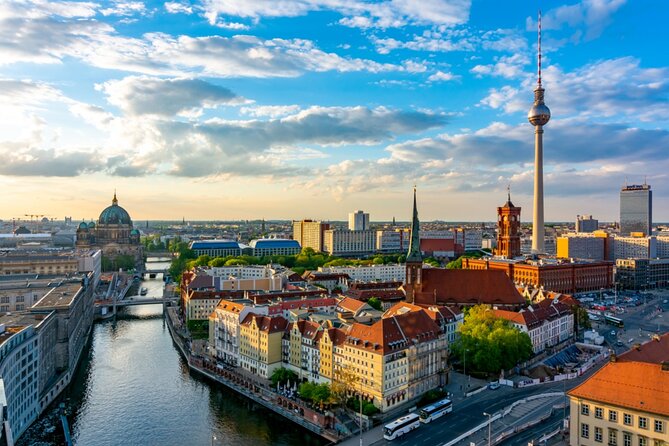
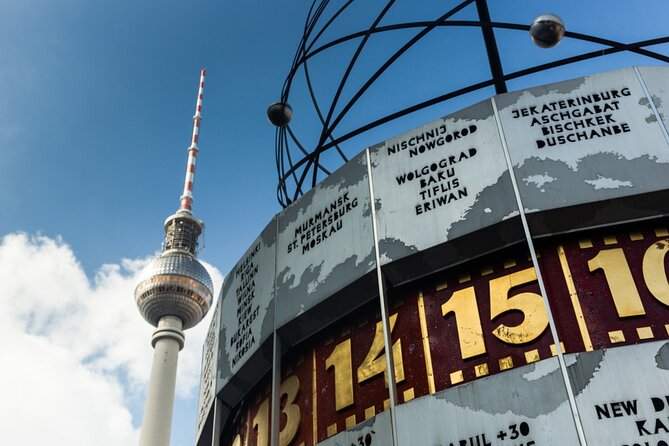
You begin at Alexanderpl. 1, near Alexanderplatz, a great choice because it is easy to orient yourself in Berlin’s busiest layer of the city center. Your first big landmark is the Urania World Clock, also called the Urania World Clock at Alexanderplatz.
This is one of those sights that looks like a piece of public design trivia until you slow down. The clock lets you read the current time in many cities worldwide from the turret-style structure, and the puzzle asks you to look around for a specific answer before moving on.
Why I like this start: it snaps you into “Berlin mode” immediately. You’re not trudging to a remote meeting point, and you’re already practicing the main game skill—look closely, find the clue, then walk.
A practical note: because this is a central square area, you’ll see foot traffic. That is not a problem, but it does make it harder to concentrate if you try to solve puzzles while passing crowds too quickly. Take an extra minute, then go.
Rathaus and the thrill of architecture you can actually see
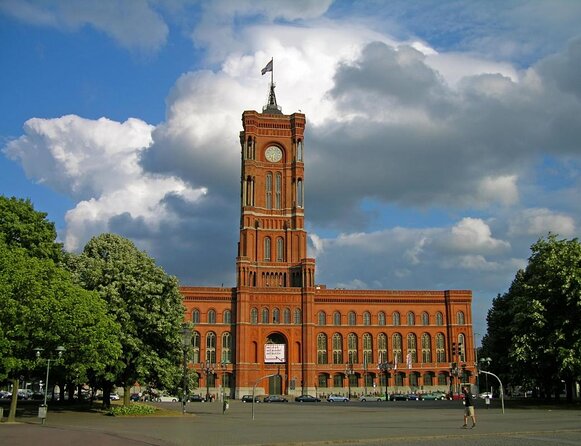
Next up is the Rathaus (Berlin City Hall). The building was built between 1861 and 1869 in the style of Northern Italy High Renaissance, designed by Hermann Friedrich Waesemann. The tower details echo older European references, including a resemblance to the cathedral tower of Notre-Dame de Laon in France, and an overall modeling link to the Old Town Hall of Thorn (today Toruń, Poland).
In a normal visit, you might breeze past the facade. In this puzzle format, you slow down by necessity. You’ll look around for a challenge answer tied to the building’s features, so you get to “read” the architecture instead of just photographing it.
Drawback to consider: if you are rushing, this stop can feel like extra work. But if you enjoy details—stonework, towers, symmetry—this is the kind of stop that makes the walk feel worth it.
Neptunbrunnen: the fountain stop that teaches you to notice
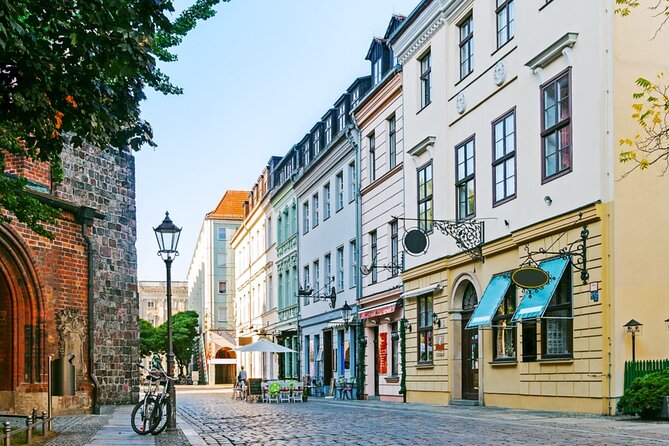
At Neptunbrunnen (Neptune Fountain), you get a classic Berlin landmark with a built date and a recognizable centerpiece. The fountain was built in 1891, designed by Reinhold Begas, and the Roman god Neptune sits in the middle.
There’s also a subtle teaching moment here. You’ll likely start thinking, okay, this is a pretty fountain, and then the puzzle question pushes you to scan the statues and surroundings for clues tied to the place’s story.
The value: it gives you a “breather” while still moving you forward through the game. You can stand for a minute, then resume without feeling stuck.
Marx-Engels-Forum and Lustgarten: shifting ideologies in the same direction
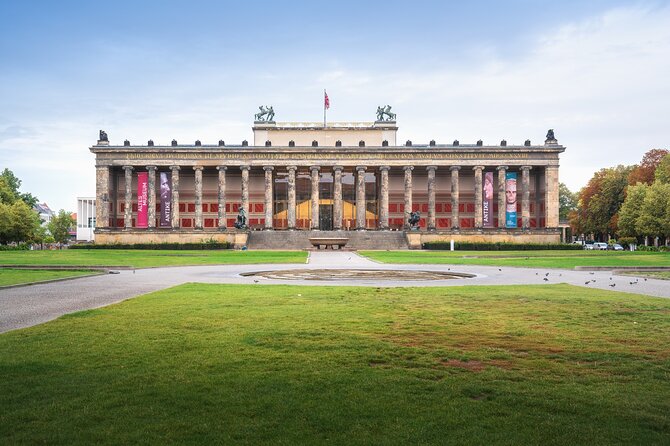
The route then moves into the Marx-Engels-Forum, a public park in the central Mitte district named for Karl Marx and Friedrich Engels, authors of the 1848 Communist Manifesto. The park was created by authorities of the former German Democratic Republic (GDR) in 1986.
This is one of those stops that helps you understand Berlin’s layers. You’re not just looking at a park sign; you’re seeing how one political system tried to shape public space and public memory. The game approach nudges you to pay attention, not just walk past.
Nearby, you reach Lustgarten on Museum Island. This park is part of the larger area that once belonged to the former Berliner Stadtschloss (Berlin City Palace). Historically, it has served as a parade ground, a site for mass rallies, and later a public park.
What I like here: the Lustgarten gives you context for how power shows up in space. Even when the building is gone, the open area can still feel like a stage. The puzzle timing helps you stop long enough to notice how the space changes your perspective.
Small practical caveat: Museum Island and surrounding squares can feel crowded when museums spill people onto the sidewalks. Go at your pace, and if you need a pause, use it. The whole point is you can take breaks and resume.
You can also read our reviews of more guided tours in Berlin





Neue Wache on Unter den Linden: a memorial built into the boulevard
Neue Wache sits on Unter den Linden boulevard in Berlin’s historic center and is one of the more emotionally weighty stops on the route. It was erected from 1816 to 1818 based on plans by Karl Friedrich Schinkel. Originally it served as a guardhouse for the Royal Palace and later became a memorial associated with the Liberation Wars, making it an important example of Prussian neoclassical architecture.
I find this stop effective because it ties architecture to meaning. You’re not only looking at forms and proportions; the building carries the idea of state memory.
The puzzle format again plays a key role. You are encouraged to look around instead of treating it as a quick pass-by photo stop. That makes it easier to respect the place without turning it into a checklist.
Bebelplatz: book burning and the uncomfortable lesson of crowds
Next comes Bebelplatz, known as the site of one of the Nazi book burning ceremonies held on the evening of 10 May 1933 in many German university cities. The student association that initiated and hosted it was the nationalist German Student Association.
This is the kind of stop where you may want extra quiet time, even though the walk keeps moving. The puzzle pushes you to look for the answer to advance, but you can still slow your breathing and read carefully.
What makes this valuable is that it’s not just abstract history. Bebelplatz is in the city’s everyday flow, which makes the event feel closer than you expect. If you like hard history but hate boring lectures, this is a strong match.
Gendarmenmarkt and Hamburg’s state representation: politics in a classic building
At Gendarmenmarkt, you get a square with a name tied to the Gens d’armes cuirassier regiment. The stables there were demolished by Friedrich II, and between two churches a new theatre was built, now known as the Konzerthaus Berlin.
The puzzle here is a nice counterbalance after the heavier memorial tone. It helps you reset visually and mentally, while still keeping you moving through significant urban space.
Then the route heads to the state representation of the Free and Hanseatic City of Hamburg in Berlin, a classicist town house on Jägerstraße in the government district. The building hosts more than one kind of official activity—think events, discussions, and day-to-day representation work. The details about who uses the building (from officials to hosted encounters) help you understand that government isn’t just a courtroom concept.
This section works well for practical sightseeing. Squares and historic facades give you visual variety, and the story framing helps you see Berlin as an active political capital, not only a museum set.
Memorial to the Murdered Jews of Europe: reading Eisenman’s design
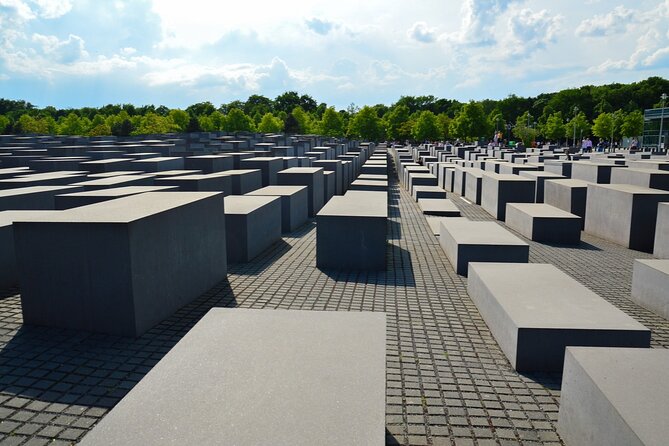
The Memorial to the Murdered Jews of Europe became the central emotional anchor of the walk for me. In 1999, the German parliament decided to establish a central memorial site, and the design competition was won by New York architect Peter Eisenman. It opened ceremonially in 2005.
You’ll treat this stop differently than the clocks and fountains, and that’s part of why it belongs. The puzzle question makes you look carefully, but you do not need to rush or “perform interest.” Let the space do its job.
One practical advantage: because the route is self-paced, you can spend as much time as you need. If you want to move quickly, you can. If you need a pause, you can. That flexibility matters in memorial spaces.
The WWII thread, including the Hitler bunker connection
The walk is built around love and war themes in Berlin, with a strong WWII throughline. One of the route highlights explicitly mentions a connection to Hitler’s former war bunker, so the story is not only about broad Nazi-era events. It’s about how those events left physical marks and how modern Berlin navigates that memory.
Why this matters for you: Berlin is full of “pretty” architecture, but not all of it is innocent. By tying the story to places you can stand in front of—squares, memorial buildings, and civic spaces—the game makes the WWII era feel less like a textbook chapter.
Just keep your expectations realistic. It is a puzzle walk, not a museum documentary. You’ll get context and cues, and then you’re meant to absorb the rest through your own observation.
How long it takes and the best pacing strategy
The tour lists an approximate duration of 1 hour. In practice, your time will depend on two things: how quickly you solve the puzzle prompts and how often you stop for short breaks.
My advice: treat it like a controlled walk, not a sprint. The design is meant to let you start, pause, and resume, so if you want a coffee stop or a moment to sit near a fountain or square, take it. Then come back and continue when your brain feels ready again.
Also, set expectations on difficulty. One of the challenges from the available feedback is that some questions can be hard while others are easier. If you get stuck, you’re not failing—you’re just spending your time where the game wants you to look more closely.
Price and value: why $6 can make sense in Berlin
At $6 per person, this is priced like a bargain if you like self-guided experiences that feel structured. You are not paying for a human guide’s time; you’re paying for a game and a route that pulls you through multiple major city-center landmarks.
For value, the big deal is flexibility plus offline play. If you’re in Berlin for a short stay, being able to do a high-impact loop without needing internet helps a lot. And because it’s private and designed to avoid crowds, it can feel smoother than joining a large group schedule.
One more angle: Berlin’s central sights can add up fast if you only do ticketed attractions. This walk mixes key stops with areas that don’t require extra entrance time for you to enjoy the story. The route even notes free admission at some specific stops like Neptunbrunnen and Bebelplatz.
Who this is best for
This experience fits you if you like history but don’t want it delivered only as a lecture. It’s also a good match if you enjoy figuring things out with clues—small research, then forward motion.
It also works well if you prefer your own pace. The structure lets you stop without losing the thread, which is useful if Berlin weather or energy levels shift during your visit.
If you want a deep, guided, explanation-heavy experience with lots of back-and-forth questions, you might feel under-served. This is story-driven, but you’re doing the guiding through the puzzles.
Practical logistics that matter (start, end, transport, time window)
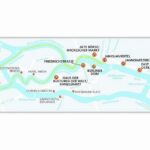
You start at Alexanderpl. 1, 10178 Berlin and end at Cora-Berliner-Straße 1, 10117 Berlin. Both are in central Berlin, so you can usually connect back to public transport without major hassle.
The route is available every day, and it’s bookable 24/7. The operating window listed runs from 5:00 AM to 9:00 PM, which gives you options for cooler morning walks or evening light.
Language is English, and the tour is a mobile ticket experience. It also states that you can play offline, so plan to start with the app ready and your phone charged.
Cancellation is free up to 24 hours in advance for a full refund, if you need flexibility before you go.
Should you book this Berlin story puzzle walk
I’d book it if you want a smart, low-cost way to experience Berlin’s WWII themes and major memorial sites while staying in control of your time. At $6, with offline play and a private setup, it feels like one of those “spend a little, learn a lot” formats that fits a city like Berlin.
I would skip it if you hate puzzle questions or if you want a guided narrative with lots of spoken explanations. In that case, you may prefer a traditional tour where answers come instantly.
If you’re planning a first or second trip to Berlin, or you just want a focused walk through the center without juggling ticket lines and group timing, this one is a strong choice. It’s structured enough to feel guided, but flexible enough to keep it on your terms.
FAQ
How long is the Love and War in Berlin self-guided story puzzle walk?
It’s listed as about 1 hour. Your actual time will vary based on how quickly you solve the puzzle challenges and how often you take breaks.
Do I need an internet connection to play?
No. You can play offline, so you do not need internet connection to complete the experience.
What language is the experience offered in?
The experience is offered in English.
Where do I start and where does it end?
You start at Alexanderpl. 1, 10178 Berlin and end at Cora-Berliner-Straße 1, 10117 Berlin.
Is it private, and do I need to meet anyone?
It’s listed as private with no human contact. Your group participates only, and it’s designed to avoid crowds.
What is the cancellation policy?
You can cancel for a full refund if you do it at least 24 hours before the experience start time. If you cancel less than 24 hours before, the amount paid is not refunded.