REVIEW · BERLIN
Alternative Berlin Private Tour with Jacob – Graffiti and Squats
Book on Viator →Operated by Nadav Jacobs Berlin experience · Bookable on Viator
Berlin has another face, and it walks with you. This private alternative tour with Jacob turns familiar landmarks into clues about Berlin’s LGBTQ life, wall-era culture, and today’s street art world. I like that you get hotel transfers built in, plus a local guide who ties the stops together instead of just pointing at buildings.
What also works well is the mix of themes: you move from the Victory Column and LGBTQ community story to Berlin’s Wall and hippie link at the Brandenburg Gate, then you slide into nightlife yards, currywurst-style street food, and the squat-scene mood around Haus Schwarzenberg. A fair heads-up: the route packs a lot into about 2 hours 45 minutes, so you’ll pass some highlights quickly and won’t have the same slow, linger-at-one-place pace you’d get on a longer tour.
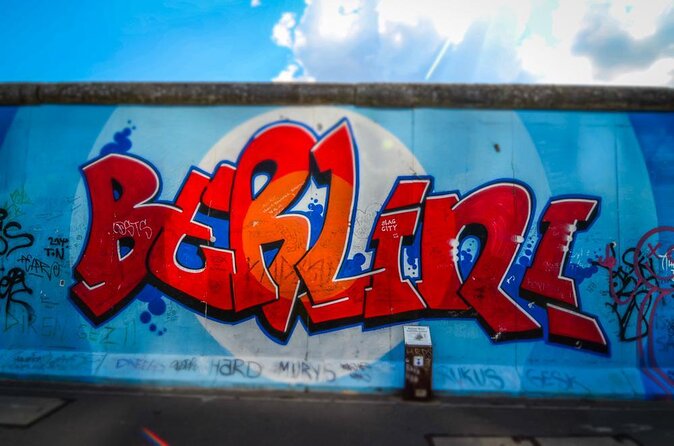
You’ll finish with graffiti and protest art energy, ending at the East Side Gallery for a short but meaningful look at a long stretch of public artwork. The upside is you’ll feel like you’ve toured a whole side of Berlin in one go, not just “hit the photos.” The trade-off is simple: comfortable shoes matter, because it’s a walking-focused experience.
In This Review
- Key things I’d plan for
- A private alternative tour that starts with pickup
- How the pace feels in 2 hours 45 minutes
- Victory Column: LGBTQ history with a real local lens
- Potsdamer Platz: the culture and cinema/business angle
- Brandenburg Gate: Wall stories and the hippie thread
- Hackesche Höfe: renovated yards and night life
- Hackescher Markt: street food cravings built into the route
- Haus Schwarzenberg: Tachles and the squat-scene mood
- Warschauer Strasse: hanging out as a lifestyle
- Kreuzberg: murals and graffiti in the real neighborhood texture
- East Side Gallery: a fast look at a long public statement
- Price and what $310 per group gets you
- Who this tour fits best (and who should choose differently)
- Should you book this alternative Berlin walk?
- FAQ
- How much does this tour cost?
- How long is the tour?
- Is pickup included?
- Is this a private tour?
- Does the tour include mobile tickets?
- Are admission tickets required for the stops?
- What about public transport costs?
- Can I arrange a private van and driver?
- Is there WhatsApp support during the tour?
- What if my plans change?
Key things I’d plan for
- Private attention with Jacob: a guide who can answer your questions and keep you moving with purpose
- Hotel/arrival pickup included: you start with less hassle and less waiting around Berlin streets
- An alternative lens on big sights: LGBTQ, Wall-era culture, nightlife yards, and graffiti all show up on the same path
- Street food stop built in: you’ll pass Berlin classics like currywurst and donner kebab, though you control how you handle spending
- Art beyond sightseeing: Jacob connects the street scene with memorial art tied to the Second World War
- Handy planning tools: you get an A3 picture folder, a big subway map, and WhatsApp support during your visit
A private alternative tour that starts with pickup
This is a private group experience for up to 15 people, and that matters in Berlin. Instead of weaving through crowds, you can actually hear the guide and keep your timing tight. If you’re the type who likes asking questions on the move, this format fits.
One of my favorite value points here is the pickup. You can be picked up from your hotel, apartment, Air B&B, or even a train station or airport location in Berlin. That saves energy before you even start walking, and it keeps you from wasting your first hours figuring out meeting points.
The guide is Jacob (listed with Nadav Jacobs Berlin experience), and the tone is clearly personal. The experience also gives you a couple of useful extras: an A3 guidance picture folder and a big map of the subway system. I like those because they help you keep your bearings after the tour ends, especially if you’re mixing neighborhoods over the next days.
You can also read our reviews of more private tours in Berlin

How the pace feels in 2 hours 45 minutes
The total time is about 2 hours 45 minutes, and the stops are short—often around 10 to 20 minutes. That means you’ll see a lot of Berlin themes in one loop, but you’ll need to accept quick snapshots rather than long photo sessions.
To me, that pacing makes sense for an alternative tour. Berlin’s street art, squats, and nightlife spaces don’t read well from a distance. You want your guide to give context fast, then you move on before the energy shifts. Just plan your expectations: if you want deeper time in just one area like Kreuzberg or the East Side Gallery, you may want extra time outside the tour.
Also note the experience is designed as a walking route near public transportation. That helps if you need to step off or hop to another place later—but it doesn’t remove the basic reality that you’ll be on your feet.
Victory Column: LGBTQ history with a real local lens
You start at Victory Column, and the theme is the gay parade and the LGBTQ community in Berlin. This opening matters because it sets the tone: the tour isn’t treating alternative culture like an accessory. It treats it like part of Berlin’s identity.
The stop is around 15 minutes with no admission ticket required. In that time, you should expect the guide to connect what you see in the area with the broader story of community visibility and public celebration in Berlin. If LGBTQ culture and public space matter to you, this is a strong first anchor before the tour jumps into more street-level scenes.
Potsdamer Platz: the culture and cinema/business angle
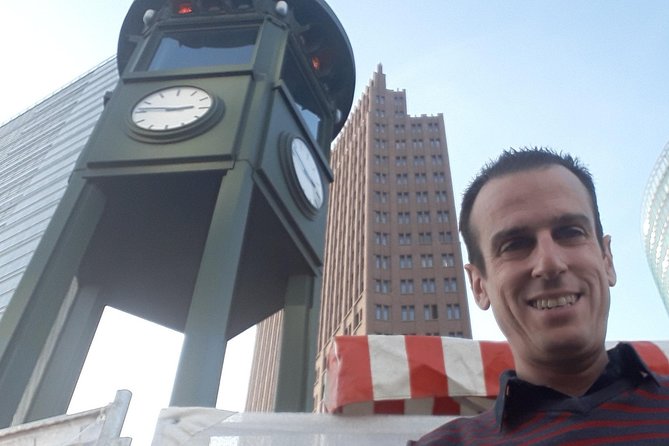
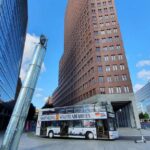
Next comes Potsdamer Platz, framed as a center of culture, cinema, and business. At roughly 20 minutes and free admission, it’s one of your “bigger Berlin” stops early on—more structured, more recognizable, and a good place for the guide to talk about how different kinds of city life collide.
I like this stop for two reasons. First, it gives you a mainstream reference point before you head toward the more underground-feeling places. Second, the culture/cinema/business framing helps you understand why alternative spaces can grow in cities that also run on media and commerce.
Brandenburg Gate: Wall stories and the hippie thread
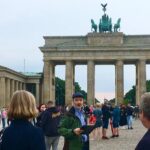
Then you hit Brandenburg Gate, where the tour connects the Wall and the hippis. This is about 20 minutes and free. Even if you know the general landmarks, the added angle is the hook: the tour uses the Gate as a springboard to talk about how people lived, resisted, and performed culture during and after the Wall era.
A practical tip: since this stop is short, bring your questions. If you care about how counterculture shows up in a city’s main squares and monuments, this is the moment to ask. Jacob’s approach (especially from the way the tour is described) seems to focus on connecting ideas, not just listing dates.




Hackesche Höfe: renovated yards and night life
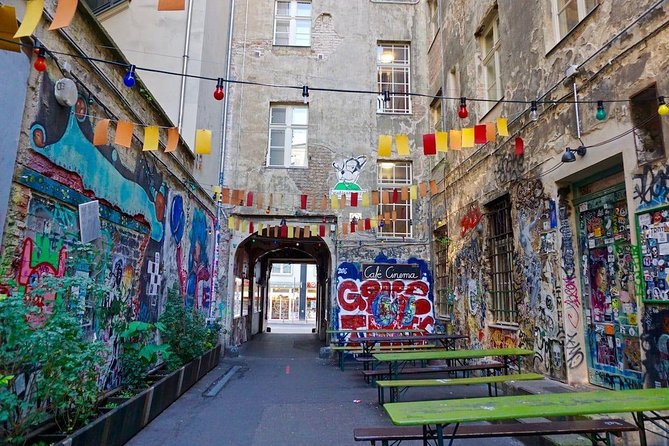
After that, the route moves into Hackesche Höfe, with time set aside for the renovated yards and the night life. This stop is about 20 minutes and free. It’s a nice shift because the setting feels more “human scale” than the big landmark areas.
I like that Hackesche Höfe is used as a bridge. It’s close enough to mainstream Berlin that you understand where you are, but it points you toward a more alternative nightlife atmosphere. The tour’s theme is basically: the city’s style isn’t one thing—it’s a mix, and the yards are one of the places where that mix feels obvious.
Hackescher Markt: street food cravings built into the route
At Hackescher Markt, the theme turns to Berlin street food: currywurst and donner kebab. This is about 20 minutes, free admission. It’s a smart inclusion because it gives you a low-pressure, very Berlin payoff that doesn’t require extra planning.
Here’s how I’d handle it: you can treat this stop as a quick look-and-smell moment, or you can use it for an actual bite depending on your budget and appetite. The tour includes walking and context, but it doesn’t list food as included—so money planning is on you.
If you’re traveling with kids, picky eaters, or people who don’t want to stop for food, this part can still work as a cultural break. You get the vibe without committing to a full meal.
Haus Schwarzenberg: Tachles and the squat-scene mood
Now we get to the tour’s edge. Haus Schwarzenberg is where the experience points to Tachles and dead chicken squats, with about 30 minutes and free admission.
This is where the tour feels most “alternative Berlin” in practice. The guide’s job here is to explain what these names mean in the context of squatting and street culture, and how that kind of space fits into the city’s long-running story of people taking over places. If you like Berlin when it’s a little rough around the edges, this stop is one of the reasons you booked in the first place.
One extra detail that’s worth knowing: Jacob also connects the street art world with art memorials tied to the Second World War. Even though the tour is themed around graffiti and squats, that reference matters because it frames Berlin’s public creativity as something that can carry memory, not just aesthetics.
Warschauer Strasse: hanging out as a lifestyle
Next is Warschauer Strasse, described as the hanging out area of Berlin. It’s about 20 minutes and free. This stop seems designed to help you read the city like a social place, not just a museum.
I like stops like this because they teach you how to recognize where people actually gather. You’re not just looking for a landmark—you’re looking for the spaces that feel made for conversation, music energy, and showing up without being formal.
If you’re a “show me how locals spend time” traveler, this is a good moment to pay attention to the surroundings and ask Jacob what to watch for as you explore later.
Kreuzberg: murals and graffiti in the real neighborhood texture
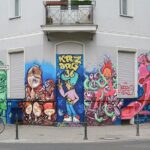
Then you reach Kreuzberg for murals and graffiti. This is a shorter stop at about 10 minutes and free. Because the time is tight, Jacob’s guidance becomes extra important: a quick stop can still be meaningful if you understand what the graffiti is reacting to and why it’s placed where it is.
I recommend treating this as an orientation stop. Look up. Take in street-level textures. Then let Jacob interpret what you’re seeing. With only 10 minutes, you won’t have time to “read everything” yourself, but you can still walk away understanding how graffiti functions here—as commentary, identity, and sometimes provocation.
East Side Gallery: a fast look at a long public statement
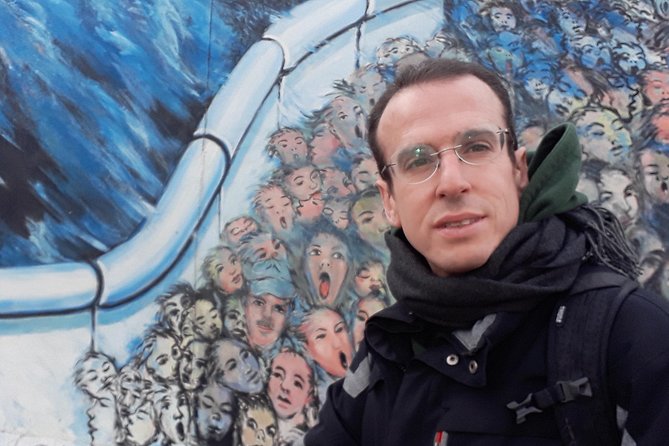
Finally, the tour ends with the East Side Gallery, described as the longest gallery in the world. It’s about 10 minutes and free.
Ten minutes sounds short, but for a tour like this, it works. By the time you arrive, you’ve already been primed by the Wall and cultural identity themes. You’ll likely notice how the tour’s earlier storytelling turns into a visual punch at the end.
If you want to do more than a quick look, use the subway map you get here to plan an extra pass later. But even as a shorter stop, this ending gives the experience a clear emotional arc: from community visibility to street art as public memory.
Price and what $310 per group gets you
The price is $310 per group for up to 15 people, and the tour runs about 2 hours 45 minutes. That sounds simple, but value depends on what’s included.
Here’s what you’re paying for that you’d otherwise spend time and money hunting for:
- A private local guide who keeps the route tied to one alternative cultural story
- Pickup from your Berlin hotel or station area (real time saver)
- A mobile ticket, plus a guide picture folder and a big subway map
- WhatsApp availability for questions or help during your Berlin visit
Then factor in what’s not included. You’ll handle public transport separately—listed as 3 to 11 euros per person for a one-time or daily ticket. If you need a private van and driver, that’s available on request. And if you’re in a group larger than 6, you’ll need to contact the provider.
To me, this price is fair if you want a guided “alternative Berlin” story without the stress of organizing transfers and figuring out the route across neighborhoods. If you’re traveling solo or as a small group, the cost may feel higher than standard walking tours, but the private guide plus pickup are the difference-makers.
Who this tour fits best (and who should choose differently)
This tour fits you if you’re active, curious, and you like Berlin through culture that isn’t just polished and postcard-ready. The graffiti and squats themes are front and center, and the LGBTQ + Wall-era framing gives it more depth than a purely street-art walk.
It’s also a good fit if you enjoy a guide who talks, listens, and adapts. The feedback around Jacob points to a guide who pays attention to what you’re asking and what you’re noticing.
You might choose a different style if you prefer very long stops, deep museum time, or a slow-paced photo tour. This route is about moving through ideas quickly—and it’s not trying to win awards for lingering.
Should you book this alternative Berlin walk?
I’d book it if you want one organized afternoon that stitches together LGBTQ visibility, Wall-era culture, nightlife yards, street food culture, and graffiti/squat scenes with a local guide named Jacob. The fact that pickup is included makes it a low-stress way to do a harder-to-plan theme.
Skip the booking if you’re allergic to walking or you need long stretches at only one location. This tour is for the kind of traveler who likes seeing the whole “other Berlin” picture, not just one page of it.
If you go, wear comfortable shoes and come ready with one or two questions for Jacob. Ask about the connections between street art, community spaces, and how public memory shows up in Berlin. You’ll get more out of the short stops when you’re thinking in themes—not just sights.
FAQ
How much does this tour cost?
It costs $310.00 per group, up to 15 people.
How long is the tour?
It runs for about 2 hours 45 minutes.
Is pickup included?
Yes. Pickup is offered from your hotel, apartment/Air B&B, or train station/airport in Berlin.
Is this a private tour?
Yes. It’s a private tour/activity, and only your group participates.
Does the tour include mobile tickets?
Yes. Mobile ticket is included.
Are admission tickets required for the stops?
The listed attractions are shown as free admission tickets for the stops on this experience.
What about public transport costs?
Public transport is not included and is estimated at 3 to 11 euros per person (one time or daily ticket).
Can I arrange a private van and driver?
A private van and driver is available upon request.
Is there WhatsApp support during the tour?
Yes. WhatsApp availability is included for any questions or help with your Berlin visit.
What if my plans change?
You can cancel for a full refund up to 24 hours before the experience’s start time. Free cancellation is available based on local time rules. Service animals are allowed, and the tour is near public transportation.