REVIEW · BERLIN
Berlin Highlights in 2 Hours: Express Walking Tour
Book on Viator →Operated by Original Berlin Walks · Bookable on Viator
Berlin can feel like one big history lecture—until you do it fast, on foot, with a guide who keeps the pace moving. This 2-hour express walking tour strings together the Cold War, Nazi rule, the Holocaust memorials, and the Berlin Wall in one practical route that still leaves you breathing room after.
What I like most is how efficient it feels without being rushed in a frustrating way. You cover major landmarks like the Brandenburg Gate and end at Checkpoint Charlie, and the tour structure keeps you from getting lost or second-guessing what matters.
My one caution: this route walks through some heavy, emotionally intense sites (from Holocaust memorials to Hitler’s bunker). If you want a lighter sightseeing day, you may find the subject matter a lot to process in a short time.
In This Review
- Key things worth knowing before you go
- Why a 2-hour highlights walk works in Berlin
- Price and value: what $21.77 buys you here
- Pariser Platz and the Brandenburg Gate: start with a symbol you can feel
- The Reichstag building: politics in stone, from Weimar to today
- Sinti and Roma Memorial and the Holocaust Memorial: remembrance you can’t ignore
- Fuhrerbunker: the Nazi endgame told from the ground
- The Aviation Ministry of Berlin and Luftwaffe HQ: architecture as evidence
- The Berlin Wall at Niederkirchnerstraße: escape stories with real stakes
- Topography of Terror: the SS, Gestapo, and SD and what’s there now
- Checkpoint Charlie: the Cold War ending point you can picture
- Guides, group size, and why the pace stays human
- Who should book this tour (and who should pair it differently)
- Should you book this express Berlin highlights walk?
- FAQ
- How long is the Berlin Highlights in 2 Hours walking tour?
- What’s the price per person?
- Is the tour offered in English?
- Where do you meet and where does the tour end?
- Are the admissions for the stops included?
- How big is the group?
- Is free cancellation available?
Key things worth knowing before you go
- Express route, big impact: In about two hours, you hit the big Berlin “story anchors” in central locations.
- Free entry at every stop: The listed admissions are free, so your time stays focused on the guided experience.
- Small-group feel (up to 25): Easier to hear, ask questions, and keep the walk moving.
- Guides get named in praise: Reviews call out guides such as Ryan, Gregor, Dylan, and Giles for clarity and good communication.
- Outdoor pacing: Most of the experience is walking and standing outside, so plan for weather.
- You’ll leave with context: The tour connects events and places, not just facts and photos.
Why a 2-hour highlights walk works in Berlin
Berlin rewards people who can switch gears quickly. One day you’re staring at political power sites; the next you’re trying to imagine what life was like on either side of the wall. This tour is built for that reality: it’s short, focused, and designed to help you get your bearings fast.
You’re paying about $21.77, but you’re not buying “a ticket to a single attraction.” You’re buying a guided line through central Berlin’s most loaded sites, with a clear start and end point and a pace that fits a busy itinerary. At the end, you’re not stuck for the next hour trying to plan what to see next—you have open time to build your own day.
The other quiet win is the structure. Each stop is time-boxed, so the walk stays on track, and you don’t lose the whole afternoon to one overly long pause. It’s ideal if you like to see a lot without ending the day with sore feet and an empty brain.
You can also read our reviews of more walking tours in Berlin



Price and value: what $21.77 buys you here
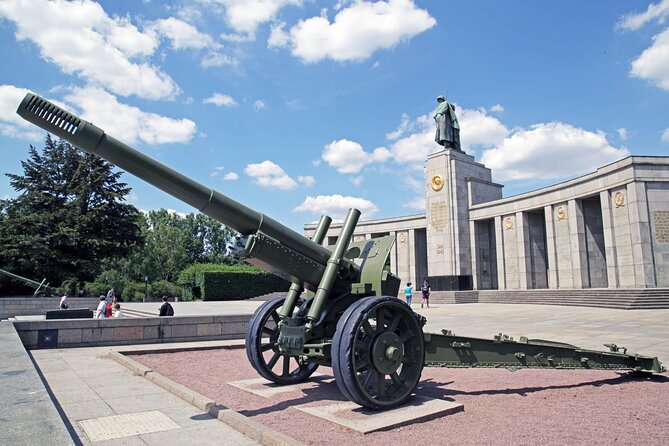
Let’s talk value in plain terms. At $21.77 per person for an about-two-hour guided walk in central Berlin, you’re paying for three things:
First, you’re paying for a guided explanation that ties the places together. The route moves from the Cold War-era border point at Checkpoint Charlie back through Nazi rule and forward to how Germany remembers those events today.
Second, you’re paying for logistics that would otherwise eat your time. The tour has a clear meeting point at Pariser Platz 1 and finishes at Checkpoint Charlie (Friedrichstraße 43-45). It’s a simple start-to-finish plan.
Third—and this matters—you’re not paying additional admissions at the listed stops. The tour information shows admission ticket items as free at each stop, which keeps your total cost predictable and your planning stress low.
Is it the cheapest way to see these sites? Maybe not if you were hoping to do everything with zero guiding. But for a first trip to Berlin, when you want context more than selfies, this is the kind of “spend a little, learn a lot” deal that actually holds up.
Pariser Platz and the Brandenburg Gate: start with a symbol you can feel
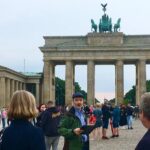
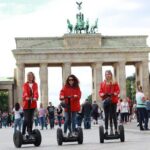
You begin at Pariser Platz 1, right by the Brandenburger Tor. The tour starts with an important visual anchor: a major symbol of unity and peace. From there, you move through the square area (Pariser Platz) with its neoclassical architecture all around you, and your guide gives you the historical framing to help you understand why this location keeps showing up in Berlin’s modern identity.
The practical win at the start is orientation. Brandenburg Gate is one of those places where your brain can quickly map the center of Berlin. So even if you later explore on your own, you’ll remember how the main streets and public spaces connect.
Possible drawback to note: because you start with such a well-known spot, it can feel crowded in the area depending on the time of day. The tour still runs smoothly, but if you hate crowds, consider going earlier rather than later.
The Reichstag building: politics in stone, from Weimar to today
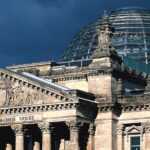
Next you head to the Reichstag building, where the tour focuses on its architecture and its political story. The guide connects it to the Weimar Republic and the present day, which is a smart way to keep you from treating this as just another impressive facade.
Why this stop matters in an express tour: it helps you understand that Berlin’s history isn’t a straight line. Political systems change, power shifts, and the same buildings can carry new meaning over time. You’re learning how the city’s physical landmarks take on new roles as Germany’s political life changes.
What to keep in mind: this stop is still outdoors and photo-friendly, but you’re not here to linger like you would at a museum. The tour gives you a concentrated explanation, then moves on quickly.
Sinti and Roma Memorial and the Holocaust Memorial: remembrance you can’t ignore
From there, the walk moves toward two memorial spaces tied directly to the suffering caused by National Socialism.
First is the Memorial to the Sinti and Roma Victims of National Socialism, where you’ll learn that thousands of Sinti and Roma people were persecuted and suffered during the Holocaust. Your guide explains why remembering this group specifically matters, and the tour frames the memorial as a tribute to real lives.
Then comes the Memorial to the Murdered Jews of Europe, the one made of concrete slabs forming a labyrinth. The guide’s role here is crucial. In this setting, it’s easy to treat it like a photo spot unless someone explains what you’re meant to feel and why the design is meant to affect your thinking.
These are not casual stops. In a short, two-hour walk, you’ll be asked to slow down mentally, even if you’re still physically moving. If you’re sensitive to heavy topics, plan to take a quiet moment for yourself after the tour too.
You can also read our reviews of more tours and experiences in Berlin

Fuhrerbunker: the Nazi endgame told from the ground
The tour then leads you to Fuhrerbunker, where your guide talks about the final days of World War II. This stop covers Hitler’s suicide on April 30, 1945, and also how Germany today confronts and reflects on its past.
In my view, what makes this stop useful on an express tour is the contrast: you’ve just moved through memorial spaces built for remembering victims. Then you shift to the final chapter of the regime itself—where leaders ended the war in a collapsing system.
A consideration: this is intense subject matter in a concentrated time window. If you’re traveling with kids or you know you want a more upbeat itinerary, you might rethink including this exact tour or pair it with something lighter afterward.
The Aviation Ministry of Berlin and Luftwaffe HQ: architecture as evidence
Next you visit the former Reich Air Ministry and Luftwaffe Headquarter, an example of Nazi-era architecture. The guide also connects its later use by East Germany’s government and notes that it’s now home to the Federal Ministry of Finance.
This is one of the most interesting “history-to-today” transitions on the route. You’re not only seeing a building from a single era—you’re seeing how structures survive regime changes, even when the meaning of those structures changes completely.
Then you keep moving toward other sites that show how the regime used power and fear. It all fits together as one theme: how political systems physically took over space and then how later Germany handled that legacy.
The Berlin Wall at Niederkirchnerstraße: escape stories with real stakes
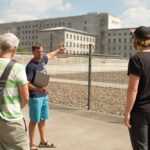
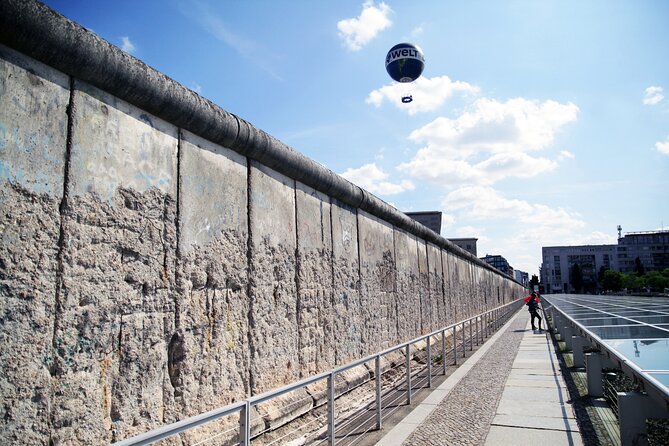
A short walk later, you reach Niederkirchnerstraße, where you see a preserved section of the Berlin Wall. The guide shares stories of escape attempts—both successful and tragic—and explains daily life on both sides of the divide.
This stop works particularly well in a tour like this because it turns a political concept into something you can point to. The Wall is not abstract when you’re standing next to it, even if the preserved section is only a slice of the full story.
You also get a mix of emotion and realism. Even in an express format, the escape-attempt stories remind you that people weren’t just escaping geography; they were trying to reach freedom, safety, and family.
Topography of Terror: the SS, Gestapo, and SD and what’s there now
Then you arrive at Topography of Terror, the site where the SS, Gestapo, and SD once had their headquarters in Nazi Germany. Today, it’s home to the Topography of Terror exhibition, which offers insights into the atrocities committed during World War II.
This is another stop where your guide’s framing matters. The location isn’t just symbolic; it connects the machinery of terror to a place you can walk around. Even if you don’t plan to go deep into the exhibition itself during the tour, you’ll leave with a clearer idea of what these organizations were and why the site is worth remembering.
The downside of an express format here is obvious: you may want more time to read, take in the details, and sit with the information. But that’s also why this tour pairs well with a follow-up visit if you want extra time.
Checkpoint Charlie: the Cold War ending point you can picture
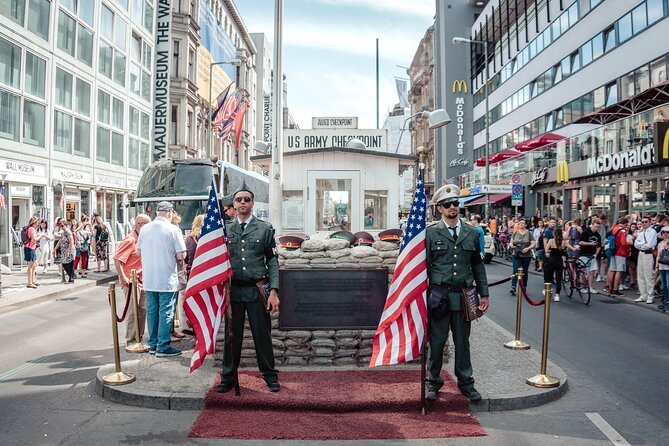
Finally, you end at Checkpoint Charlie, the famous border crossing point during the Cold War. The guide shares stories tied to espionage and escape attempts, and you close the loop of your Berlin timeline: from the Nazi period, to the aftermath, to the Cold War divide.
This stop is a strong finish for a walking tour because it’s easy to visualize. Even if you’ve only seen the idea of Checkpoint Charlie through films or photos, being there makes the concept feel real.
And as a practical tip: since you finish here, you can keep exploring immediately. You’re not left stranded with a vague route ending somewhere hard to reach. Checkpoint Charlie sits in a spot where you can head to other parts of central Berlin with less hassle.
Guides, group size, and why the pace stays human
This tour runs with a maximum of 25 travelers, which is a big deal. In a city full of “look at this, move on” tours, that small cap helps keep the experience conversational instead of chaotic.
The best praise in the reviews centers on the guide. Names like Ryan, Gregor, Dylan, and Giles come up with consistent themes: clear communication, strong knowledge, and the ability to keep the story interesting even when the topic is heavy. One review highlights how a guide made everything mean something, which is exactly what you want on a history route.
You’ll also notice the walking pace gets described as appropriate for mixed ages, from people in their 20s up through 70s. That suggests the tour isn’t built for power walkers, but for normal travelers who want to hear the explanation without sprinting to keep up.
And there’s another potential bonus: if the group ends up smaller than expected, the whole experience can feel more personal. On a two-hour tour, that matters.
Who should book this tour (and who should pair it differently)
This Express Walking Tour is a great fit if:
- You’re a history buff who wants the big story beats without spending the whole day
- You’re visiting Berlin for the first time and want a sensible map of what’s central
- You want a group tour to save planning time and make sense of what you’re seeing
It may be less ideal if:
- You want a light, relaxed day for sightseeing only
- You’re not comfortable with Holocaust-related memorial stops in a tight schedule
- You prefer museum-style pacing with lots of reading time at each site
If you do book it, I’d pair it with something that gives your brain a reset afterward—maybe a meal nearby, or another short walk where you can just look at the city without the constant historical context.
Should you book this express Berlin highlights walk?
If you want a fast, organized way to understand central Berlin, I’d book it. The value is strong because the tour is short, the meeting and ending points are clear, and the stops are listed as free admissions. You also get guided storytelling that ties places together instead of scattering facts.
My main reason to hesitate is emotional load. If you know you’ll struggle with Holocaust remembrance and Nazi-era sites, consider whether the topic intensity matches your travel mood. But if you can handle serious history—and you want context more than wandering—this is the kind of tour that helps you see more and stress less.
FAQ
How long is the Berlin Highlights in 2 Hours walking tour?
It runs for about 2 hours.
What’s the price per person?
The price is $21.77 per person.
Is the tour offered in English?
Yes, it’s offered in English.
Where do you meet and where does the tour end?
You start at Pariser Platz 1, 10117 Berlin. You end at Checkpoint Charlie at Friedrichstraße 43-45, 10117 Berlin.
Are the admissions for the stops included?
The tour lists admission tickets as free at each stop.
How big is the group?
The tour has a maximum of 25 travelers.
Is free cancellation available?
Yes. You can cancel up to 24 hours in advance for a full refund.