REVIEW · BERLIN
Berlin Off-the-Beaten-Path Walking Tour: Kreuzberg, Mitte and Friedrichshain
Book on Viator →Operated by Alternative Berlin Tours · Bookable on Viator
Berlin has a second map. This walking tour traces today’s Berlin through Kreuzberg, Friedrichshain, and beyond, with a local guide who connects neighborhoods to the city’s weird, creative past.
I love how the route mixes everyday life with street-level history: Turkish community corners, a Jewish quarter stop, and the kind of urban “left-field” gardening you won’t find on a postcard. I also love the way the tour turns Berlin’s alternative music and politics into real places you can point at, from student protests to punk scenes and the Love Parade story.
One thing to plan for: it’s a long chunk of time outdoors. If it’s cold or wet, you’ll feel it, so bring layers and expect lots of walking.
In This Review
- Key highlights I’d plan around
- A Different Berlin Route Through Kreuzberg, Mitte, and Friedrichshain
- Starting at Vapianoam Alex and finishing at YAAM Beach
- Kreuzberg’s Turkish quarter, Jewish corner, and guerrilla gardens
- Food culture stops: currywurst, doner kebab, and Prater Garten
- Counterculture on foot: students, Baader-Meinhof, punk, and May 1
- Street art, the music scene, and YAAM Beach’s ending energy
- Walking pace, transit legs, and the AB ticket reality
- Price and value for a 4.5-hour small-group alternative tour
- Should you book this Kreuzberg–Mitte–Friedrichshain walking tour?
- FAQ
- What is the tour duration?
- What time does the tour start?
- Where does the tour start and end?
- Is the tour offered in English?
- How much does it cost?
- Are public transport tickets included?
- Is food included?
- Does the price include a guide?
- What’s the group size?
- Is there free cancellation?
Key highlights I’d plan around
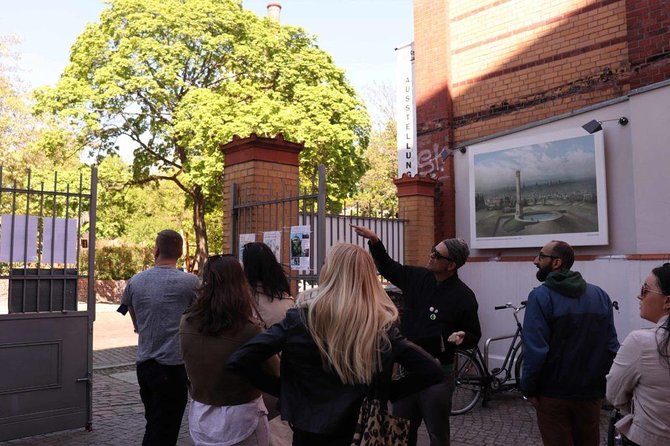
- Small group (max 20 people) keeps the chat going without feeling like a lecture
- Kreuzberg focus includes the Turkish neighborhood, Jewish history, and the area’s organic/guerrilla-garden vibe
- Food lore you can actually use covers currywurst and doner kebab, plus a stop at Prater Garten
- Counterculture timeline on foot moves from 1960s protests to Baader-Meinhof and punk-era May 1 riots
- Music and art finish strong with YAAM Beach and a look at how electronic, reggae, hip-hop, and rasta fans show up in Berlin life
A Different Berlin Route Through Kreuzberg, Mitte, and Friedrichshain
This tour is built for people who feel like they already know the big sights and want the “how does this city work?” version instead. You start in central Berlin and spend the afternoon moving through districts that sit closer to Berlin’s day-to-day edge—places where history didn’t stay parked behind glass.
The Kreuzberg–Mitte–Friedrichshain mix matters. Kreuzberg brings you face-to-face with a strong Turkish community and the neighborhood’s Jewish quarter. Mitte gives you the contrast of the central city, and Friedrichshain tends to feel more experimental and artsy, which fits perfectly with the tour’s main theme: counterculture.
The best part is that the guide doesn’t treat history like a list of dates. You’ll hear about the 1960s student protest movement, the rise of Baader-Meinhof in the 1970s, and how punk and May 1 riots fed Berlin’s rebellious identity in the 1980s. Then, the story keeps moving—because in Berlin, art and protest don’t live in separate worlds.
You can also read our reviews of more walking tours in Berlin



Starting at Vapianoam Alex and finishing at YAAM Beach
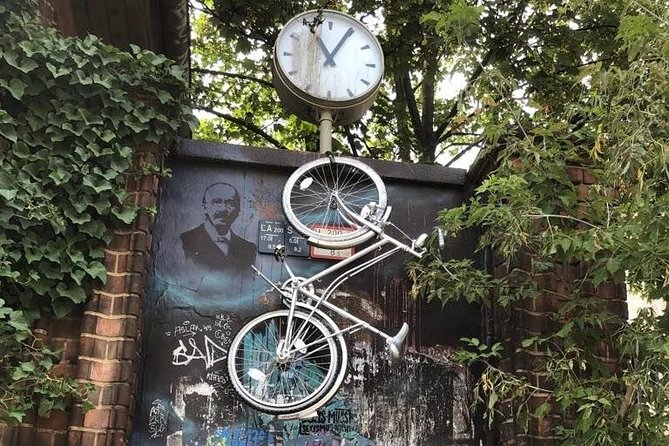
You’ll begin at Vapianoam Alex, Rathausstraße 6, 10178 Berlin, starting at 12:00 pm. The tour wraps at Stralauer Allee 34, 10245 Berlin, at YAAM Beach.
YAAM Beach is a smart finish. It’s a place associated with music culture, and the tour uses it as a closing lens: how reggae, hip-hop, and rasta fans fit into Berlin’s identity, and why electronic scenes like the Love Parade matter beyond the festival name.
One practical note: the tour can run a bit beyond the exact printed end point in the ticket details. If you’re trying to catch a strict next reservation, don’t schedule it back-to-back. Give yourself a cushion, and let your guide call the pace.
Kreuzberg’s Turkish quarter, Jewish corner, and guerrilla gardens
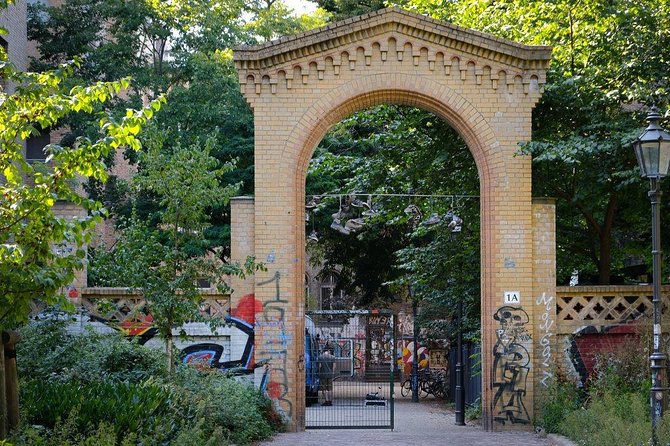
Kreuzberg is the heart of this route, and the tour uses that neighborhood to explain Berlin’s “migration + ideas + space to experiment” energy. You’ll spend time around the thriving Turkish community, and you also get a stop connected to Berlin’s Jewish quarter. That pairing is important: it shows how Berlin’s alternative identity isn’t just about art and politics—it’s also about people, community, and the layers of who lived where.
What I like most is how the tour points out the small signals of change. Kreuzberg is described as peppered with urban farms, guerrilla gardens, alternative art galleries, and organic markets. Even if you’ve seen a lot of Berlin street photos, this kind of on-the-ground detail helps you understand why the area feels “alive” in a grounded way, not just in marketing copy.
There’s also a bigger point here: Berlin’s counterculture didn’t only happen in big speeches or headline-making events. It happened in spaces where people tried different ways of living—gardening, sharing food systems, building art communities, and creating hangout zones that feel slightly off-script.
A standout moment from the tour experience includes a playground where kids build a lot of it themselves (ages 6–16) and even burn down part of it each year to make room for new builds. That’s a perfect example of the “Berlin logic” the guide is trying to show: playful, destructive, creative, and all part of a cycle.
Food culture stops: currywurst, doner kebab, and Prater Garten
Berlin food is never just fuel on this tour. It’s used as a cultural translator.
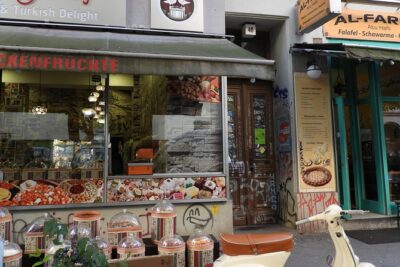
You’ll have the chance to try currywurst at your own expense. This is the classic fried sausage topped with curry-flavored ketchup—one of those foods that sounds simple until you learn how it became a Berlin staple. You’ll also hear about doner kebab, described here as a Turkish-style version of a gyro that took off in Berlin and became a daily-life food for a lot of people.
The point isn’t that you must eat. It’s that once the guide explains what these foods represent, you’ll recognize them everywhere you go after the tour. It changes how you read the city.
Then comes a more traditional anchor: a stop at Prater Garten, known as the city’s oldest beer garden. You get a contrast—counterculture flavors and immigrant food stories on one side, and a long-running Berlin social spot on the other. It’s a neat reminder that Berlin’s alternative identity doesn’t erase old institutions. It sits next to them.
Lunch time is also part of the tour structure. There’s about 20–30 minutes set aside to grab something, but meals themselves aren’t included, so plan on paying for what you choose.
Counterculture on foot: students, Baader-Meinhof, punk, and May 1
If you like history, this tour has a more personal feeling than the usual Cold War route. You walk while the guide connects movements to locations, so you’re not just memorizing names.
The tour story is paced like a timeline:
- 1960s student protest movement, showing how frustration turned into organized street action
- Baader-Meinhof in the 1970s, where the narrative turns darker and more intense
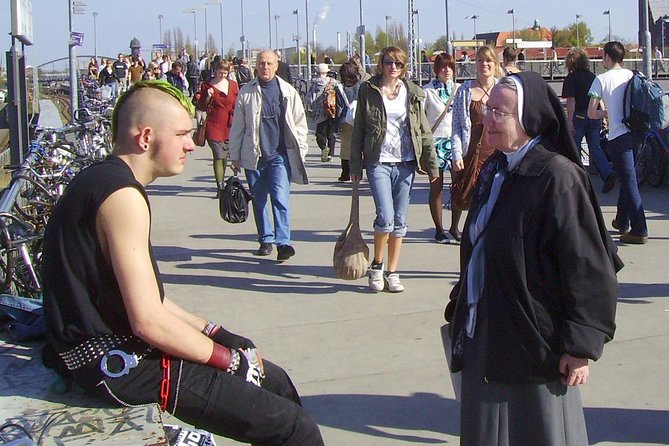
- Punk and May 1 riots in the 1980s, when Berlin’s rebellious identity becomes louder and more visible
What works well is how art and music get folded into the political story. Berlin’s creative culture isn’t treated like a side hobby. It’s treated like an engine.
You’ll also hear about the Love Parade, and how electronic dance music became a public expression of the city’s experimental spirit. Later, the YAAM Beach finish ties in the reggae/hip-hop/rasta fan world, so the political timeline ends with cultural reality—how scenes gather, how people claim space, and how subcultures survive.
One more thing: the tone stays grounded. The guide approach is praised for having an on-the-street feel, not just facts. Names mentioned in feedback include guides like Rhys, Lee, Reese, Antonio, Ben, Arnie, Jake, and Jason. If you get a guide with that same energy, you’ll likely get lots of room for questions about Berlin life, not only about past events.





Street art, the music scene, and YAAM Beach’s ending energy
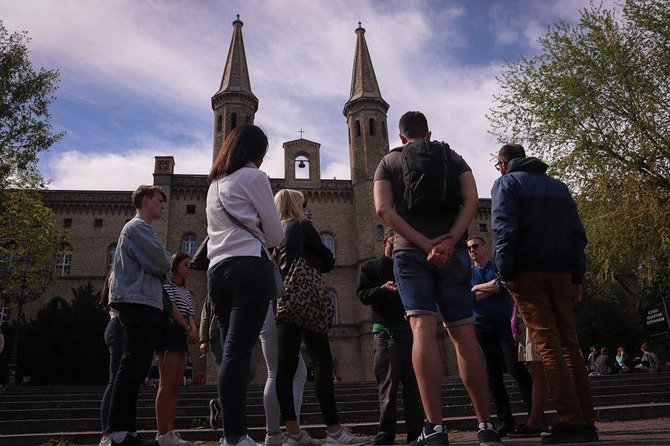
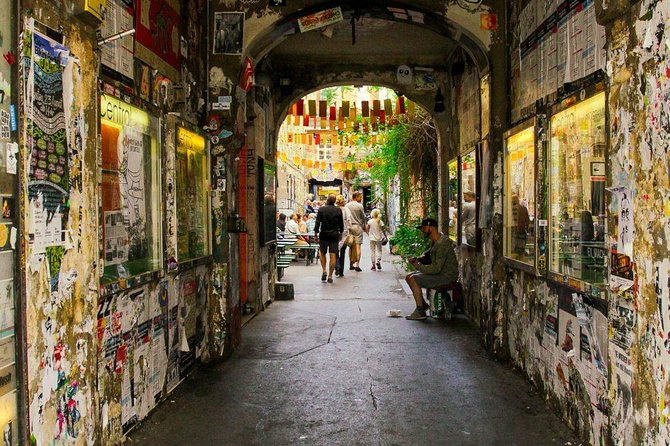
Street art is a major thread in this tour. You’ll see how it shows up in walls and alleyways across the neighborhoods you cover, and the guide explains why that visual language fits Berlin’s subculture history.
This is also where Friedrichshain’s character tends to come through. The tour links art scenes and punk-era identity, which helps you read what you’re seeing. Instead of “cool mural,” you get “why this style and why here,” which makes the artwork feel more purposeful.
Music culture ties it all together. The tour brings up electronic culture via the Love Parade story, and it ends at YAAM Beach, where the focus shifts to how different music groups and fan communities keep Berlin’s alternative identity moving. The finish point matters because it doesn’t end with a museum feeling. You end in a place that’s meant for hanging out.
If you care about Berlin as a living city, that ending lands well. You leave with a sense that neighborhoods change because people keep inventing new uses for the spaces they find.
Walking pace, transit legs, and the AB ticket reality
This is a walking tour, but it’s not pure foot power. The format includes public transport legs during the 4 hours and 30 minutes. In practice, that can mean fewer blisters and more neighborhood coverage.
Still, you’ll walk enough that comfortable shoes are a must. One piece of feedback called out that you cover a lot of ground, so plan for it.
On the transit side, AB public transport tickets are required for the tour. A day pass is recommended. The tour includes time for tram/U-Bahn travel as part of the tour window, but you still need to pay for your ticket.
Weather is the other logistics issue. It’s a long outdoor afternoon, and at least one note from the experience points out how uncomfortable it can get in freezing conditions. Dress like Berlin in winter means it: warm layers, hat or hood, and something that blocks wind.
Finally, group size helps pacing. The tour maxes at 20 people, which usually means you can keep questions going without getting lost in the shuffle.
Price and value for a 4.5-hour small-group alternative tour
At $30.25 per person, this isn’t priced like a fancy private guide. It’s priced like a smart way to learn the city through neighborhoods you’d skip on your own.
What you’re paying for is the English-speaking local guide plus the time structure that connects stops into a story. Food and drinks are not included, and that’s a good thing to understand up front. You’ll have options like currywurst on your own dime, and you’ll have a lunch break window where you choose what works for you.
Transit tickets are also extra. Since an AB day pass is recommended, your real total cost depends on how much public transport you plan to use that day. If you’re already thinking about using trams and U-Bahn, the tour value gets better fast.
In short: this is good value when you want more than monuments. It’s worth the price when you want city insight, street art context, and counterculture history mapped onto real neighborhoods.
Should you book this Kreuzberg–Mitte–Friedrichshain walking tour?
Book it if you want Berlin beyond the checklist. You’ll like it if you’re drawn to street art, neighborhood culture, immigrant food stories, and a counterculture timeline that treats people and places as the same thing.
Skip it or think twice if:
- You hate long walks in the cold (the tour can be uncomfortable outdoors)
- You need a tightly scheduled end time for the next appointment (it may run a bit past the printed end point)
- You’re only interested in big, famous sights (this route is built for the side streets and lesser-known corners)
If you’re the type who likes asking why a city looks the way it does, this tour is a strong bet. It ends at YAAM Beach, so you finish with both context and atmosphere, not just photos.
FAQ
What is the tour duration?
The tour lasts about 4 hours 30 minutes.
What time does the tour start?
It starts at 12:00 pm.
Where does the tour start and end?
It starts at Vapianoam Alex, Rathausstraße 6, 10178 Berlin and ends at Stralauer Allee 34, 10245 Berlin, at YAAM Beach.
Is the tour offered in English?
Yes, it’s offered in English.
How much does it cost?
The price is $30.25 per person.
Are public transport tickets included?
No. AB public transport tickets are required, and a day pass is recommended.
Is food included?
No. Food and drinks are not included, though you can try items like currywurst at your own expense.
Does the price include a guide?
Yes. The tour includes an English-speaking local guide.
What’s the group size?
The tour has a maximum of 20 travelers.
Is there free cancellation?
Yes. You can cancel for a full refund up to 24 hours in advance of the experience start time.