REVIEW · BERLIN
Get to Know Berlin’s Main Sites –A Private Tour with Jacob
Book on Viator →Operated by Nadav Jacobs Berlin experience · Bookable on Viator
Berlin clicks when you walk it.
This private route is built for your pace and interests, with a guide named Nadav Jacobs who can tailor what you focus on. I also like the simple meet-up process: you can meet in your hotel lobby and start when it fits your schedule. The one trade-off is time: you’ll hit major landmarks in 2 hours 45 minutes, so each stop is more “see and understand” than “hang out forever.”
You get practical tools too, not just facts. There’s a mobile ticket, plus an A3 guidance folder and a public transport big map to help you keep moving after the walk.
In This Review
- Key Highlights You’ll Care About on This Berlin Sites Tour
- How a Private Walking Tour Keeps Berlin From Feeling Like a Checklist
- Meeting Nadav Jacobs and Using the Mobile Ticket Like a Pro
- Reichstag Building: A Fast Start With the German Parliament as the Anchor
- Brandenburg Gate: The Wall Falls in One Walking Moment
- The Holocaust Memorial and the Art of Looking Closely (20 Minutes)
- Fuhrerbunker Stop: Hearing About the Last Days of the War From a Sign
- From Nazi Architecture to Topography of Terror: Photo Stops With Context
- Trabi Museum and Checkpoint Charlie: East Germany to Cold War Crossing
- Gendarmenmarkt to Rausch: A Beautiful Square and a Practical Chocolate Finish
- Value, Price, and Why the Group Size Matters
- What This Tour Is Best For (and When You Might Want Something Else)
- Should You Book This Private Tour?
- FAQ
- How many people are in the group?
- How long is the tour?
- Is pickup included?
- Are admission tickets included for the stops?
- What payment convenience is provided?
- What’s the cancellation policy?
Key Highlights You’ll Care About on This Berlin Sites Tour
- Private, customizable focus with Nadav Jacobs guiding the flow
- Hotel lobby pickup and flexible start time for easier sightseeing
- Free admission stops for the listed landmarks along the route
- A history-and-photos mix at heavy sites, with clear guidance on what to look for
- Classic East/West Berlin contrasts from Trabi Museum to Checkpoint Charlie
- A proper ending at Rausch for a chocolate stop after the walking
How a Private Walking Tour Keeps Berlin From Feeling Like a Checklist
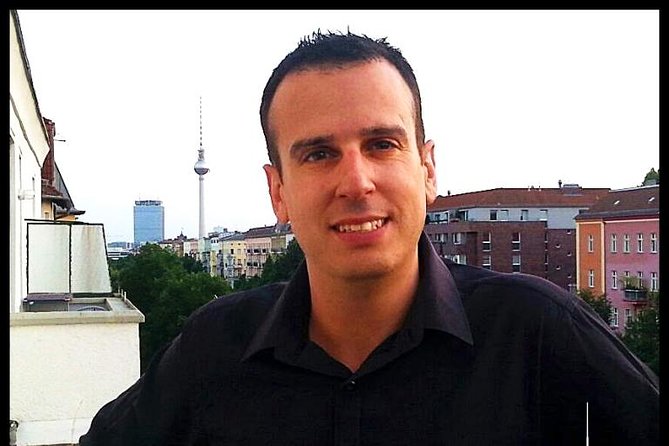
Berlin can feel like a grab bag of big sights if you’re doing it alone. I like that this tour is structured like a walk-through your understanding: you see the key places, then you get context on what they meant and why they matter.
Because it’s private, you’re not stuck with a group pace that’s either too fast or too slow. If you want more time at memorials, street-level details, or photo angles, you can usually steer the conversation that way—this is a tour where you’re meant to have control.
The route also helps you cover “name-brand Berlin” efficiently. You’ll move through government sites, World War II memory locations, Cold War landmarks, and even a fun stop for chocolate, all in one continuous plan.
You can also read our reviews of more private tours in Berlin


Meeting Nadav Jacobs and Using the Mobile Ticket Like a Pro
This tour is set up to be low-friction. You’ll receive confirmation at booking, then you can share your preferred departure time and your central pickup location so your meeting point can be set up for you.
Pickup is offered from places like your hotel, apartment, Air B&B, train station, or airport in Berlin. That matters because Berlin’s sights are spread out, and starting with a smooth arrival cuts down on the stress that eats sightseeing time.
On the day, the mobile ticket is part of the convenience. You’ll also get an A3 guidance folder, plus a public transport big map—handy for figuring out what to do next once the walking portion ends.
Reichstag Building: A Fast Start With the German Parliament as the Anchor
The tour opens at the Reichstag Building, home of the German parliament. You’ll spend about 10 minutes there, with free admission indicated for this stop.
This is a smart first move. The building gives you an immediate “center of gravity” for the city—Germany’s political story runs underneath a lot of what you’ll see later in Berlin. Even with a short stop, the guide can frame what you’re looking at so it doesn’t just feel like a big facade photo.
What to keep in mind: since the time is short, don’t expect a long deep-dive experience at this exact location. Treat it like an orientation point—get oriented, then let the rest of the walk build your understanding.
Brandenburg Gate: The Wall Falls in One Walking Moment
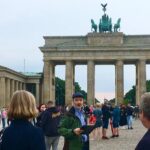
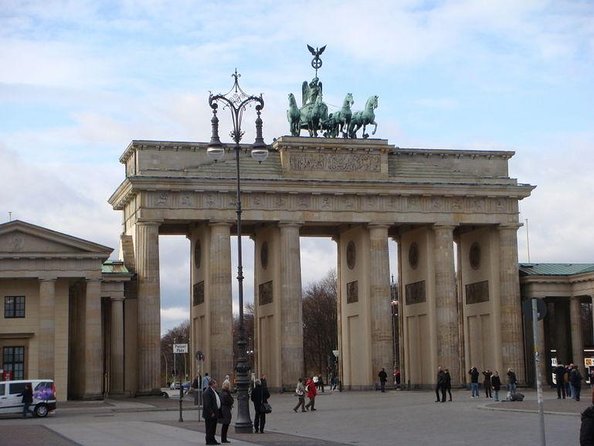
Next comes the Brandenburg Gate, with a walking pause of about 15 minutes and free admission indicated. This is often described as the gate of freedom because it sits right where modern Berlin’s transformation became visible in public space.
Walking through it (or along its axis) helps you grasp why Berlin used monuments as communication. It’s not just a photo stop. The guide’s job here is to connect the physical place to the political story: what changed, why people cared, and how the city rebuilt meaning around these symbols.
If you’re visiting during busy hours, you’ll want to stay patient. This is one of the most photographed spots in the city, so the tour time is designed to keep things moving without turning your day into a queue marathon.
The Holocaust Memorial and the Art of Looking Closely (20 Minutes)
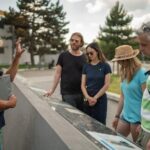
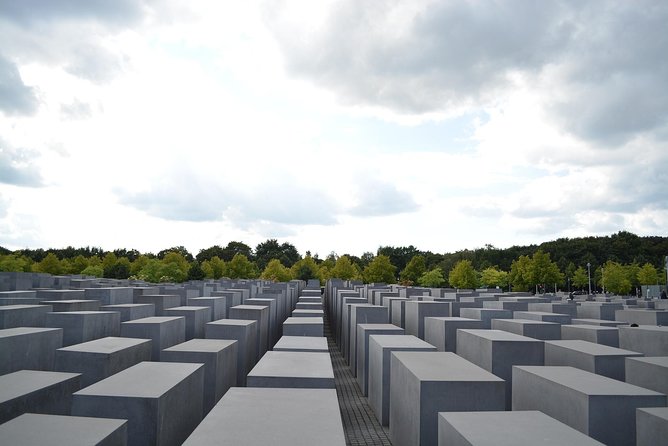
You’ll head to the Memorial to the Murdered Jews of Europe for around 20 minutes, with free admission. The activity is basically walking through the memorial and seeing it from different angles as you move.
This is one of those places where the “right” experience is slower than your instincts. The tour format still keeps it respectful and guided, but it’s not built for lingering for hours. In a short time, you’ll still get enough to understand how the space makes you feel and why that matters.
Practical tip: wear comfortable shoes. You’ll be walking, and the memorial is meant to be experienced on foot. If you want a longer visit later, this stop can serve as the introduction that helps you know what to look for on a second trip.





Fuhrerbunker Stop: Hearing About the Last Days of the War From a Sign
The next stop is Fuhrerbunker, but the format is clearly not an underground tour. You’ll stop at the sign and listen to the guide talk about the last days of the war, with about 10 minutes allocated.
That matters because it keeps expectations straight. You’re learning about a location that carried enormous weight, but you’re not promised a long, immersive site visit. For many people, that’s actually a good thing—your time stays focused and respectful.
If you prefer history told through context rather than dramatized storytelling, this stop is likely to work well. The guide can point out the meaning behind what’s visible now (and what’s not), which helps you connect past events to modern Berlin.
From Nazi Architecture to Topography of Terror: Photo Stops With Context
After that, you’ll pause at the Federal Ministry of Finance area (about 15 minutes). It’s described as the biggest Nazi building remaining, and the guide uses that as a cue for explanation.
Then you’ll move to Topography of Terror for about 10 minutes, with a stop at a Nazi museum area to take pictures of the wall. The time here is designed for quick understanding plus practical viewing.
Here’s how I’d think about these stops: they’re not “museum-day” sections of the tour. They’re location-based learning. That can be a relief if you’re trying to get Berlin’s big story without committing your whole afternoon to indoor exhibits.
If you want to go deeper afterward, you’ll usually have a much better sense of what to prioritize—because you’ll know which themes you care about before you enter any deeper museum space on your own.
Trabi Museum and Checkpoint Charlie: East Germany to Cold War Crossing
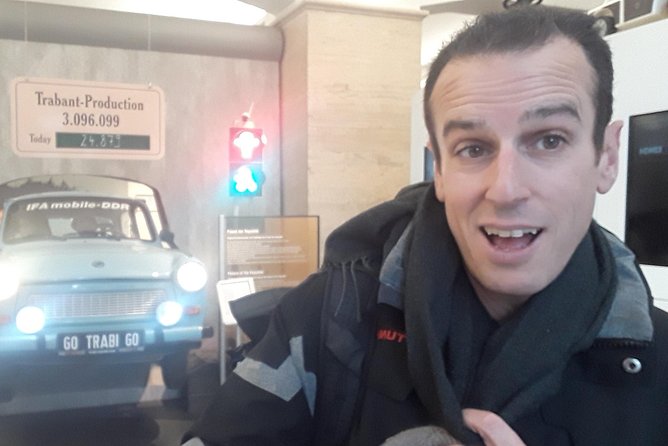
The tour takes you to the Trabi Museum for about 15 minutes, focusing on the East German car. This is a refreshing change of tone—after the heavy sites, you get something tangible and everyday, which is often how people actually remember history.
A quick car museum stop also works well on a walking tour because it gives you a break without losing the “Berlin contrast” theme. You’ll likely walk out thinking about how ordinary objects can carry political meaning.
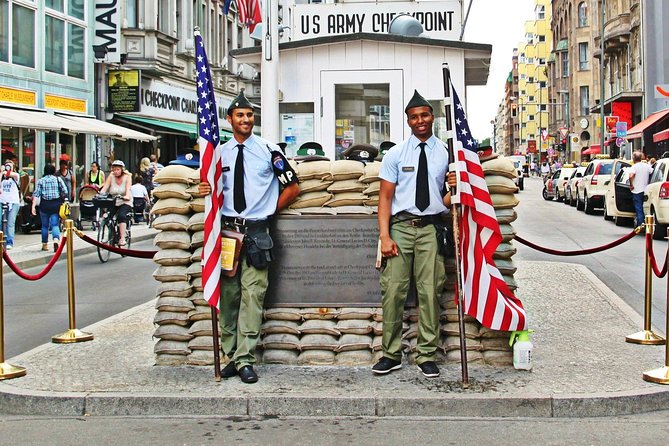
Then comes Checkpoint Charlie, where the plan is to cross the famous checkpoint area, with about 20 minutes allocated and free admission indicated. This is one of the clearest ways to feel Cold War Berlin in public space.
Key thing: this is a guided passing-through moment, not a full reenactment or long documentary-style stop. You’ll get the context to understand what the crossing symbolized, then you move on.
Gendarmenmarkt to Rausch: A Beautiful Square and a Practical Chocolate Finish
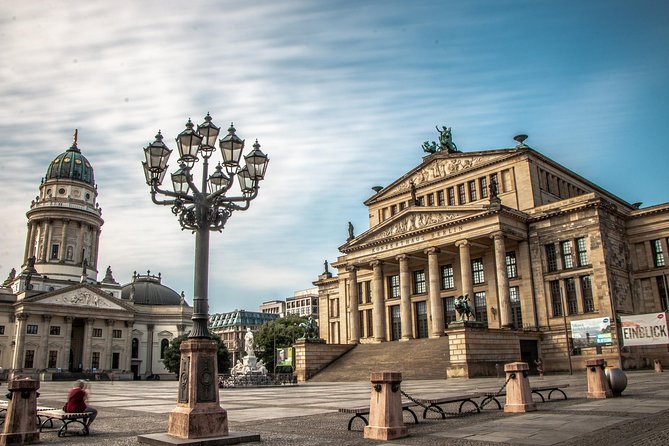
After Cold War landmarks, you’ll head to Gendarmenmarkt for about 15 minutes. The tour description focuses on it as the most beautiful square of the city and a remainder of imperial Berlin.
Walking through squares like this is where Berlin can feel “human scale.” It’s less about breaking down ideology and more about noticing how the city looks when it’s pretending politics are over for the day.
Finally, you’ll go to Rausch Schokoladenhaus for about 15 minutes. This stop is all about walking into the chocolaterie and treating yourself after a history-heavy route.
Even if you don’t buy anything, it’s still a smart way to end. You’re tired from walking, your brain is full, and this gives you a simple, feel-good wrap-up without having to hunt for dessert at the end of your day.
Value, Price, and Why the Group Size Matters
The price is $310 per group, up to 6 people, for about 2 hours 45 minutes. If you’re traveling as a pair, the cost can still feel steep—especially if you’re used to standard walking tours.
But private tours change the math. You’re paying for personalized pacing, pickup coordination, and guided time spent in places where it’s easy to miss context. For groups of friends or family, the per-person value tends to get much better fast.
Also worth noting: the tour indicates free admission for the listed stops. That doesn’t mean you’ll never spend money in Berlin, but it does reduce the “nickel-and-dime” feeling that can pop up on attraction-based tours.
One more practical value point: you’re not just getting a route. You get recommendations for museums and restaurants, plus the guide is available for questions and help with your Berlin visit. That can save you time later.
What This Tour Is Best For (and When You Might Want Something Else)
This tour makes the most sense if you want a guided map of Berlin’s most famous, most important places without turning your day into a museum marathon.
It’s especially good for:
- First-time Berlin visitors who want the big story in one walk
- People who prefer history explained in plain language while they move
- Small groups who don’t want to negotiate meeting points across multiple transit systems
- Anyone who likes to end with something fun, like the chocolate stop
You might choose a different format if you know you want long time inside major museums. This itinerary is structured with relatively short stops at each location, so it’s designed to show and orient rather than to exhaust every exhibit.
Should You Book This Private Tour?
If your goal is to understand Berlin’s major sites in a single, organized walking experience, I think booking makes sense. The private setup, hotel-area pickup, and the chance to customize your interests are the big wins—plus the guide is named Nadav Jacobs, and the standout theme in the experience is that the walk stays clear and well explained.
If you hate rushing, this might feel a bit tight, since the route hits many locations in one afternoon window. But if you treat it like an efficient orientation and plan to return later for deeper independent time, it can be a very smart first step.
FAQ
How many people are in the group?
It’s a private tour for your group only. The price is per group up to 6, with a maximum of 10 people per booking.
How long is the tour?
The tour lasts about 2 hours 45 minutes.
Is pickup included?
Yes, pickup is offered from hotel/apartment/Air B&B/train station/airport in Berlin. You’ll provide your preferred departure time and a central pickup location at booking.
Are admission tickets included for the stops?
The itinerary lists free admission for the listed stops, so admission tickets for those stops are included as part of the tour.
What payment convenience is provided?
You’ll receive a mobile ticket.
What’s the cancellation policy?
You can cancel for a full refund up to 24 hours in advance of the experience start time. Canceling less than 24 hours before won’t be refunded.