REVIEW · BERLIN
Sachsenhausen Memorial Private Half Day Tour
Book on Viator →Operated by Tour Up in Europe · Bookable on Viator
History hits different at Sachsenhausen. This private, English-led trip to the Sachsenhausen Memorial turns a difficult topic into a clear, walkable route, with hotel pickup and an organized visit starting at Tower A. I like that you’re not left figuring things out on your own, and I like the steady, respectful pacing that keeps the focus on what happened.
Inside the memorial, the tour is built around specific places you can actually understand: Barracks 38 and 39 in the Small Camp, the camp prison and original cells, and later areas connected to medical experiments. One possible drawback: this is heavy material, and since lunch isn’t included, you’ll want to plan your food so you’re not hungry while you’re processing what you see.
In This Review
- Key points
- Where Sachsenhausen Fits in Berlin’s Dark Past
- Hotel Pickup and a Smooth Start From Berlin
- Tower A Entry: Getting Oriented at the Main Entrance
- Barracks 38 and 39: The Small Camp Story
- The Camp Prison and Original Cells: When Reality Gets Concrete
- Infirmary, Morgue, and Medical Experiments: A Chilling Chapter
- The Prisoner Kitchen Museum and Station Z Remains
- Soviet Memorial: Closing the Loop on the Site’s Meaning
- The Timing: What “Half Day” Really Means Here
- Price and Value: What You’re Paying For
- What You Get Beyond the Site Stops
- Practical Tips Before You Go
- Who This Tour Suits Best
- Should You Book Sachsenhausen Private Half Day Tour?
- FAQ
- How long is the Sachsenhausen Memorial private half-day tour?
- Is hotel pickup included?
- What language is the tour guide?
- What’s included in the ticket cost?
- Is lunch included?
- Is this tour private?
- Can I cancel for a full refund?
- Is it wheelchair-friendly or suitable for everyone?
Key points
- Pickup from your hotel in Berlin keeps your morning from feeling like a logistics project
- Entry via Tower A gets you oriented fast, right at the main entrance area
- Small Camp stops (Barracks 38–39) focus on Jewish prisoners held there and what the spaces mean today
- Prison + original cells give you a concrete sense of confinement, not just general explanations
- Infirmary, morgue, and medical experiments are covered as part of the camp story, not as side notes
- About four hours on-site gives enough time to take it in without constant rushing
Where Sachsenhausen Fits in Berlin’s Dark Past
If you’re spending time in Berlin, you’re going to run into the Nazi era sooner or later. Sachsenhausen is one of those places where the history isn’t abstract. You’re seeing the layout of a functioning prison-and-terror system, with buildings and rooms that survivors’ stories helped turn into warning signs for the future.
What makes this half-day format work is that it’s structured around the spaces that matter. You don’t just pass memorials and call it a day. You move through areas tied to detention, confinement, and exploitation, and you do it with an English-speaking guide who keeps things factual and grounded.
It’s also worth saying plainly: you should come prepared for an emotionally difficult experience. The goal isn’t to make you comfortable. The goal is to understand what happened—without turning suffering into theater. A good tour helps you do that with steadiness, not drama.
You can also read our reviews of more private tours in Berlin


Hotel Pickup and a Smooth Start From Berlin
The day begins with pickup from your hotel in Berlin around 9:00 AM. That’s a real quality-of-life improvement, especially when you’re heading out to an out-of-town site. Instead of juggling buses or taxis with limited time, you just meet your driver and go.
You’re then on the way to the memorial, arriving around 10:00 AM. This timing matters because Sachsenhausen can feel like information overload. When you arrive with a plan already in your pocket, you can spend your attention where it belongs: on the site.
You’ll also have a mobile ticket, which helps keep the process simple once you’re there. The tour is private, too—only your group participates—so you can ask questions without feeling like you’re interrupting a large crowd.
Tower A Entry: Getting Oriented at the Main Entrance
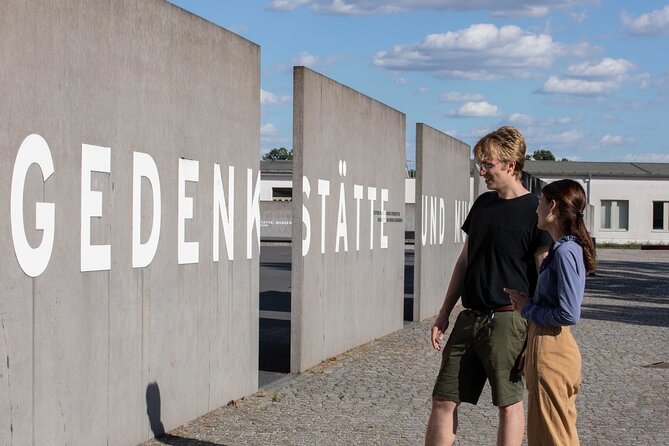
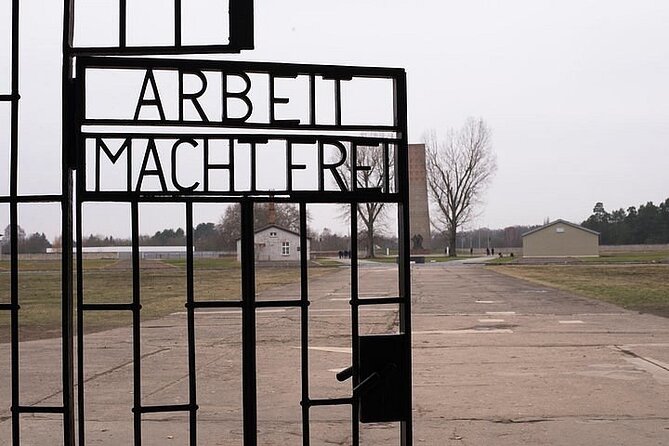
One of the first things you’ll do is enter through Tower A and the main entrance, where the infamous slogan “Arbeit macht frei” is associated with the camp. This isn’t a sightseeing moment; it’s part of the system. The guide’s job here is to help you understand how the camp’s design and symbolism worked together.
I like this start because it forces you to understand the site as a whole. Tower A isn’t just architecture—it’s a way to start reading the camp. From there, the tour can flow logically into what different areas were used for and who was held where.
A consideration: if you’re expecting a light introduction, this won’t be it. You’ll start with one of the starkest visual reminders of Nazi propaganda and coercion. If you’re sensitive to symbolism, just know this is where the tour will go first.
Barracks 38 and 39: The Small Camp Story
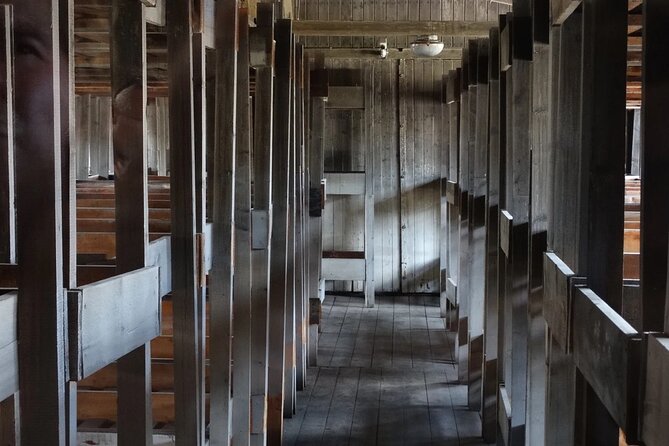
Around 10:30 AM, the tour focuses on Barracks 38 and 39 in the “Small Camp.” This is the kind of stop that benefits from a guide who can explain what you’re looking at. The barracks are now presented as part of a museum area, tied specifically to Jewish prisoners who were held there.
What makes this stop valuable is the link between space and purpose. You aren’t just hearing names or dates; you’re seeing how barracks functioned and what those rooms meant in daily life under captivity. The museum framing helps turn an intimidating site into something you can actually interpret as you walk.
A drawback to keep in mind: because the subject is so concentrated, you might want extra mental pacing here. If you tend to absorb slowly, ask your guide for a moment to step back and take in what you’re seeing before moving on.
The Camp Prison and Original Cells: When Reality Gets Concrete
At about 11:00 AM, you move into the camp prison area and see original cells. This is where the experience becomes very physical in your mind. There’s no substitute for seeing cells that were used for brutal confinement.
This part of the tour is often the hardest for people—not because it’s graphic for the sake of it, but because it’s plain. The guide can help you connect the cells to the broader system: who was held, why imprisonment worked as control, and how the camp operated as a machinery of fear.
The practical value here is orientation. Once you understand the prison spaces, other parts of the memorial start to make more sense. The tour doesn’t treat the camp like disconnected exhibits; it reads like a system.





Infirmary, Morgue, and Medical Experiments: A Chilling Chapter
The tour continues to 11:30 AM, covering the infirmary and morgue areas and the history of medical experiments conducted on inmates. This is one of those topics where you want a guide who can stay clear, respectful, and grounded. That’s especially important because it’s easy for narratives to become either vague or sensational.
A strength of this tour approach is that the topic is handled as part of the camp’s reality, not as a separate shock section. The stop structure helps you understand how medicine was corrupted by ideology and coercion.
If this topic is particularly difficult for you, plan how you’ll handle it. You can ask your guide to keep explanations factual and brief, then allow yourself time to walk slowly afterward.
The Prisoner Kitchen Museum and Station Z Remains
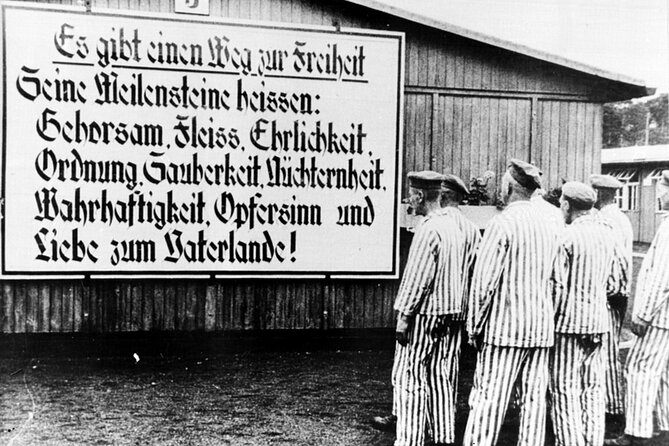
Around 12:00 PM, you’ll visit the former prisoner kitchen museum, a stop that can be unexpectedly informative. Food-related spaces in detention settings tell you a lot about control: what people were given, what was taken away, and how daily needs could become leverage.
Then, at about 12:30 PM, you’ll see the remains of Station Z. This area is important because it helps connect what you’ve learned earlier to the camp’s later functions and layers of the camp’s structure. It also gives you a chance to see how the memorial preserves remnants—not to look dramatic, but to keep history anchored in physical evidence.
One practical note: this stretch is mentally demanding, so it’s a good idea to hydrate and keep moving at a comfortable pace. You’ll cover a lot of ground, and your attention will work harder than it does on a typical museum day.
Soviet Memorial: Closing the Loop on the Site’s Meaning
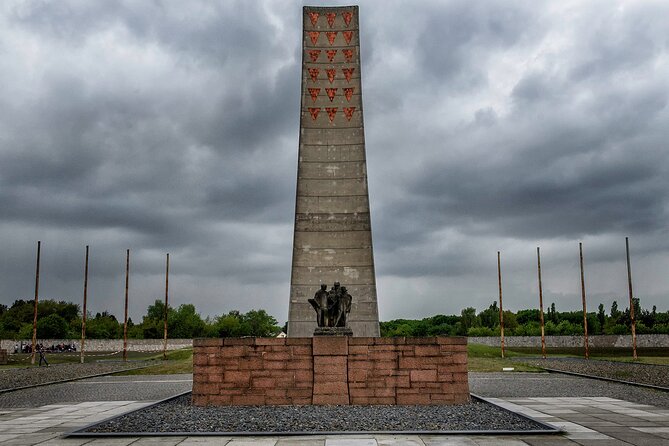
At 1:00 PM, the tour moves to the Soviet memorial. This part can help you understand how Sachsenhausen’s story doesn’t end with the Nazi period. Memorialization by different groups shows how layers of history get recorded and interpreted over time.
By the time you reach this point, your brain has usually absorbed the camp’s mechanisms—so the Soviet memorial can feel like a shift from description to broader meaning. You’re being guided toward the idea of legacy, warning, and remembrance.
Don’t rush this stop. It’s one of the places where slowing down actually helps. If your guide is moving on quickly, you can ask for a few extra minutes.
The Timing: What “Half Day” Really Means Here
This is scheduled as about 6 hours total, with around four hours at the memorial. That ratio is a sweet spot for many people. It’s long enough to cover key areas without turning it into a blur, but short enough to still feel like part of a Berlin visit rather than a full day sacrifice.
The day moves from 9:00 AM hotel pickup to about 10:00 AM arrival, then continues through the core camp stops until early afternoon. You’ll return to Berlin around 1:30 PM and be dropped off around 2:30 PM.
Drawback to plan for: because lunch isn’t included, your food schedule matters. If you eat too late, you’ll feel it during the most emotionally intense parts. If you eat too early and then walk and stand a lot, you might still feel sluggish. Either way, plan a simple snack strategy for before or after.
Price and Value: What You’re Paying For
The price is $464.65 per person for a private half-day tour. That sounds high compared with a basic group bus trip, and it is—so you should ask what you’re buying.
You’re paying for three main things that matter at a memorial site:
- Private guide and driver, which is more than convenience. It means you can keep your pace and ask questions without a crowd pressure vibe.
- All fees and taxes, plus key admissions that let you focus on the visit rather than ticket admin.
- A structured route through specific, high-impact areas, including prison-related spaces and the Soviet memorial.
If you value clarity and respectful pacing, the private format often feels worth it. If your group is large, private tours can become a better deal because you split the logistics savings. If you’re a solo traveler, the cost may feel steeper, but you’re also buying time and attention from a guide rather than doing it on your own.
What You Get Beyond the Site Stops
A tour like this isn’t only about where you walk. It’s also about how someone manages your experience in a place that needs seriousness.
In past experiences with guides such as Sven and Alex/Alexander, the standout theme was straightforward, respectful guiding with factual explanations and enough time to absorb what you’re seeing. I think that balance is the difference between a visit that feels like information gathering and one that feels like remembrance with context.
The fact that it’s offered in English also matters. When you’re dealing with complex, painful history, you want language clarity—not just casual narration.
Also, since the day includes pickup and drop-off, you keep Berlin time efficient. That’s not a luxury detail. It’s part of the value.
Practical Tips Before You Go
This kind of tour is demanding. Here are a few practical moves that help you get more from it:
- Wear comfortable shoes and plan for walking and standing. Memorial grounds can be uneven.
- Bring a small water bottle and maybe a simple snack for the hours between meals. Lunch isn’t included.
- If you’re the type who gets overwhelmed, decide ahead of time how you’ll pace yourself—slow down during the prison and experiment-related sections.
- If you have questions about what you’re seeing, this is the place to ask. A private guide format gives you that chance.
If you’re traveling with a service animal, the tour notes that service animals are allowed. If you rely on public transport, the memorial is described as near public transportation too, though your day here is centered on pickup.
Who This Tour Suits Best
This is a strong fit if you want a serious, organized visit without guessing. You’ll probably enjoy it most if you:
- Care about understanding specific parts of the camp, not just general statements
- Prefer fact-first guiding over emotionally theatrical storytelling
- Like the idea of a private group pace with a dedicated driver and guide
- Want a Berlin add-on that feels meaningful and structured rather than random
It’s less ideal if you’re looking for a relaxed, casual sightseeing day. This isn’t that kind of experience. Even when the guide keeps things calm and factual, the material itself is hard.
Should You Book Sachsenhausen Private Half Day Tour?
I’d book this if your top priority is a guided, respectful, organized visit that covers the camp’s most important areas in a manageable timeframe. The hotel pickup, English guide, and the route through Tower A, Barracks 38–39, the prison cells, the infirmary/morgue topic, the prisoner kitchen museum, Station Z remains, and the Soviet memorial add up to a full narrative arc.
I’d hesitate only if you know you’ll struggle with intense history and you can’t emotionally pace yourself through it. Also think about timing: since lunch isn’t included, you’ll want a simple plan for food and energy.
If you want a straightforward, serious experience that doesn’t waste time and doesn’t soften the subject, this is a good choice.
FAQ
How long is the Sachsenhausen Memorial private half-day tour?
It runs for about 6 hours, including pickup from your hotel, time at the memorial (about 4 hours), and the return to Berlin.
Is hotel pickup included?
Yes. The guide and driver meet you at your Berlin hotel, and they contact you in advance with pickup details.
What language is the tour guide?
The tour is offered in English.
What’s included in the ticket cost?
All fees and taxes are included, along with a private guide and driver. Admission is included for the memorial and museum experience.
Is lunch included?
No. Lunch is not included.
Is this tour private?
Yes. It’s a private tour/activity, so only your group participates.
Can I cancel for a full refund?
Yes, you can cancel up to 24 hours in advance for a full refund.
Is it wheelchair-friendly or suitable for everyone?
The tour indicates that most travelers can participate, and service animals are allowed. If you need specific accessibility accommodations, you’ll want to confirm details with the provider before booking.