REVIEW · BERLIN
Alternative Berlin Bike Tour – Off the Beaten Tracks in Small Groups
Book on Viator →Operated by Berlin on Bike · Bookable on Viator
Berlin by bike, minus the tourist rinse. This Alternative Berlin Bike Tour threads together Friedrichshain’s street-art energy, DDR-era streets, and real neighborhood life in about 3.5 hours. It’s built for small groups, pedal-first sightseeing, and an expert guide who actually lives the stories behind the places.
I love that bikes and helmets are included, so you don’t waste time renting or shopping. I also like the mix of big-city landmarks and off-the-radar stops, like Karl-Marx-Allee’s architecture and the wall art along the East Side stretch—plus plenty of short breaks to absorb it all.
One consideration: you’ll cycle on city streets with bike and car traffic. It can feel a bit intense in spots, especially if you’re traveling with a younger kid who needs calm, constant attention.
In This Review
- Key Things You’ll Notice on This Tour
- Alternative Berlin in a Small, Guided Ride
- Starting at Kulturbrauerei: Big Old-Industrial Energy
- Friedrichshain Parks: A Breather Before the Main Stories
- Oberbaum Bridge, the Wall’s Art, and East Berlin’s Edge
- Karl-Marx-Allee: DDR-Style Architecture You Can Actually Feel
- RAW Tempel: Where Culture Meets Nightlife
- Görlitzer Park: From Rail Yards to a Local Hangout
- What to Expect on the Road (Pace, Traffic, and Comfort)
- Guides Matter: How Anna, Paul, Maria, Marcus, Edgar, and More Shape the Ride
- Value: Why $43.54 Can Make Sense for This Route
- Should You Book This Alternative Berlin Bike Tour?
- FAQ
- How long is the Alternative Berlin Bike Tour?
- What time does the tour start?
- Where do I meet the guide?
- Is bike and helmet use included?
- Is the tour offered in English?
- How large are the groups?
- Is the tour suitable for people with limited physical fitness?
- Does the tour run in bad weather?
- Are food and drinks included?
- What is the cancellation policy?
- How much does the tour cost?
Key Things You’ll Notice on This Tour
- Small group size (max 14) keeps the ride lively and organized
- Bikes + helmets included means less logistics before you roll
- Friedrichshain and Kreuzberg focus gives you a Berlin you don’t see by bus alone
- East Side Gallery + Oberbaum Bridge connect art, history, and daily life
- Parks breaks (like Volkspark Friedrichshain and Görlitzer Park) keep the pace human
- Real neighborhood stops go beyond the usual photo points
Alternative Berlin in a Small, Guided Ride
This is a 3 hours 30 minutes bike tour (starting at 3:00 pm) that’s designed to feel like Berlin at street level. With a maximum of 14 people, you usually get more time with your guide and fewer long waits while everyone regroups. The route also makes sense: Berlin is fairly flat, and the ride is paced to let you look around and listen without feeling like you’re sprinting to each stop.
You don’t need to be an athlete, but you do need moderate physical fitness. You’ll be on a bike for a meaningful chunk of time, and the tour runs in all weather—so plan for cool mornings, drizzle, or wind. The guide helps keep the flow moving, but you’re still doing the bike-work.
Language-wise, it’s offered in English, and the focus stays on context: how DDR-era design shaped daily life, how the art scene evolved, and why places like RAW Tempel and the East Side stretch matter to Berlin today.
You can also read our reviews of more cycling tours in Berlin
Starting at Kulturbrauerei: Big Old-Industrial Energy
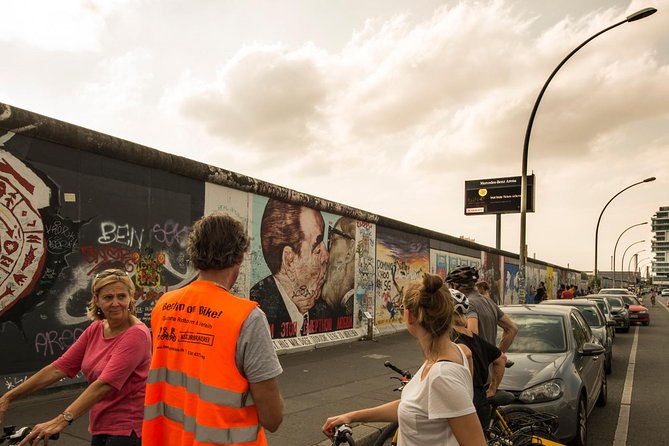
You meet back at Berlin on Bike’s bike depot near Kulturbrauerei (Knaackstraße 97). This matters because Kulturbrauerei isn’t some random starting point. It’s a 25,000 m² complex of buildings with courtyards and standout industrial architecture. It’s been listed since 1974, and it’s one of the better-preserved industrial monuments from the late 19th century.
Why I like starting here: it sets the tone. The tour isn’t pretending Berlin began in 1989 or that the city only has one face. Right away, you’re surrounded by the older brick-and-steel Berlin that helped shape everything that came after. It also keeps logistics easy. You can arrive close to public transport, get your helmet and bike, and roll without a long transfer.
Even if you’ve seen photos of Berlin’s famous sights, this start feels different. You begin in an area where “alternative” isn’t a theme—it’s part of the physical city fabric.
Friedrichshain Parks: A Breather Before the Main Stories
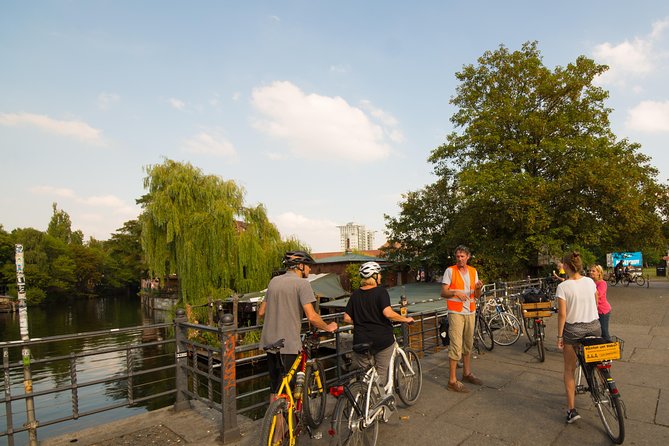
A key part of the tour’s charm is that it doesn’t treat cycling as nonstop “move, move, move.” You get real breaks and the kind of green pauses that help the city make sense.
One of those is Volkspark Friedrichshain, a recreation area built in 1846. The interesting detail here is that it was the first municipal green space in Berlin. That means it’s tied to the idea of the city improving daily life early on—not just modern recreation. On a bike tour, a park stop does two jobs: it lets your body reset and it gives the guide room to explain what you’re seeing without you feeling rushed.
If you’re the type who likes to understand a place rather than just collect photos, park moments are where it clicks. You can hear the guide, look around at the atmosphere, and then hop back on the bike with a clearer sense of where you are in Berlin’s story.
Oberbaum Bridge, the Wall’s Art, and East Berlin’s Edge
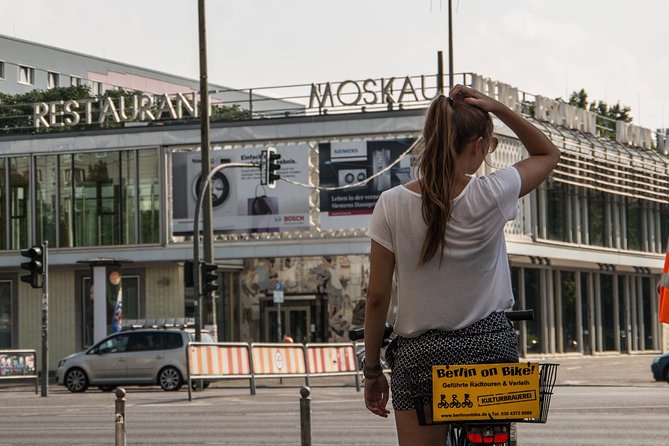
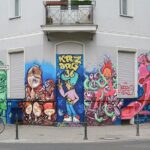
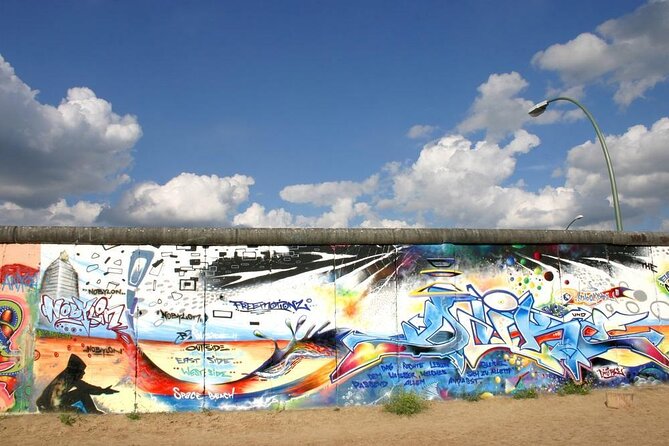
The tour’s “where you are in Berlin’s changing identity” part really ramps up around Friedrichshain. This district is known for an alternative vibe, techno clubs like Berghain, and political graffiti connected with the East Side Gallery. And you don’t just hear the theory—you bike through the area where those ideas play out in everyday streets.
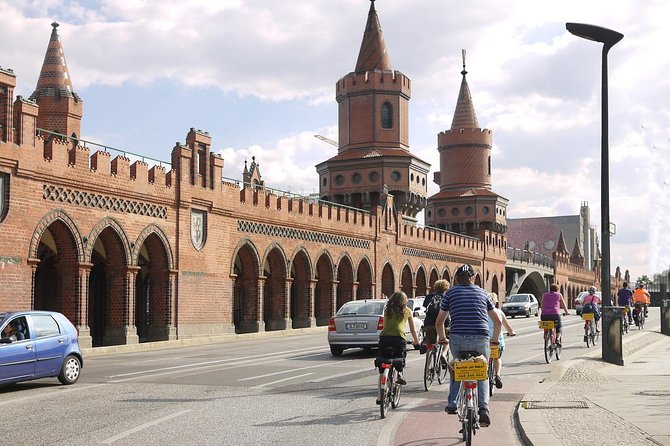
You also get one of Berlin’s visual anchors: Oberbaum Bridge, which spans the Spree and connects Friedrichshain with Kreuzberg. It’s the kind of landmark that makes it feel like the city has a spine. Your guide can point out how the bridge functions in more than a practical way; it’s also a symbol of connection between two sides of Berlin’s identity.
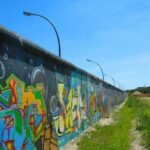
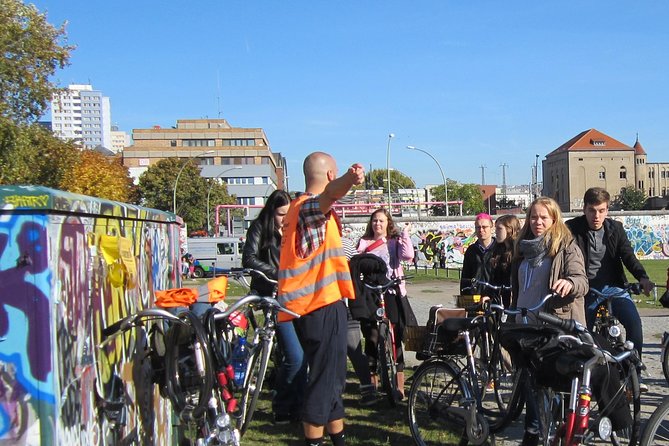
Then comes the wall-art stretch. The East Side Gallery is described as a listed section of the Berlin Wall and part of the longest remaining segment along Mühlenstraße between Ostbahnhof and Oberbaumbrücke. That long wall stretch is why the art feels different from a single mural. It’s not one moment—it’s a whole corridor of memory and interpretation.
Practical thought: this area is popular in general, but seeing it at cycling speed (with commentary) helps you process it. You’re not standing in a crowd trying to piece together context. You’re moving through the space while the guide frames what you’re looking at.
Karl-Marx-Allee: DDR-Style Architecture You Can Actually Feel
Karl-Marx-Allee is where Berlin’s political history shows up in building shapes. Along this street you’ll see apartment blocks and towers with a style mix of Socialist Classicism and Prussian Schinkel School. It sounds academic, but when you cycle past the long lines and monumental facades, you understand why people talk about this as “designed messaging.”
This is a major reason bike tours work so well here. Walking gives you detail, but biking gives you rhythm. You can feel the scale of the street, how the buildings “hold” the view as you move, and how the street layout affects what daily life would have looked like.
The guide’s storytelling is the other half of it. Good guides don’t just say what the architecture is. They connect it to what people were experiencing and what Berlin changed into later. One of the strengths shown in the tour’s guide reviews is personal framing—how the city’s creative and political scenes grew around these structures, not just around new venues.
If you want Berlin’s DDR side without a museum-only approach, this stop is built for you.
RAW Tempel: Where Culture Meets Nightlife
Next you roll into RAW Tempel, a space linked to intercultural projects, exhibitions, and markets. It’s also home to clubs and bars, so the vibe isn’t locked to daytime. This is the kind of place you might walk by without noticing—unless you know what to look for, and a guide helps you see it as part of Berlin’s ongoing cultural pattern.
Why RAW Tempel fits an alternative bike tour: it’s not presented as a museum relic. It’s functional. The whole point is that Berlin keeps reusing spaces. RAW Tempel is one example of how a city can treat older industrial areas as living platforms for art and community.
If you’re into street art, creative neighborhoods, or just learning how Berlin’s scenes operate, RAW Tempel is a high-value stop. It also helps break up the history-heavy parts of the route with something more present-day and human.
Görlitzer Park: From Rail Yards to a Local Hangout
To end strong, the tour brings you to Görlitzer Park, one of Kreuzberg’s big local parks and a nearby place to relax. The practical detail that makes this park interesting: it was built in the late 1980s and early 1990s after the demolition of the old Görlitzer station rail facilities.
That timing matters because it connects the park’s existence to a broader transition in Berlin. The city rearranged infrastructure, reclaimed space, and used it for public life. Bike tours make these connections easier, because you’re moving through the urban layers instead of reading about them from a brochure.
If you want a closing feeling that’s not purely “historic monuments,” Görlitzer Park gives you that. You arrive after seeing architecture and wall art, and then you get a calmer, greener reality check: Berlin is also a city where people meet friends, hang out, and treat parks like part of the day.
What to Expect on the Road (Pace, Traffic, and Comfort)
This tour is about cycling through real streets, and that’s where you should set expectations. Berlin bike culture can be confident, but city traffic is still city traffic. Reviews hint that some segments can feel a bit harrowing for younger kids, especially if you’re expecting a totally slow, car-free ride.
So here’s the practical way to think about it:
- If you or your child can handle bike lane changes and attention to the guide, you’ll do fine.
- If your group is nervous about traffic, plan to rely on your guide’s instructions and stay focused.
The good news: the tour includes helmets and provides bikes, and reviews mention good bike condition. Also, the guide attention matters. Multiple guides are praised for keeping the group together and maintaining a comfortable pace.
Bring water. Food and drinks aren’t included, so you’ll want a small snack if you get hungry. Wear weather-appropriate layers since it operates in all conditions.
Also, since it’s near public transport, you can build it into your day without a complicated schedule. It’s a solid afternoon activity, not a full-day commitment.
Guides Matter: How Anna, Paul, Maria, Marcus, Edgar, and More Shape the Ride
A bike tour lives or dies on the guide, and this one earns praise for personality and storytelling. Names that show up across the experience include Anna, Paul, Maria, Marcus, Edgar, and guides like Klaus and Lauren. Different voices, same theme: Berlin from the inside.
One strong pattern in the feedback is guides who connect facts to real life. Anna is described as energetic and deeply connected to the community. Paul is credited with a great overview of cooler Kreuzberg areas. Marcus is praised for personal stories that bring Berlin to life. Edgar is mentioned for guiding people through the Berlin scene and history with a “walk-on-the-rails” kind of clarity.
Another practical strength: guides who remember people in the group and make the conversation feel personal. There’s also mention of the guide adapting if the group language situation shifts—like a case where the visit ended up happening in French even though English was expected. That kind of flexibility is a good sign if you want the tour to feel human, not scripted.
If you love learning where the street art comes from, how techno culture fits the city fabric, and why DDR-era architecture isn’t just concrete trivia, this guide-led approach is the point.
Value: Why $43.54 Can Make Sense for This Route
At $43.54 per person for about 3.5 hours, this isn’t a “cheap thrill” add-on. But the value stacks up when you look at what you get: a local guide, bikes, and helmets included, plus a route that hits both well-known Berlin areas and the more off-the-beaten-track feeling stops.
Think about the alternative costs:
- Bike rental + helmet rental (and the time spent handling it)
- Paying for a separate guided walk while trying to cover long distances
- The cost of missing context at major sites like the wall-art stretch
Here, you’re paying for a single guided experience that covers a lot of ground while still stopping enough to process it. It also includes free-entry experiences at listed stops like Kulturbrauerei-related entry (as noted) and keeps you from spending your day juggling tickets.
Also, the group size is small enough that the tour feels guided rather than like following a crowd on two wheels. For many people, that’s the difference between a “nice ride” and an actually memorable Berlin orientation.
Should You Book This Alternative Berlin Bike Tour?
Book it if you want:
- Friedrichshain and Kreuzberg at street speed
- Wall-art and DDR-era architecture explained with real context
- A ride that includes park time, not just nonstop city blocks
- A small-group guide with personality, not a recited script
Skip it or be cautious if:
- You strongly dislike cycling in traffic or you’re bringing a very young kid who gets overwhelmed easily
- You want only classic, postcard-famous Berlin landmarks with zero edge and no alternative neighborhoods
If your goal is to understand Berlin beyond the obvious stops, this tour is a smart way to get there in half a day. You’ll leave with a clearer sense of where Berlin’s creative and political layers show up in the actual streets.
FAQ
How long is the Alternative Berlin Bike Tour?
It runs for about 3 hours 30 minutes.
What time does the tour start?
It starts at 3:00 pm.
Where do I meet the guide?
You meet at Berlin on Bike at Kulturbrauerei, Knaackstraße 97, 10435 Berlin, Germany. The tour ends back at the meeting point.
Is bike and helmet use included?
Yes. Bike and helmet use are included, so you don’t need to rent them.
Is the tour offered in English?
Yes, it is offered in English.
How large are the groups?
The tour has a maximum of 14 travelers.
Is the tour suitable for people with limited physical fitness?
It’s aimed at travelers with a moderate physical fitness level.
Does the tour run in bad weather?
It operates in all weather conditions. You should dress appropriately.
Are food and drinks included?
No. Food and drinks are not included.
What is the cancellation policy?
Free cancellation is available up to 24 hours in advance for a full refund, based on local time.
How much does the tour cost?
The price is listed as $43.54 per person.