REVIEW · BERLIN
Private taxi tour to Potsdam and Sanssouci 6-8h
Book on Viator →Operated by Gunter Bauer GAT-Productions · Bookable on Viator
Sanssouci feels personal on a taxi day. You get a private, air-conditioned ride out of Berlin with an English guide and a tight, no-wasted-time route through Potsdam’s most famous palaces and garden stops. What I like most is the pickup convenience and the fact that you can keep moving without fighting transit.
Two big wins: you’ll spend real time inside Sanssouci Palace (with the option to include admission) and you’ll also get the big-picture context for the whole palaces-and-grounds plan, from Frederick the Great to later Prussian rulers. The timing is built around what you can actually see in 6-8 hours.
One heads-up: some garden paths are uneven and partly unpaved, so you’ll want proper walking shoes. And if you don’t choose the Sanssouci+ admission option, a few key palace and structure entries aren’t included, so expect on-the-day ticket costs for those stops.
In This Review
- Key highlights you’ll care about
- A Private Taxi Day to Potsdam: What you’re really buying
- Timing and how to use 6–8 hours without feeling rushed
- Sanssouci Palace: Frederick the Great’s rococo world in real scale
- The terrace view, the water system, and why the gardens matter
- Windmill views and the Orangery outlook
- Chinese Tea House and the pleasure-garden mindset
- New Palace: the royal relatives’ 600-room holiday machine
- Cecilienhof Palace and the Potsdam Conference rooms
- Potsdam’s old center: gates, Dutch Quarter, city square wander time
- The Berlin-to-Potsdam connection and the bridge that stayed closed
- Price and value: what $179.01 buys you in practice
- Who this tour suits best (and who might want a different plan)
- Should you book this private Potsdam and Sanssouci taxi tour?
- FAQ
- How long is the Potsdam and Sanssouci private taxi tour?
- What time does the tour start, and where do I meet?
- Is the tour offered in English?
- Does the price include admission to the palaces?
- Is this a private tour?
- What’s the pickup process?
- Can the driver accommodate children or strollers?
Key highlights you’ll care about
- Private taxi pacing: efficient travel between Berlin and Potsdam plus short walks where it matters
- Sanssouci Palace focus: a guided look at the rococo rooms and garden connections
- Garden variety: windmill views, orangery outlook, Chinese Tea House style, and the postcard terraces
- New Palace plus court life: how the royal “holiday-home” and its 600-room scale work
- Cecilienhof’s modern shock: the Potsdam Conference rooms tied to 1945
- Old Potsdam add-ons: gates, the Dutch Quarter, and the rebuilt-city-story in the center
A Private Taxi Day to Potsdam: What you’re really buying
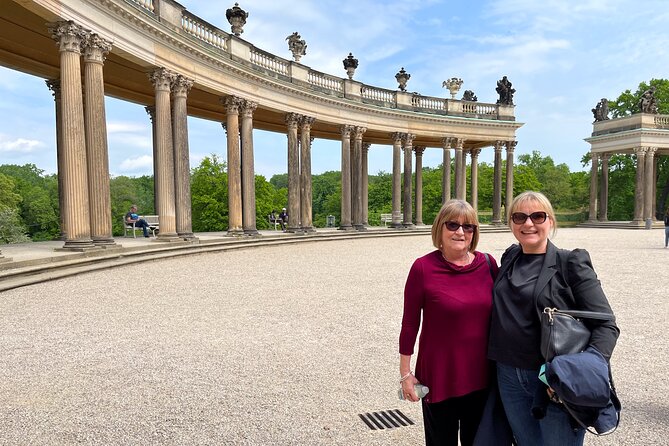
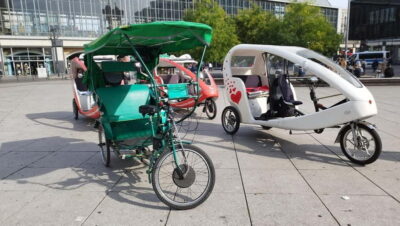
This is not a hop-on-hop-off bus day. It’s a private taxi tour out of Berlin that’s designed to get you from sight to sight with minimal friction, while your guide handles the flow. Start at 10:30am, and your pickup is from your hotel or accommodation, with the practical note that you should step outside only after you get an SMS/WhatsApp message.
The value here is simple: you’re paying for time saved. Potsdam looks close on a map, but it’s spread out, and a taxi day lets you spend that saved time walking through Sanssouci’s garden world instead of planning connections.
I also like that your guide focuses on what you’re seeing, not just names and dates. In the reviews, Gunter Bauer comes through as the sort of guide who points out design choices and different architectural styles, and he even helps with photos at key spots, which makes your day feel less like a checklist and more like a shared outing.
You can also read our reviews of more private tours in Berlin


Timing and how to use 6–8 hours without feeling rushed
Six to eight hours sounds generous until you realize Potsdam has multiple layers: palaces, terraces, water features, small “pleasure gardens” structures, and then the rest of the city. This route is paced so you can see the headline attractions and still have moments where you slow down.
Expect that most of your walking happens in the palace grounds and gardens. Your shoes matter here: the tour notes specifically call out mostly unpaved paths and the need to avoid sandals. If you’re the kind of traveler who hates sore feet by noon, you’ll want to plan on comfortable footwear from the start.
A smart mindset: you’re not trying to “complete” every corner. Instead, think of the day as a guided story in scenes—Sanssouci as the dream palace, the New Palace as the big imperial stage, Cecilienhof as the political turning point, and the Dutch Quarter/old center as the modern city layers.
Sanssouci Palace: Frederick the Great’s rococo world in real scale
Sanssouci Palace is the emotional center of the day. This rococo palace sits alone on a small vineyard, which is already a clue about the mindset Frederick the Great had: power, yes, but also retreat and control. You’re looking at a palace designed to feel like a private dream rather than a huge public monument.
One of the most practical reasons to tour it with a guide is orientation. The palace has only 8 rooms, and each connects back to the gardens, which means you’ll get a better experience if you understand why that layout matters. Your guide’s job is to translate what you’re seeing into how it functioned for the king, his routines, and his guests.
Admission is the key variable in your planning. Sanssouci Palace is listed as not included unless you book the option that covers entry for the castle tours (Sanssouci+). If you want the smoothest day, choosing Sanssouci+ removes the stress of deciding tickets on the fly. If you’re trying to save money, you can skip the add-on, but you’ll likely be paying separately for at least the main palace.
The terrace view, the water system, and why the gardens matter
Sanssouci isn’t just a palace building; it’s a whole designed sequence of views. The route includes the Weinbergterrassen (the wine terraces), which give you the iconic postcard perspective toward the palace and the large water fountain area.
What I find useful is understanding how the designers solved local limits. Potsdam is a bit far north for wine growing, so the gardeners used a trick: vines were protected behind glass to extend the growing season. You’re basically looking at an early version of controlled microclimate agriculture—built into a royal leisure garden.
Then there’s the fountain story. A separate lake was created higher up to feed the fountain, disguised with a ruin-like concept (the ruin mountain). If you’re the kind of traveler who thinks gardens are just pretty, this is where the day clicks: it’s engineering disguised as theatre.
Timing note: the Weinbergterrassen stop is described as about 15 minutes and is free for the ticket piece. That makes it a good “breather stop” between bigger entries.
Windmill views and the Orangery outlook
You’ll also see the Historic Windmill, which remained in place because of a legal dispute with the king—yes, grain mill politics at royal scale. The practical angle for you: it’s one of the stops that gives you a change of pace, and the route notes recommend it specifically for its views over the park.
Next up is the Orangery, built for the orange and exotic plants that had to be brought inside for winter. This is one of those stops that helps you read the entire grounds: you’ll see how the park supports plants year-round and how the ridge-top design creates an “eye-catcher” moment.
Orangery admission isn’t stated as included, so treat it as likely separate unless your Sanssouci+ add-on covers the palace tour entries. The big payoff here isn’t just plants—it’s the viewpoint. If you love photography, this is where the garden structure becomes obvious.





Chinese Tea House and the pleasure-garden mindset
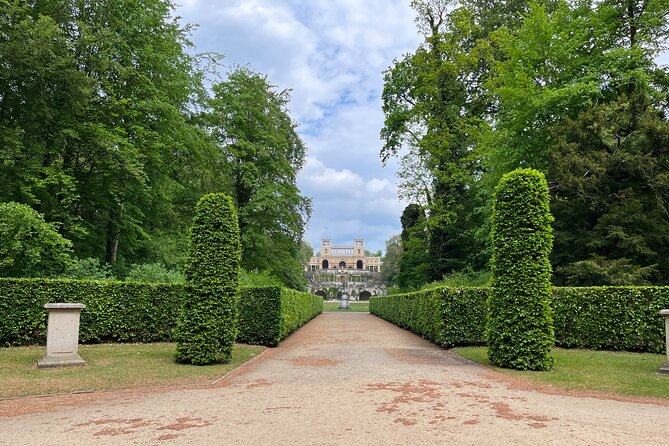
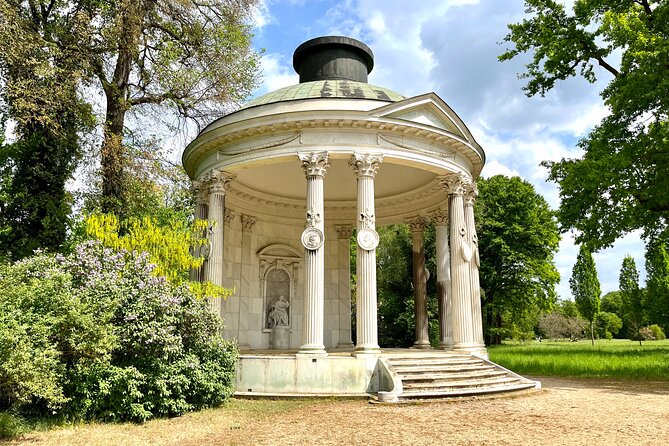
One of the more memorable contrasts in Sanssouci Park is how many styles the park borrows. The Chinese Tea House is described as more than just a pavilion: it’s tied to the Mode Chinoise fashion, with precious furniture and delicate Chinese porcelain, decorated with gold details.
This stop works best if you’re willing to let it be a little playful. The palace-and-park builders weren’t only aiming for realism. They wanted you to step into a different world for a short pause, and these structures are built for that shift in imagination.
The same “small destination” philosophy shows up elsewhere in the park concept too. There are pleasure-garden spots meant for short walks and picnics, with servants bringing food from the kitchens. Even if you don’t picnic, you’ll feel how the park encourages wandering and meeting small moments instead of rushing to a single monument.
New Palace: the royal relatives’ 600-room holiday machine
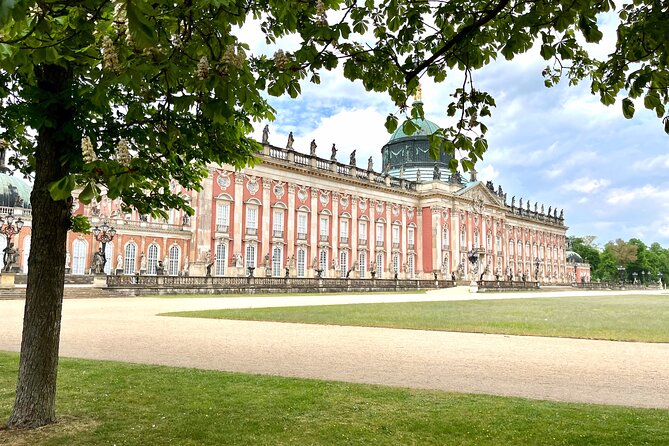
After you’ve taken in Sanssouci’s intimate feel, the New Palace swings the pendulum. The day’s route includes it along with the broader grounds that connect palaces across long distances. The guide focus here matters because the New Palace is visually stunning but also easy to get lost in if you don’t understand the logic of the building.
The tour material emphasizes the building’s scale: it has 600 rooms, divided into “apartments,” with different royal relatives treated almost like they each had a holiday home. You also learn why the kitchen was handled differently, and why later rulers used the building in their own ways.
Even the details help you read the era. There’s mention of modernity in the form of a mechanical elevator for the Empress, but it was visually hidden behind an Oriental building fashion element, described here as a mosque-style structure with a minaret that doubles as a chimney for a steam turbine still producing electricity today.
If you’re trying to prioritize one “big palace mindset” moment after Sanssouci, make this your second. It explains the shift from Frederick’s controlled retreat to later court life as a social machine.
Cecilienhof Palace and the Potsdam Conference rooms
Cecilienhof Palace is the emotional curveball in the day. It’s described as the youngest of the Prussian palaces and built for the Crown Prince and his wife Cecilie von Braunschweig. Even if the English-country-house exterior looks like it’s made for quiet rural life, the palace carries a heavy 20th-century purpose.
Here’s why you should care: Cecilienhof was the site of the 1945 Potsdam Conference, with the leaders of the victorious powers meeting there. The conference room is still furnished as it was at the time, and the outdoor facilities also retain their connection to that moment.
The palace is described as modern for its day—central heating, bathrooms, and comforts—but it wears an older-looking country-house style. That mix is exactly what makes it fascinating for modern visitors: you’re seeing how a place can be both symbolic and practical at once.
Potsdam’s old center: gates, Dutch Quarter, city square wander time
If the palaces are the spotlight, the route gives you enough “city texture” to make Potsdam feel alive—not just like an open-air museum.
You’ll pass major gates, including the Nauen Gate. It’s framed as the most imposing of Potsdam’s surviving city gates, kept in a medieval Romanesque style. Even if you only stop for about 30 minutes, it’s a strong way to reset your eyes after palace interiors.
Then there’s the Dutch Quarter, built by Dutch canal workers brought in by the Great Elector. It’s a red clinker district with canal-builder architecture, giving you a distinct Holland feel. The practical benefit is that it’s also a shopping and cafe area, so it works well for a break even if you don’t want a long sit-down meal.
This part of the day also includes time drifting through Potsdam’s main pedestrian areas and historic city-center geometry. If you like browsing shops, this is where you can slow down without guilt.
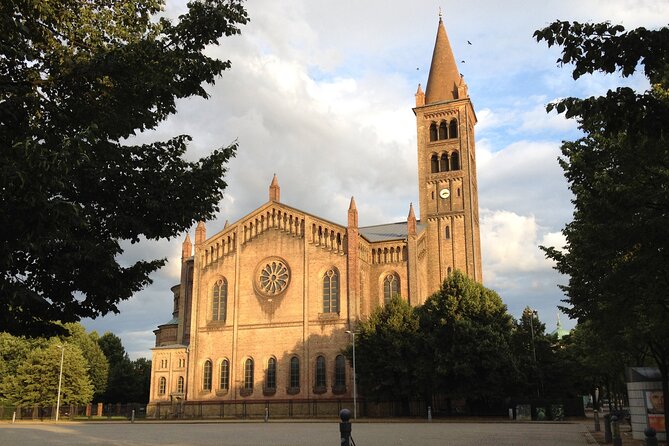
The tour also includes key reconstructed city monuments in the center, including the City Palace (re-centered in the old town after socialist-era destruction) and a prominent church with a dome that rises above the surrounding houses. You’re seeing how Potsdam rebuilds identity, not only how it preserves old art.
The Berlin-to-Potsdam connection and the bridge that stayed closed
On the way, you’ll get a view of the famous Glienicke Bridge area (the story connected to decades of Berlin division). The route description notes that the bridge sat on the border between West Berlin and the GDR and was closed for 40 years, turning it into a stage for covert spy and prisoner exchanges between the US and the Soviet Union.
Even if you don’t care about spy stories, this is a good pacing moment. It breaks up the palace-heavy day with something grounded in twentieth-century reality and helps you understand why Potsdam and Berlin history are intertwined.
Price and value: what $179.01 buys you in practice
At $179.01 per person for a 6–8 hour private taxi tour, you’re paying for three things: door-to-door convenience, a guided route that fits your limited time, and local parking and taxi tariff inclusion. This isn’t a budget public-transport plan, but the price isn’t random either.
Here’s where the value becomes real for you:
- If you’re doing Potsdam for the first time, you’d otherwise spend time figuring out how to connect stops efficiently.
- If you care about architecture and how different rulers shaped the city, the guide’s explanations are what turn places into something you remember.
- If you want to avoid crowds, a private route with shorter, targeted stops helps you steer around the worst bottlenecks.
The one cost-tradeoff is admission. The tour includes parking fees, and some park entries are described as included or free, but castle entries often depend on whether you choose the Sanssouci+ option. If you’re the type who wants to see the inside of the big palaces, Sanssouci+ can be the simpler route—less decision-making, fewer surprise ticket lines.
Who this tour suits best (and who might want a different plan)
This tour fits you if you want a first-time Potsdam day with a clear route and a guide who can explain what you’re seeing in the moment. It also works well if you like taking photos at scenic points, since the guide is described as taking photos and sharing them with you.
It may be less ideal if you’re the kind of traveler who wants to linger for long stretches in every room. The day is packed by design, and with only a 6–8 hour window, you won’t get a slow, hours-long “museum day” pace.
Also consider mobility planning. The route is mostly walking on park paths and around palaces, and the guidance is to use good walking shoes rather than sandals. If you’re unsure about your comfort level on uneven ground, ask questions before booking.
Should you book this private Potsdam and Sanssouci taxi tour?
I’d book it if you’re visiting Berlin and want Potsdam to feel like a guided story rather than a self-planned scramble. The combination of private taxi pacing, a focused Sanssouci Palace visit, and the jump to New Palace and Cecilienhof makes it a strong use of limited time.
Book it with care if you’re sensitive to admission costs. If you care about going inside the palaces, check whether Sanssouci+ matches your priorities, because some of the headline stops are marked as not included. If you want mostly outdoor views and quick structured breaks, you can still have a good day, but be ready for partial paid entries.
If you want a day that’s efficient, photo-friendly, and guided with architecture-and-place context from start to finish, this is the kind of tour that makes Potsdam click fast—and in the right order.
FAQ
How long is the Potsdam and Sanssouci private taxi tour?
It runs about 6 to 8 hours.
What time does the tour start, and where do I meet?
The start time is 10:30am. Pickup is from your hotel or accommodation.
Is the tour offered in English?
Yes, it’s offered in English.
Does the price include admission to the palaces?
Admission depends on the option you select. The Sanssouci+ option includes admission for all castle tours. Some parts like Sanssouci Park are listed as ticket included, and some stops are listed as free.
Is this a private tour?
Yes. It’s a private experience, and only your group participates.
What’s the pickup process?
You’ll be picked up from your hotel or accommodation. The guidance is to wait to step out onto the street until the guide sends you an SMS/WhatsApp message, and you should include a cell phone number when booking.
Can the driver accommodate children or strollers?
A baby car seat (MaxiCosy) is available on request. For strollers, the cradle must be removable and the frame foldable, with space considerations for luggage.