REVIEW · BERLIN
Berlin: walking tour about Charité
Book on GetYourGuide →Operated by Secret Tours Berlin · Bookable on GetYourGuide
Berlin medicine has dark secrets. This 2-hour Charité walk strings together 300 years of science, plagues, and famous Nobel winners, from Virchow to Koch, with stops that feel oddly close to real life-and-death decisions. I especially like how the tour gives you clear names and dates, and how it brings you to the Medicine Temple, Berlin’s oldest surviving teaching building, tucked away in a courtyard area. The main thing to consider: you see parts of the hospital from outside, because the Charité Campus Mitte grounds aren’t open for group tours.
I also like the structure: you start at the Charité Bed House area, then you walk through the university-campus zone toward older teaching spaces. You’ll hear about bright breakthroughs and the grim period when doctors collaborated with the Nazi regime, so the story doesn’t stay in the comfort zone of inventions alone. One possible drawback: the Animal Anatomical Theatre (TAT) may change hours at short notice and it can be closed on public holidays, so your timing depends on the day.
In This Review
- Key points before you go
- Why the Charité story feels personal (and not like museum trivia)
- Meeting at Charité Tower and how the 2-hour walk is paced
- Charité Bed House views, then Luisenstraße and the campus connections
- The Medicine Temple: Berlin’s oldest surviving teaching building (inside)
- Animal Anatomical Theatre (TAT): the science that can’t be untangled
- Famous doctors and Nobel winners: what the names actually explain
- The dark chapter: when medicine bends with Nazi power
- Price and value: is $27 worth a focused 2-hour guided story?
- Who this tour fits best
- Should you book the Berlin Charité walking tour?
- FAQ
- How long is the Berlin Charité walking tour?
- Where do I meet for the tour?
- Is the tour conducted in English?
- Does the tour go inside the Charité Bed House?
- Can I enter the Charité Campus Mitte grounds?
- Will we visit the Animal Anatomical Theatre (TAT)?
- What is the cancellation policy?
Key points before you go
- 300 years of Charité: plague-era roots to major university hospital impact
- Nobel Prize winners: Virchow, Emil von Behring, Robert Koch, and Ferdinand Sauerbruch
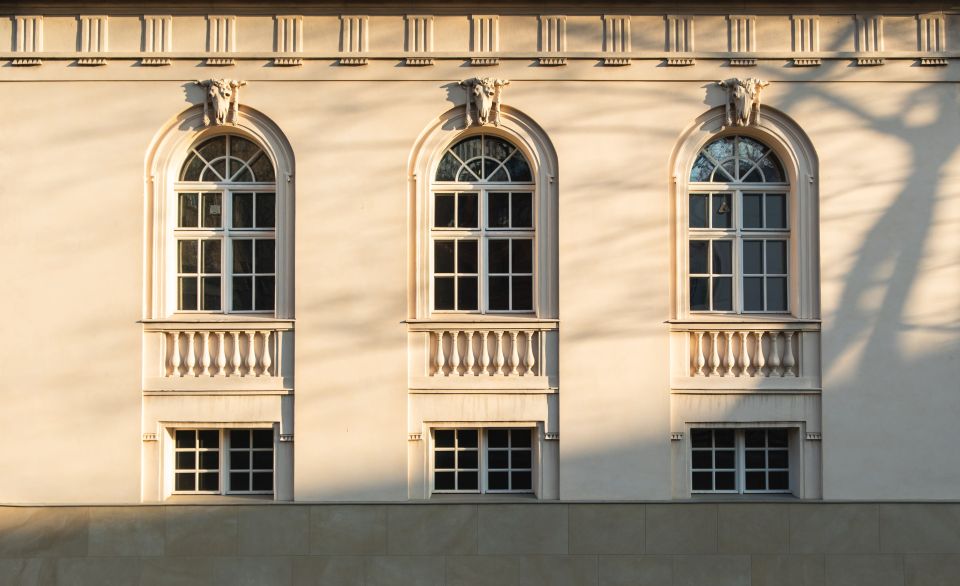
- Medicine Temple inside: Berlin’s oldest surviving teaching building, visited from the inside
- Guided medical stories: life-and-death case-style storytelling tied to Berlin’s science
- TAT timing matters: Animal Anatomical Theatre can shift hours or close on public holidays
Why the Charité story feels personal (and not like museum trivia)

The Charité is not just a big hospital on a map. It’s one of those places where medicine, politics, and ethics keep bumping into each other, across centuries. That’s what makes the walk work: you’re not wandering room-to-room with vague background captions. You’re following a timeline of real ideas that shaped how doctors worked in Berlin, and how they sometimes failed people.
You also get the names that actually mattered. The tour highlights physicians and researchers such as Rudolf Virchow, Emil von Behring, Robert Koch, and Ferdinand Sauerbruch. Even if you only know one or two of them, you’ll leave with a more connected picture of why they belong in the same story—and why their discoveries didn’t happen in a vacuum.
And yes, the darker chapters are included. When the tour mentions collaboration with the Nazi regime, it’s not to be sensational. It’s to explain why medicine can’t be separated from the moral choices of the time. If you want history that only flatters human progress, this isn’t that kind of experience. If you want a more honest Berlin, it fits.
You can also read our reviews of more walking tours in Berlin



Meeting at Charité Tower and how the 2-hour walk is paced
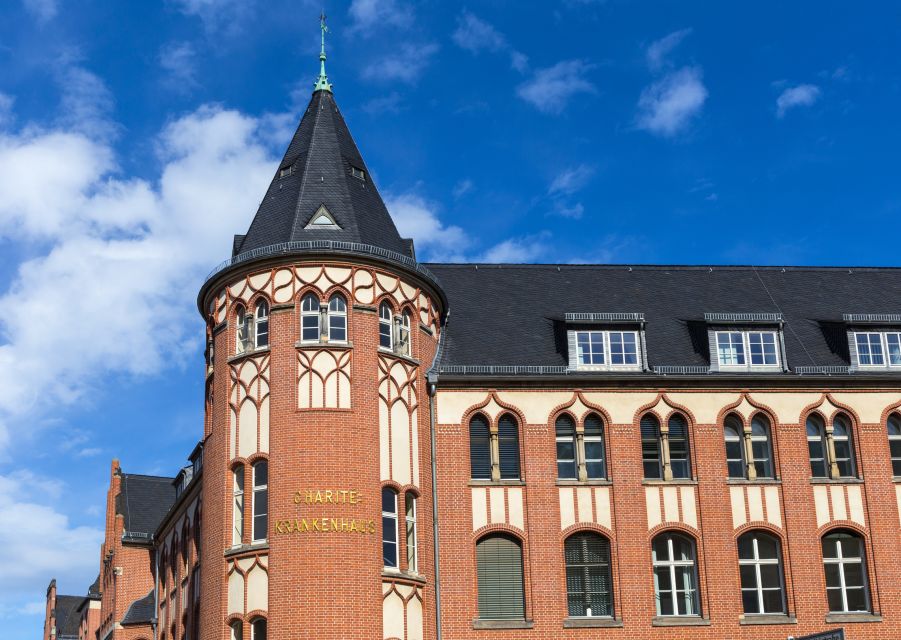
You start at the Charité Tower, right where Schumannstraße / Charitéplatz / Charitéstraße cross. The tour starts on time and ends back at that meeting point, which makes planning easy. It’s a walking-oriented format, so I recommend you wear shoes you can move in comfortably for the full 2 hours.
Because the hospital grounds aren’t accessible for group tours, the pace stays focused on guided viewpoints and specific buildings you can enter. That’s a good thing for most people. You still get a sense of place—campus paths, street-level edges, and the university-area feel—but you’re not stuck outside with no guidance.
You’ll also hear the tour is live-guided in German. If you’re a confident beginner in German, you might catch names and key terms, but the stories will land best if you can follow spoken German at least at a basic level. If German isn’t your strength, consider it carefully before booking.
Charité Bed House views, then Luisenstraße and the campus connections

The walk begins with the Charité Bed House area. You don’t go in at that stage, but you do get a first look at the hospital facility from outside, which sets the tone. It’s like getting the stage in view before the play starts.
From there, the route moves along Luisenstraße and crosses through the university campus area. This part matters because it shows you how the hospital and the broader academic world are braided together in Berlin. The Charité is a teaching hospital, and the tour keeps that theme running: science and students, research and patients, classrooms and ethics.
A practical note: since the Charité Campus Mitte grounds aren’t accessible for group tours, you’ll rely on the guide’s explanations and the viewpoint stops for understanding the layout. If you like to roam freely and test your own curiosity, you might feel a bit limited during this segment. But if you want a tight, story-driven route, it works.
The Medicine Temple: Berlin’s oldest surviving teaching building (inside)
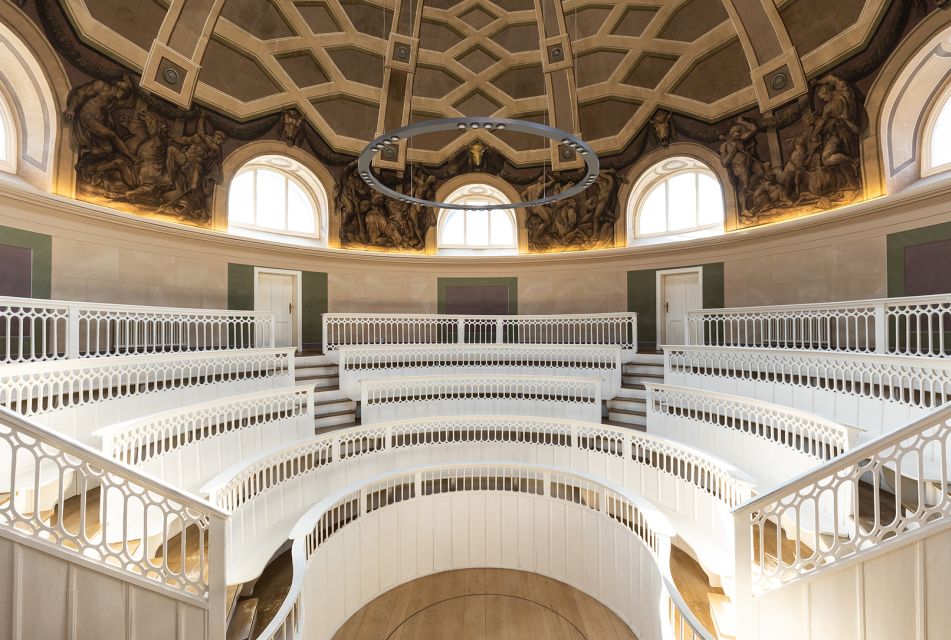
The highlight for many people is the stop people call the Medicine Temple. You find it in a backyard-style setting, described as Berlin’s oldest surviving teaching building that still stands today.
What you’ll like here is that the tour doesn’t treat the building as a photo stop. You get context about why it’s called a teaching space and why it matters to the Charité story. Even without going deep into architectural nerd details, the building’s purpose comes through: this is where medical education becomes physical, not theoretical.
You’ll also be visiting from the inside, which makes the experience feel more grounded. Buildings that survive long enough to become symbols tend to feel abstract in guidebooks. Here, you can see how a place designed for teaching medicine would have shaped what doctors learned and how they learned it.
One important restriction: the tour does not go inside the Charité Bed House. And in general, since this is a hospital facility, you should expect protection-and-hygiene rules and follow the guide’s direction. If you’re hoping for lots of full-access hospital interior time, set expectations accordingly.
Animal Anatomical Theatre (TAT): the science that can’t be untangled
Another key stop is the Animal Anatomical Theatre (TAT). The format is special because this is tied to how anatomy was taught. The tour uses it to connect medical education to the techniques and assumptions doctors worked with—then and now.
There’s also a real-world constraint to plan around. The TAT reserves the right to adjust opening hours at short notice in the context of closed events. And it’s closed on public holidays. Translation: if your schedule includes a public holiday, you might not be able to count on the exact same visit timing.
In practice, that doesn’t mean the tour is a gamble. It means you should book it with a day where normal operations are more likely. If you’re visiting Berlin around a major holiday, I’d treat this as a “check the day-of feasibility” stop rather than a guaranteed final-castle room.






Famous doctors and Nobel winners: what the names actually explain
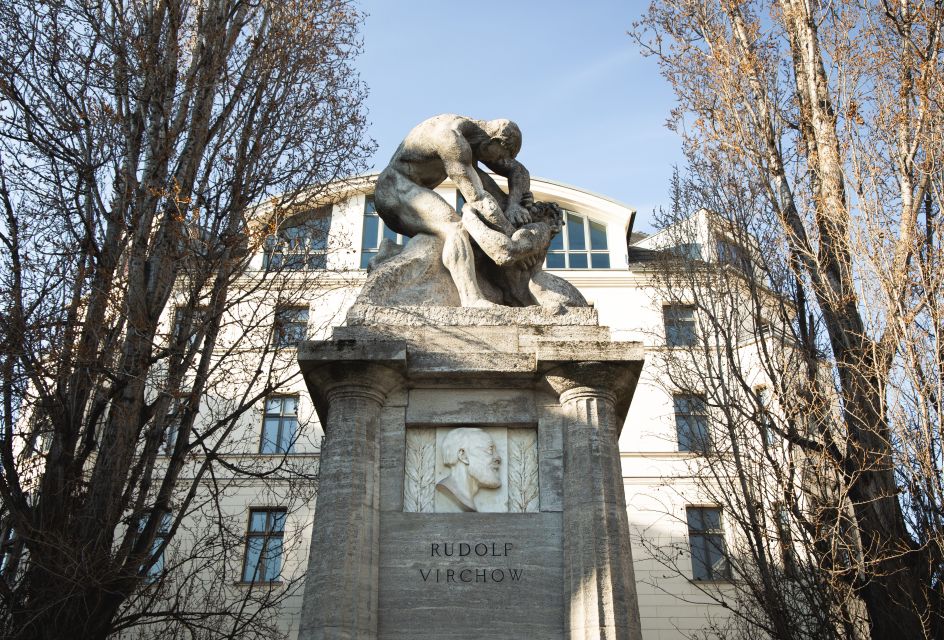
The tour’s “great names” approach is smart, because it doesn’t just drop famous surnames. It ties them back to what was going on in Berlin medicine at the time. You’ll hear about Rudolf Virchow and his place in the evolution of medical thought, plus other heavyweight figures including Emil von Behring and Robert Koch.
Then Ferdinand Sauerbruch comes in as another anchor point for how surgical and medical practice developed. Even if you don’t remember every detail, the tour gives you a way to connect the dots: innovation happens in institutions, and institutions reflect the society around them.
If you’re the type of traveler who likes your history with names and cause-and-effect, you’ll probably rate this highly. The overall rating is 4.4 from 537 reviews, and one recurring theme in feedback is the value of the medical background you get, not just the scenery.
The dark chapter: when medicine bends with Nazi power
The tour includes the Nazi-era collaboration by doctors. This can be emotionally heavy, but it’s also one of the most important parts of the Charité story. Medicine isn’t only labs and breakthroughs—it’s also human decision-making, institutions, and systems.
The way to approach this segment is with an open mind and a realistic lens. You’re not being asked to agree with the era. You’re being asked to understand how authority, ideology, and scientific institutions can collide—and what that meant for patients and ethics.
If you’re traveling with kids or teens, this isn’t necessarily the kind of tour you’d choose by default. But for adults and older teens interested in medical ethics, it adds serious weight and context.
Price and value: is $27 worth a focused 2-hour guided story?
At $27 per person for a 2-hour live-guided tour, you’re paying for two things: a route that’s built around specific Charité-related spaces and a guide who can connect the dots between medicine, teaching buildings, and the scientists behind the breakthroughs.
This isn’t a “see everything inside the hospital” price. You’re paying for medical context that many visitors would miss on their own, plus entry to the oldest surviving teaching building and the planned stop at the Animal Anatomical Theatre (TAT). When you factor in the guided explanations and the time saved by having the story stitched together for you, the price feels reasonable.
If you’re Berlin-only for a short stay and you want one experience that’s different from standard monument tours, this is a strong pick. If you’re already a deep medical-history specialist, you might find you want more depth per stop—but for most travelers, it’s a solid length and a focused subject.
Who this tour fits best
This tour suits you if you like:
- history tied to people and ideas, not just buildings
- medical science as a human story (including the ugly parts)
- short, well-paced walks where the guide handles the timeline
It might not be the best match if you:
- want maximum inside access to hospital wards (the campus grounds aren’t open for group tours)
- only speak very limited German, since the live guide is German
- are scheduling around public holidays, since the TAT can close
If you’re planning other Berlin neighborhood walks, this also works well as a “brainy” counterpoint. It gives you a different kind of Berlin, where the street-level world connects directly to major changes in how medicine evolved.
Should you book the Berlin Charité walking tour?
I’d book it if your idea of a great Berlin day includes serious stories and strong names—Virchow, von Behring, Koch, Sauerbruch—and you want to see the Medicine Temple teaching building inside. The tour’s focus on medical background and context is exactly the kind of thing you can’t replicate from a smartphone map.
I’d think twice if you’re expecting a fully open hospital visit or if you’re traveling on a public holiday where the Animal Anatomical Theatre (TAT) might be closed. Otherwise, for $27 and 2 hours, it’s a smart, story-led way to understand why the Charité matters far beyond Berlin.
FAQ
How long is the Berlin Charité walking tour?
The duration is 2 hours. Starting times vary, so you’ll want to check availability for the time that works for you.
Where do I meet for the tour?
Meet in front of the Charité Tower at the crossroads of Schumannstraße / Charitéplatz / Charitéstraße.
Is the tour conducted in English?
No. The live tour guide speaks German.
Does the tour go inside the Charité Bed House?
No. The tour does not go inside the Charité Bed House, as it is a hospital facility with corresponding protection and hygiene regulations.
Can I enter the Charité Campus Mitte grounds?
No. The hospital grounds (Charité Campus Mitte) are not accessible for group tours.
Will we visit the Animal Anatomical Theatre (TAT)?
Yes, the tour includes a visit to the Animal Anatomical Theatre (TAT). Its opening hours can change at short notice, and it is closed on public holidays.
What is the cancellation policy?
You can cancel up to 24 hours in advance for a full refund.