REVIEW · BERLIN
Explore Berlin History and Highlights Sightseeing Walking Tour
Book on Viator →Operated by Birchys Berlin Tours · Bookable on Viator
Berlin history hits different when you can walk it. This 3.5-hour highlights tour strings together iconic landmarks and the heavy turning points they’re tied to, all with a guide’s commentary while you cover the city on foot. You’ll move through Imperial-era power, Nazi terror memorials, and Cold War reminders without getting lost in the weeds.
What I really like is the small group size (max 15), which keeps the pace human and makes questions feel easy. I also like that the plan is packed with big-picture context at each stop, and the tour’s guides, like Aurel, Cairan, Eugen, and Rhys, are especially good at making the stories clear and easy to follow.
One drawback to flag: it’s still a walking tour, so if you have mobility limits, plan carefully. Also, a few stops cover extremely dark material, so it may be a lot if you’re looking for a lighter sightseeing morning.
In This Review
- Key things to know before you go
- Price and logistics: what your $32.58 really buys
- Start at Wurst 🙂 and get oriented fast
- Brandenburg Gate to Reichstag: from imperial power to the fuse of catastrophe
- Holocaust Memorial, Führerbunker area, and the machinery of Nazi terror
- Cold War Berlin in one walk: Checkpoint Charlie to Gendarmenmarkt
- Bebelplatz and Unter den Linden: books burned, universities remembered
- Museum Island finish: medieval Berlin to a modern museum area
- Who this tour is best for
- Should you book this Berlin history walking tour?
- FAQ
- Where is the meeting point?
- What time does the tour start?
- How long is the tour?
- Is this a walking tour?
- What language is the tour offered in?
- How many people are in the group?
- Is the admission included for the stops?
- Where does the tour end?
- Is there public transportation nearby?
- What’s the cancellation policy?
Key things to know before you go
- Max 15 people means more time for questions and a better sense of who’s learning what
- Free admission at the listed stops makes it easier to budget and stay on schedule
- A full storyline, not just photos: Imperial Germany to the Third Reich to Cold War Berlin to reunification-era viewpoints
- Heavy-hitting memorials and sites (Holocaust Memorial, Topography of Terror, Führerbunker area) bring real weight to the route
- Ends at Museum Island, so you can naturally continue into the museum area afterward
Price and logistics: what your $32.58 really buys
At about $32.58 per person for roughly 3 hours 30 minutes, this tour isn’t trying to be a bargain bus tour. You’re paying for an expert guide and a focused route that hits major sites you’d otherwise have to research yourself.
It also helps that the stops on the route are marked as free admission in the tour plan. That means you’re not constantly checking ticket rules or scrambling for timed entries. You’re simply walking, listening, and learning at each location.
You’ll start at 10:00 am at Wurst 🙂 near the Brandenburger Tor / Ebertstraße Ecke Scheidemannstraße area, and you’ll finish on Museum Island. The tour uses a mobile ticket, and it’s near public transportation, which matters in Berlin where getting around is easy but finding the exact start point can still be a hassle if you’re rushing.
One practical note: bring comfortable shoes. You’ll cover ground over the morning, and the value of this tour is tied to staying present as the guide moves you from one historical theme to the next.
You can also read our reviews of more walking tours in Berlin



Start at Wurst 🙂 and get oriented fast
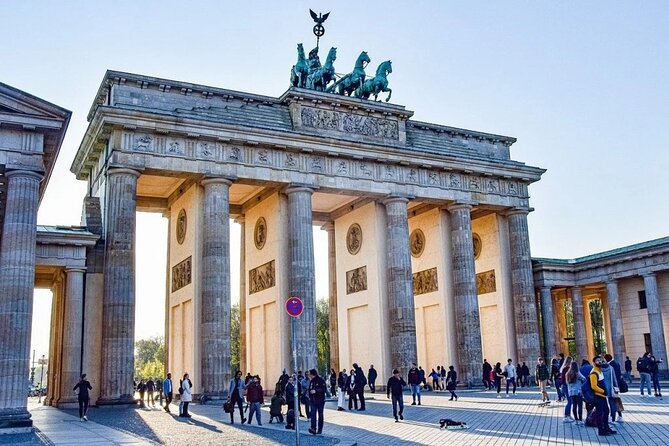
The meeting spot is right by Brandenburg Gate at Wurst 🙂 on Ebertstraße Ecke Scheidemannstraße. It’s a helpful landmark, and it sets your expectations: this tour is built to start with the most recognizable symbol in central Berlin and then widen into the city’s full historical arc.
Because the group is capped at 15, you’re less likely to feel like you’re “waiting behind a crowd.” The guide can keep everyone moving while still stopping long enough to explain why each place matters. Many people like first-day tours for exactly this reason: you get a map in your head, not just pictures on your phone.
Brandenburg Gate to Reichstag: from imperial power to the fuse of catastrophe
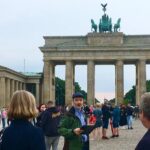
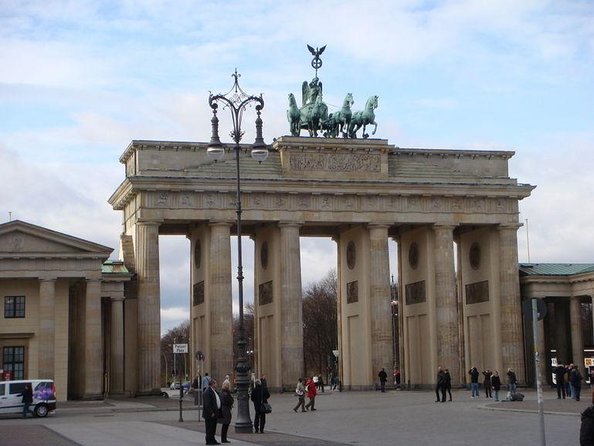
Stop one is the Brandenburg Gate, where the guide explains the Gate’s history and why it’s been a witness to key moments in Berlin’s story. Even if you’ve seen it in photos before, this is the point where it starts to feel less like a postcard and more like a historical actor—something that stood there while governments, regimes, and wars shifted around it.
You’ll spend about 20 minutes here, which is enough time for the guide’s context to land. If you care about photos, keep your timing in mind: the Gate is a major magnet in Berlin, so crowd energy can affect your shots.
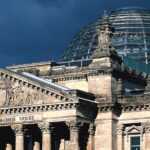
Then you move to the Reichstag Building for another 20 minutes. The tour frames the building through a few specific lenses: it served as the parliament building during Germany’s Imperial period, it was tied to the infamous fire that came shortly after Hitler was made Chancellor, and it became a key target for the Soviets when they took the city near the end of World War II.
This stop works well because it ties the architecture to the consequences. You’re not just seeing a landmark—you’re learning how this particular place was pulled into turning points that changed the course of the country.
Holocaust Memorial, Führerbunker area, and the machinery of Nazi terror
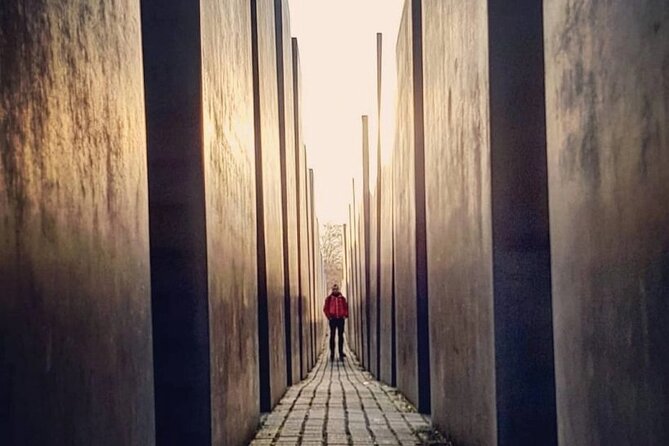
After Reichstag, the tone shifts in a way that’s appropriate for what you’re learning. Next is the Holocaust Memorial – Memorial to the Murdered Jews of Europe (about 15 minutes). The guide walks you through what surrounds the memorial and why it was built—especially the history connected to its construction and the crimes that enabled that construction.
This is one of those stops where a guide adds real value. The site can be visually overwhelming in the best way, but it’s easy to miss the meaning if you don’t have someone to connect the memorial to the underlying events. The tour’s structure helps you hold both: the place in front of you, and the historical context behind it.
Then you reach the Führerbunker area (about 15 minutes). The tour description calls it the most infamous car-park in the world, and that contrast is part of why the stop hits. You learn that it was the Führer’s bunker, located within the gardens of the New Reich’s Chancellery building, and it was also where Hitler ended his reign.
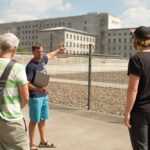
From there, the route continues to the Bundesministerium der Finanzen building (about 15 minutes). Today it functions as the Finance Ministry, but the guide connects it to its prior life as the HQ building of the Luftwaffe, plus the construction and its important Cold War history. The value here is seeing how one site can change roles without losing its historical gravity.
After that comes Topography of Terror (about 20 minutes). This stop takes you into the former headquarters connected to the SS, Gestapo, and SD, and then into the post-war efforts to memorialize the site. It’s exactly the kind of location where you want a guide to separate what happened there from what it means today.
This cluster—Holocaust Memorial, Führerbunker area, former Nazi-linked HQ grounds—is heavy. It’s also the part of the tour where the structure matters most: you’re moving through different layers of the same moral and political catastrophe.
Cold War Berlin in one walk: Checkpoint Charlie to Gendarmenmarkt
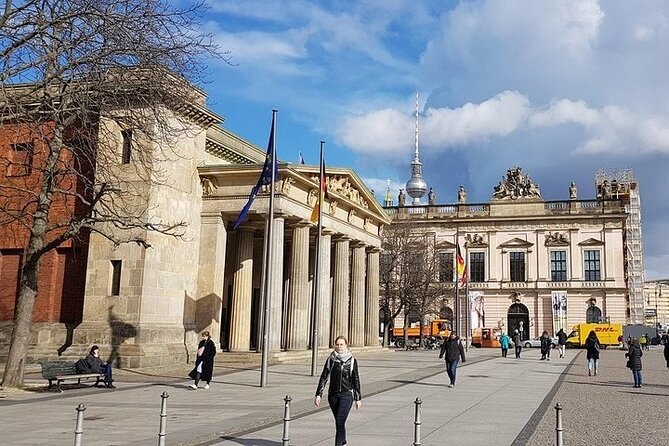
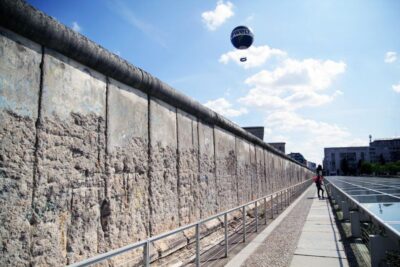
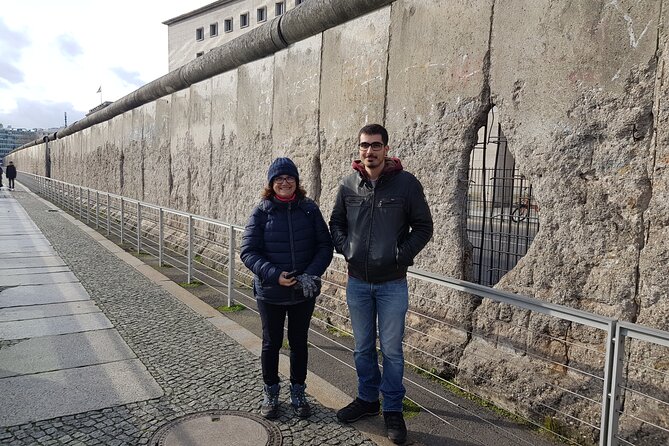
Once you’ve absorbed the Nazi-period sites, the tour shifts you into Cold War Berlin. Checkpoint Charlie is next (about 20 minutes). The guide frames it as one of the most iconic checkpoints and a key site tied to Cold War divisions.
Checkpoint Charlie is easy to treat like a themed stop, because it’s so famous. What makes this tour’s approach useful is that you don’t stay stuck at the surface. You get the connection to the wider Cold War story as you move on.
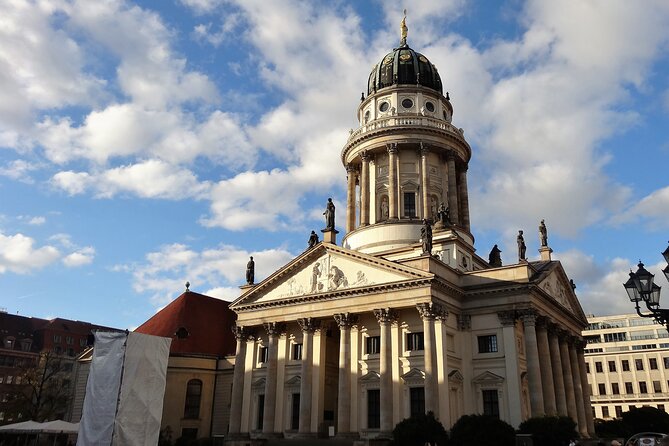
Then you head to Gendarmenmarkt (about 15 minutes). This one is a breather in terms of atmosphere, since the focus becomes the history of the square’s foundation and development, along with the splendor of 18th and 19th century architecture. It’s a reminder that Berlin isn’t only memorial sites and political symbolism—some of the city’s most beautiful spaces also sit on top of complicated eras.
This stop can work especially well if you’re with family or friends who want a mix. You still get historical meaning, but you also get a different sensory experience: classic urban space, symmetrical views, and a sense of a Berlin that lived beyond war headlines.
You can also read our reviews of more historical tours in Berlin





Bebelplatz and Unter den Linden: books burned, universities remembered
Next is Bebelplatz (about 15 minutes). The tour ties it to the grandeur of Frederick the Great’s Prussian capital and then brings you to the Memorial to the 1933 Nazi Book Burning, described as the square’s memorial to the darkest chapter of its past.
It’s a powerful contrast. You’re in a beautiful, formal space and then you’re faced with a reminder of violence against ideas. The guide’s job here is to keep that contrast from feeling random. You end up understanding why a memorial belongs in a civic square, not off to the side.
After Bebelplatz, the tour walks along Unter den Linden (about 20 minutes). You’ll learn about the Humboldt University, the Memorial to Victims of War and Tyranny, and the German History Museum. Unter den Linden is famous for being a grand boulevard, but this tour makes it more than scenery by linking the institutions and memorials to what they represent.
This stop is also good for orientation. If you want to wander afterward on your own, you’ll likely recognize the street and feel more confident about where things are.
Museum Island finish: medieval Berlin to a modern museum area
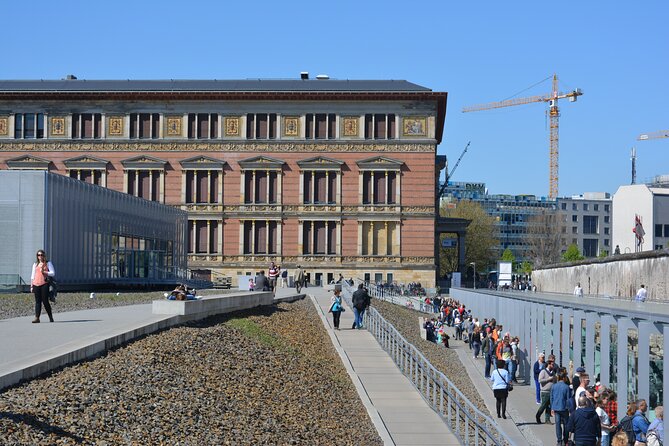
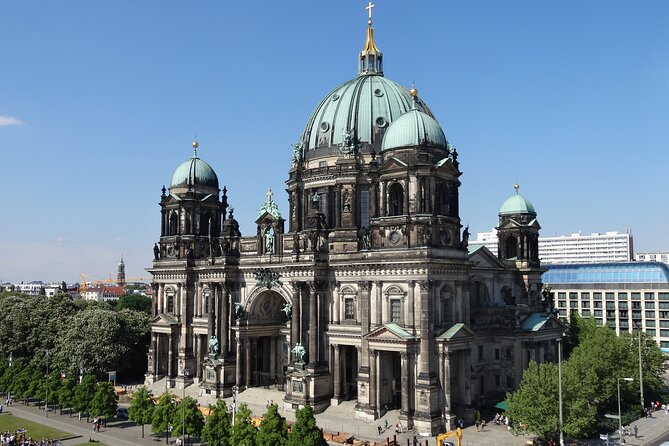
The last stop is Museum Island, finishing after you cross into what’s described as medieval Berlin. The tour points you toward Stadt Schloss from the 15th century and the Berlin Cathedral, and it notes that Museum Island is now home to five world-class museums.
Even though this is a walking tour (not a museum ticket tour), the ending is still smart. It sets you up to keep exploring without needing to reorganize your day. And the guide’s discussion includes a viewpoint toward Alexanderplatz, presented here as the center of post-war East Berlin.
That final connection—from medieval foundations to post-war geography—helps the day feel like one continuous line instead of a checklist of separate stops. You finish with a sense of where to go next, and you’re not just tired; you’re mentally grounded.
Who this tour is best for
This tour is a strong fit if you want a guided Berlin highlights experience that still takes history seriously. It’s also ideal if you’re traveling with people who learn best by hearing stories as they stand in the locations where those stories unfolded.
It’s especially worth it if you:
- Want a route that covers Brandenburg Gate, Reichstag, Holocaust Memorial, and Cold War sites in one morning
- Prefer a small group instead of a big crowd situation
- Like history told with both context and place-based explanations
It may not be the best fit if:
- You don’t do well with walking or long stretches of standing
- You’d rather avoid emotionally heavy topics like Holocaust remembrance, Nazi terror sites, and the Führerbunker area
One more practical point from what I’ve seen people value here: guides often share ways to keep your day moving afterward, including suggestions on where to go next. If you like a plan you can immediately use after the tour, you’ll probably appreciate that extra nudge.
Should you book this Berlin history walking tour?
I’d book it if you want a morning where Berlin’s most important landmarks are connected by a clear storyline, not just a string of photos. The small group (max 15), the free admission at the listed stops, and the fact that you end on Museum Island make it feel like good value, not just “see the sights.”
If you’re worried about the walking portion, or you want something lighter than Holocaust and Nazi-era sites, then look for an easier paced option. But if you’re ready to walk and listen—and you want your first Berlin history overview to actually stick—this is the kind of tour that helps you understand the city beyond the surface.
FAQ
Where is the meeting point?
The tour starts at Wurst 🙂 at Brandenburger Tor / Ebertstraße Ecke Scheidemannstraße, 10117 Berlin.
What time does the tour start?
The start time is 10:00 am.
How long is the tour?
It runs about 3 hours 30 minutes (approx.).
Is this a walking tour?
Yes. It’s a walking tour, and you should plan on being on your feet for the full duration.
What language is the tour offered in?
The tour is offered in English.
How many people are in the group?
The tour has a maximum of 15 travelers.
Is the admission included for the stops?
The stops are marked as free admission in the tour description, and the tour emphasizes that you won’t need entrance tickets for what’s listed.
Where does the tour end?
The tour ends on Museum Island at 10 Berlin.
Is there public transportation nearby?
Yes, it’s listed as being near public transportation.
What’s the cancellation policy?
You can cancel for a full refund if you cancel at least 24 hours in advance. If you cancel less than 24 hours before the start time, the amount paid isn’t refunded.