REVIEW · BERLIN
Private Sachsenhausen Concentration Camp tour with train
Book on Viator →Operated by Insider Tour Berlin · Bookable on Viator
This is not a casual Berlin side trip. Sachsenhausen pulls you into the machinery of Nazi repression, then connects it to the wider story of propaganda and postwar uses of the camp. What I like most is the private format (you can ask questions and go at your pace), and the fact that you’re guided by someone trained by the memorial authority. One thing to plan for: the day is long and walking-heavy, and it’s emotionally heavy even when the guide keeps a steady, respectful pace.
The route is built around the real geography of the place. You start in Oranienburg, then head to Sachsenhausen for a mix of memorial grounds and museum time, including an expert-led walk through key areas. The English offering and the wide choice of departure times from Berlin are practical wins, especially if you want to fit this into a packed itinerary.
In This Review
- Quick hits you’ll appreciate on day one
- Sachsenhausen in plain terms: why this camp is still essential
- Private logistics from Berlin: what hotel pickup and the train actually mean
- A real-world note on your feet
- Stop 1 in Oranienburg: why the town itself is part of the story
- Memorial and Museum Sachsenhausen: the camp’s layout tells the story
- What makes the museum time valuable
- The guided grounds walk (Gedenkstätte und Museum): daily terror and prisoner resilience
- The guide is the whole day: examples of how different experts shape it
- What to pack and how to pace yourself through 6 hours of meaning
- Price and value: does $338.15 make sense?
- Who should book this private Sachsenhausen tour by train
- Should you book it
- FAQ
- How long is the private Sachsenhausen tour with train?
- Does the tour include hotel pickup and drop-off?
- What language is the tour offered in?
- Are tickets included for the museum and memorial stops?
- Is this a private tour?
- What about food and drinks?
- Is the tour very walk-heavy?
- Can I cancel for a full refund?
Quick hits you’ll appreciate on day one
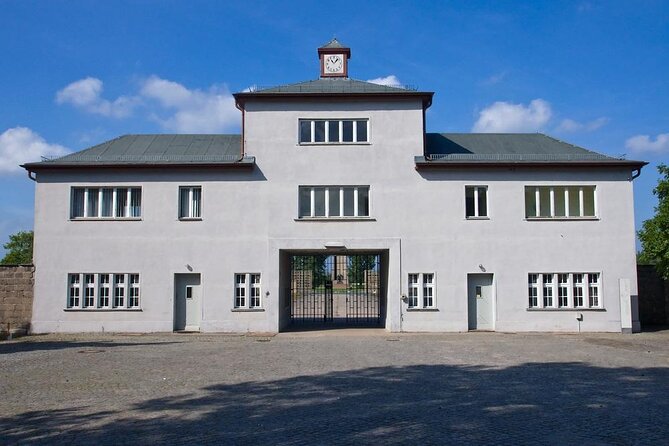
- Private-by-train day: hotel pickup and drop-off, with local transit that feels like part of Berlin life.
- Expert guide, trained by the memorial authority: solid historical framing and room for questions.
- Three-step learning flow: Oranienburg street-level context, then the camp’s memorial/museums, then the grounds walk.
- Real site design details: the camp’s layout (like the entrance point and where things end) is explained in context.
- Walking matters: expect uneven pavement and long distances, so pack for feet, not comfort.
Sachsenhausen in plain terms: why this camp is still essential
Sachsenhausen is one of those sites where you can feel history working like a system. It wasn’t just a place to imprison people—it was a place designed to control, intimidate, and dehumanize, with forced labor tied into the Nazi war effort.
The basics you’ll get on the tour help everything click. During the Nazi period, slave laborers were used to build Sachsenhausen (built north of Berlin after the 1936 Olympics). Over the next decade, around 200,000 people were imprisoned there. Then, after the camp’s evacuation by the Soviets in 1945, the Soviets used it for another phase of imprisonment, including 60,000 war criminals (including Nazis and Nazi collaborators, according to the information shared on the tour).
A good guide doesn’t turn this into a checklist. Instead, you learn how the place’s design and routine helped the system run—roll call, barracks reality, guard power, and the way daily life stripped people down to what the regime wanted.
You can also read our reviews of more private tours in Berlin

Private logistics from Berlin: what hotel pickup and the train actually mean
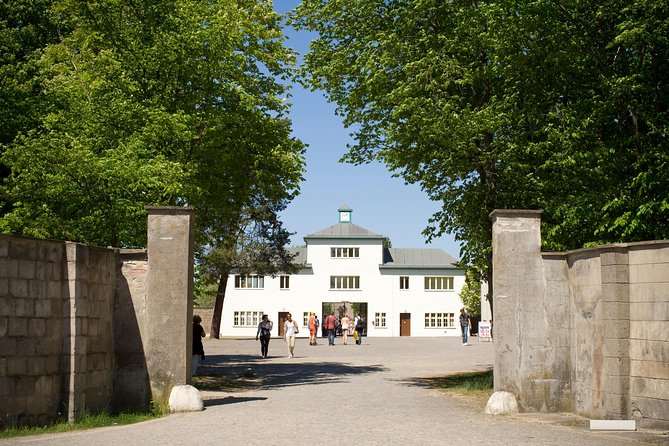
This is billed as Private Sachsenhausen Concentration Camp tour with train, and that detail matters for your expectations. You get hotel pickup and drop-off, plus a guide who meets you and stays with your group the whole time. There’s also a mobile ticket and the tour runs in English.
The transit piece is part of the experience, not just an add-on. In past days, guides have taken people by train toward Oranienburg and then used walking to reach the memorial area. Some schedules include a short walk from the station; depending on timing and weather, taxis have also been used to reduce walking when it was needed.
Here’s the practical takeaway: you should expect a day that mixes train time with walking at the site. Even when a vehicle might help on a particular segment, the core structure is “public transport + memorial grounds.”
A real-world note on your feet
Even with a private guide, this is still a large site. One person counted about 11,000 steps, and mentioned uneven pavement. Another mentioned a route that included a train leg and a walk from the station. So if you’re the kind of traveler who normally plans days around bus stops and quick museum interiors, this will feel different.
Stop 1 in Oranienburg: why the town itself is part of the story
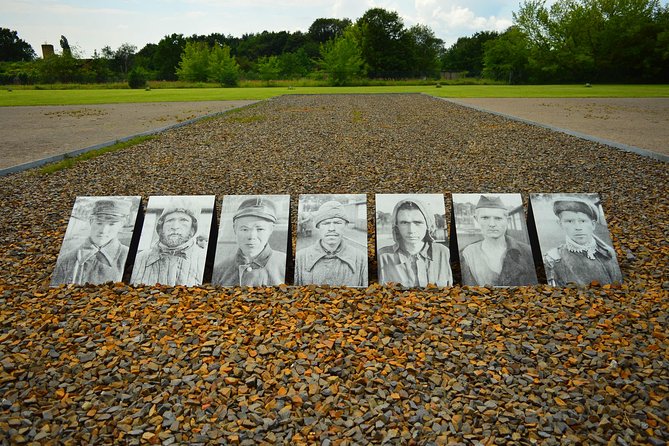
You’ll start in Oranienburg, and you won’t just pass through it. The point here is to show how the Nazi regime wasn’t sealed behind camp fences—it was linked to the surrounding towns and businesses.
On this first stop, you walk through the town’s connection to Sachsenhausen. Local factories and other enterprises relied on forced labor from the camp, including for war-related production. The moral discomfort the guide raises is important: some residents were aware or complicit, while others benefited economically and looked away rather than confronting what was happening nearby.
This segment takes about 25 minutes, and there’s no admission ticket needed. It’s short on paper, but it can be long in meaning. I like it because it keeps you grounded in the human scale of how systems spread.
What to do with this time: watch how the guide points out the “nearby normal” feeling. Then compare it to the camp later. That contrast is often where people’s understanding sharpens.
Memorial and Museum Sachsenhausen: the camp’s layout tells the story
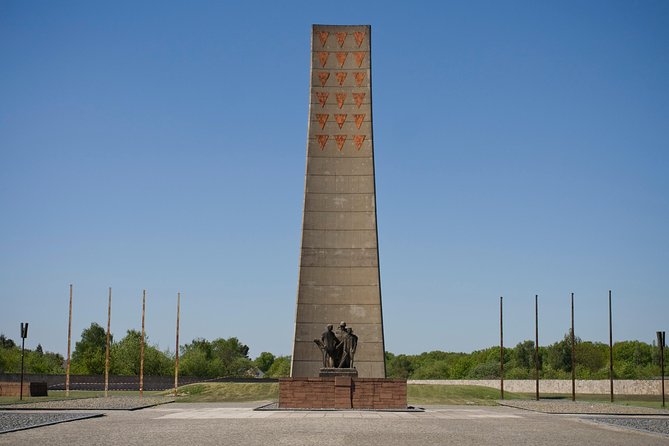
Next comes Memorial and Museum Sachsenhausen, about 1 hour 30 minutes with admission included. This is where you start seeing how the Nazi project used architecture, order, and routine to control prisoners.
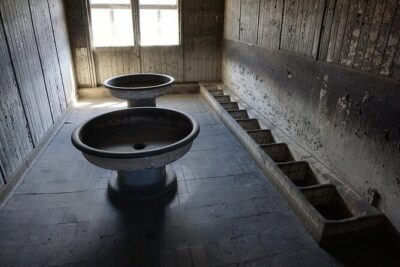
A well-led explanation uses the camp’s structure as a teaching tool. You may hear about the triangular layout, Tower A as the entrance point, and Station Z as the location linked to industrialized killing (as described during guided discussions). When you stand in certain areas—like the roll call square described by one reviewer—the cold logic of the system can land hard.
You’ll also learn the wider arc: slave labor tied to construction, political enemies being imprisoned, and then the later Soviet imprisonment period after 1945. The museum approach helps you connect those dots without drowning you in facts.




What makes the museum time valuable
This isn’t just about learning what happened. It’s about learning how the regime thought. If your guide explains things clearly (and many guides on this tour are praised for pacing and clarity), you can understand the purpose behind the cruelty. It’s heavier than typical museum tours, but it’s also more focused.
A practical note: museum areas often have fewer places to stop and breathe than you might expect. Use the breaks your guide gives you, and don’t be afraid to ask for a slower rhythm at the difficult parts.
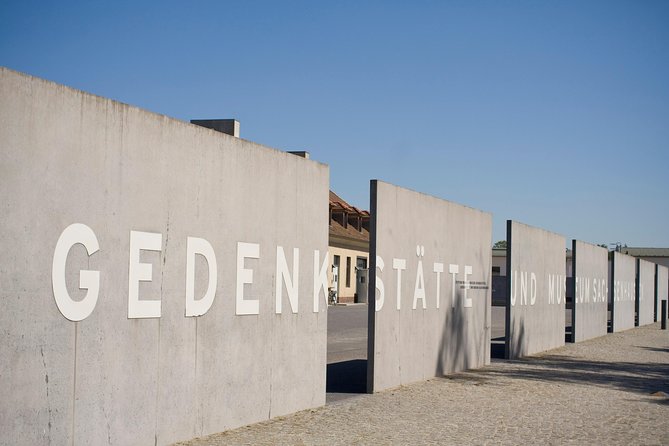
The guided grounds walk (Gedenkstätte und Museum): daily terror and prisoner resilience
The final stop is Gedenkstätte und Museum Sachsenhausen, also about 1 hour 30 minutes. Here, admission is free (for this portion on the tour), and you move through the haunting grounds with an expert guiding the walk.
This section is where the tour shifts from background to lived-in horror and hard survival. You’ll hear about the brutality inflicted by SS guards and the daily horrors prisoners endured. Guides also emphasize prisoner resilience—how people held onto dignity, community, and endurance even when the system tried to erase personhood.
This is also where the memory work gets spelled out: why preservation matters, and why memorials like this one exist when time moves on and firsthand testimony becomes rarer.
I like this ordering—Oranienburg first, then museum framing, then the grounds—because it prevents you from treating the camp like a single dramatic image. You see the structure, then the human impact, then the reason the memory lasts.
The guide is the whole day: examples of how different experts shape it
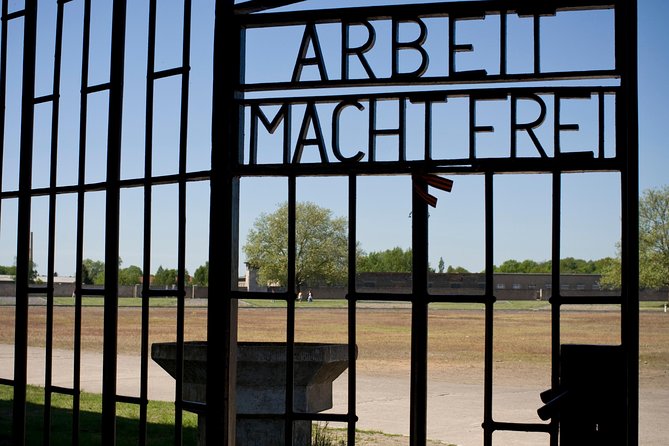
With a private tour, the guide matters a lot. The best matches don’t just recite dates—they shape your understanding with pacing and context, and they answer your follow-up questions without rushing you.
Here are examples of guide strengths that show up in the way people describe their days:
- Maria: praised for pacing and for focusing more on how the Nazis planned and engineered horror rather than treating the story as only victim-centered.
- Xavier: described as making history feel personal and interactive, with lots of detail and a steady rhythm.
- Natalie: highlighted for being patient and friendly, including adjusting routes when someone in the group used a wheelchair.
- Klaus: praised not only for camp history, but also for Berlin tips and clear answers.
- Paul: mentioned as going above and beyond, mixing deep information with a helpful attitude.
- Ioana (Joanna): described as very professional, with strong knowledge and tailoring based on the visitor’s background.
- Nickolai: praised for reverent, respectful delivery and for building the story as you traveled and walked.
- Hannah: noted for arranging the trip via train and bus while keeping the group from feeling rushed.
- Martin: praised for broad expertise, including WW2, the Third Reich, Berlin, and concentration camp context, plus insights into East Germany life.
- Walid: credited with humor and flexibility, plus taxi help for people who needed fewer walking steps.
- Pip: described as guiding in a way that leaves you focused on humanity and bearing witness.
- Brian Bell: praised for connecting Sachsenhausen to Germany’s political and social backdrop and current affairs context.
- Taylor: highlighted for explaining Nazi Germany’s rise and the camp system, with chilling attention to Station Z.
- Chloe: praised for preparation, including return transportation tickets and allowing extra time in areas that needed it.
You can’t choose your guide in every booking, but the consistent lesson from these accounts is clear: the strong guides manage pacing, keep the tone respectful, and build context so you leave with a clearer map of how the system worked.
What to pack and how to pace yourself through 6 hours of meaning
The tour is about 6 hours (approx.). That’s enough time to learn a lot, but it’s not enough time to shrug off discomfort. You’ll need to take care of your body so your mind can stay present.
Bring:
- Comfortable walking shoes (some paths can be uneven)
- Water (food and drinks are not included)
- A plan for breaks, because some parts of the site can feel intense
Food is not included, and one person explicitly recommended bringing a lunch since amenities are scarce during much of the day. That’s a solid idea. Even if you find something nearby, don’t assume it will match what you want while you’re emotionally processing a site like this.
Also: the tour calls for moderate physical fitness, and it’s not recommended for people with limited mobility or walking impairments. That doesn’t mean it’s impossible for everyone, but it does mean you should think hard about whether the walking load fits your limits.
Price and value: does $338.15 make sense?
At $338.15 per person for a private, English-language tour, the cost is real. So the key question is whether you’re buying time and attention—not just a ticket to a memorial.
Here’s what you’re getting for that price:
- A licensed guide trained by the memorial authority
- Hotel pickup and drop-off
- A private group, meaning you can ask questions and slow down
- A structured day that includes multiple stops and real learning time at the camp grounds and museum
You’re not getting:
- Food and drinks
- A promise of an all-day vehicle for the entire route (the train is part of the format)
One caution that pops up in the booking reality: if you’re expecting a car-driven experience the whole way, you’ll be disappointed. Some people felt the day ran long and walking was more than they expected, especially if they thought transport would be more vehicle-heavy. That’s not a small detail—it changes the feel of the day.
But when the private format is working, it feels like this: your questions don’t get pushed to the end, and the guide can tailor explanations to what you’re trying to understand. For a site like Sachsenhausen, that kind of attention can be worth paying for.
Who should book this private Sachsenhausen tour by train
This tour is a strong fit if you:
- Want serious, guided context (not just wandering through exhibits)
- Prefer a private pace where you can ask questions
- Like connecting the camp to Nazi systems and the broader story, including after 1945
It’s a rough fit if you:
- Need minimal walking and smooth surfaces
- Want a “light” day trip
- Are expecting a vehicle to replace most walking and transit
And if you’re someone who gets emotionally drained by heavy history, go anyway—but plan your day around it. Don’t schedule anything stressful right after. Give yourself time to decompress.
Should you book it
Yes, I’d book it if you want a guided, private understanding of Sachsenhausen and you can handle a long, walking-based day. The biggest value is the way the guide frames the camp as a system—then connects it to why memory work still matters.
Book with confidence if:
- You’re okay with a somber experience
- You wear good shoes and bring water
- You’re open to learning how local towns like Oranienburg were tied into forced labor
Skip or reconsider if:
- Limited mobility is a hard constraint
- You’re expecting a car-run tour that avoids walking
- You want snacks and easy breaks built into the tour (food isn’t included)
FAQ
How long is the private Sachsenhausen tour with train?
It’s about 6 hours (approx.).
Does the tour include hotel pickup and drop-off?
Yes. Hotel pickup and drop-off are included.
What language is the tour offered in?
The tour is offered in English.
Are tickets included for the museum and memorial stops?
Admission is included for Memorial and Museum Sachsenhausen. Admission is free for the Oranienburg town walk and for Gedenkstätte und Museum Sachsenhausen (for the parts specified in the tour).
Is this a private tour?
Yes. It’s a private tour/activity, and only your group participates.
What about food and drinks?
Food and drinks are not included, so plan for that during the day.
Is the tour very walk-heavy?
It requires moderate physical fitness and is not recommended for limited mobility or walking impairments. Expect walking at the site, and the day can be physically demanding.
Can I cancel for a full refund?
You can cancel up to 24 hours in advance for a full refund.
If you tell me your travel dates and whether anyone in your group has mobility limits, I can help you sanity-check whether this format will feel manageable.